Bedside Table MOQ in China: Factory Minimums & How to Negotiate Better Deals
Wondering how many bedside tables you need to order from a China factory? Learn typical MOQ requirements, the factors that affect minimum order quantities, and practical strategies to negotiate lower MOQs without increasing sourcing risks.
Bedside Table MOQ in China: Why Different Factories Quote Different Minimum Orders
A buyer may receive three quotations for similar bedside tables and see three very different minimum order quantities: 30 pieces, 100 pieces and 300 pieces. That does not automatically mean one factory is flexible and another is difficult. More often, each supplier is looking at a different production reality.
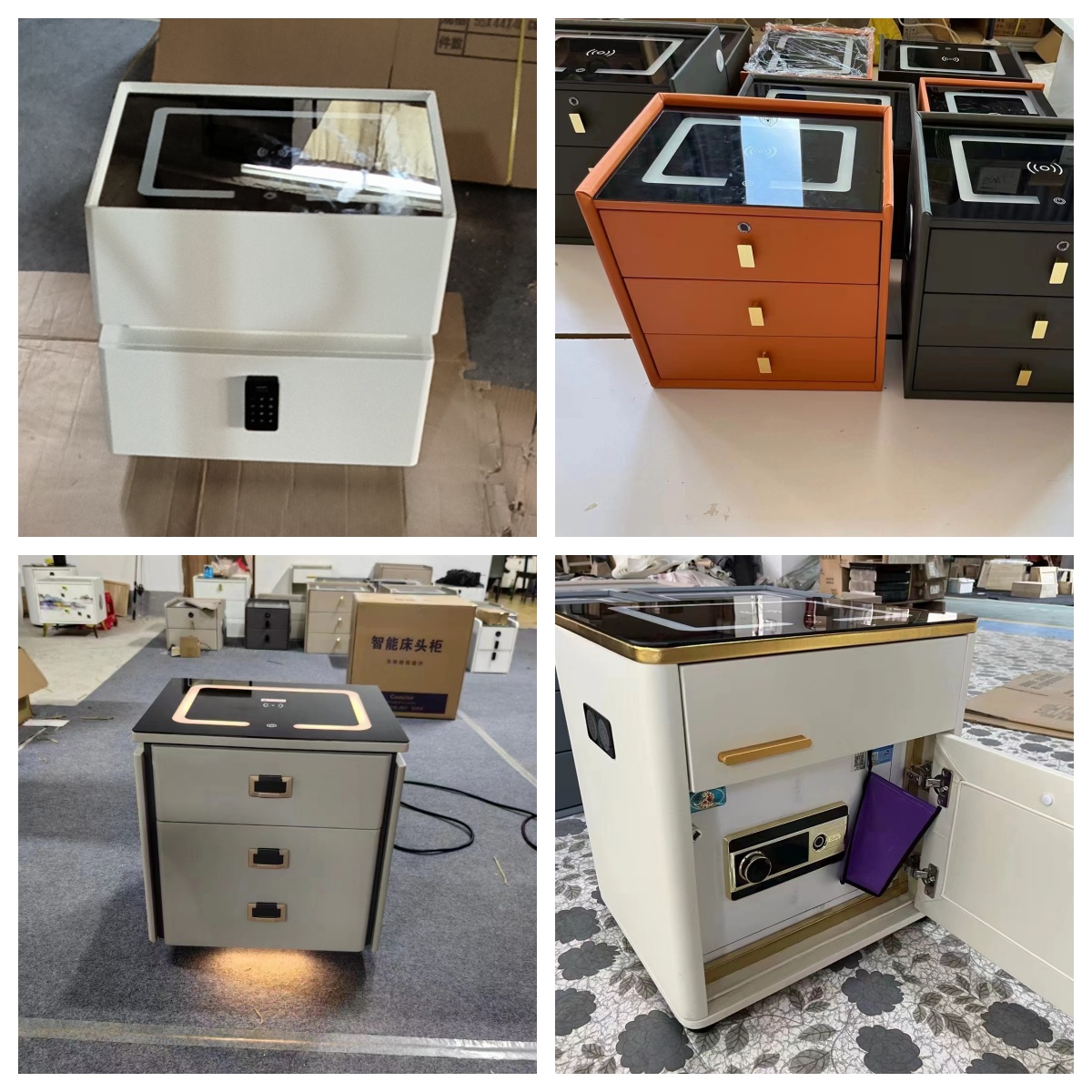
MOQ is shaped by the cabinet structure, the materials already available, the number of finishes, hardware or electronic modules, packaging requirements and the way an order fits into the factory schedule. A simple repeat model can be practical in a small batch. A visually similar product with a new structure, several colours and custom smart functions may need a larger run before the project makes sense on the production floor.
This guide is written for importers, hotel buyers, furniture brands and distributors who want to understand what happens behind the quotation. It does not present one universal MOQ. Instead, it shows how a bedside table factory assesses a project and where buyers can make sensible changes before placing the first order.
Planning your first OEM project? Read first ↓ ↓ ↓ ---------------------- Ready? |
|
At a glance
· MOQ is usually assessed by model, finish and production batch—not by the total order alone.
· Existing designs normally allow more flexibility than a completely new OEM structure.
· A smart nightstand can have both a furniture MOQ and an electronics purchasing threshold.
· One model in one finish may be easier to make than a larger order divided across several models and colours.
· Simplifying the first production run often works better than negotiating only on quantity.
1. Why different factories quote different MOQs
Furniture factories are organised around the products they make every day. A plant running standard panel furniture has a different cost structure from a workshop focused on upholstered bedroom furniture. A smart-furniture supplier also has to coordinate electronics, glass panels, wiring and functional testing. Those differences show up in the MOQ.
When an RFQ arrives, the sales team may be the first point of contact, but the useful answer usually comes after engineering, purchasing and production have reviewed the specification. The internal question is not “How many pieces can we ask the buyer to order?” It is “Can this product move through production without creating an uneconomical number of small batches?”
Two 50-piece projects can be completely different
Project A | Project B | |
Structure | Existing model | New cabinet structure |
Finish | One standard oak finish | Three upholstery colours |
Functions | Standard hardware | Wireless charging + fingerprint lock |
Packaging | Standard export carton | Printed retail cartons |
Factory workload | Routine scheduling | Engineering, sourcing, electronics and packaging coordination |
Both projects contain 50 pieces. Project A can usually join an existing production run with limited preparation. Project B creates several new jobs before the first cabinet is assembled. The quantity is identical; the production burden is not.
The three enquiry types we see most often
New-market trials usually use an existing structure and keep changes limited. Private-label programmes tend to add branding, selected finish changes and packaging. Hotel and contract projects are often easier to schedule than their quantity suggests because the same specification repeats across many rooms. Each of these situations deserves a different MOQ discussion.
The most useful comparison is therefore not “Which factory gave the lowest number?” It is “What exactly is included in that number?” A low MOQ based on ready stock, one finish and a plain carton is not directly comparable with an MOQ for a new smart model and custom retail packaging.
Want to know how different OEM production models affect pricing and lead time? 👉 Read:OEM vs ODM Bedside Tables |
2. How a bedside table factory works out the MOQ
A workable MOQ normally emerges from several checks rather than one fixed formula. The order is reviewed from the first drawing through to the packed carton. The most restrictive stage often sets the practical minimum.
RFQ | Engineering | Materials | Finish | Components | Packaging | Production plan |
Engineering and structure
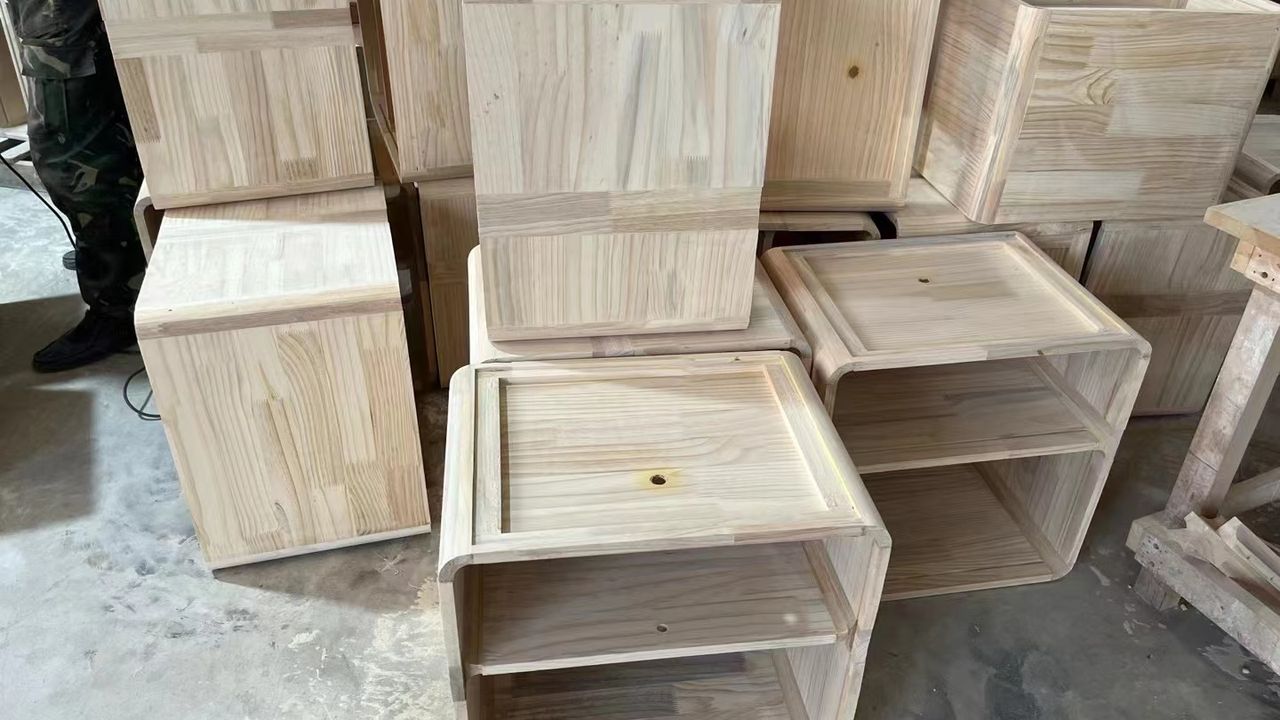
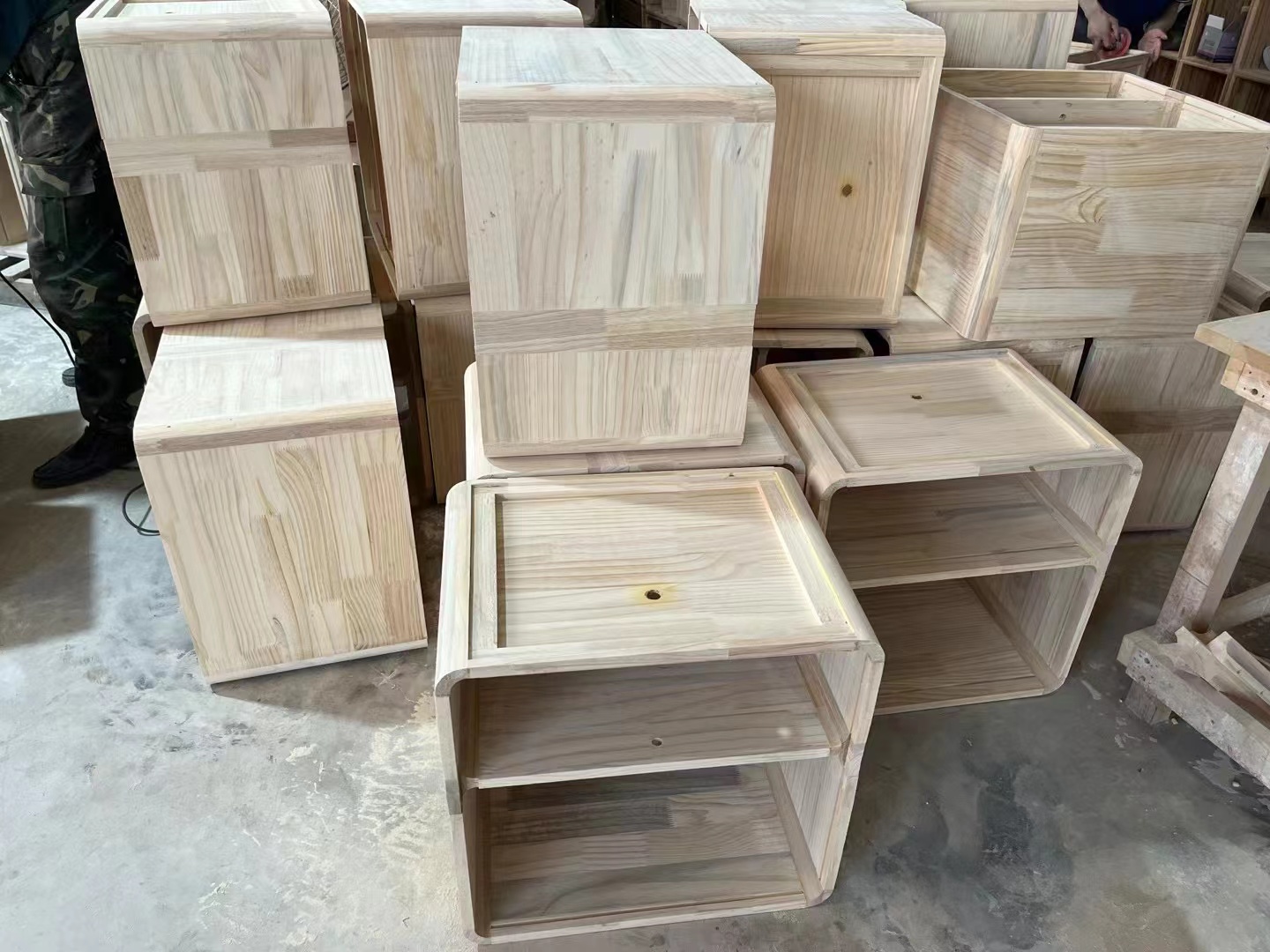
An existing construction already has drawings, CNC files, assembly methods and inspection points. A new height, drawer layout or frame may require drawings, a sample and production validation. Small batches become harder to justify when the engineering work is effectively the same as for a large order.
Materials
MDF, plywood, solid wood, veneer, fabric, leather, tempered glass and aluminium all follow different purchasing cycles. Standard materials already used by the factory are easier to arrange. A special veneer, imported fabric or custom glass panel can create a separate supplier minimum.
Colour and finish
A buyer may see walnut and oak as two colour choices on the same cabinet. The factory sees two material or finishing batches, two approval standards and two sets of inspection records. Multiple finishes can split one order into several smaller production runs.
Hardware and smart modules
Slides, handles and feet may be stock items. Wireless charging, USB-C, speakers, locks, sensors or a branded control panel may come from specialist suppliers. Availability, plug standard and colour can all affect the practical quantity.
Packaging
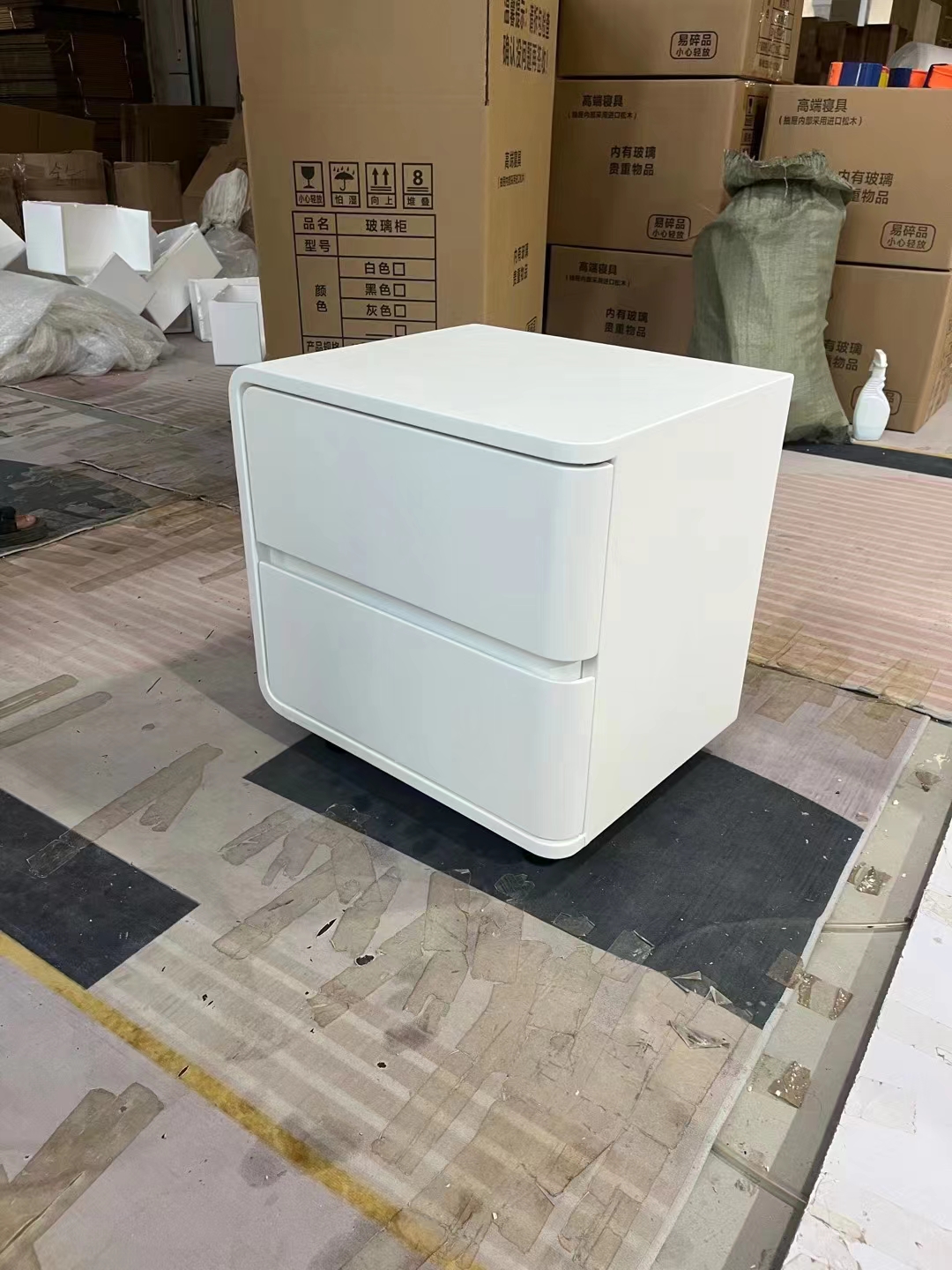
Plain export cartons are usually flexible. Printed cartons, custom foam, colour manuals, barcodes and retail presentation add separate purchasing and approval tasks. Packaging is part of production planning, not an afterthought.
Scheduling
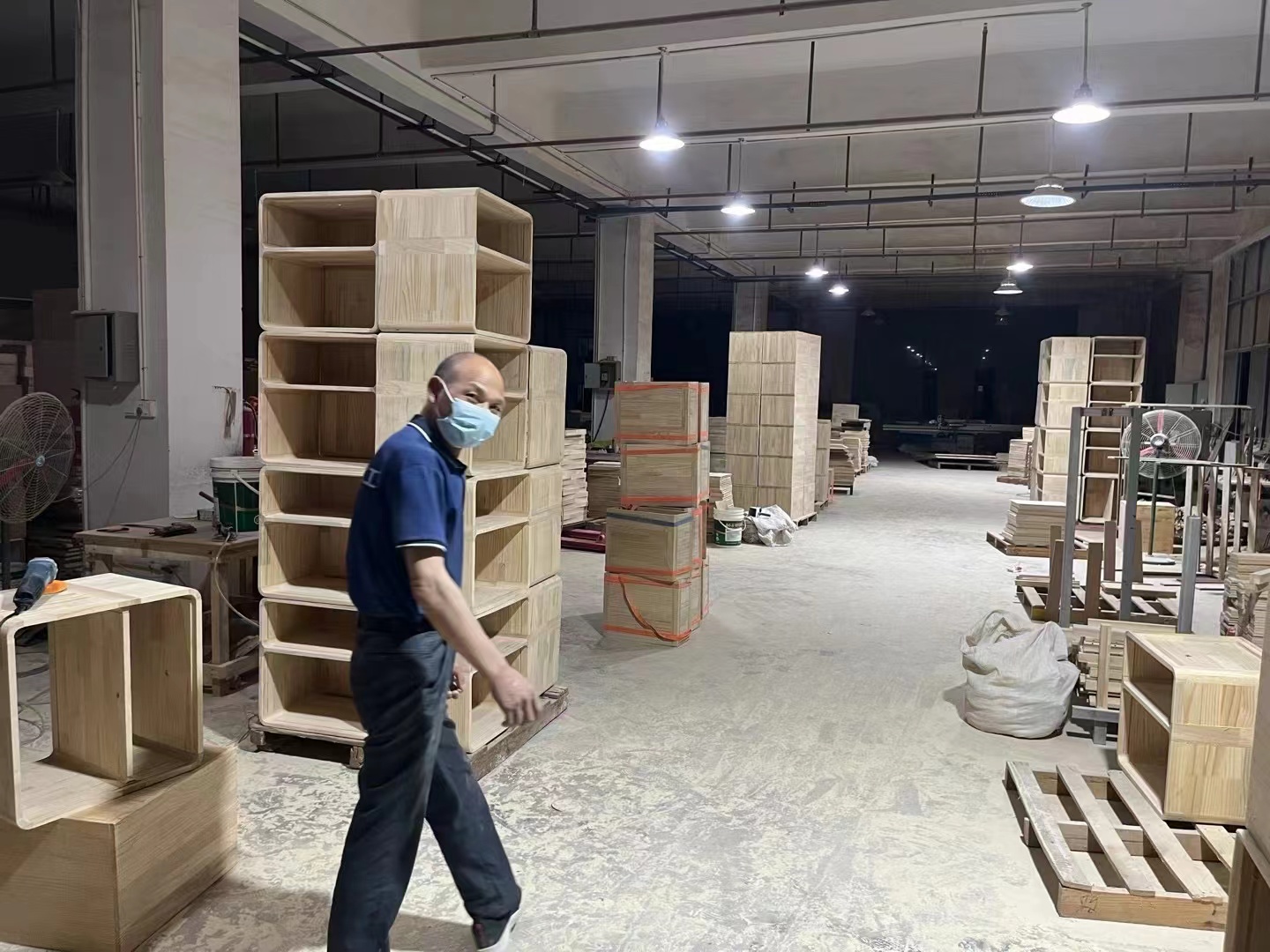
The production manager has to fit cutting, machining, sanding, painting or upholstery, assembly, testing, inspection and packing into the current workload. A small repeat order may fit easily. A similar-size order with several changes can interrupt multiple lines.
Furniture MOQ and electronics MOQ may not match
This is especially important for smart nightstands. The cabinet may be practical at 50 pieces, while a customised glass panel, fingerprint lock or control module is supplied in a larger batch. The final recommendation is usually governed by whichever item has the highest practical minimum. Buyers should therefore confirm electronic specifications before the cabinet design is frozen.
A useful way to remember the process is simple: the MOQ is often set by the hardest part of the project to buy, prepare or schedule—not by the easiest part to manufacture.
Read these practical guides: ↓ |
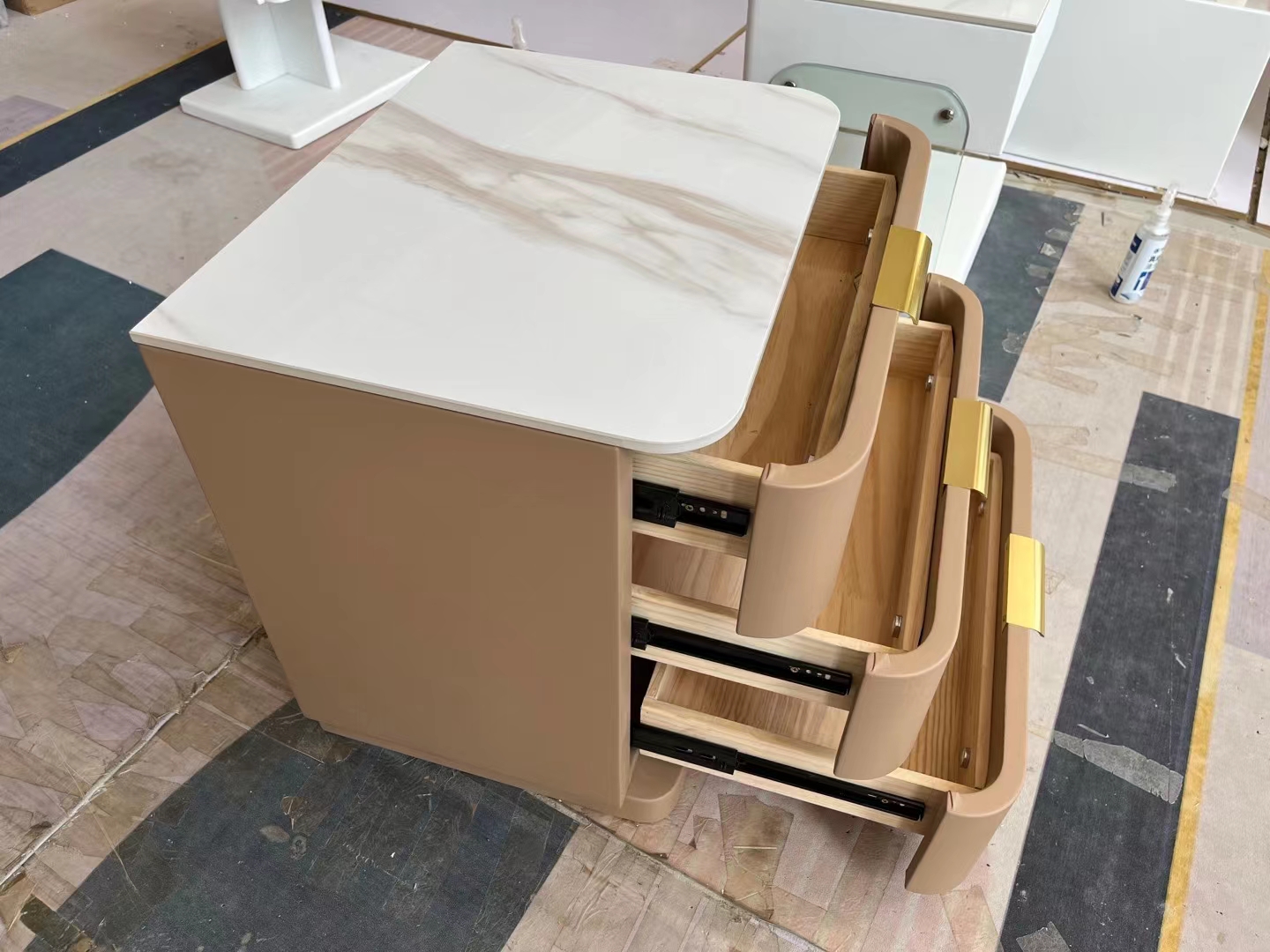
3. Is MOQ per model, per colour or per total order?
Factories manufacture batches, not totals on a purchase order. A total of 100 pieces can represent one clean production run or several small jobs, depending on how the quantity is divided.
Order | What the buyer sees | What the factory sees | Relative difficulty |
100 pcs, one model, one finish | One order | One drawing, one material plan, one finish, one packaging standard | Lowest |
100 pcs, one model, two finishes | Still one model | Two finishing batches and separate identification | Moderate |
120 pcs, three models | A larger total | Three engineering and production runs of 40 pcs each | Higher |
Mixed container | Efficient shipping | Several unrelated production workflows may still be required | Depends on product similarity |
Different models can sometimes share part of the production process when they use the same cabinet construction, board thickness, drawer system, finish and packaging format. A wooden nightstand, an upholstered cabinet and a smart model may ship together, but they rarely behave as one production batch.
Shipping quantity and production MOQ are therefore separate calculations. A full container can improve freight efficiency without making every SKU easier to manufacture.
A project that became easier without changing the business plan
A distributor approached us with roughly 120 pieces divided across three designs, three upholstery colours, wireless charging and custom cartons. The purpose of the shipment was market testing. We agreed to keep one design, one upholstery colour and standard export packaging for the first run, then hold the remaining options for the follow-up order. The range was not cancelled; it was launched in a more workable sequence.
Before sending an RFQ, list the quantity for each model and each finish. This simple breakdown gives a factory far more useful information than the total order value alone.
Planning a mixed-model order? Share the model list, finishes and quantities. We can identify which items may share materials or production stages and where the plan is likely to create separate minimums. |
Planning multiple models? 👉 Read:Private Label Bedside Table Guide Planning mixed containers? 👉 Read:China Furniture Import Guide |

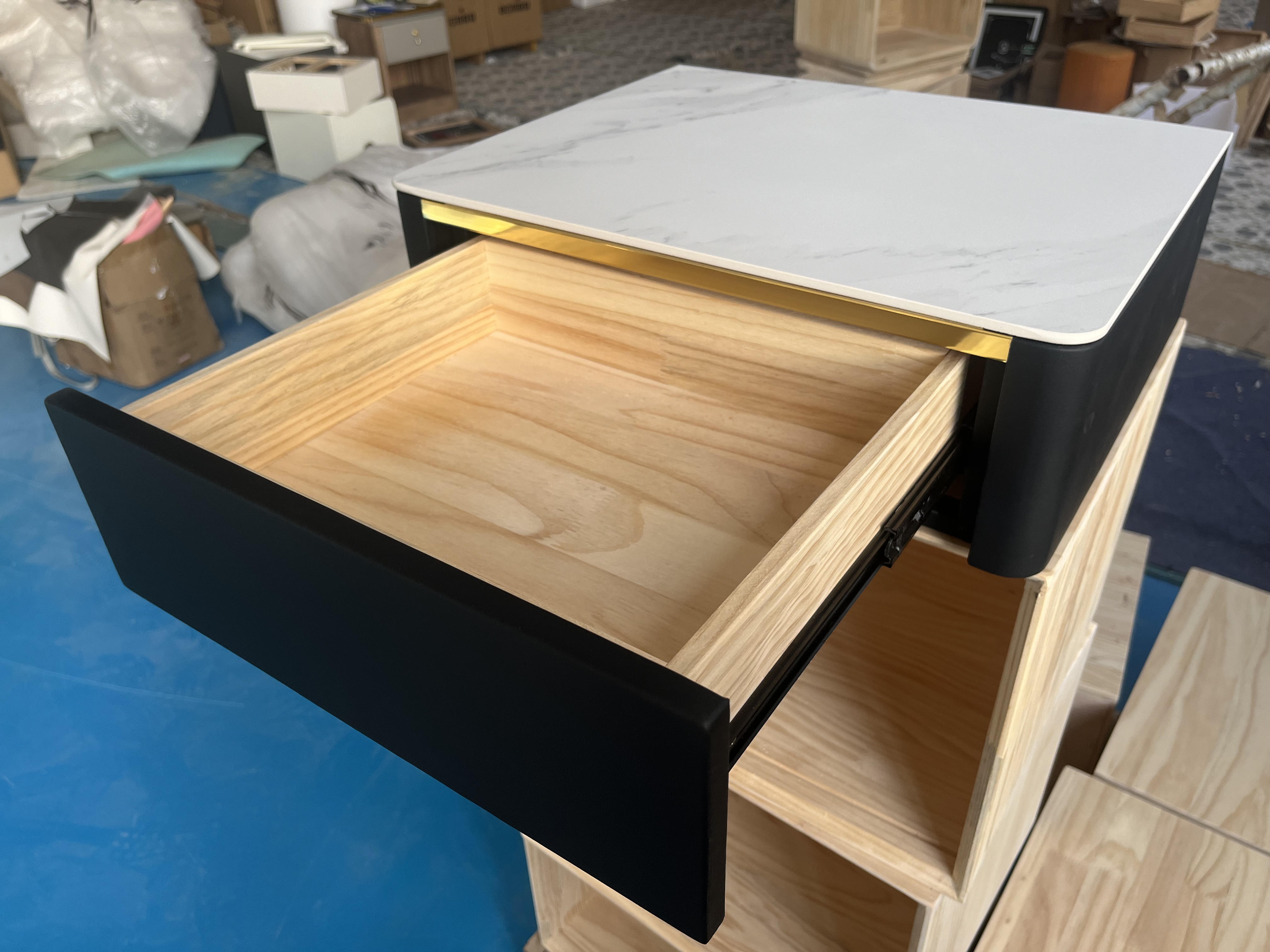
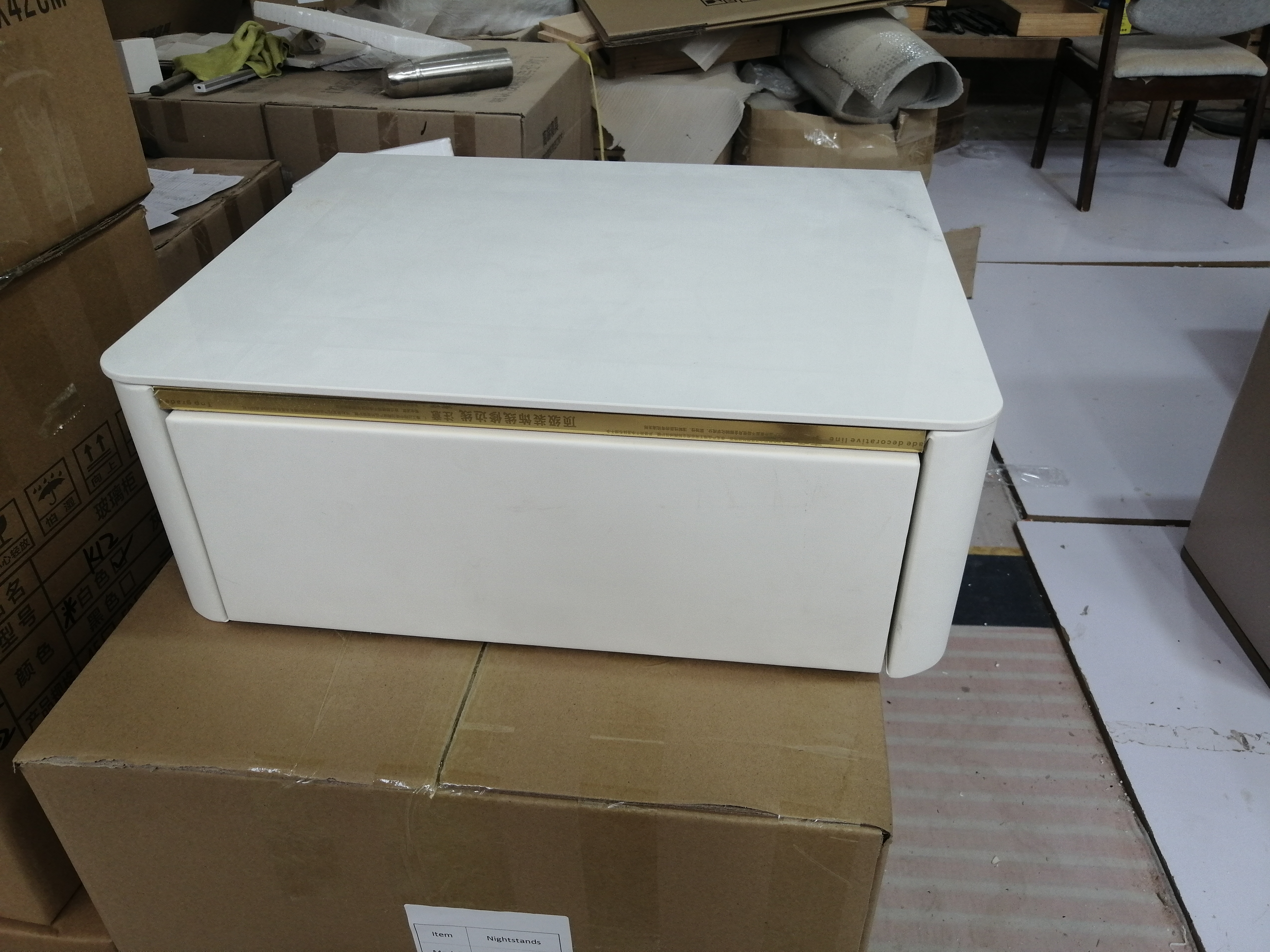
4. Why different bedside table types need different MOQ strategies
Product type | Engineering | Purchasing | Production pattern | Typical flexibility |
Existing wooden model | Low | Low | Repeatable | Higher |
Upholstered nightstand | Medium | Medium | Material/colour batches | Medium |
Smart nightstand | High | High | Furniture + electronics | Project dependent |
Standard hotel project | Medium | Low | Repeated room specification | Often higher |
New OEM design | Very high | High | New process to establish | Lower at first |
Existing wooden models
These are often the easiest starting point because the structure and machining programme are known. Flexibility comes from a proven process, not simply from the material being wood.
Upholstered nightstands
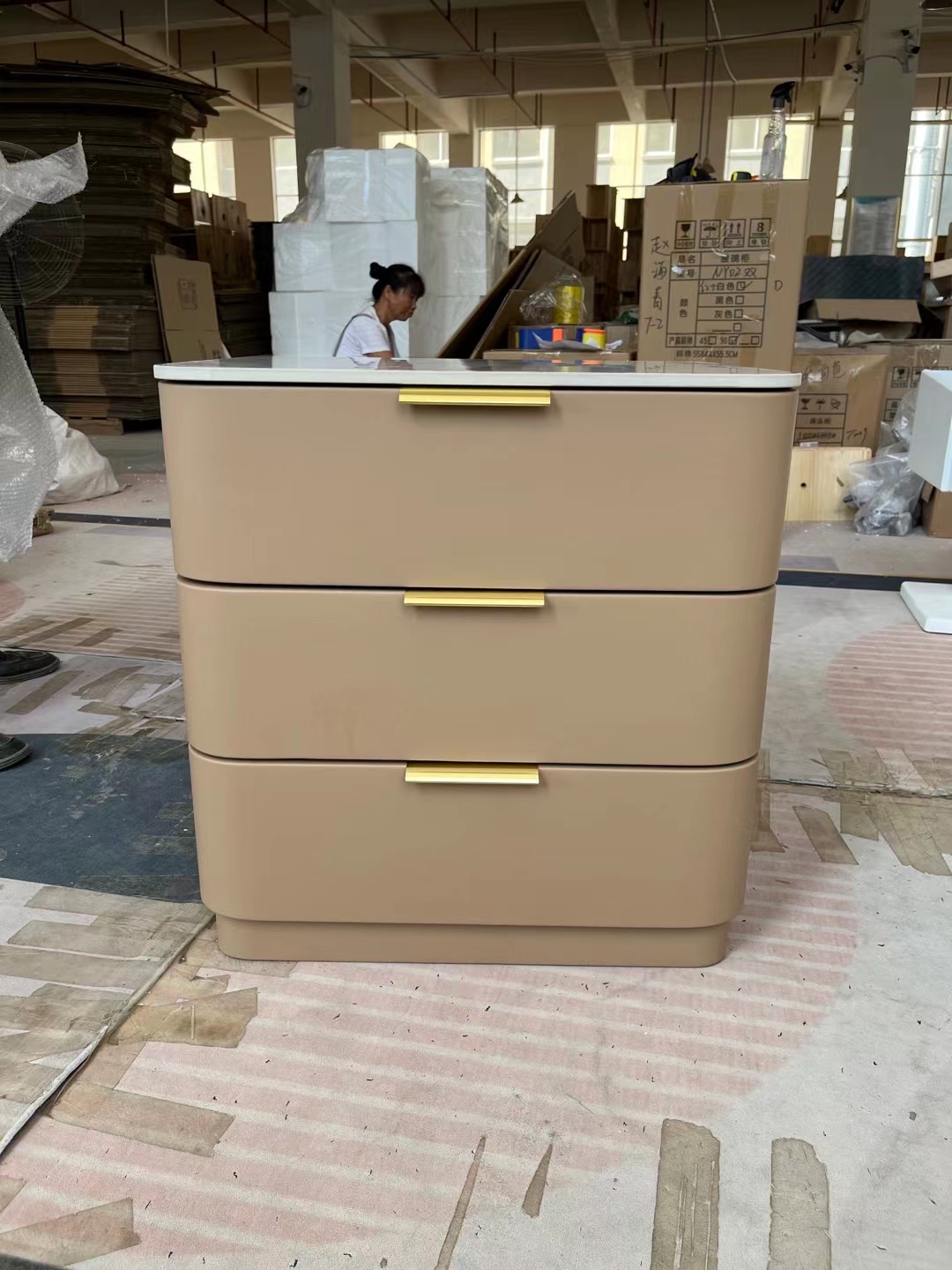
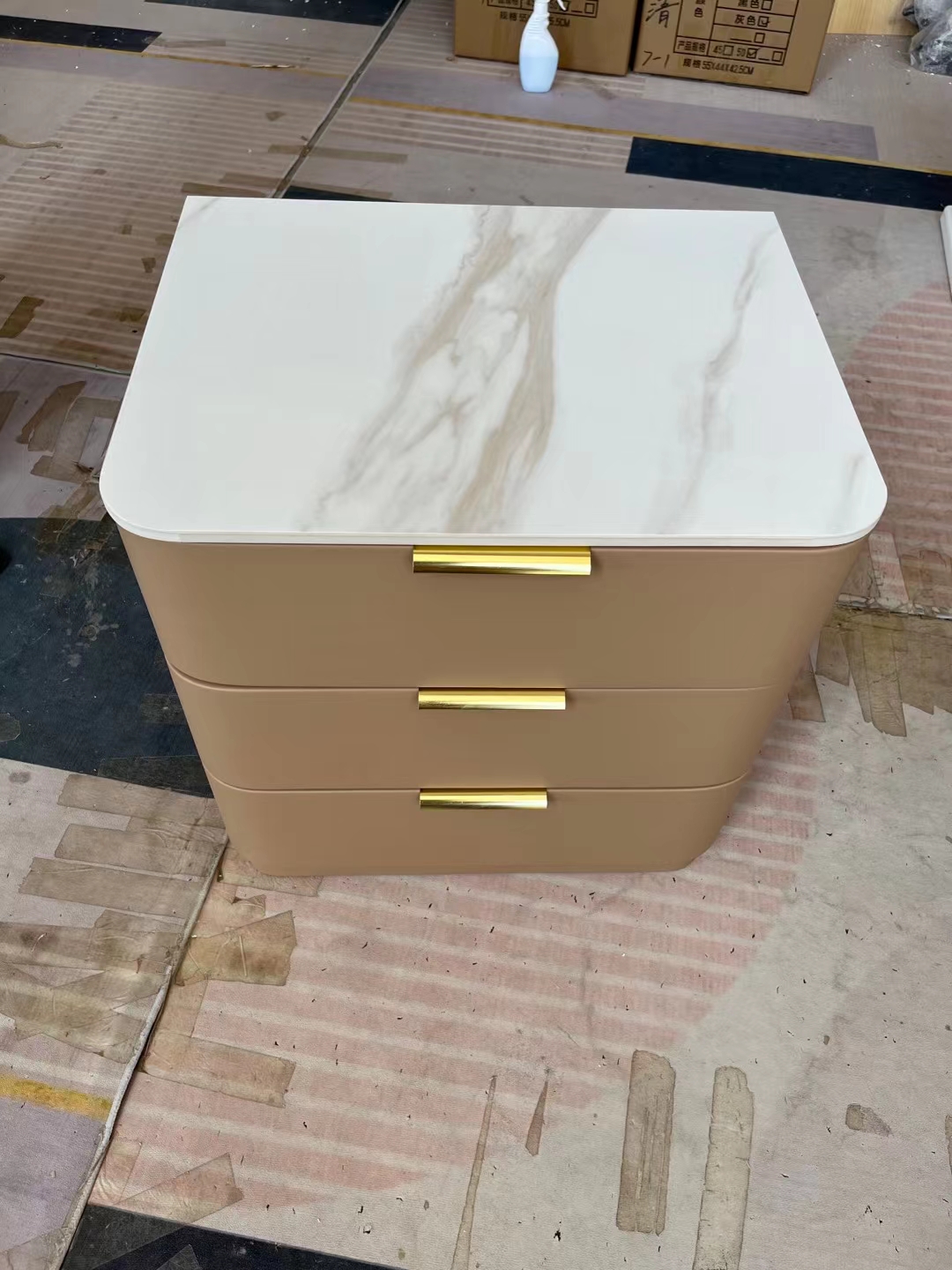
The cabinet may be standard, but leather, fabric, foam and stitching introduce separate purchasing and preparation. One stocked upholstery colour is very different from several exclusive colours in small quantities.
Smart nightstands
Smart models combine cabinet production with electronic sourcing, installation and testing. A standard module may be flexible; a new lock colour, plug standard or control panel may not be. Confirming the function list early avoids redesigning the cabinet around a late component change.
Hotel projects
An 80-room hotel can be easier to schedule than a retail order of the same size when every room uses the same dimensions, finish and hardware. Repetition simplifies purchasing, production and inspection, which is why project consistency can matter more than a large headline quantity.
Completely new OEM designs
A new product requires a repeatable method to be created: drawings, sample approval, material standards, packaging and inspection criteria. The first run carries the development work; later runs are normally easier because the process already exists.
Planning Smart Furniture? Continue Reading ↓ 👉 What Is a Smart Nightstand System? ↓ 👉 Wireless Charging Smart Nightstand Guide ↓ 👉 USB-C PD Smart Nightstand Power System ↓ 👉 Smart Nightstand LED Lighting Guide ↓ 👉 Smart Nightstand with Bluetooth Speaker ↓ 👉 Smart Nightstand with Password Lock ↓ |
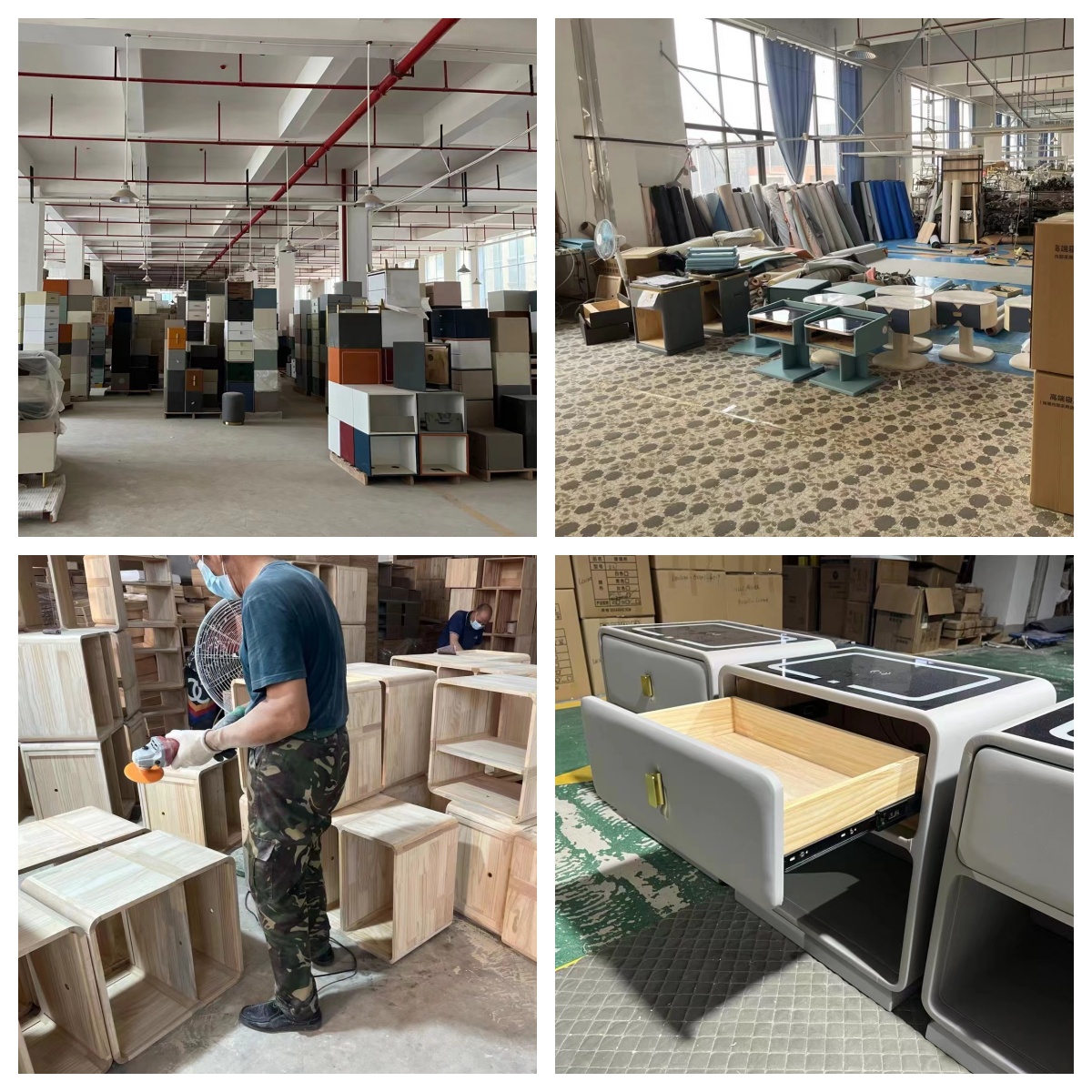
5. What should you customise first?
The question “How much can we customise?” tends to produce a long feature list. A better first-order question is “Which changes will help this product sell?” The most reliable launches usually prioritise a few commercially important changes and leave secondary options for later.
Priority | Typical examples | Decision rule |
Essential | Dimensions, finish, required charging function, safety requirement | Needed for the target market or application |
Valuable | Upgraded hardware, branded labels, improved storage, enhanced packaging | Adds value but should not delay launch |
Future development | More colours, exclusive mouldings, matching collections, additional smart features | Introduce after market feedback |
A first production run does not have to carry every idea. It needs to prove the product, the packaging and the sales proposition. After that, colour options, matching furniture and extra functions can be added with real customer feedback behind them.
We have seen projects become unnecessarily slow because a buyer tried to launch several cabinet sizes, multiple upholstery colours, speakers, locks and custom retail packaging together. Keeping the smart functions that mattered to the market while reducing the number of sizes, finishes and packaging versions made the launch faster without weakening the product concept.
6. How experienced buyers plan a first order
Experienced buyers rarely start with the lowest possible MOQ. They start with the simplest route to a credible market test. That normally means one clear customer group, one manageable product configuration and a plan for what will be improved after the first shipment.
· Define the market before finalising the specification.
· Separate must-have features from preferences.
· Keep the number of models and finishes manageable.
· Treat the first order as a source of product and packaging feedback.
· Share the expected reorder plan so the factory understands the longer-term programme.
A distributor once planned three bedside table collections at the same time. We recommended launching one collection first and reserving the other designs for the next stage. The buyer entered the market earlier and used real sales data to decide which range deserved further investment. The long-term plan stayed intact; only the sequence changed.
See how one distributor simplified its first order before mass production. 👉 From Customer Concept to Smart Nightstand: A Hong Kong OEM Furniture Project Related OEM Projects ↓ ↓ ↓ |
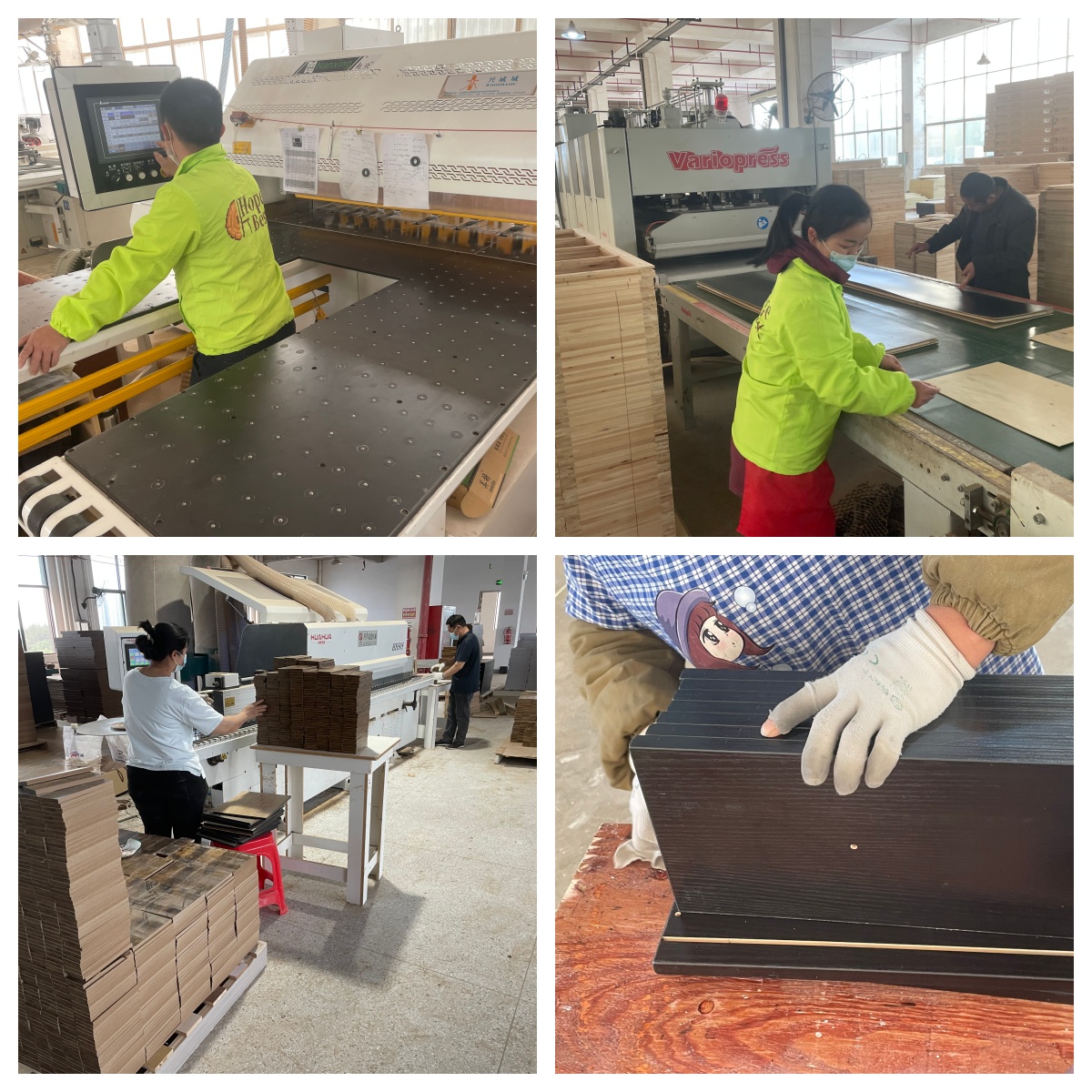
7. What happens before mass production starts
Stage | Factory work | What the buyer should confirm |
RFQ review | Check drawings, quantity by model, market and required functions | Provide complete references and a model-by-model quantity |
Engineering | Confirm structure, drawings, sample and testing needs | Approve technical direction before costing is final |
Purchasing | Check materials, hardware, electronics and packaging availability | Confirm specifications and acceptable alternatives |
Production planning | Fit the order into the relevant lines and finishing schedule | Agree on milestones, not only a final delivery date |
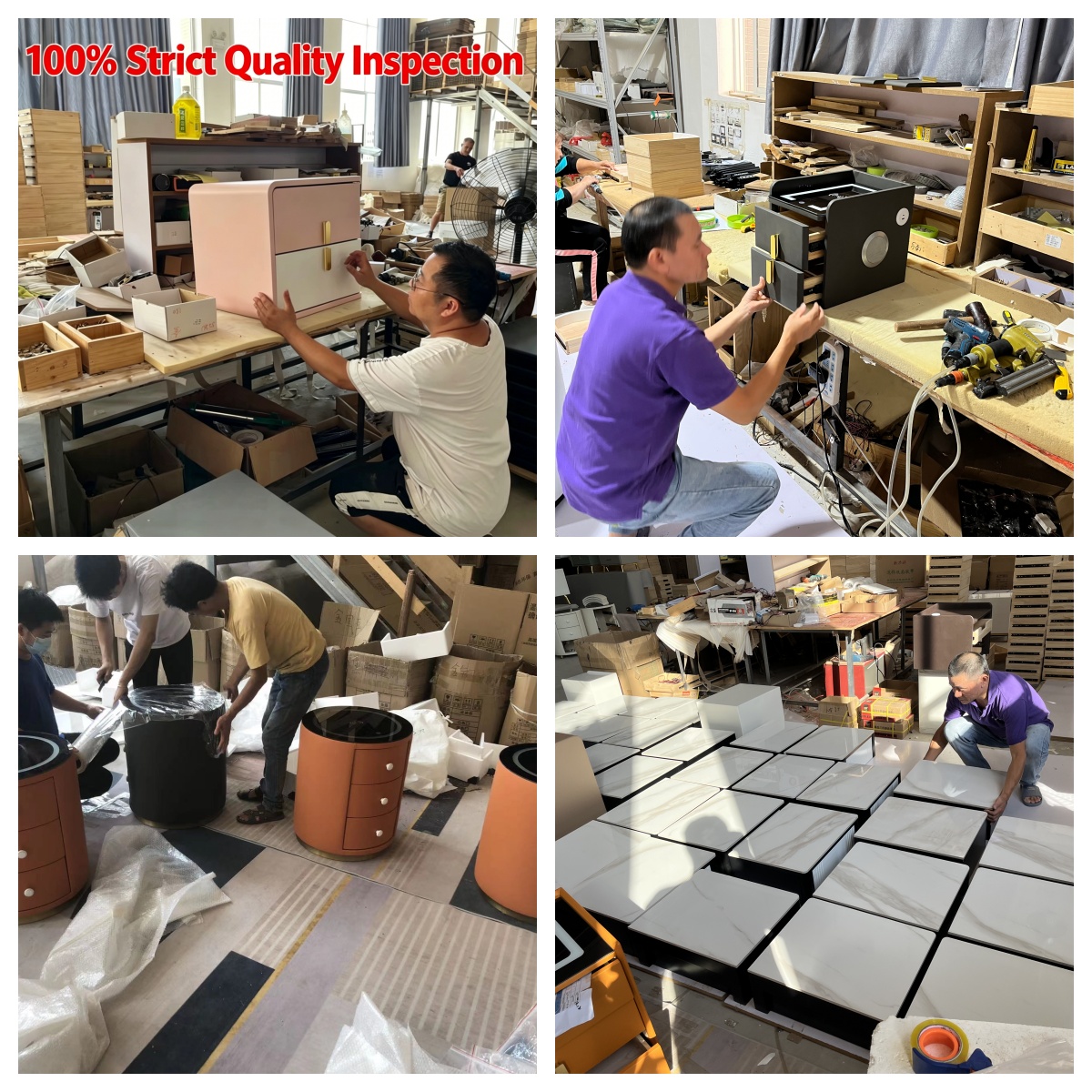
Sample approval | Verify structure, finish, functions and packaging protection | Record approved specifications clearly |
Mass production | Run to the approved standard with defined inspection points | Avoid late changes after material purchase |
A smooth production run is usually the result of good preparation rather than unusually fast manufacturing. Missing information at RFQ stage does not disappear; it returns later as revised quotations, sample changes or production delays.
Is your RFQ ready? A complete project brief helps the factory give a realistic MOQ, price and lead time. Use the checklist before sending the same enquiry to several suppliers. |
8. Frequently asked questions about bedside table MOQ
1. What is a typical MOQ for bedside tables in China?
Direct answer. There is no single industry MOQ. Existing models are often practical in smaller batches than a completely new OEM design, but the final quantity depends on the factory, materials, finishes, components and packaging.
Why it matters. A public “30-piece MOQ” may refer to ready stock or a standard finish, while a larger MOQ may include engineering and custom packaging. The numbers are not automatically comparable.
Practical recommendation. Send the same specification and quantity breakdown to each supplier, then compare what is included in the quotation.
2. Why do factories quote different MOQs for similar bedside tables?
Direct answer. Factories have different production lines, supplier networks and product specialities, so similar-looking products can create different workloads.
Why it matters. A factory already running the structure may only need routine scheduling. Another may need new drawings, materials or tooling.
Practical recommendation. Ask whether the quotation uses an existing production programme or requires new development.
3. Is MOQ calculated per model or for the whole order?
Direct answer. Most factories assess each model and finish first, then check whether products can share materials or production stages.
Why it matters. One hundred identical units are normally easier to organise than one hundred units divided across several unrelated designs.
Practical recommendation. List the quantity per model and per finish in the RFQ instead of giving only the total.
4. Can different bedside table models share one MOQ?
Direct answer. Sometimes, particularly when the models share the same structure, board thickness, finish, hardware and packaging format.
Why it matters. Products can be packed in the same container without sharing the same production process. Logistics and manufacturing are separate calculations.
Practical recommendation. Ask the supplier which materials or operations can genuinely be combined.
5. Does adding another colour increase MOQ?
Direct answer. It may not change the formal MOQ, but it usually creates another material or finishing batch.
Why it matters. Separate paint, veneer or upholstery batches require their own preparation, approval and inspection.
Practical recommendation. Use one core finish for the first run unless the market clearly requires several colours.
6. Why is smart nightstand MOQ different from standard furniture MOQ?
Direct answer. A smart nightstand combines cabinet production with electronic purchasing, installation and testing.
Why it matters. The cabinet may be practical at a lower quantity than a customised charging module, lock, glass panel or wiring set.
Practical recommendation. Confirm every smart function, plug type and compliance requirement before the sample is designed.
7. Can I customise a bedside table in a small first order?
Direct answer. Yes, but light changes based on an existing structure are usually easier than a completely new product.
Why it matters. Changing finish, logo or selected hardware is different from changing the structure, electronics and packaging at the same time.
Practical recommendation. Prioritise the changes customers will notice and reserve secondary options for later orders.
8. Does custom packaging affect MOQ?
Direct answer. It can. Printed cartons, manuals, custom foam and retail presentation may have their own supplier quantities.
Why it matters. Packaging is designed and purchased before the product is packed, so it forms part of the production plan.
Practical recommendation. Use standard export packaging for a market test unless branded retail presentation is essential.
9. Why can a hotel project receive more MOQ flexibility?
Direct answer. Hotel projects often repeat one specification across many rooms, which makes manufacturing predictable even when the quantity is moderate.
Why it matters. Consistent dimensions, finish, hardware and installation simplify purchasing and inspection.
Practical recommendation. Provide the room count, FF&E schedule, drawings and project timeline with the enquiry.
10. How can I reduce MOQ without lowering quality?
Direct answer. Reduce production complexity rather than removing quality requirements.
Why it matters. An existing structure, one finish, standard hardware and standard packaging are easier to schedule without changing material or workmanship standards.
Practical recommendation. Ask the factory which variation or custom item creates the highest production minimum.
11. Can I supply my own electronic modules?
Direct answer. Possibly, but the factory must verify dimensions, mounting, wiring, heat management, plug standards and documentation before sampling.
Why it matters. A module that works independently may still be unsuitable once installed under glass or inside a cabinet.
Practical recommendation. Share drawings, specifications and samples early and agree who is responsible for testing and warranty.
12. Does MOQ normally decrease on repeat orders?
Direct answer. Repeat orders are often easier because drawings, materials, packaging and inspection standards are already approved.
Why it matters. The factory no longer has to repeat the full development process, although supplier minimums for special materials or electronics may still apply.
Practical recommendation. Discuss forecast quantities and likely reorder timing when planning the first production run.
13. How does MOQ affect lead time?
Direct answer. Quantity matters, but product complexity and material availability often influence lead time more than MOQ itself.
Why it matters. A simple repeat order can move faster than a smaller order that needs a new sample, several finishes and custom electronics.
Practical recommendation. Ask for a timeline covering engineering, sample approval, material purchase and production—not only “production days”.
14. What should I send before asking for a quotation?
Direct answer. Provide a drawing or reference photo, dimensions, quantity per model, materials, finish, hardware, smart functions, packaging, destination market and target schedule.
Why it matters. Without these details, a supplier can only offer a provisional MOQ and price that may change later.
Practical recommendation. Use one consistent RFQ when comparing factories so the answers are based on the same project.
15. Is the lowest MOQ always the safest choice?
Direct answer. No. A very low MOQ can mean stock products, limited customisation, a higher unit cost or a production compromise.
Why it matters. The best choice balances inventory exposure with stable manufacturing and the features the market actually needs.
Practical recommendation. Compare the complete offer: specification, sample, quality control, packaging, lead time and support—not the MOQ alone.
👉FAQ 👉Download:OEM Launch Toolkit Includes ✔ MOQ Calculator ✔ MOQ Decision Tree ✔ RFQ Template ✔ Factory Audit Checklist ✔ Supplier Comparison Sheet ✔ Sample Inspection Checklist ✔ Production Timeline ✔ OEM Development Roadmap |
Ready to discuss your project?
Send your model list, reference images, quantity per model, preferred finish, required smart functions and destination market. We will review the production plan and explain which parts are straightforward, which items may create a separate minimum and where the project can be simplified before quotation.
· MOQ feasibility review
· Material and function recommendations
· Mixed-model planning
· Packaging options
· Preliminary lead-time and quotation guidance
Request a free engineering review A technical discussion at the beginning is usually more useful than negotiating one number after the quotation has already been prepared. GET OEM SOLUTION DISCUSS YOUR PROJECT SEND PRODUCT REQUIREMENTS |