
OEM vs ODM Bedside Tables Compared: Cost, MOQ & Customization Guide
Not sure whether OEM or ODM is the better choice for your bedside table business? Compare cost, MOQ, lead time, customization flexibility, and product exclusivity to choose the right manufacturing model for your market.
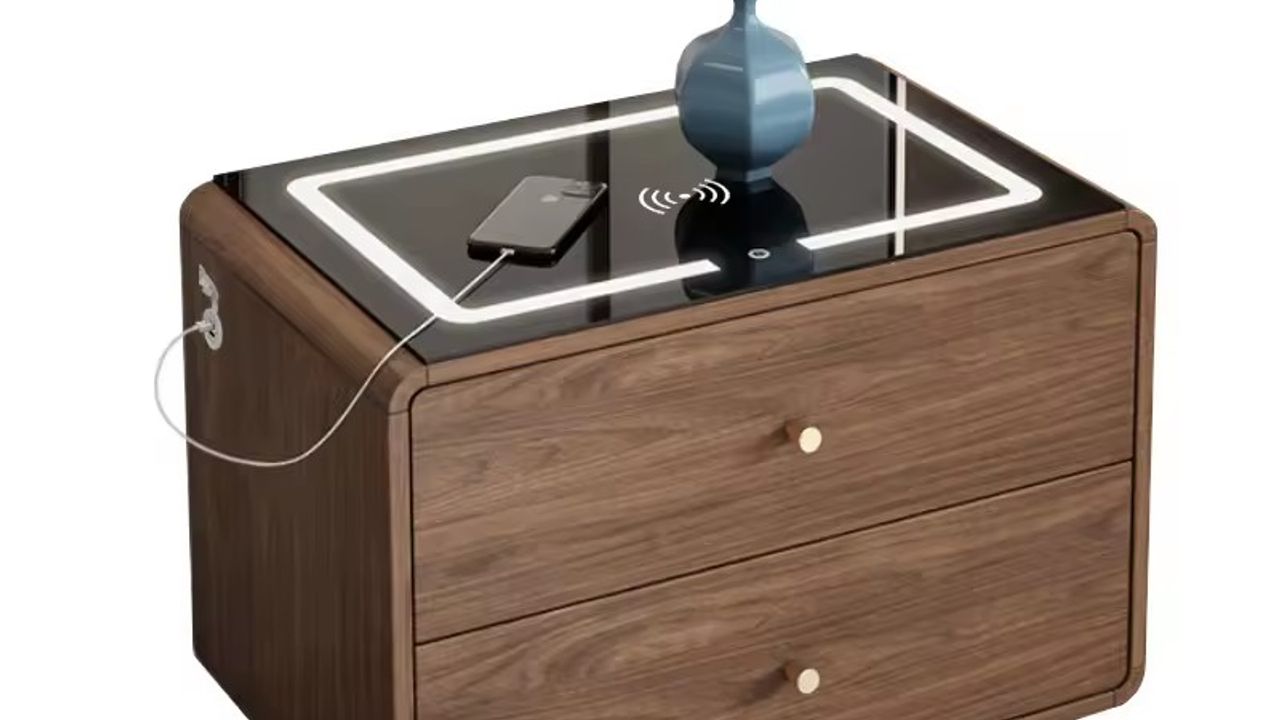
OEM vs ODM Bedside Tables: Which Option Is Better for Your Business in 2026?
Introduction
Many buyers contact bedside table manufacturers before they fully understand the difference between OEM and ODM.
That is actually quite common.
A distributor may want to add a new nightstand collection to their catalog. A hotel supplier may be working from an architect's drawing. An online retailer may simply want a product that can be launched quickly under a private label.
Most buyers sourcing bedside tables from China eventually face the same question: Should they choose OEM or ODM manufacturing?
Should I choose OEM or ODM?
At first glance, the answer seems simple.
OEM means developing a product based on your own requirements.
ODM means selecting an existing design and making limited modifications.
However, once you start comparing costs, lead times, MOQs, product exclusivity, and smart furniture functions, the decision becomes much more important.
Choosing the wrong approach can lead to unnecessary development costs, longer lead times, or products that are difficult to compete with in the market.
Choosing the right approach can help you launch faster, reduce risk, and build a stronger product line over time.
The good news is that there is no universally correct answer.
The best choice depends on your business model, your target customers, and where you want your business to be in the next few years.
This guide focuses specifically on bedside tables and smart nightstands. Instead of discussing OEM and ODM in general manufacturing, we will look at how they work in real furniture sourcing situations and which option makes the most sense for different types of buyers.
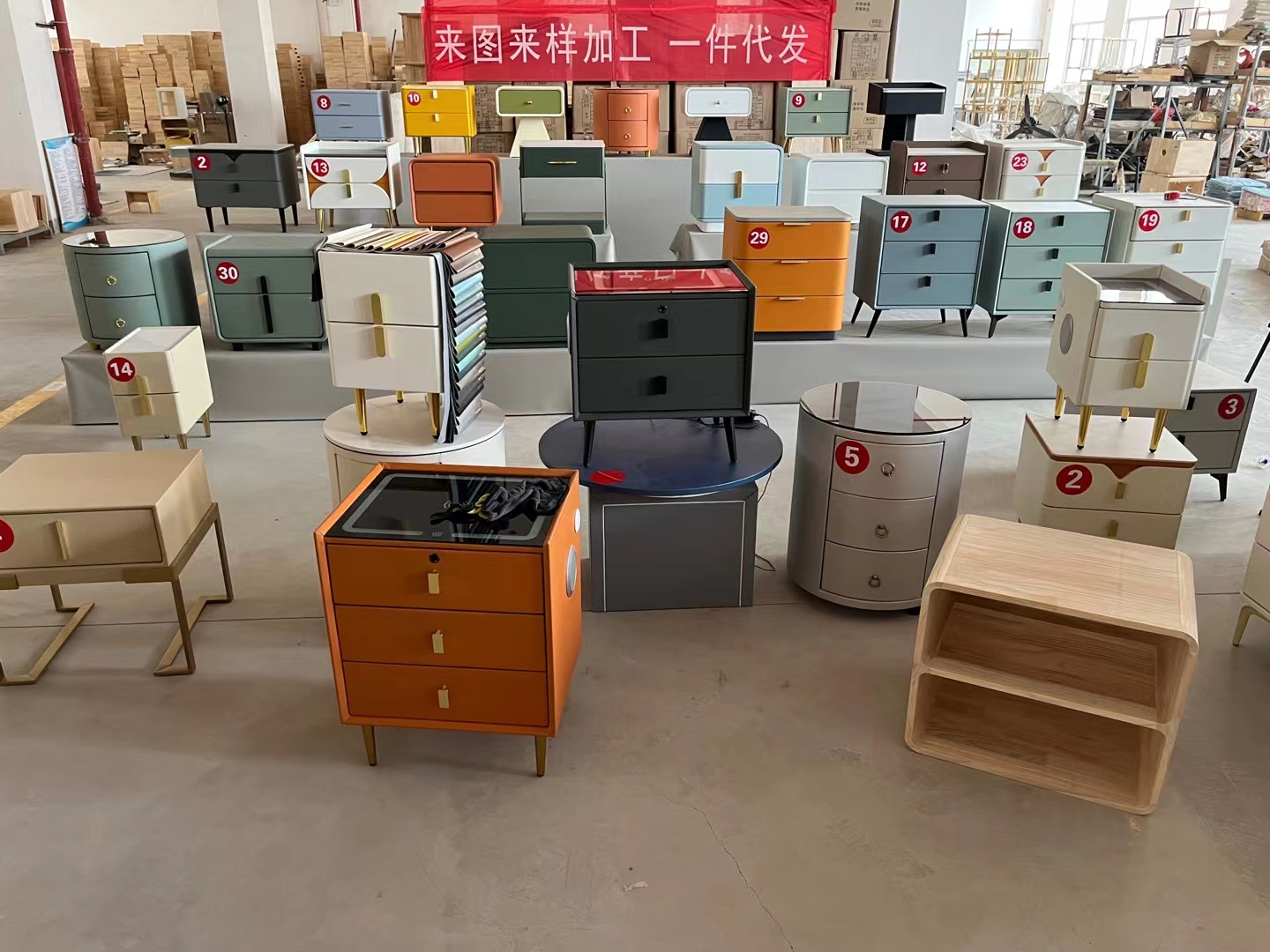
OEM vs ODM Bedside Tables: A Quick Answer
If you are short on time, here is the simplest way to think about it.
Choose OEM if you need:
A unique product design
Custom dimensions
Smart function customization
Stronger brand differentiation
Long-term product exclusivity
Choose ODM if you need:
Faster market entry
Lower MOQ
Lower development costs
Reduced risk
A proven product platform
Many successful importers do not stay with one model forever.
They often start with ODM to test the market and move to OEM later after sales become stable.
The Path Most Buyers Actually Follow
Many buyers assume they need to choose either OEM or ODM from the beginning.
In reality, most successful furniture importers follow a gradual path.
They often start with an existing product to test demand, make improvements based on customer feedback, and eventually develop exclusive products of their own.
A common sourcing journey looks like this:
ODM
↓
ODM+
↓
OEM
This approach reduces risk while creating a clear path toward long-term product differentiation.
OEM vs ODM Bedside Tables at a Glance
Question | Better Choice |
Need a unique bedside table design? | OEM |
Need custom dimensions? | OEM |
Need faster market entry? | ODM |
Want lower development costs? | ODM |
Need smart function customization? | OEM |
Need lower MOQ? | ODM |
Building a furniture brand? | OEM |
Testing a new market? | ODM |
Need stronger product exclusivity? | OEM |
Which Option Fits Your Business?
Buyer Type | Recommended Option |
Hotel Furniture Supplier | OEM |
Furniture Brand | OEM |
Smart Furniture Distributor | OEM |
New Importer | ODM |
Online Retailer | ODM |
Regional Distributor | ODM → OEM |
Project Contractor | OEM |
Private Label Seller | ODM → OEM |
If you are still uncertain, think about your primary goal.
If you are trying to build a unique product line, OEM is usually the better choice.
If you are trying to enter the market quickly and reduce risk, ODM is often the smarter starting point.
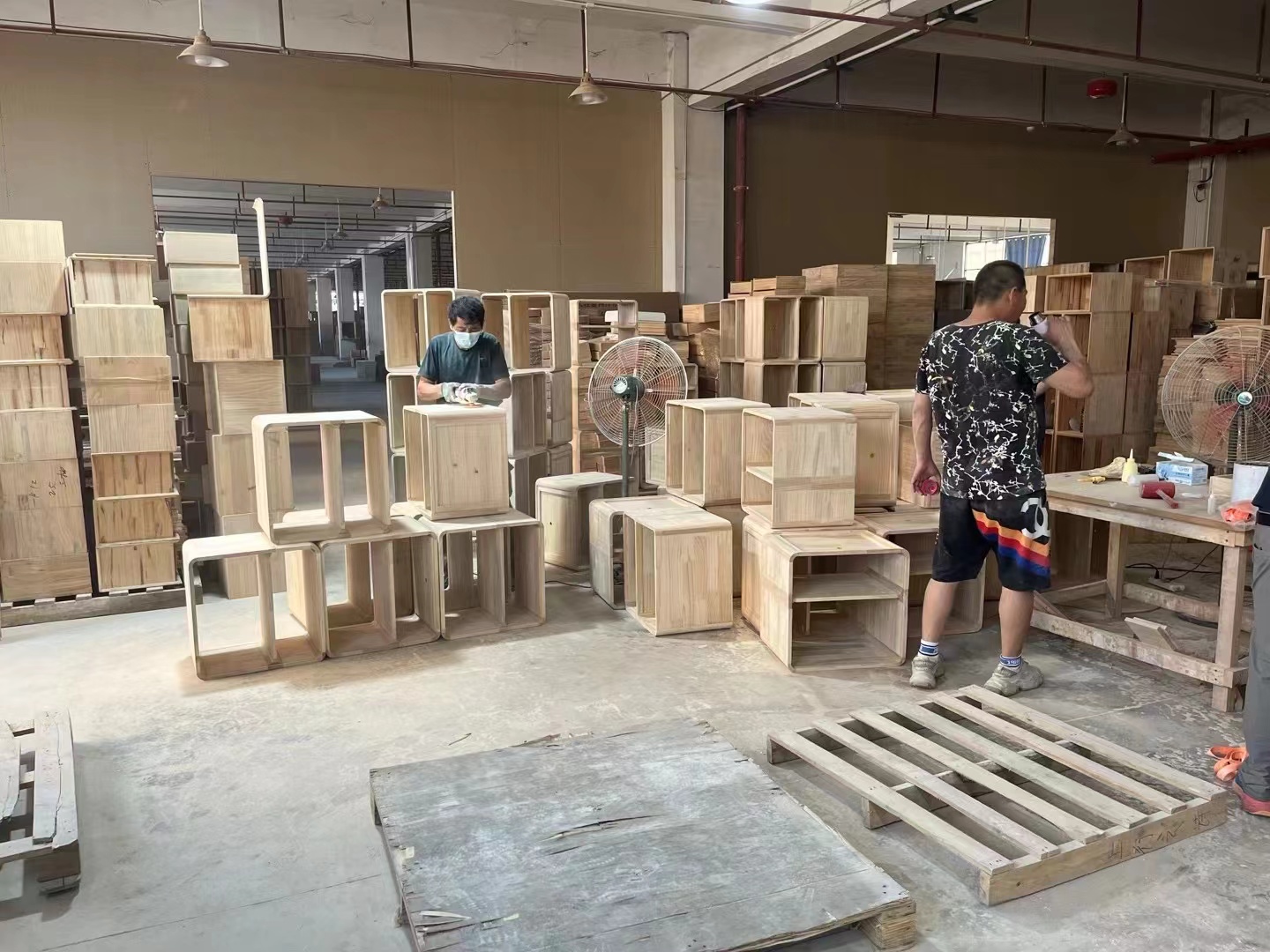

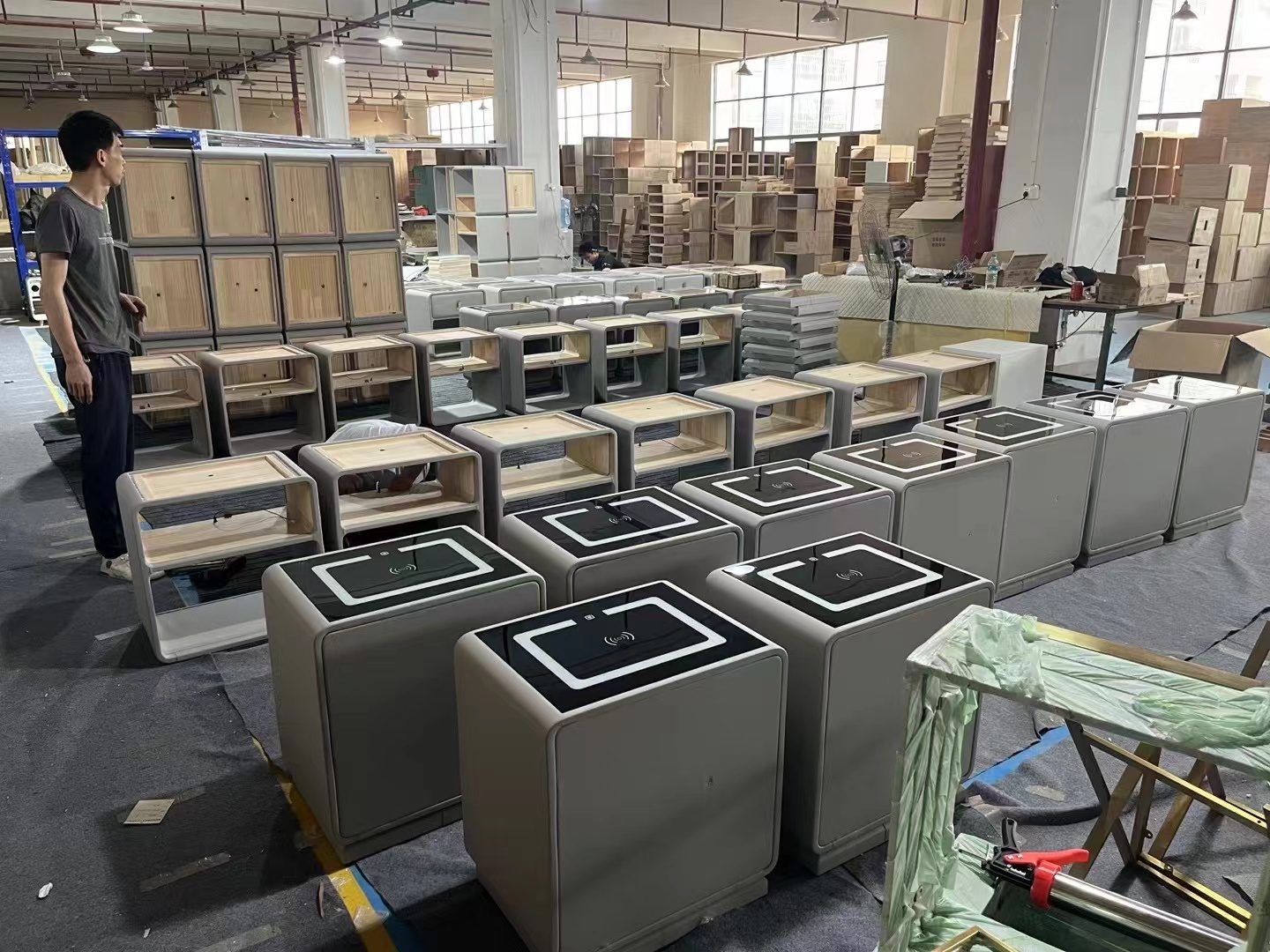
What Does OEM Mean for Bedside Tables?
Most OEM projects start with a problem.
The buyer has already looked through dozens of existing products but still cannot find exactly what they need.
Maybe the dimensions are wrong.
Maybe the design looks too similar to competitors' products.
Maybe the product does not include the smart functions required by the market.
Maybe the bedside table needs to match a hotel room design.
When standard products no longer meet the project requirements, OEM usually becomes the next step.
With OEM, the product is developed according to the buyer's specifications rather than selected from an existing catalog.
Depending on the project, customization may involve:
Product dimensions
Drawer configurations
Upholstery details
Veneer finishes
Hardware selection
Packaging design
Smart functions
A typical OEM project follows a process similar to this:
Product Concept
↓
Technical Drawing
↓
Engineering Review
↓
Prototype Sample
↓
Sample Approval
↓
Mass Production
The exact process varies from factory to factory, but the principle remains the same.
The product starts with the buyer's requirements rather than an existing design.
Why Buyers Choose OEM
They Want Something Different
One of the biggest reasons buyers choose OEM is simple.
They do not want to sell the same product as everyone else.
If ten suppliers are offering nearly identical bedside tables, competition often comes down to price.
OEM helps buyers avoid that situation by creating products that are not widely available.
A Typical OEM Project
A hotel furniture supplier was sourcing bedside tables for a new hospitality project.
The original design required custom dimensions, integrated Type-C charging, and LED lighting.
Several standard models were reviewed, but none matched both the room layout and technical requirements.
The project eventually moved to OEM development, allowing the furniture to match the hotel's design standards while incorporating the required charging and lighting functions.
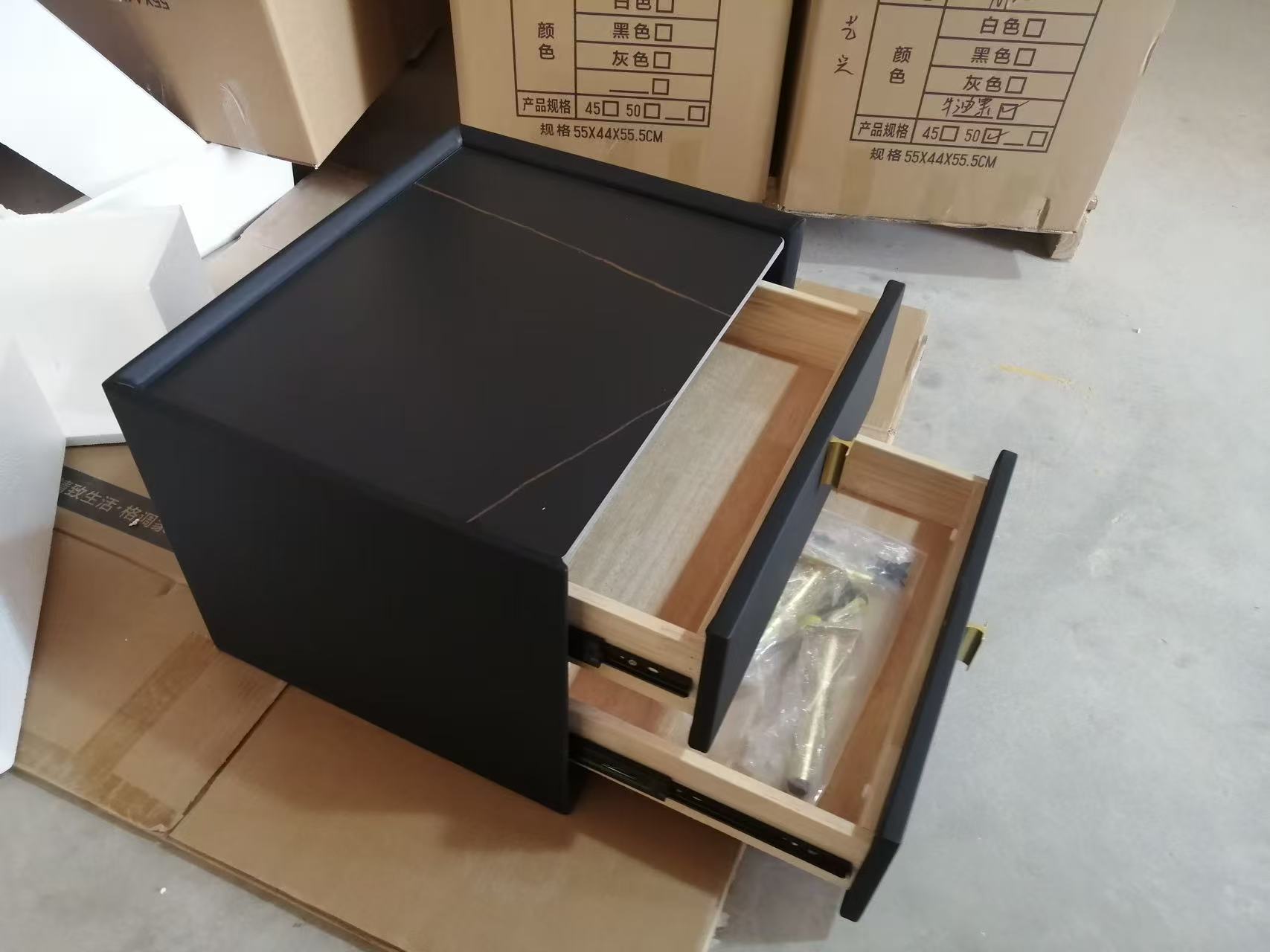
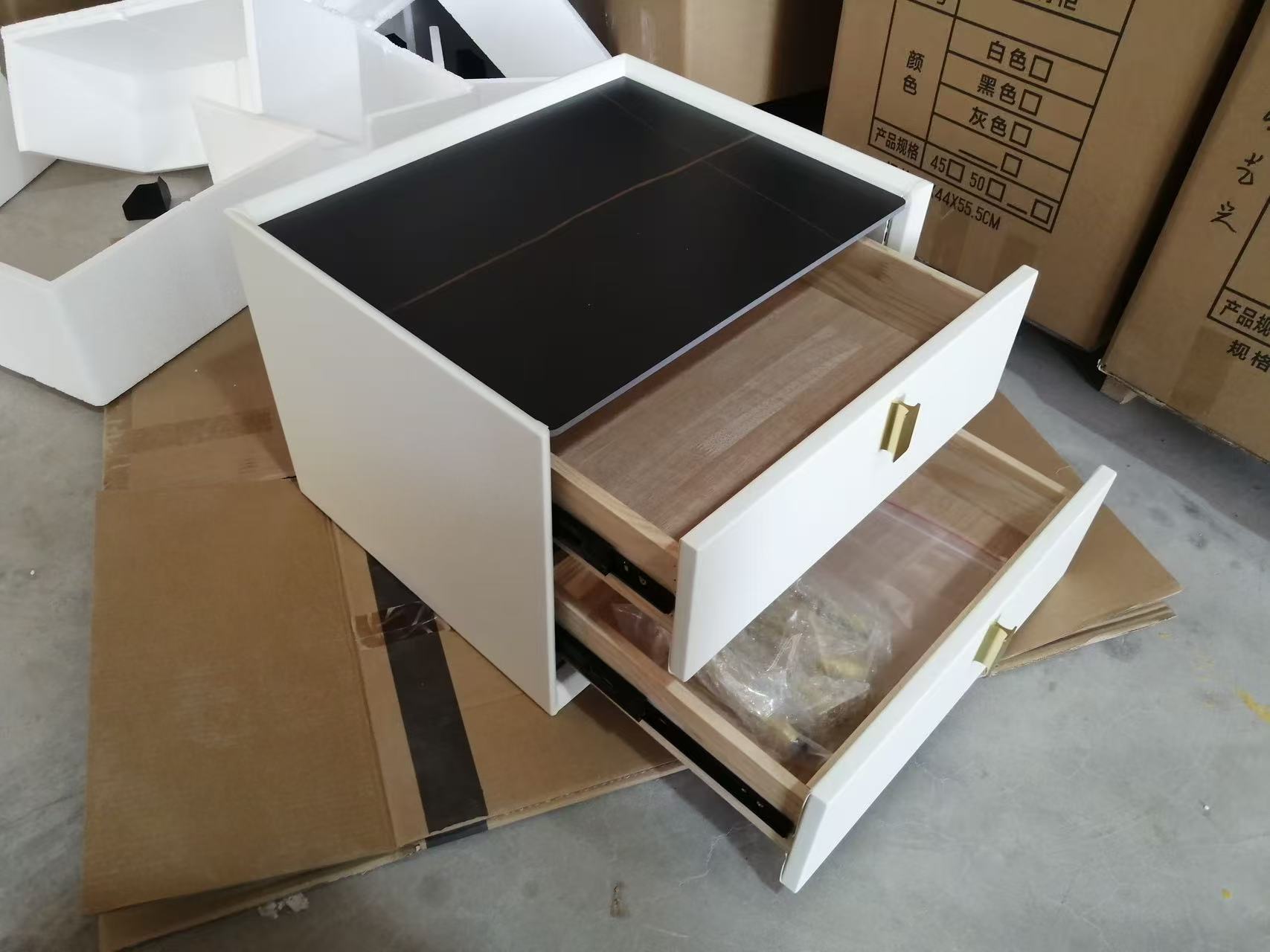
Ready to Develop Your Own Bedside Table?
Looking for a manufacturer that supports custom dimensions, materials, and smart furniture functions?
They Need More Control
Some projects require very specific details.
A hotel may require a certain width to fit room layouts.
A furniture brand may want a particular combination of materials and finishes.
A distributor may want a unique appearance that aligns with its brand image.
OEM gives buyers much greater control over these decisions.
They Want Better Long-Term Positioning
Developing a custom product usually requires more effort in the beginning.
However, many buyers view OEM as a long-term investment rather than a short-term purchase.
A product that cannot be easily copied often creates stronger margins and better brand value over time.
They Need Smart Function Customization
This is becoming increasingly important in today's market.
Many buyers are no longer sourcing traditional bedside tables.
They are sourcing smart furniture.
Common requirements include:
Wireless charging
USB charging
Type-C charging
LED lighting
Bluetooth speakers
Fingerprint locks
Password locks
Motion sensors
These functions often require engineering changes that cannot be achieved through simple cosmetic modifications.
As a result, many smart bedside table projects naturally move toward OEM development.
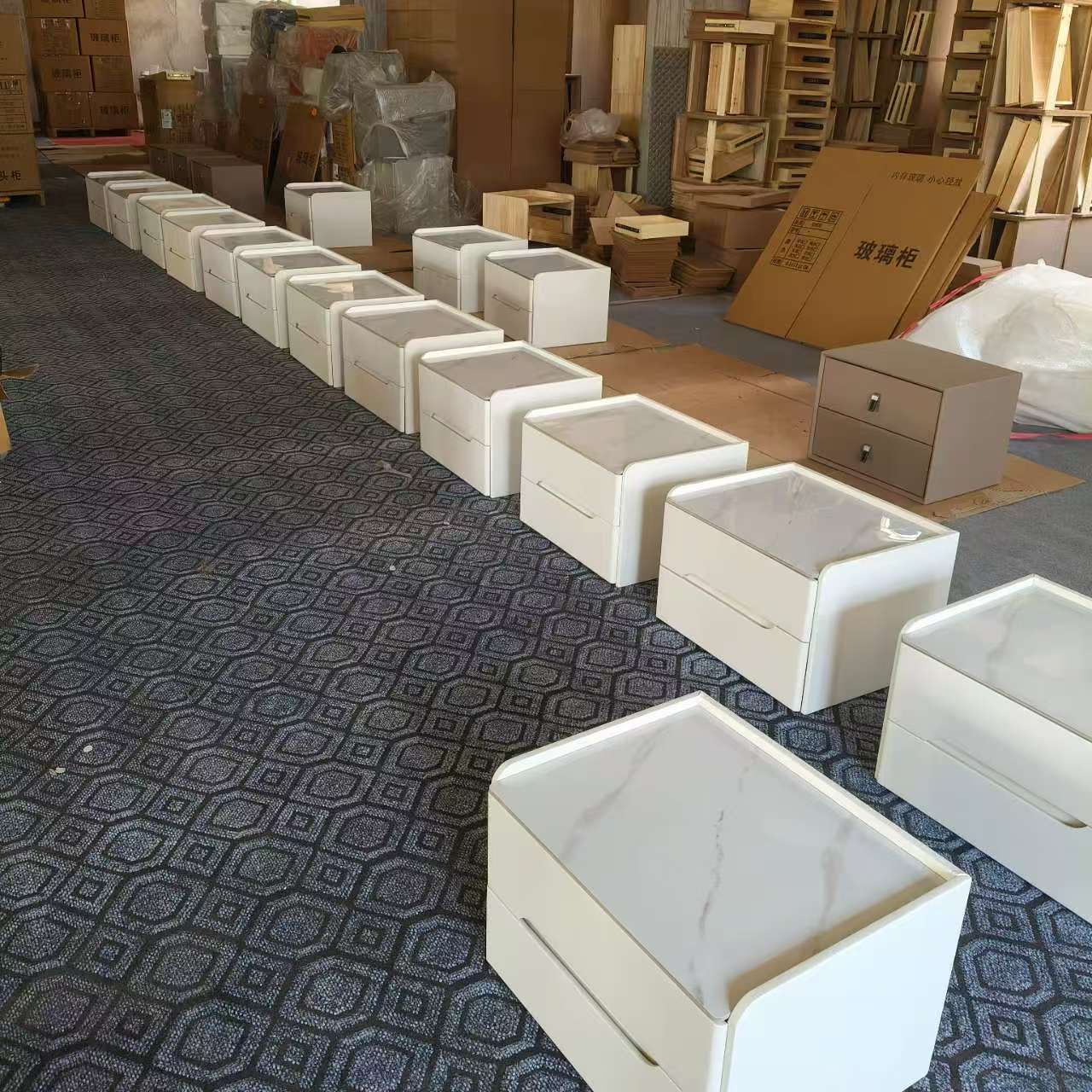
Planning a Smart Nightstand Project?
Wireless charging, LED lighting, Bluetooth speakers, fingerprint locks, and Type-C charging often require engineering support from an experienced manufacturer.
👉 Get Smart Nightstand Solution
When OEM May Not Be the Best Choice
OEM is not always the right answer.
Some buyers move too quickly into product development before validating demand.
Others underestimate the time and investment required.
Compared with ODM, OEM generally involves:
Longer development cycles
Higher MOQs
More sample revisions
Higher upfront costs
If speed and flexibility are your main priorities, ODM may be a better starting point.
What Does ODM Mean for Bedside Tables?
Not every buyer needs a completely new product.
In many cases, an existing bedside table already satisfies most of the project requirements.
Instead of spending months developing a new design, buyers select a proven product and make a few modifications before production begins.
That is essentially how ODM works.
The factory owns the original design and production system.
The buyer selects a model and customizes certain elements such as:
Colors
Materials
Fabrics
Handles
Packaging
Branding
The basic structure remains unchanged.
Because the engineering work has already been completed, the project can move much faster.
Why Buyers Choose ODM
They Need Speed
Many buyers care more about launch speed than exclusivity.
For example, a distributor entering a new market may prefer to start selling within a few weeks rather than spending several months developing a custom product.
ODM makes that possible.
They Want Lower Risk
Product development always involves uncertainty.
ODM allows buyers to work from an existing platform that has often been produced before.
This reduces both development costs and project risk.
They Need Lower MOQ
For smaller importers and first-time buyers, MOQ can be a major concern.
ODM products often require lower quantities because the factory does not need to recover development costs.
They Want to Test the Market
Many successful furniture importers started with ODM products.
Instead of investing heavily in a custom design, they first tested customer demand.
Once they understood what the market wanted, they moved toward OEM development.
Where ODM Reaches Its Limits
ODM works very well for many projects.
However, limitations begin to appear when buyers need significant changes.
Major structural modifications are often difficult.
Advanced smart functions may require engineering adjustments.
And because the original design belongs to the factory, exclusivity is usually limited.
At that point, buyers often start exploring OEM alternatives.
OEM vs ODM Bedside Tables: The Key Differences
Factor | OEM | ODM |
Product Design | Buyer | Factory |
Product Ownership | Buyer | Factory |
Product Exclusivity | High | Limited |
Development Cost | Higher | Lower |
MOQ | Higher | Lower |
Lead Time | Longer | Shorter |
Design Flexibility | High | Limited |
Smart Function Customization | High | Limited |
Market Entry Speed | Slower | Faster |
The decision ultimately comes down to priorities.
If exclusivity, customization, and long-term brand building are your priorities, OEM is often the stronger option.
If speed, flexibility, and lower investment are more important, ODM may be the better choice.
Why Bedside Tables Are Different
The OEM versus ODM discussion is different for bedside tables than it is for many other furniture categories.
A dining chair is usually just a chair.
A coffee table is usually just a table.
But bedside tables have changed significantly in recent years.
More buyers now request:
Wireless charging
USB ports
Type-C charging
LED lighting
Bluetooth speakers
Fingerprint locks
As more technology is integrated into furniture, product development becomes more complex.
This is one reason why many buyers who originally planned to purchase an ODM nightstand eventually decide to develop an OEM version instead.
Understanding where your project sits on that spectrum is the first step toward choosing the right manufacturing strategy.
OEM vs ODM Smart Bedside Tables
This is usually where the conversation starts to change.
When buyers are sourcing a standard bedside table, choosing between OEM and ODM is often relatively straightforward.
But once smart functions enter the discussion, things become much more complicated.
A buyer may initially think:
"I just need to add wireless charging to an existing nightstand."
Or:
"Can we add a fingerprint lock to this model?"
At first, those requests sound simple.
In reality, they often affect the entire product structure.
Unlike a traditional bedside table, a smart nightstand is no longer just a furniture product. It combines furniture manufacturing with electrical systems, electronic components, and functional testing.
That is why many smart furniture projects that begin as ODM eventually turn into OEM projects.
Why Smart Nightstand Projects Often Require OEM
One situation appears repeatedly in the smart furniture industry.
A buyer finds an existing bedside table that looks close to what they need.
The design is acceptable.
The finish can be changed.
The packaging can be customized.
Everything seems straightforward.
Then additional requirements start appearing.
For example:
Wireless charging on the top panel
USB and Type-C ports beside the drawer
LED lighting under the cabinet
Fingerprint lock inside the drawer
Hidden safe storage
At that point, the project is no longer about changing colors or materials.
The factory needs to consider:
Internal wiring routes
Power supply location
Component installation
Safety requirements
Structural adjustments
In other words, the project starts moving beyond the limits of a standard ODM product.
This is why buyers looking for multi-function smart bedside tables often end up choosing OEM, even if they originally planned to buy an existing model.
What Can Realistically Be Done Through ODM?
A common misunderstanding is that ODM means no customization.
That is not true.
Most factories can make a variety of changes without redesigning the product.
Typical ODM modifications include:
Finish changes
Fabric changes
Handle replacement
Logo branding
Packaging customization
These adjustments are usually straightforward because they do not affect the product structure.
The challenge begins when buyers want to change how the product works rather than how it looks.
That is where OEM often becomes necessary.
Smart Function Compatibility Matrix
The table below provides a practical way to evaluate whether a project is more suitable for OEM or ODM.
Function | ODM | OEM |
Finish Change | Yes | Yes |
Fabric Change | Yes | Yes |
Packaging Customization | Yes | Yes |
USB Charging | Limited | Yes |
Type-C Charging | Limited | Yes |
Wireless Charging | Limited | Yes |
LED Lighting | Limited | Yes |
Bluetooth Speaker | Rare | Yes |
Fingerprint Lock | Rare | Yes |
Motion Sensor Light | Rare | Yes |
Multi-Function Smart System | No | Yes |
A simple rule often applies:
The more functions you want to combine in one bedside table, the more likely OEM becomes the better solution.
OEM vs ODM Cost Comparison
Price is usually one of the first topics buyers ask about.
However, many people focus only on the unit price and overlook the bigger picture.
The actual production cost difference between OEM and ODM is often smaller than expected.
The larger difference usually appears before production begins.
Where OEM Costs Come From
With OEM, buyers are not only purchasing furniture.
They are investing in product development.
Typical expenses may include:
Engineering work
Technical drawings
Prototype samples
Sample revisions
Function testing
Packaging development
These costs occur before mass production starts.
For some buyers, this feels expensive.
For others, it is simply part of building a unique product.
Why ODM Usually Requires Less Upfront Investment
With ODM, most of the development work has already been completed.
The factory already has:
Drawings
Production processes
Material specifications
Testing experience
As a result, buyers mainly pay for:
Samples
Branding changes
Packaging modifications
Production
This makes ODM particularly attractive for first-time importers and market testing projects.
Looking Beyond Initial Cost
A lower upfront cost does not automatically mean a better business decision.
An ODM product may cost less to launch.
An OEM product may generate better margins for years.
The right choice depends on whether your priority is short-term efficiency or long-term differentiation.
OEM vs ODM MOQ Comparison
MOQ is another area where buyers often see a clear difference between OEM and ODM.
In general, the more customized a product becomes, the higher the MOQ tends to be.
Typical ranges are:
Project Type | Typical MOQ |
Standard ODM Nightstand | 50–100 pcs |
Private Label ODM Project | 100–200 pcs |
OEM Bedside Table | 200–500 pcs |
OEM Smart Nightstand | 300–500 pcs |
These numbers vary from factory to factory, but the overall pattern is fairly consistent.
MOQ Is Not Always About Quantity
Many buyers focus only on the number.
In reality, MOQ is often driven by material purchasing, hardware sourcing, packaging requirements, and electronic components.
For example, a smart bedside table with wireless charging and LED lighting may require a higher MOQ than a standard nightstand, even if the design itself is relatively simple.
Understanding why MOQ exists often helps buyers negotiate more effectively with suppliers.
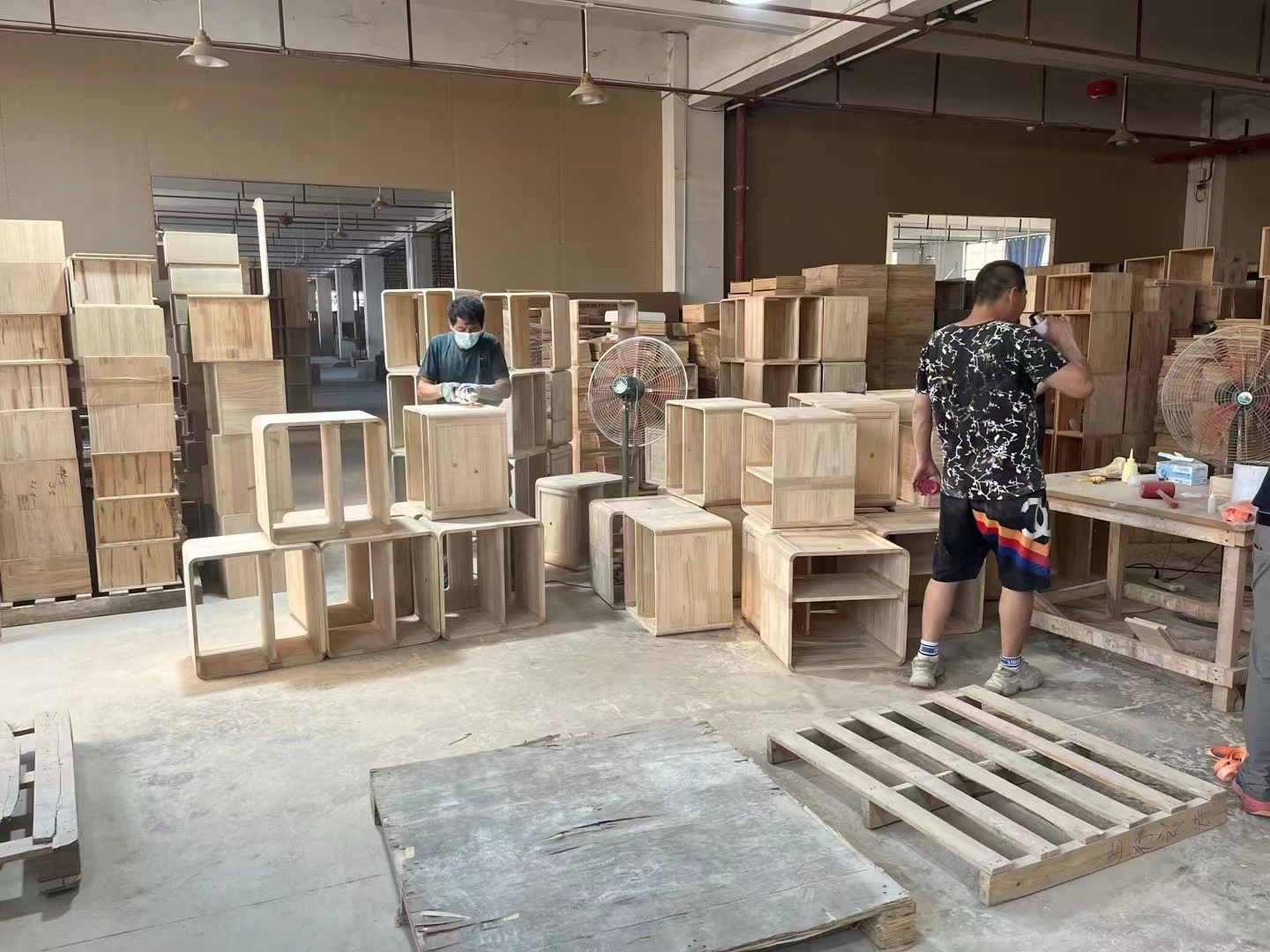
Not Sure What MOQ Fits Your Project?
MOQ requirements vary depending on design complexity, materials, and smart functions.
Download our buyer guide to understand typical OEM and ODM order quantities before sourcing from China.
Why Smart Nightstands Usually Require Higher MOQs
A traditional bedside table mainly involves woodworking and hardware.
A smart bedside table introduces additional suppliers and processes.
For example:
Wireless charging modules
LED systems
Power adapters
Electronic components
Factories often need to purchase these components in minimum quantities.
For that reason, smart bedside tables usually require higher MOQs than standard products.
OEM vs ODM Lead Time Comparison
Lead time is often just as important as cost.
A product that reaches the market two months earlier can sometimes generate more profit than a product that saves a few dollars per unit.
The main reason ODM projects move faster is simple.
The development work has already been done.
The product already exists.
With OEM, the factory must first create and verify the product before production begins.
Typical timelines look like this:
Stage | OEM | ODM |
Sample Development | 7–15 Days | 3–7 Days |
Sample Approval | 3–10 Days | 1–3 Days |
Production | 30–45 Days | 20–35 Days |
Total Project Cycle | 45–90 Days | 30–60 Days |
For seasonal promotions, hotel openings, or urgent launches, this difference can be significant.
Who Owns the Product?
This is one of the most overlooked questions in furniture sourcing.
Many buyers focus on price, MOQ, and lead time while forgetting to ask who actually owns the design.
The answer can have long-term consequences.
Item | OEM | ODM |
Product Design | Buyer | Factory |
CAD Drawings | Buyer | Factory |
Product Structure | Buyer | Factory |
Exclusive Rights | Higher | Limited |
In most OEM projects, buyers have greater control over the final product.
With ODM, the factory usually owns the original platform.
That means similar products may be sold to other customers.
For some businesses this is not a concern.
For others, particularly furniture brands and distributors, exclusivity can become a major competitive advantage.
Why Exclusivity Matters
For some buyers, exclusivity is not important.
For others, it can significantly affect profitability.
If competitors can purchase the same bedside table from multiple suppliers, price competition becomes difficult to avoid.
Exclusive products often allow brands and distributors to maintain healthier margins and stronger market positioning.
Looking at Risk from a Different Perspective
Buyers often ask:
"Which option is safer?"
The answer depends on what kind of risk you are trying to avoid.
With OEM, the biggest risks are usually:
Higher investment
Longer timelines
More development work
With ODM, the biggest risks are usually:
Limited exclusivity
Greater price competition
Easier product replication
Neither option is risk-free.
They simply involve different types of risk.
Key Takeaways
By now, the pattern should be clear.
OEM generally makes more sense when buyers need:
Greater customization
Smart function flexibility
Product exclusivity
Long-term differentiation
ODM usually makes more sense when buyers need:
Faster market entry
Lower investment
Smaller initial orders
Reduced development risk
The interesting thing is that two buyers sourcing the same bedside table may reach completely different conclusions.
A hotel supplier may choose OEM.
A first-time importer may choose ODM.
A smart furniture distributor may start with ODM and later move to OEM.
The right answer depends less on the product itself and more on the business strategy behind it.
Which Buyers Should Choose OEM Bedside Tables?
One of the biggest misconceptions in furniture sourcing is that OEM is only for large buyers.
That is not necessarily true.
The real question is not how big your company is.
The real question is what kind of business you want to build.
Some buyers only need a product they can start selling next month.
Others are trying to create something competitors cannot easily copy.
Those two goals usually lead to very different sourcing decisions.
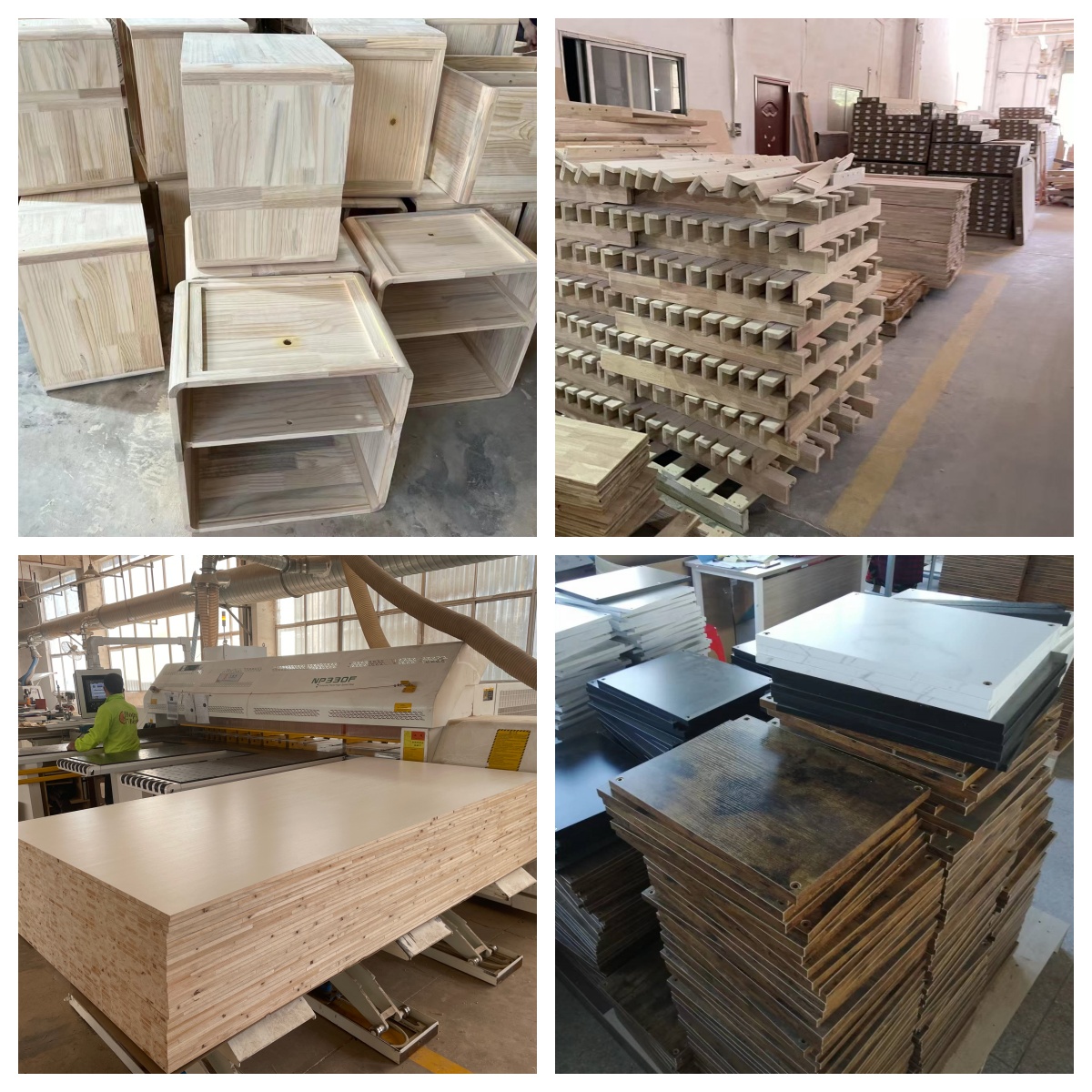
Furniture Brands
Furniture brands are often the most natural fit for OEM.
Think about it this way.
If your customers can find exactly the same bedside table from five different suppliers, what makes your brand special?
Eventually the conversation becomes about price.
Most brands want to avoid that situation.
They want products that look different, feel different, or offer something competitors do not have.
That might mean:
Unique design details
Special materials
Exclusive finishes
Customized smart functions
Coordinated bedroom collections
In these situations, OEM is not simply about manufacturing.
It is about creating a product identity.
Hotel Furniture Suppliers
Hotel projects are another area where OEM often makes more sense.
Most hotels are not shopping for furniture the way consumers do.
They are usually working from room layouts, design concepts, and project specifications.
A few centimeters can matter.
The position of a charging port can matter.
The finish color can matter.
Even drawer configurations can matter.
A bedside table that works perfectly in one hotel may be completely unsuitable for another.
That is why many hotel projects require custom development rather than off-the-shelf products.
Smart Furniture Distributors
This is probably one of the fastest-growing buyer groups in recent years.
Many distributors are no longer looking for traditional bedside tables.
They are looking for products that offer additional functions.
For example:
Wireless charging
LED lighting
Bluetooth speakers
Fingerprint locks
Hidden safes
At first, many distributors try to find an existing ODM product that already includes these features.
Sometimes they succeed.
More often, they discover that the available products do not fully match what their customers want.
Maybe the charging area is too small.
Maybe the lighting system is too basic.
Maybe the lock function is missing.
This is often the point where an ODM search turns into an OEM project.
Experienced Importers
Buyers who have been in the furniture business for several years often reach a similar conclusion.
Competing on price alone becomes harder every year.
There will almost always be another supplier offering a similar product for a lower price.
OEM gives these buyers a different path.
Instead of competing only on price, they can compete through product design, functionality, quality, and brand value.
That is one reason why many mature importers gradually increase the percentage of OEM products in their collections.
Which Buyers Should Choose ODM Bedside Tables?
ODM sometimes gets treated as the "entry-level" option.
That is not really fair.
For many businesses, ODM is actually the smartest decision.
Not every project needs a completely new product.
Not every market demands exclusivity.
Sometimes speed is more important.
Sometimes reducing risk is more important.
ODM works particularly well in those situations.
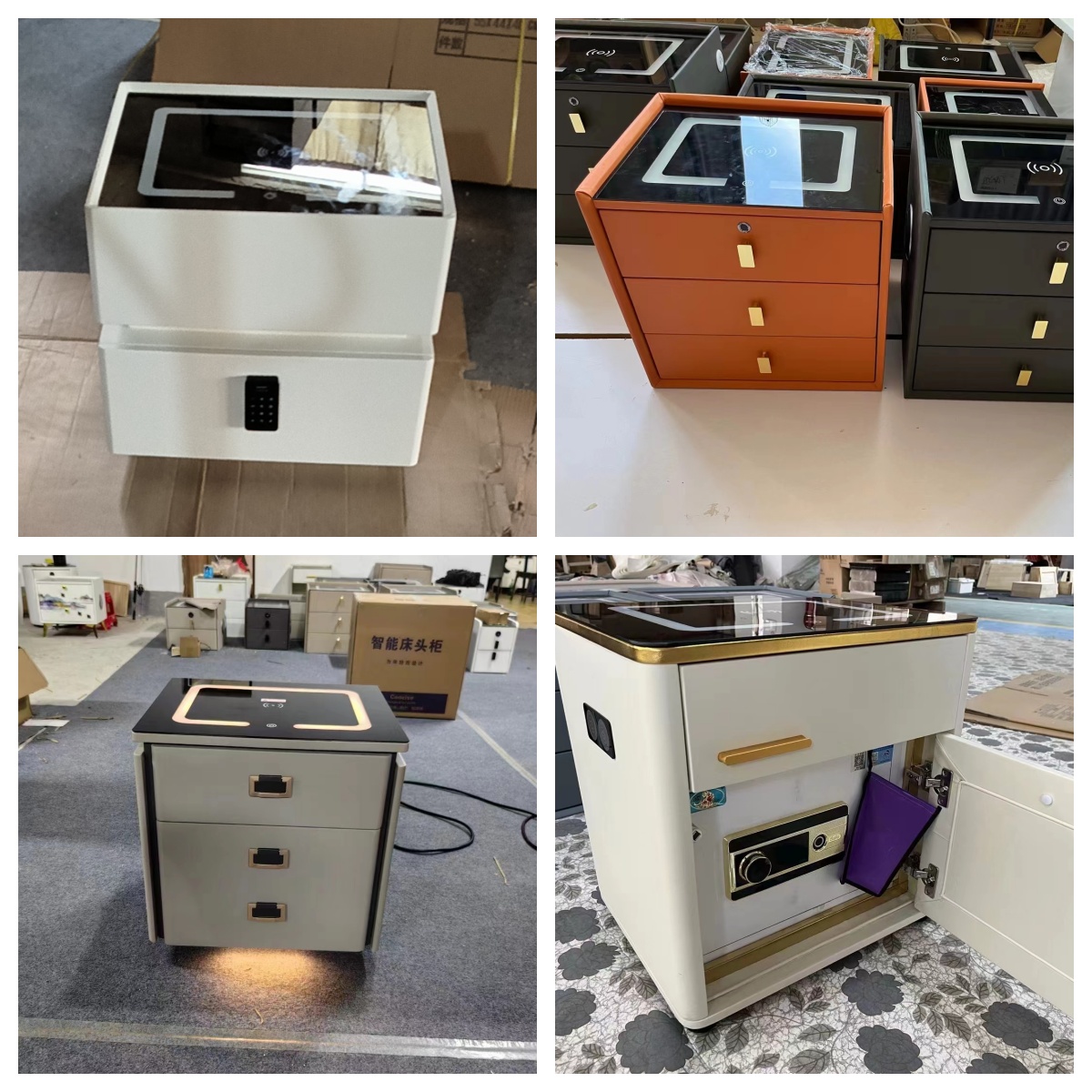
First-Time Importers
For someone entering the bedside table business for the first time, ODM often makes a lot of sense.
The buyer may still be learning:
Customer preferences
Pricing expectations
Shipping costs
Market demand
Developing a completely new product before understanding these factors can be risky.
Starting with an existing product often provides a safer learning curve.
Many successful importers began exactly this way.
Online Retailers
Online sellers often operate in a different environment.
They move quickly.
Customer preferences change quickly.
Product trends change quickly.
Waiting several months to develop a custom bedside table is not always practical.
In many cases, speed matters more than exclusivity.
ODM allows retailers to test products, gather customer feedback, and react to market changes much faster.
Small and Regional Distributors
Not every distributor needs a proprietary product line.
Many distributors build their business around:
Local market knowledge
Customer relationships
Inventory availability
Service quality
For these businesses, an existing product with customized branding may be more than sufficient.
The lower investment and faster launch often outweigh the benefits of a completely custom design.
Market Testing Projects
This is probably one of the best uses of ODM.
Imagine entering a new country or launching a new furniture category.
You may have confidence in the opportunity, but you still do not know exactly how customers will respond.
ODM allows you to test the market without committing significant resources to product development.
If demand grows, OEM can always come later.
Why Many Smart Nightstand Projects Eventually Move from ODM to OEM
This pattern appears again and again.
A buyer starts with ODM.
The product sells well.
Customers begin providing feedback.
The buyer starts noticing opportunities for improvement.
Maybe customers want faster charging.
Maybe they want additional USB ports.
Maybe they want a cleaner design.
Maybe they want better storage.
At first, these seem like small requests.
But over time, they begin pushing beyond the limits of the existing design.
The buyer gradually realizes that improving the product requires more than simple modifications.
That is usually when OEM enters the conversation.
In many cases, ODM helps a company enter the market.
OEM helps it stand out.
Common OEM Mistakes Buyers Should Avoid
Most OEM problems do not happen because factories cannot manufacture the product.
They happen because the project starts with unrealistic expectations.
Fortunately, many of these mistakes are avoidable.
Mistake #1: Developing a Product Before Understanding the Market
It is easy to fall in love with an idea.
It is much harder to determine whether customers actually want it.
Some buyers spend months developing a product only to discover that demand is weaker than expected.
The safest approach is often to validate the market first.
Mistake #2: Constantly Changing the Requirements
Every OEM project reaches a point where decisions need to be finalized.
Some buyers continue making changes after samples have already been developed.
A new dimension here.
A different charging system there.
A new hardware option later.
Each adjustment may seem minor, but together they can delay the project significantly.
Clear specifications save time and money.
Mistake #3: Assuming Smart Functions Are Simple
Wireless charging sounds simple.
So does LED lighting.
So does a fingerprint lock.
Until the engineering work begins.
Many smart functions affect the internal structure of the product, power management, and testing requirements.
The more functions involved, the more important proper development planning becomes.
Mistake #4: Choosing a Supplier Based Only on Price
Most experienced buyers eventually learn this lesson.
The cheapest quotation is not always the lowest-cost solution.
A factory with stronger engineering support and better project management may save far more money in the long run than a slightly lower unit price.
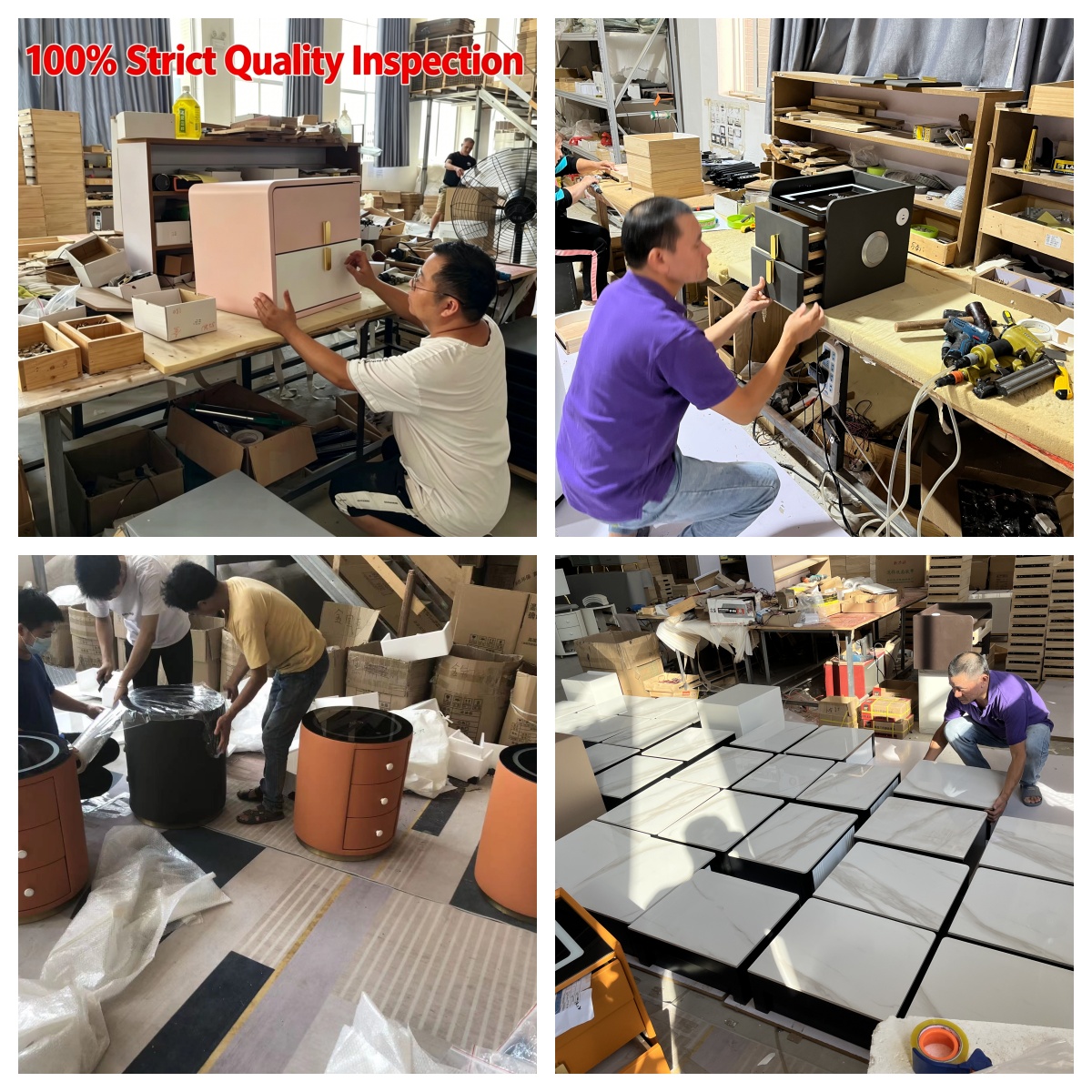
Real OEM Project Example
A distributor wanted to launch a premium smart bedside table collection.
The target market expected more than basic furniture.
The product needed:
Wireless charging
LED lighting
USB and Type-C charging
Fingerprint lock
The team initially searched for existing products that could be modified.
After reviewing multiple options, they discovered that no available model met all of their requirements.
The project eventually moved to OEM development.
The process took longer, but the result was a product designed specifically for the target market rather than a compromise based on existing products.
Real ODM Project Example
One distributor entering the bedroom furniture category decided not to invest in a completely new product immediately.
Instead, the company selected an existing upholstered nightstand, customized the fabric and packaging, and launched a small trial order.
After the first season produced positive sales results, the company began discussing OEM upgrades for the next collection.
A Common Distributor Journey
Many distributors begin with an ODM bedside table because it offers lower risk and faster market entry.
After one or two years of sales, customer feedback often reveals opportunities for improvement.
At that stage, the distributor may introduce upgraded features such as wireless charging, LED lighting, or custom finishes through an OEM project.
This gradual transition from ODM to OEM is one of the most common growth paths in the furniture industry.
Have a Similar OEM Requirement?
Whether you need custom dimensions, upholstery, wireless charging, or fingerprint lock integration, our engineering team can help evaluate your project.
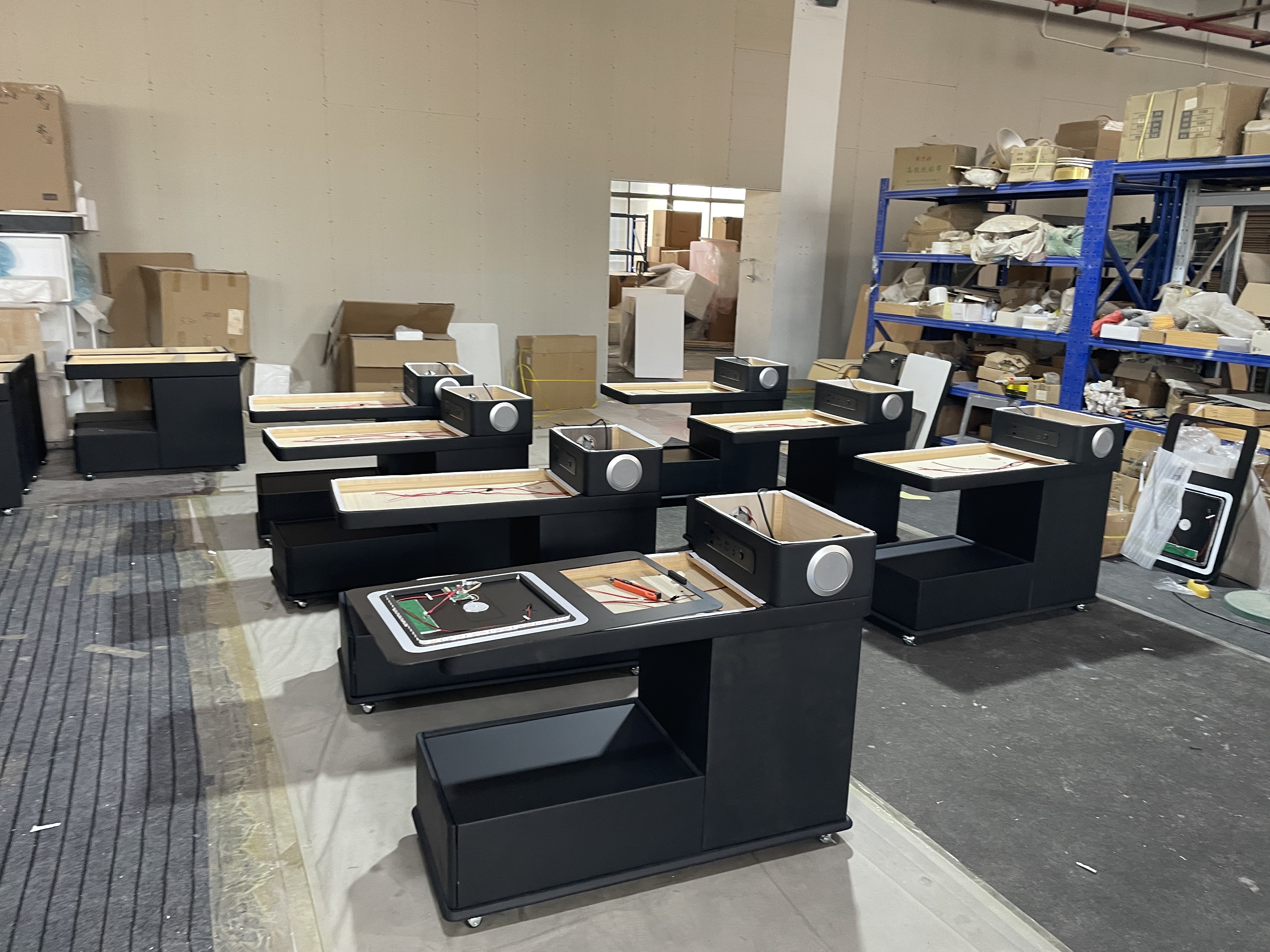
What Separates Successful OEM Projects from Unsuccessful Ones?
After looking at enough furniture projects, a pattern becomes obvious.
The most successful buyers do not start by asking:
"What product should we build?"
They start by asking:
"What does the market actually need?"
That difference may sound small, but it changes everything.
The strongest OEM projects are usually built on:
Clear market demand
Well-defined customer needs
Real competitive advantages
Practical specifications
Whether you choose OEM or ODM, the goal should never be customization for the sake of customization.
The goal is to create a bedside table that solves a problem, meets a demand, or offers something customers cannot easily find elsewhere.
The ODM → ODM+ → OEM Path That Many Importers Follow
One thing many buyers do not realize is that OEM and ODM are not always two completely separate choices.
In fact, a lot of successful bedside table importers move through both stages as their business grows.
Very few companies start by investing heavily in a fully customized product.
Most prefer to learn the market first.
They want to understand what customers like, which designs sell best, and what features people are actually willing to pay for.
Only after they gain that experience do they begin investing in more customized products.
Over the years, this pattern has become quite common in the furniture industry.
Step 1: Start with ODM
For many buyers, the first goal is simple.
Get a product into the market.
At this stage, speed is usually more important than exclusivity.
The buyer may choose an existing bedside table and make a few basic changes such as:
Different finishes
Different fabrics
Custom packaging
Private-label branding
This approach keeps costs relatively low and allows the buyer to focus on sales rather than product development.
More importantly, it provides real market feedback.
Customers often tell you far more than market research ever can.
Step 2: Improve What Already Works
After a product has been selling for a while, buyers usually start noticing patterns.
Customers ask for improvements.
Sales teams identify common objections.
Retailers provide suggestions.
At this point, many buyers are no longer satisfied with simply changing colors or packaging.
They may want:
Better materials
Improved hardware
More storage space
Additional charging functions
Better packaging
The product is still based on an existing design, but it starts becoming more unique.
Many people refer to this stage as ODM+, even though different factories may use different terms.
It is often one of the most practical stages because buyers can improve competitiveness without taking on the full cost of OEM development.
Step 3: Move to OEM
Eventually, some buyers reach a point where the existing platform can no longer support their ideas.
Maybe they want a completely different structure.
Maybe they want a smart bedside table with a unique combination of functions.
Maybe they want a product that competitors cannot easily source from another supplier.
This is usually when OEM becomes the logical next step.
At this stage, the goal is no longer just selling furniture.
The goal is building something that belongs to your business.
That is why many established brands and distributors eventually move toward OEM, even if they originally started with ODM.
A Quick Recommendation
Choose OEM if:
✓ You want exclusive products
✓ You need custom dimensions
✓ You plan to build a furniture brand
✓ You require smart furniture customization
Choose ODM if:
✓ You need faster market entry
✓ You want lower MOQ
✓ You are testing a new market
✓ Existing products already meet your requirements
What Many Successful Buyers Actually Do
Interestingly, many experienced importers do not see OEM and ODM as competitors.
They use both.
They may launch with ODM, learn from the market, and gradually introduce OEM products as demand becomes more predictable.
This approach often reduces risk while still creating a path toward long-term differentiation.
How to Evaluate a Bedside Table Manufacturer
Choosing between OEM and ODM is only part of the decision.
The manufacturer itself matters just as much.
A strong supplier can make a complex project feel straightforward.
A weak supplier can turn even a simple project into a headache.
When evaluating a factory, there are several areas worth paying attention to.
Looking for an Experienced OEM & ODM Manufacturer?
Discuss your product requirements, target market, quantities, and customization needs with our team.
Can They Actually Develop Products?
Many factories offer OEM services.
Not all factories have strong product development capabilities.
If your project requires customization, ask questions such as:
Can they create technical drawings?
Can they modify structures?
Have they completed similar projects before?
How do they manage sample development?
Their answers will often tell you more than a product catalog ever will.
Do They Understand Smart Furniture?
This becomes increasingly important as smart bedside tables become more popular.
A factory may be very good at traditional furniture manufacturing but have limited experience with:
Wireless charging
USB and Type-C systems
LED lighting
Bluetooth speakers
Fingerprint locks
The more functions involved, the more valuable relevant experience becomes.
How Do They Handle Samples?
Samples reveal a lot about a supplier.
A professional factory should have a clear process for:
Sample development
Revisions
Testing
Approval
A well-managed sample stage often leads to a smoother production stage.
Can They Support Export Projects?
Manufacturing is only one part of the process.
International buyers also need support with:
Packaging
Container loading
Shipping coordination
Export documentation
Factories with export experience usually make these steps much easier.
One Question Worth Asking Before You Make a Decision
Before comparing quotations, MOQs, or lead times, ask yourself one question:
What am I actually trying to achieve?
If the goal is to enter the market quickly, ODM may be the smartest option.
If the goal is to build a product that competitors cannot easily copy, OEM may be worth the additional investment.
The answer often becomes clearer once you focus on your business objectives rather than manufacturing terminology.
Final Thoughts
Whether you start with ODM or move directly into OEM, the most important decision is not the manufacturing model itself.
It is choosing a product strategy that fits your market, your customers, and your long-term business goals.
The companies that succeed are rarely the ones with the most products.
They are usually the ones with the clearest strategy.
Whether you are sourcing from China for the first time or expanding an existing furniture business, understanding the differences between OEM and ODM can help you make better long-term decisions.
Need Help Choosing OEM or ODM?
Every project is different.
Some buyers benefit from fast-launch ODM solutions.
Others need a fully customized OEM bedside table with smart furniture functions.
Tell us about your project and we will recommend the most suitable approach.
What We Can Support
✓ OEM Bedside Table Development
✓ ODM & Private Label Programs
✓ Smart Nightstand Engineering
✓ Hotel Furniture Projects
✓ Custom Packaging
✓ Low-Risk Market Testing
👉 Get OEM Quote Within 24 Hours
Frequently Asked Questions
Is OEM always more expensive than ODM?
Not necessarily.
OEM usually requires more upfront investment because of development and sampling costs. However, many buyers find that exclusive products provide better margins over the long term.
Can I customize an ODM bedside table?
Yes.
Most manufacturers allow changes to finishes, fabrics, handles, packaging, and branding. The extent of customization depends on the factory and the product structure.
Which option usually has a lower MOQ?
ODM.
Because the product already exists, factories can often accept smaller quantities than they would for a fully customized OEM project.
Is OEM the better choice for hotel furniture?
In many cases, yes.
Hotels often require custom dimensions, finishes, and functions that cannot be achieved through standard products alone.
Is OEM necessary for smart bedside tables?
Not always.
Simple smart functions may be possible through ODM. However, projects involving multiple integrated functions often require OEM development.
Can I start with ODM and move to OEM later?
Absolutely.
Many successful furniture importers follow this exact path. They use ODM to validate demand and OEM to create stronger differentiation once the market has been proven.
Who usually owns the design in an OEM project?
Typically the buyer.
However, ownership terms should always be discussed and confirmed before development begins.
What is the most common OEM mistake?
Starting development before understanding market demand.
The strongest OEM projects are usually based on clear customer needs rather than assumptions.
Can I Add Wireless Charging to an Existing ODM Bedside Table?
In some cases, yes.
However, it depends on how the bedside table was originally designed. Adding wireless charging is not always as simple as installing a charging module.
The thickness of the top panel, internal structure, power supply location, and wiring layout can all affect charging performance.
If wireless charging is an important selling point for your project, it is best to discuss it with the manufacturer before confirming the product.
Which Option Is Usually Better for Furniture Brands?
Most furniture brands eventually move toward OEM products.
The main reason is differentiation.
If the same bedside table is available from multiple suppliers, competition often comes down to price. OEM allows brands to develop products that are more difficult for competitors to copy.
That does not mean every brand should start with OEM. Many brands begin with ODM products and move into OEM development after identifying what customers respond to best.
Is OEM Only for Large Companies?
Not necessarily.
Some buyers assume OEM is only suitable for large importers or major furniture brands, but that is not always the case.
What matters more is whether there is a clear business reason for developing a custom product.
A smaller company with a strong product concept may benefit from OEM, while a larger company may still choose ODM if speed is the priority.
How Long Does OEM Sample Development Usually Take?
There is no single answer because every project is different.
For a relatively simple bedside table, a sample may be completed within one or two weeks.
Projects involving custom structures, upholstery details, wireless charging, LED lighting, or other smart functions typically require more time.
Most buyers should allow extra time for revisions and testing before approving mass production.
Can I Sell an ODM Bedside Table Under My Own Brand?
Yes.
This is actually one of the most common reasons buyers choose ODM.
Most manufacturers can apply your logo, customize packaging, and adjust product finishes to match your brand image.
For companies entering a new market, ODM often provides a faster and lower-risk way to launch a private-label furniture collection.
Which Option Usually Offers Better Profit Margins?
There is no universal answer, but OEM products often provide stronger long-term margins.
Because the product is customized, direct price comparison becomes more difficult. Buyers are not competing against dozens of suppliers selling the exact same item.
ODM products may be less expensive to launch, but they often face greater competition once they reach the market.
How Do I Know Whether My Project Needs OEM or ODM?
A simple way to think about it is to look at how many changes you need.
If an existing bedside table already meets most of your requirements and only needs minor adjustments, ODM is usually the more practical choice.
If you require custom dimensions, exclusive designs, special materials, or multiple smart functions, OEM is often the better route.
When buyers are unsure, many start with an ODM product, gather market feedback, and then decide whether a future OEM version makes sense.
What Is the Biggest Difference Between OEM and ODM?
The biggest difference is where the product starts.
With OEM, the project starts with the buyer's requirements.
With ODM, the project starts with an existing factory design.
That single difference affects almost everything else, including customization, lead time, MOQ, development costs, and product exclusivity.
This is why two buyers sourcing similar bedside tables may choose completely different manufacturing strategies depending on their business goals.