Bedside Table Materials Guide: How OEM Buyers Choose the Right Material
Choosing the right material is one of the most important decisions in an OEM bedside table project. Learn how solid wood, MDF, plywood, veneer and smart furniture structures affect cost, durability and product positioning.

Bedside Table Materials Guide: How OEM Buyers Choose the Right Material
Introduction
When a customer sends us a bedside table design for quotation, the first discussion is usually not only about the appearance.
The questions often come quickly:
What material should we use?
Will this structure be strong enough?
Can we keep the target price?
Is this material suitable for our market?
A bedside table may look simple, but the material choice behind it affects almost every stage of the project.
The same design can have completely different solutions depending on where it will be sold.
For example, a hotel group may prefer a plywood and veneer structure because hundreds of rooms require consistent appearance and long-term durability.
An online furniture brand may choose MDF because production stability and price control are more important.
A premium brand may prefer solid wood because the material itself creates product value.
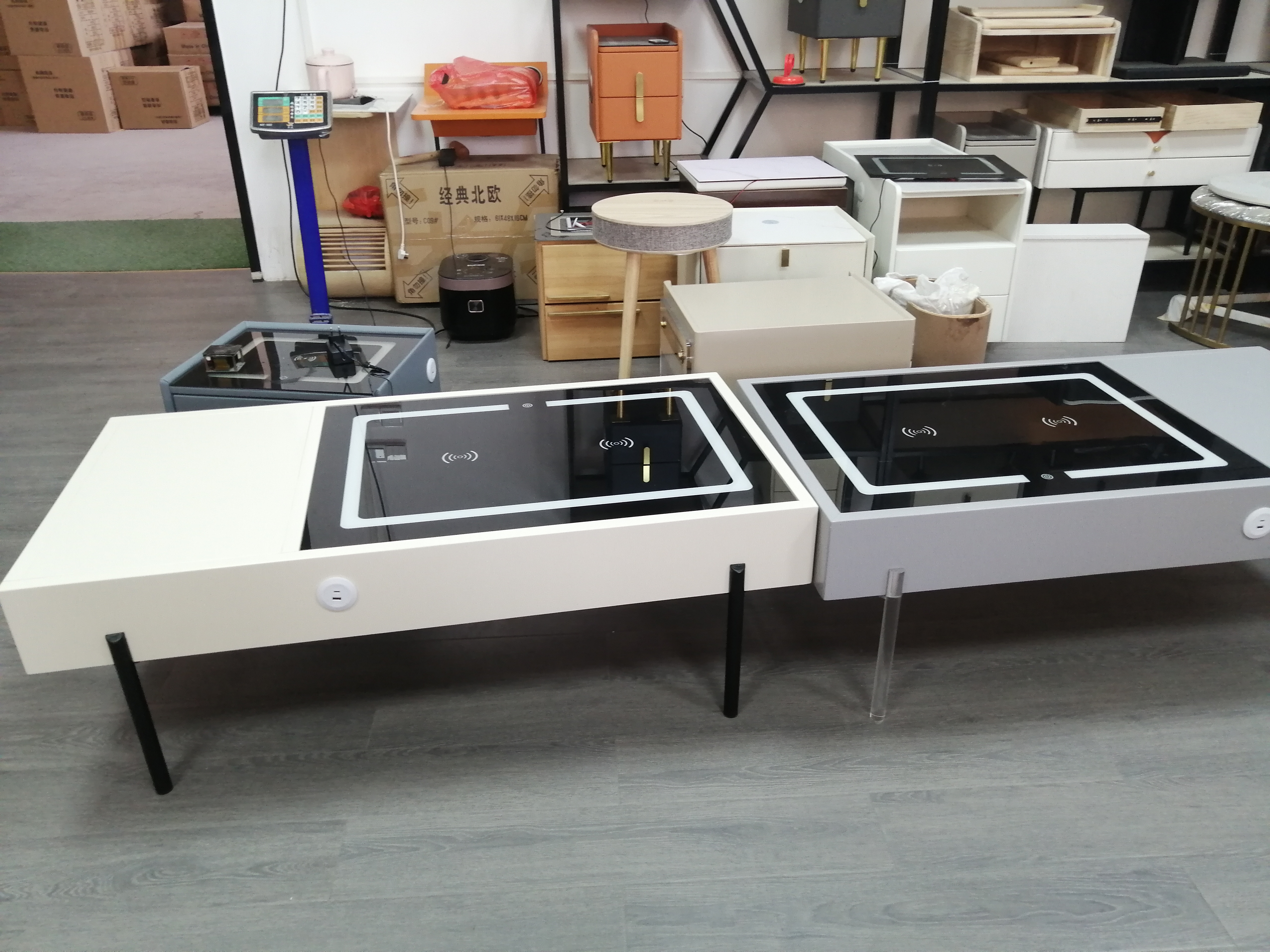
For smart bedside tables, the material decision becomes even more complicated because the structure must also support wireless charging, LED systems, USB ports and other electronic components.
After working with different bedside table OEM projects, we have found that the most suitable material is usually not the most expensive one. It is the material that fits the product position, market expectation and production plan.
Choosing the right packaging solution starts with choosing an experienced OEM partner. A professional bedside table manufacturer should understand not only production, but also product development, quality control, packaging and international shipping requirements.
👉 OEM bedside table manufacturer in China
Common Materials Used for OEM Bedside Tables
There are several common material solutions used in bedside table production.
Material | Common Application | Why It Is Used |
Solid Wood | Premium furniture | Natural texture and higher product value |
MDF | Retail and e-commerce products | Stable production and cost control |
Plywood | Hotels and commercial projects | Strong structure and durability |
Veneer | Hospitality and premium furniture | Real wood appearance with consistency |
Glass / Metal / Acrylic | Modern designs | Decorative and functional elements |
Stone / Marble | Luxury projects | High-end visual effect |
In real projects, manufacturers often combine different materials.
For example:
MDF structure + painted finish
Plywood structure + wood veneer
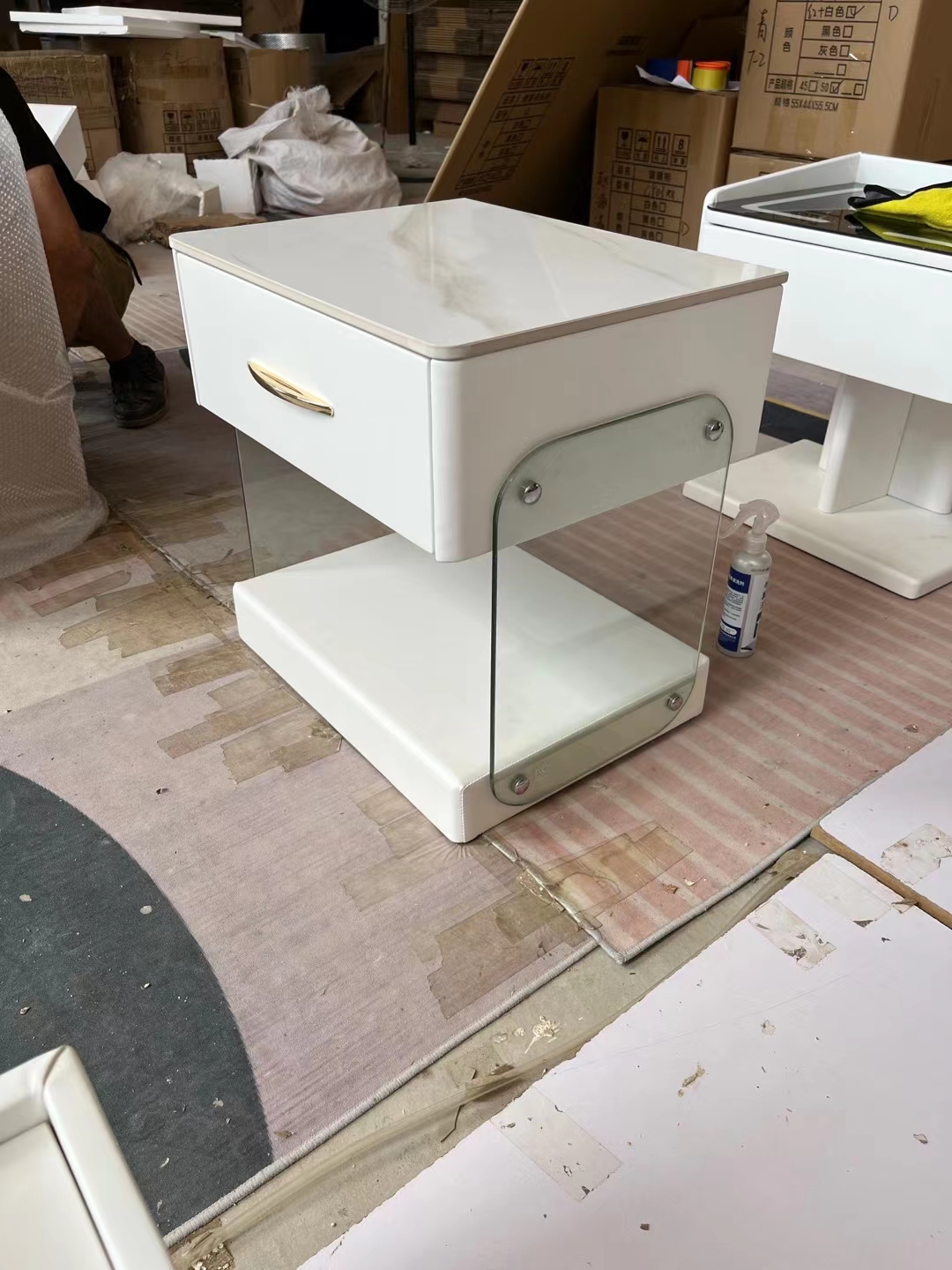
Wood structure + tempered glass top
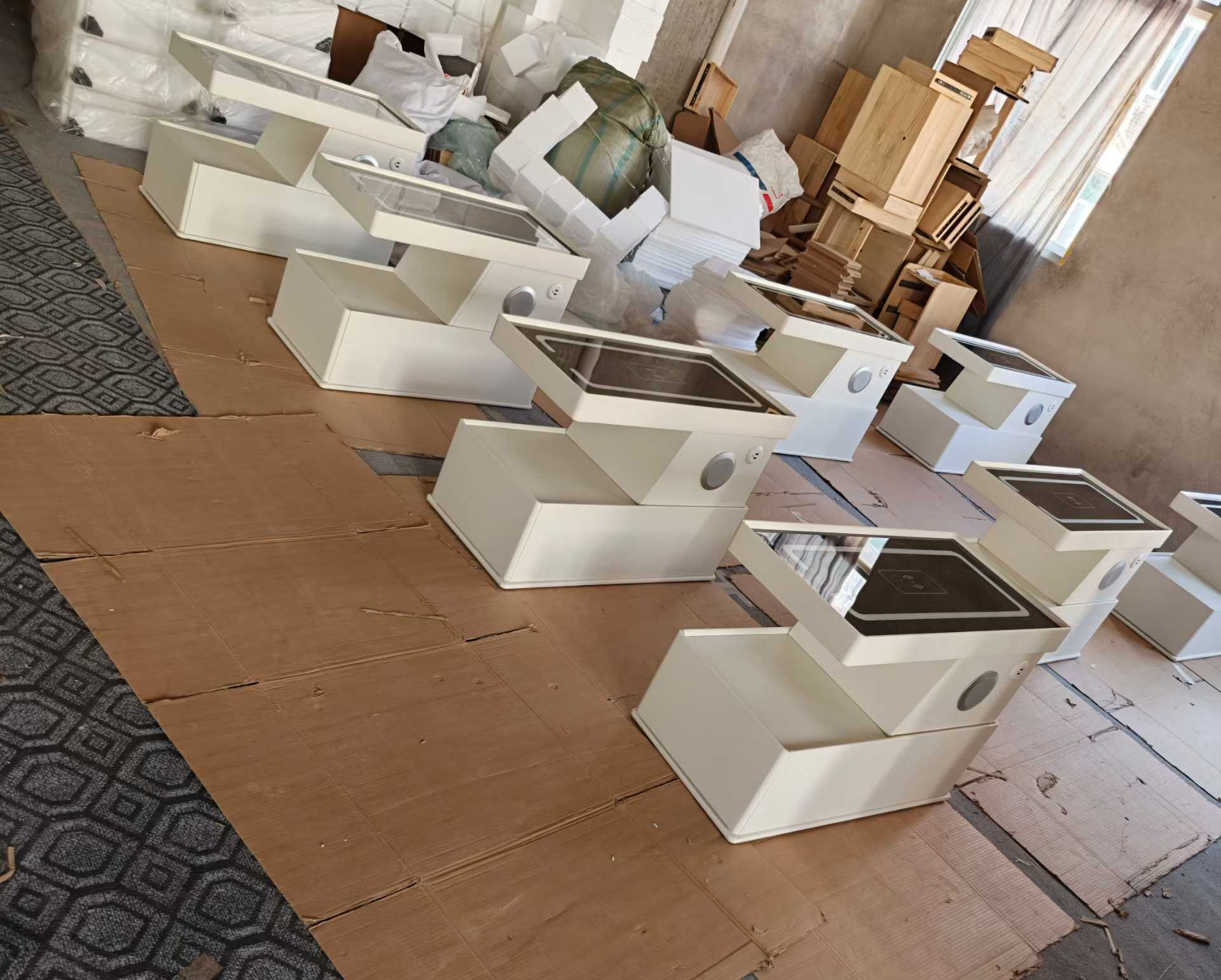
Engineered wood structure + smart electronic system
The final choice depends on the product goal.
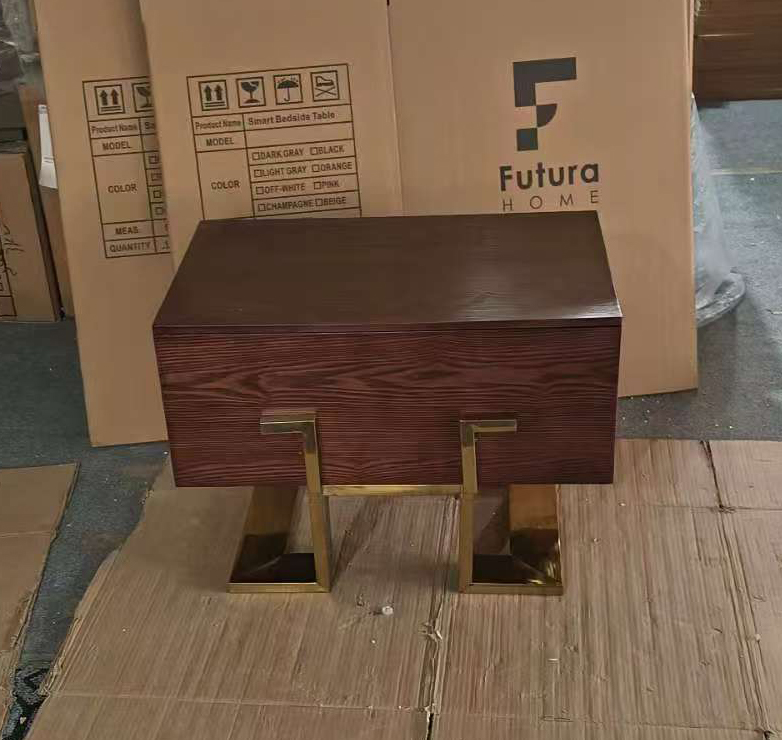
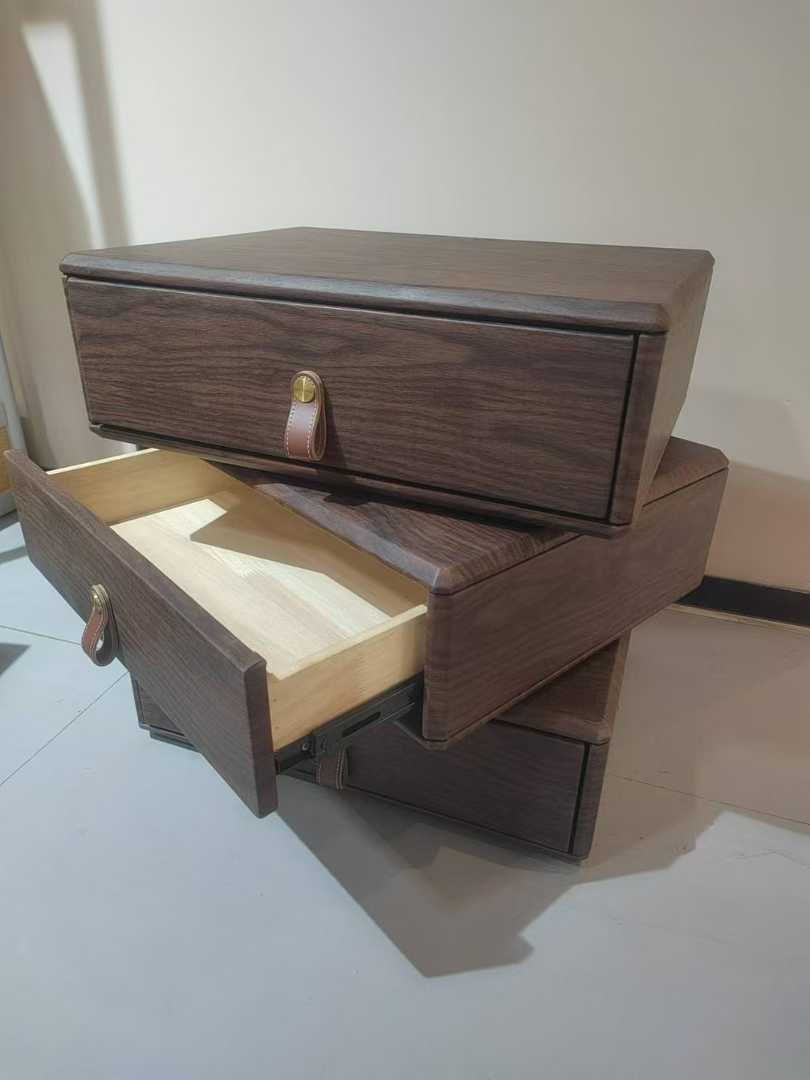
Solid Wood Bedside Tables: For Premium Product Positioning
Solid wood remains one of the most attractive choices for high-end furniture.
The reason is simple: customers can see and feel the difference.
The natural grain and texture create a premium impression that is difficult to fully replace with artificial materials.
Common options include:
Oak
Ash
Rubber wood
Walnut
Where Solid Wood Works Best
Solid wood is commonly selected for:
Luxury bedroom collections
Boutique hotels
Premium residential furniture
For these projects, the material itself becomes part of the selling point.
Customers are not only buying a bedside table. They are buying the feeling of natural material and craftsmanship.
What We Usually Discuss Before Using Solid Wood
In OEM projects, solid wood also brings some challenges.
The cost is higher.
The production process requires more attention.
Natural wood also means some variation between pieces.
For example, two drawers made from the same wood species may not have exactly the same grain pattern.
This is acceptable for premium furniture, but it may not be suitable for every large-volume project.
Therefore, before choosing solid wood, we usually discuss:
Target selling price
Expected quantity
Required consistency
Final market positioning
MDF Bedside Tables: A Practical Choice for Volume Production
MDF is one of the most widely used materials in modern furniture manufacturing.
It is especially common in:
Online furniture products
Retail collections
Large quantity orders
Why MDF Is Popular
One reason is production stability.
MDF provides a smooth surface, which makes it suitable for:
Painted finishes
Lacquer finishes
Modern furniture styles
For brands that need hundreds or thousands of units with similar appearance, MDF is often a practical choice.
It also helps control production costs.
For many commercial projects, keeping the right balance between appearance and price is more important than selecting the most expensive material.
Is MDF a Low-End Material?
This is a question we often receive.
The answer depends on how the product is designed and manufactured.
A well-made MDF bedside table can have:
Good appearance
Stable structure
Reliable daily performance
The final quality depends on factors such as:
Board density
Thickness
Surface treatment
Hardware selection
Manufacturing process
The material itself does not decide whether the product is good or bad.
Packaging is only one part of a successful OEM project. Before shipment, buyers also need to understand how suppliers control product quality during manufacturing, inspection and final checking.
👉 bedside table quality control process
Plywood Bedside Tables: Suitable for Hotels and Commercial Projects
Plywood is often selected for projects where strength is a priority.
Compared with some other engineered materials, plywood provides good structural stability.
Why Hotels Often Choose Plywood
Hotel furniture has different requirements from home furniture.
A bedside table in a hotel room may be used every day by different guests.
The product needs to handle:
Frequent opening and closing
Regular cleaning
Long service periods
For this reason, hotel purchasing teams often pay more attention to structure and durability.
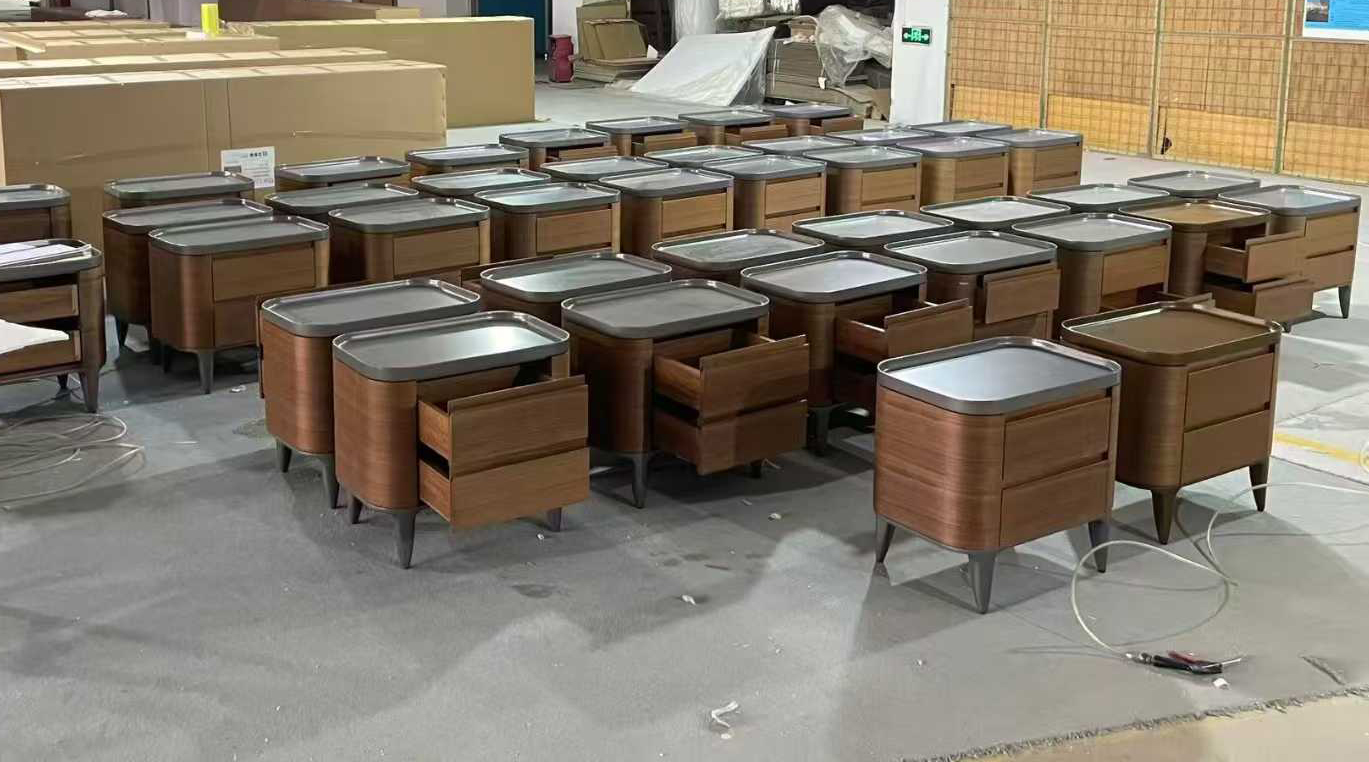
Plywood is commonly used together with veneer finishes to achieve:
Strong internal structure
Premium external appearance
Wood Veneer Bedside Tables: Balancing Appearance and Cost
Wood veneer is one of the most common solutions in hospitality furniture.
It provides the appearance of natural wood while allowing better production consistency.
Why Veneer Is Widely Used in Projects
Imagine a hotel project requiring 300 or 500 bedside tables.
The buyer usually wants every room to have the same visual effect.
Using veneer can help achieve:
Consistent appearance
Controlled cost
Efficient production
This is why many commercial furniture projects choose veneer instead of full solid wood.
Veneer is not simply a cheaper option. In many cases, it is the more practical engineering solution.
For customized bedside table projects, packaging requirements should be confirmed together with product specifications, production plans and quality standards. A clear OEM workflow helps reduce unexpected issues during mass production.
👉 OEM bedside table order process

Upholstery Materials: Creating a Softer Furniture Style
Some bedside tables include upholstered surfaces to create a different visual experience.
Common options include:
PU leather
Genuine leather
Velvet
Fabric
These designs are often used in:
Boutique hotels
Luxury bedrooms
Designer furniture collections
What Matters for Upholstery Selection
Appearance is only one part of the decision.
Projects also need to consider:
Wear resistance
Cleaning requirements
Color stability
A beautiful material that cannot handle daily use may create problems after installation.
Glass, Metal and Acrylic in Modern Bedside Tables
Modern furniture designs increasingly combine different materials.
Glass, metal and acrylic are usually used as design elements.
Glass
Tempered glass is commonly used for:
Table tops
Decorative panels
Modern luxury designs
It creates a clean and premium appearance.
Metal
Metal components are used for:
Legs
Frames
Decorative details
They are common in modern and industrial-style furniture.
Acrylic
Acrylic is sometimes used for:
Transparent panels
Decorative features
Unique design effects
These materials help brands create products that look different from standard furniture.
Stone and Marble Elements for Luxury Projects
Some premium bedside tables include stone or marble surfaces.
These materials are mainly used when the product needs a stronger luxury appearance.
Typical applications:
High-end residential projects
Luxury hotels
However, they require additional planning because of:
Weight
Packaging
Transportation
A beautiful material still needs to be practical for export.
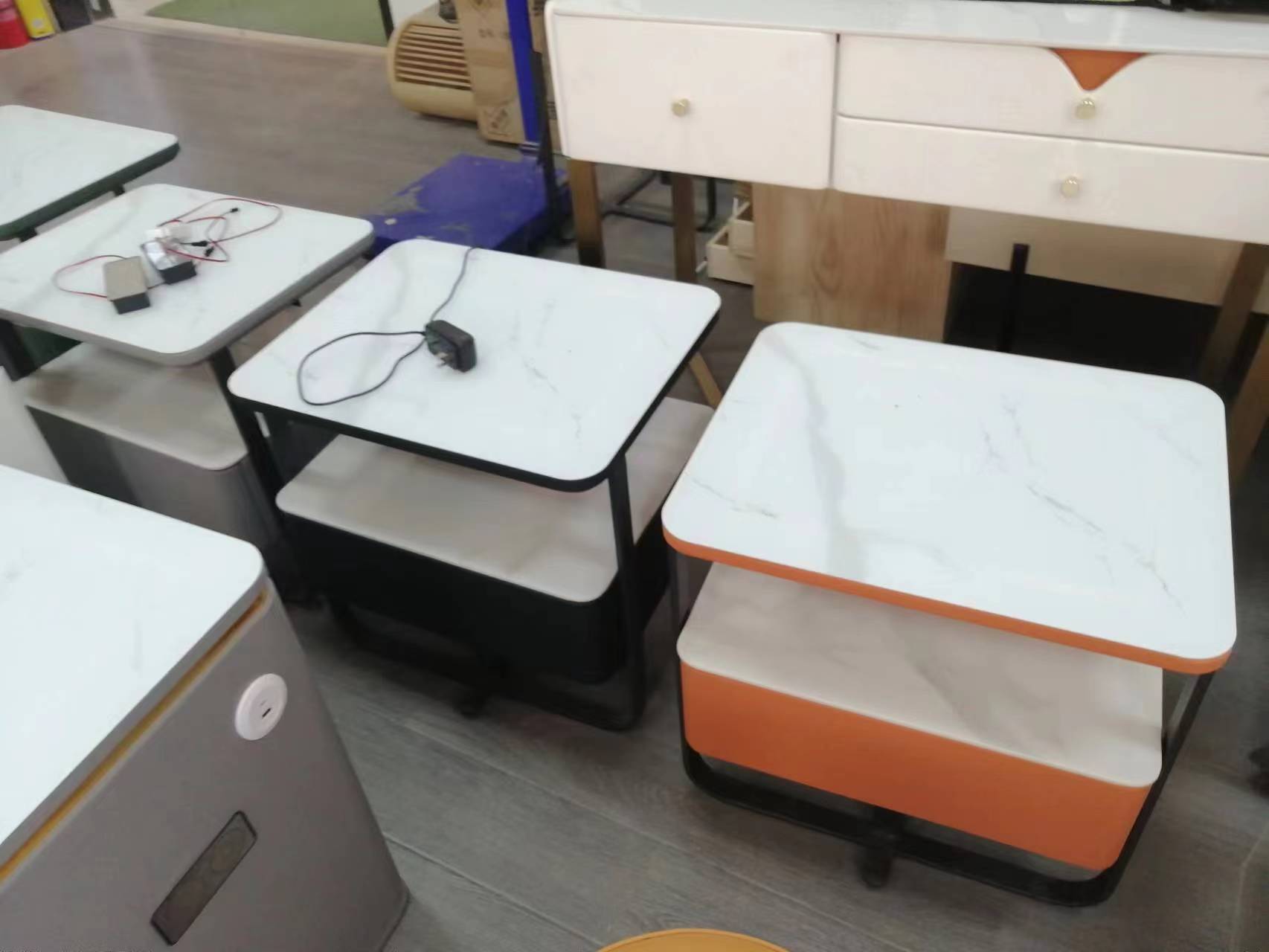
Material Selection for Smart Nightstands
Smart bedside tables require a different approach.
The product is not only furniture. It is also an electronic device integrated into furniture.
Typical functions include:
Wireless charging
USB charging
Type-C charging
LED lighting
Bluetooth speakers
Fingerprint locks
For smart bedside tables with wireless charging, LED lighting, USB ports or smart locks, packaging needs to protect both furniture structures and electronic systems. Buyers should evaluate suppliers with experience in smart furniture OEM projects.
👉 smart nightstand OEM solutions

Why Structure Design Matters
During development, the material structure needs to leave enough space for:
Wiring
Controllers
Charging modules
Electronic components
For example, a wireless charging module needs proper positioning and thickness control.
This is why smart nightstand projects usually require earlier cooperation between furniture engineers and electronic suppliers.
How Different Projects Usually Select Materials
Different customers usually have different priorities.
Luxury Furniture Brands
Focus:
Premium appearance
Material story
Customer perception
Common choice:
Solid wood
Veneer
Hotels
Focus:
Durability
Consistency
Maintenance
Common choice:
Plywood
Veneer
Retail and E-commerce Brands
Focus:
Competitive pricing
Stable production
Market acceptance
Common choice:
MDF
Veneer
Smart Furniture Brands
Focus:
Structure
Function integration
Electronic installation
Common choice:
MDF or plywood structure with customized design
Reduce Shipping Risks Before Production
Every bedside table project has different packaging requirements. Send us your product details, and we can recommend suitable protection methods based on your design and shipping destination.
👉 Get Packaging Recommendation

Why Similar Bedside Tables Have Different Prices
Many customers are surprised when two similar-looking bedside tables receive very different quotations.
The reason is usually hidden in the details.
The difference may come from:
Material grade
Board thickness
Surface finishing
Hardware selection
Production process
For example, two bedside tables may both have a wood appearance, but one may use MDF with a printed finish while another uses real wood veneer.
The appearance may be similar, but the production cost and product value are different.
What Should Be Confirmed Before Starting Production?
Before mass production, it is important to confirm:
Material Structure
Core material
Thickness
Surface material
Product Requirements
Target market
Quantity
Price position
Functions
Export Requirements
Moisture control
Packaging
Transportation conditions
Clear communication at the beginning helps avoid changes later.
Packaging is also closely related to importing costs, customs planning and total landed cost. Buyers who are sourcing bedside tables internationally should consider the complete import process before placing large orders.
👉 import bedside tables from China guide
Material Quality Depends on Manufacturing Control
Choosing a good material is only the first step.
The final product quality also depends on how the factory manages production.
Important steps include:
Incoming material checking
Moisture inspection
Surface inspection
Assembly checking
Final inspection
Different materials require different production experience.
A supplier who understands both materials and manufacturing processes can help reduce quality risks during mass production.
Get OEM Packaging Solution
Need a bedside table supplier who understands export packaging requirements? Share your project details and we will suggest a suitable packaging solution.
Conclusion
There is no universal “best” material for bedside tables.
Solid wood can create premium value.
MDF provides production efficiency.
Plywood offers strong structural performance.
Veneer balances appearance and cost.
Glass, metal and stone create additional design possibilities.
For smart bedside tables, material selection also needs to consider electronic integration.
The best material choice is the one that matches the product positioning, market requirements and long-term business plan.
Start Your OEM Bedside Table Project
Tell us your product requirements, target market and order quantity. Our team will help evaluate product design, packaging method and export solution.
👉 Send Your Project Requirements
Frequently Asked Questions About Bedside Table Materials
1. What material is usually used for OEM bedside tables?
There is no fixed material used for every OEM bedside table project.
In actual production, the material is usually selected according to the product position.
For example:
MDF is commonly used for retail and online furniture because it offers good cost control and stable production.
Plywood is often selected for hotels and commercial projects because the structure needs to handle frequent daily use.
Solid wood is preferred for premium collections where natural texture is part of the product value.
Veneer is widely used when customers want a real wood appearance with better consistency.
For most OEM projects, the material decision is made together with the design, target price and expected market.
2. Which material is better for bedside tables, MDF or solid wood?
MDF and solid wood are used for different types of projects.
Solid wood is usually selected when the product needs:
Natural wood grain
Premium feeling
Higher-end positioning
MDF is often chosen when the project needs:
Stable production
Controlled cost
Consistent appearance across many units
For example, a luxury furniture brand may prefer solid wood, while an online retailer ordering hundreds of pieces may find MDF more practical.
Neither material is automatically better. The right choice depends on the business goal of the product.
3. Is MDF strong enough for bedside tables?
Yes, MDF can be suitable for bedside tables when the structure and production process are properly designed.
Many commercial furniture products use MDF because it provides:
Smooth surface for painting
Stable dimensions
Good production efficiency
The performance depends on factors such as:
Board density
Thickness
Edge treatment
Hardware selection
Overall structure
A well-designed MDF bedside table can meet the requirements of many retail and residential projects.
4. Why do some hotels choose plywood bedside tables?
Hotels usually have higher requirements for furniture durability.
A bedside table in a hotel room may be used by many guests over several years, so the structure needs to remain stable.
Plywood is often selected because it provides:
Strong internal structure
Good screw holding performance
Reliable long-term use
In many hotel projects, plywood is combined with veneer finishes to achieve both durability and a premium appearance.
5. Is veneer a cheap alternative to solid wood?
No.
Veneer is not simply a lower-cost replacement for solid wood.
In many commercial furniture projects, veneer is selected because it solves a different requirement.
For example, a hotel may need hundreds of bedside tables with the same wood appearance across all rooms.
Using veneer can provide:
Natural wood appearance
Better consistency
More controlled production
Many premium furniture projects use veneer because it offers a practical balance between appearance and manufacturing efficiency.
6. What is the difference between plywood and MDF bedside tables?
The main difference is the structure and typical application.
MDF is often selected for:
Painted furniture
Modern designs
Cost-sensitive projects
Plywood is often selected for:
Hotels
Commercial furniture
Projects requiring stronger structure
For example, a bedside table with a painted finish for online sales may use MDF, while a hotel project may prefer plywood because of daily usage requirements.
7. What material is recommended for hotel bedside tables?
For hotel projects, plywood and veneer are common choices.
The reason is that hotels usually care about:
Durability
Appearance consistency
Easy maintenance
A hotel may need hundreds of bedside tables installed in different rooms. The material needs to maintain a consistent look while handling long-term use.
The final solution depends on the hotel grade, budget and design requirements.
8. What material should I choose for a luxury bedside table?
Luxury bedside tables usually focus on the overall experience, not only the material.
Common choices include:
Solid wood
Veneer
Leather upholstery
Glass or stone elements
Solid wood creates a natural and premium feeling.
Veneer can achieve a refined wood appearance with better consistency for larger projects.
Many luxury designs also combine different materials to create a unique appearance.
Developing a Smart Nightstand Project?
Smart furniture requires both manufacturing experience and electronic protection planning. Our team can help evaluate packaging requirements for wireless charging, LED and smart functions.
👉 Discuss Smart Furniture Project
9. Can MDF or plywood be used for smart bedside tables?
Yes.
Smart bedside tables usually require a suitable structure rather than one specific material.
Common solutions include:
MDF structure
Plywood structure
Veneer finish
Glass top
The important point is that the structure needs enough space for:
Wireless charging modules
USB and Type-C ports
LED wiring
Control components
For smart furniture projects, material selection needs to be considered together with electronic design.
10. How does material affect the price of a bedside table?
Material is one of the factors that creates price differences between similar-looking products.
The final quotation may be affected by:
Material grade
Board thickness
Surface finish
Production process
Hardware
For example, two bedside tables may both have a wood appearance, but one uses MDF with a decorative finish while another uses real wood veneer.
The appearance may look similar, but the manufacturing cost can be very different.
11. Should buyers always choose the most expensive material?
Not necessarily.
A higher material cost does not always mean a better product for the target market.
For example:
A hotel project may need durability more than expensive wood.
An online seller may need price competitiveness.
A luxury brand may need premium material value.
The material should support the product strategy rather than only increase the cost.
12. What materials are suitable for export bedside tables?
Export furniture needs to consider more than appearance.
Important factors include:
Structural stability
Moisture control
Packaging requirements
Transportation conditions
Different materials may be suitable for different markets.
For example:
MDF is often used for cost-controlled products.
Plywood is common for stronger structures.
Veneer is used for premium appearance.
Solid wood is suitable for higher-end collections.
13. Can different materials be combined in one bedside table?
Yes.
Many modern bedside tables use mixed material structures.
Common combinations include:
MDF + veneer
Plywood + veneer
Wood + tempered glass
Wood structure + metal legs
Furniture structure + electronic components
Combining materials allows manufacturers to achieve a better balance between design, cost and performance.
14. What should I confirm before choosing materials for an OEM project?
Before production, it is better to confirm:
Core material
Thickness
Surface finish
Hardware
Functions
Target market
Order quantity
Clear material specifications help avoid changes after production starts.
15. How can I check if a supplier uses the correct material?
Before mass production, buyers usually confirm through:
Material samples
Production samples
Factory inspection
Quality checks
Important points include:
Board type
Thickness
Surface quality
Construction details
A clear material specification before production helps both sides avoid misunderstandings.
16. What material is best for a smart nightstand with wireless charging and LED lighting?
For smart nightstands, the material choice needs to support both furniture structure and electronic installation.
Common solutions include:
MDF or plywood structure
Veneer or painted surface
Tempered glass elements
The most important part is usually the internal design.
The factory needs to reserve space for:
Charging modules
Wiring
Controllers
LED components
A smart nightstand is not only a furniture product; it is a combination of furniture manufacturing and electronic integration.
Start Your OEM Bedside Table Project
Whether you are sourcing standard bedside tables, smart nightstands or custom hotel furniture, our team can help with product development, sampling, production and export logistics.
✔ OEM & ODM Service
✔ Smart Nightstand Solutions
✔ Low MOQ Available
✔ Sample Support
✔ Export Experience
👉 Get OEM Quote Within 24 Hours