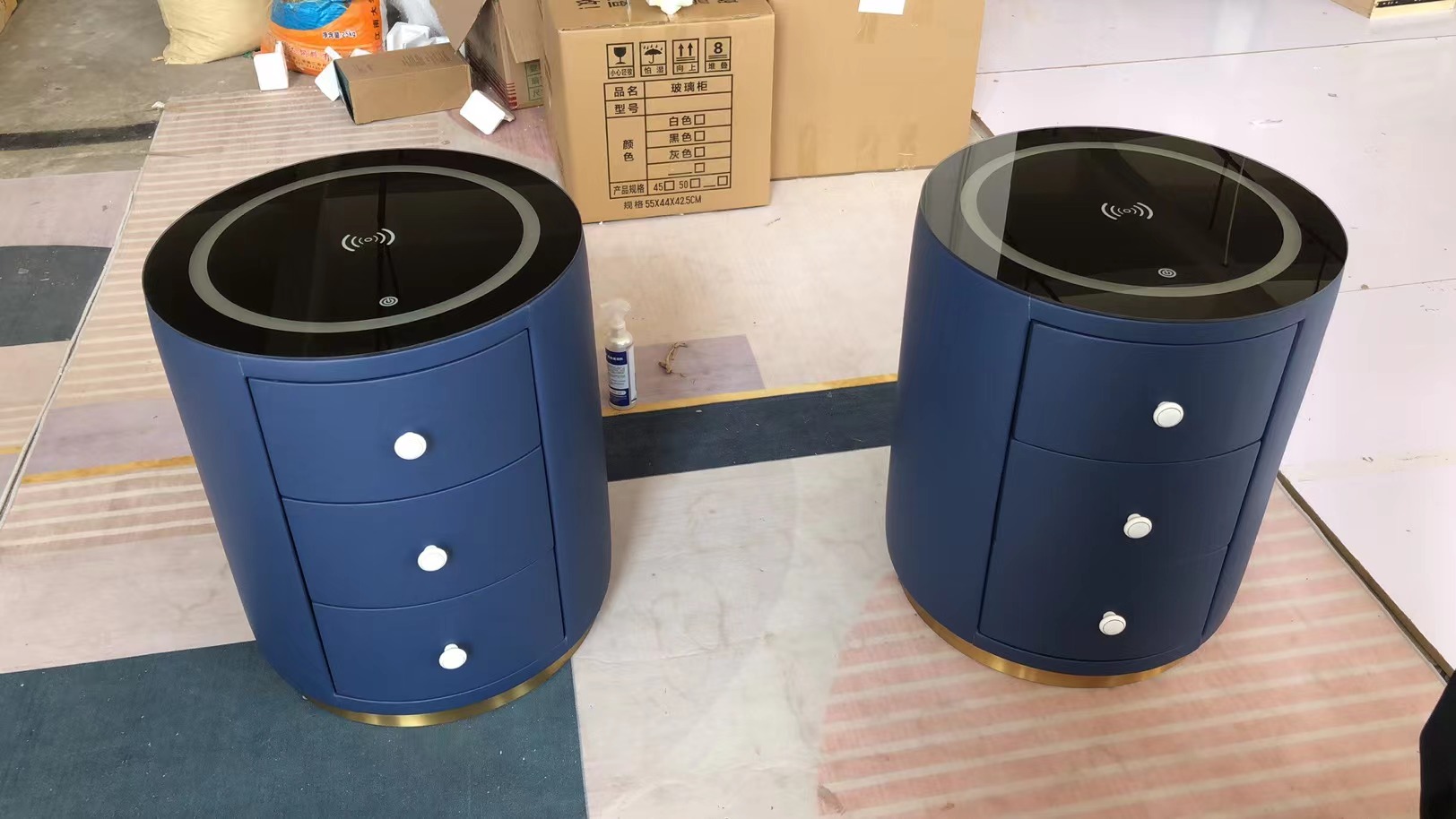
Are Smart Nightstands Safe? Key Electrical Risks Buyers Should Know
Are smart nightstands safe for homes, hotels, and commercial projects? Learn about electrical safety risks, overheating prevention, wireless charging protection, certification requirements, and key quality checks buyers should consider before sourcing smart furniture.
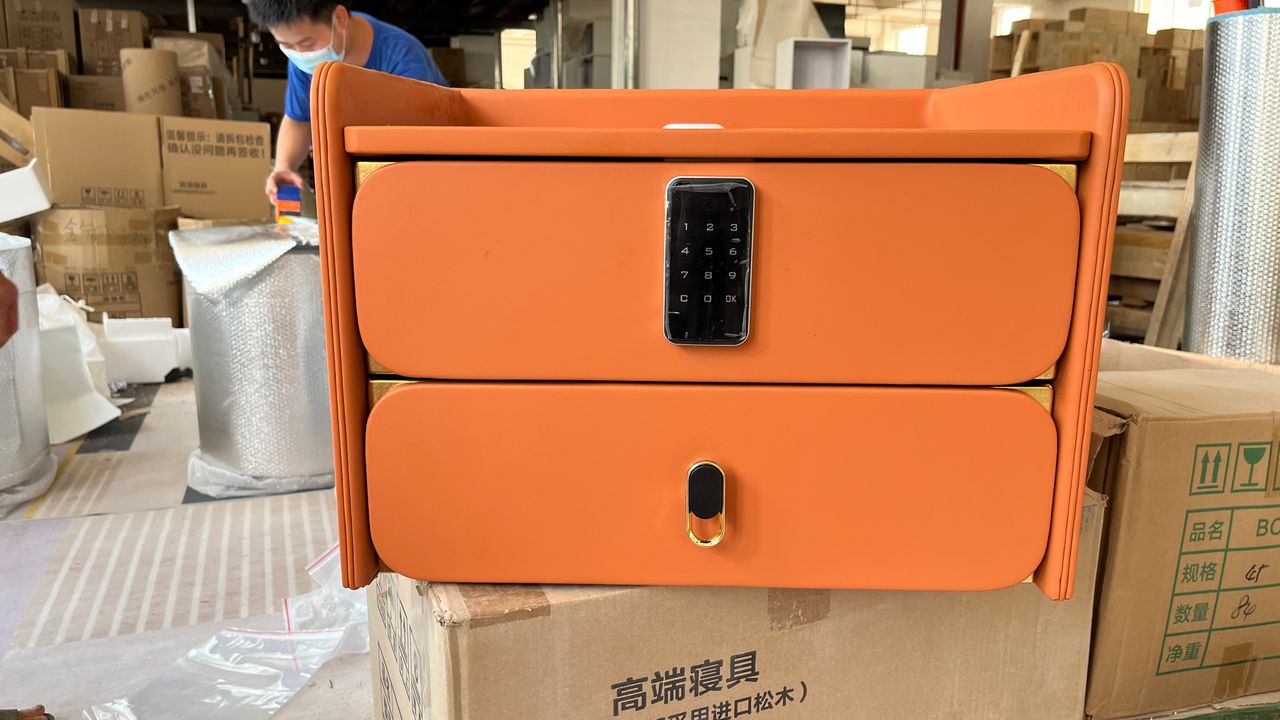
Looking for OEM bedside table supplier? Visit our complete OEM guide:
👉 What Is a Smart Nightstand System? Engineering, Standards & OEM Sourcing Guide (2026)
Ganzhou Hebai Wood Products Co., Ltd is a trusted bedside table manufacturer in China specializing in OEM smart and upholstered nightstands.
👉Looking for OEM bedroom furniture? Explore our Smart bedside table.
Smart Nightstand Electrical Safety Guide: Power Protection, Finished-Product Testing & OEM Compliance Standards (2026)
Published: June 5, 2026
Last Updated: June 15, 2026
Reviewed by Hebai Furniture Product Development & Export Team
Excerpt
A practical B2B guide to smart nightstand electrical safety, covering adapter selection, wiring layout, overcurrent and short-circuit protection, thermal control, EMC/EMI, full-load aging tests, CE, FCC, RoHS, IEC 62368-1, and OEM sourcing recommendations for hotels, distributors, retailers, e-commerce sellers, and smart furniture brands.
A smart nightstand is no longer only a wooden bedside cabinet.
Once wireless charging, USB-C ports, LED lighting, Bluetooth audio, touch control, password locks, fingerprint locks, or sensors are added, the product becomes a furniture-electronics hybrid. That changes how buyers should evaluate it.
For a traditional bedside table, buyers usually check material, finish, drawer structure, packaging, price, and lead time. For a smart nightstand, those points still matter, but they are not enough.
A serious buyer also needs to ask:
What adapter is used?
Is the wiring fixed safely inside the cabinet?
Does the product have overcurrent and short-circuit protection?
Does the wireless charging area become too warm during use?
Can USB-C, LED lighting, Bluetooth audio, wireless charging, and locks work together without interference?
Can the supplier show finished-product test videos or QC records?
If one module fails after shipment, can it be replaced?
This guide is not a general electrical safety article. It focuses on a very specific situation: what happens when charging modules, LED drivers, audio boards, touch panels, and lock systems are installed inside a bedside cabinet.
A module that works well on a test bench may behave differently after it is placed under glass, fixed inside a wooden structure, connected with other electronics, and shipped in export packaging.
That is why smart nightstand electrical safety should be checked at finished-product level, not only module level.
Quick Answer
Smart nightstand electrical safety should be evaluated as a complete furniture-electronics system, not by checking only one wireless charging or USB module.
For B2B buyers, the most important checks are adapter quality, wiring layout, overcurrent protection, short-circuit protection, thermal control, EMC/EMI performance, and full-load aging tests.
Wireless charging, USB-C ports, LED lighting, Bluetooth audio, touch panels, password locks, and fingerprint locks should be tested together under full-load conditions.
CE, FCC, RoHS, IEC 62368-1, and Low Voltage Directive requirements may be relevant depending on target market, voltage range, product configuration, and electronic modules used. IEC 62368-1:2023 is a product safety standard that classifies energy sources and prescribes safeguards to reduce risks such as pain, injury, and fire-related property damage in AV/ICT-type equipment.
For hotels, distributors, retailers, and e-commerce sellers, electrical safety documentation helps reduce after-sales risk, product returns, and buyer uncertainty.
Request a Smart Nightstand Electrical Safety Checklist
Before ordering smart nightstand samples, ask the supplier for:
Adapter specifications
Wiring layout
Overcurrent protection details
Short-circuit protection details
Full-load testing method
Temperature test records
EMC/EMI consideration
Compliance documents if available
Replacement module options
Suggested inquiry message:
👉 “Please send your smart nightstand electrical safety checklist, including adapter information, overcurrent protection, short-circuit protection, full-load aging test, temperature test, wiring safety, and CE/FCC/RoHS documentation if available.”
1. Why Electrical Safety Matters After Electronics Are Built Into Furniture
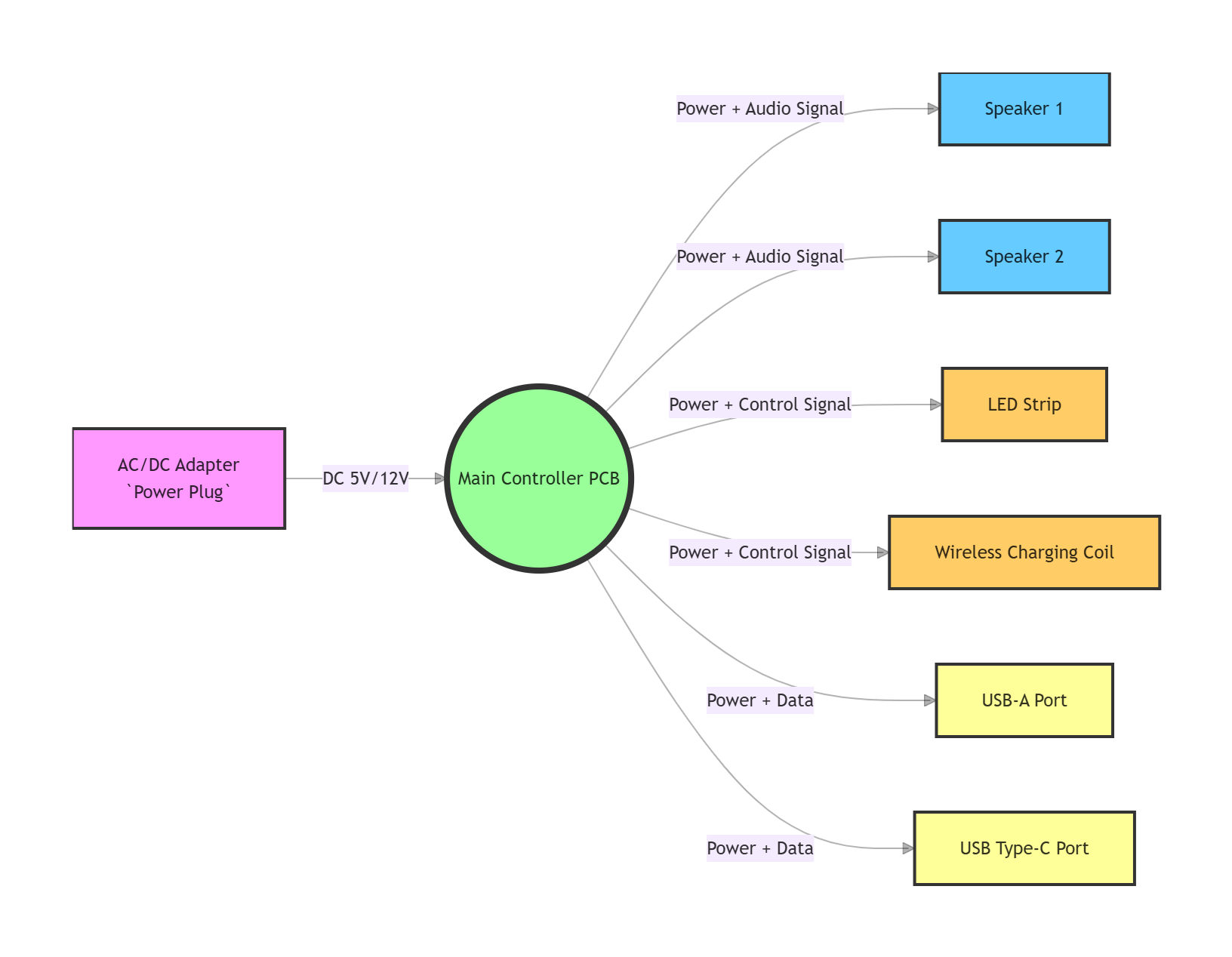
A smart nightstand usually combines several small electronic modules inside a compact furniture body.
Common modules include:
Wireless charging module
USB-A / USB-C charging ports
LED lighting system
Touch control panel
Bluetooth speaker module
Password lock
Fingerprint lock
Power adapter and internal wiring
Each module may look simple when tested alone. But inside a finished smart bedside table, these modules share space, power, wiring routes, and sometimes the same adapter.
That is where problems appear.
A wireless charger may work well during a short test, but become warm after long operation. A Bluetooth speaker may sound fine alone, but create buzzing when the wireless charging coil is active. A USB-C port may charge normally, but become unstable when LED lighting, audio, and charging modules operate at the same time.
From a sourcing perspective, electrical safety is not only about avoiding serious accidents. It is also about reducing everyday complaints:
Charging stops unexpectedly
Touch panel becomes unstable
LED light flickers
Bluetooth speaker has noise
Drawer lock loses power
Adapter becomes hot
User manual is unclear
Product receives returns or bad reviews
For B2B buyers, these issues directly affect after-sales cost.
A smart nightstand system should be reviewed as a complete product, not only as a furniture cabinet with several electronic accessories added later.
2. Electrical Safety Is Not Just a Certificate
Many buyers ask first:
“Do you have CE, FCC, or RoHS?”
That question is understandable, especially for export projects. But for smart nightstands, electrical safety should not be reduced to one certificate.
In real production, electrical safety starts from:
adapter selection
internal wiring layout
module matching
connector fixing
heat control
short-circuit protection
finished-product testing
clear user instructions
after-sales replacement plan
A certificate for one adapter or one USB module does not automatically mean every version of a complete smart nightstand is covered. If the product changes adapter, plug type, wireless module, Bluetooth board, LED driver, or power layout, the compliance path should be checked again.
Smart Nightstand Electrical Safety Areas
Safety Area | What It Controls | Why It Matters |
Overcurrent protection | Excessive current | Prevents module damage |
Short-circuit protection | Wiring or connector faults | Reduces shutdown and safety risks |
Thermal protection | Heat from modules | Reduces overheating complaints |
Insulation | Electric shock risk | Protects users |
Adapter safety | Input power stability | Reduces unstable output |
Wiring safety | Internal cable routing | Prevents damage inside cabinet |
EMC / EMI | Electronic interference | Reduces noise and unstable functions |
Aging test | Long operation stability | Checks real-use reliability |
User instructions | Correct operation | Reduces misuse and returns |
A smart nightstand should be tested as a finished product, not only as a group of separate modules.
3. Problems Buyers Usually See After Shipment
Many buyers think electrical safety only means “will it catch fire?”
In real B2B projects, the more common risk is repeated small failure.
A product may not have a dramatic accident, but it may create many small complaints. Those complaints still hurt the buyer.
Common Electrical Risks
Risk | Common Cause | Possible Result |
Overheating | Poor power design / enclosed cavity | User complaints, module failure |
Short circuit | Weak wiring / loose connectors | Power failure, safety risk |
Overcurrent | Overloaded USB or charging module | Module damage |
EMI interference | Wireless charger + audio + LED driver | Buzzing, flicker, unstable function |
Adapter failure | Low-quality adapter | Unstable output or shutdown |
Touch failure | Poor grounding / moisture | User operation issue |
Battery lock failure | No low-battery warning | Lockout complaints |
Poor cable routing | Wire pressed by drawer or panel | Intermittent failure |
Weak connector | Vibration during transport | Loose contact after delivery |
For hotels, distributors, and online sellers, these problems are not small. A few repeated complaints can create returns, negative reviews, or service delays.
That is why electrical safety should be checked before bulk orders, not after the first after-sales problem appears.
For large buyers, the real cost is not only replacing one faulty module. The bigger cost is repeated communication, delayed installation, bad reviews, room maintenance, or distributor claims after delivery.
4. Why Full-System Power Design Matters
This article does not replace a detailed USB-C power architecture guide.
The safety point is simpler:
All electronic modules should be evaluated together because a smart nightstand often shares one internal power environment.
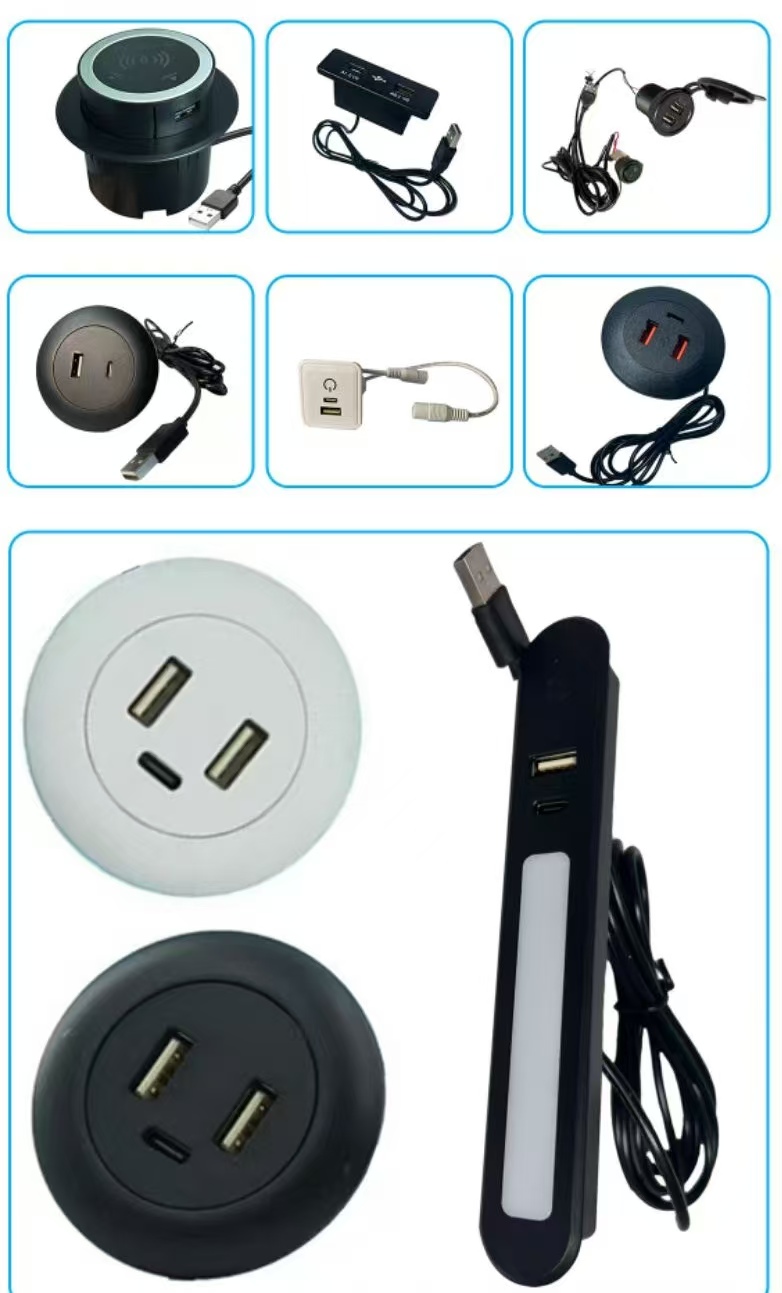
A smart bedside table may include a 12V or 24V adapter, internal power board, USB ports, LED driver, wireless charger, audio amplifier, touch panel, and lock module.
If each module is selected separately without considering the whole system, several issues may appear:
Adapter overload
Voltage drop
Heat buildup
EMI noise
Unstable touch response
Random shutdown
Reduced module lifespan
Safety Concerns by Module
Module | Safety Concern |
Wireless charging | Heat, FOD, coil distance |
USB-C / USB-A | Overcurrent, port durability |
LED lighting | Driver heat, low-voltage stability |
Bluetooth audio | EMI, grounding, noise |
Password lock | Battery, emergency power |
Fingerprint lock | Sensor power, backup unlocking |
Touch panel | Moisture, grounding, insulation |
Power adapter | Output stability, certification path |
The safest smart nightstand is not the one with the most functions. It is the one where the selected functions can work together stably.
For projects with USB-C and fast charging functions, the smart bedside table power system should be reviewed together with the adapter and wiring layout.
👉smart bedside table power system
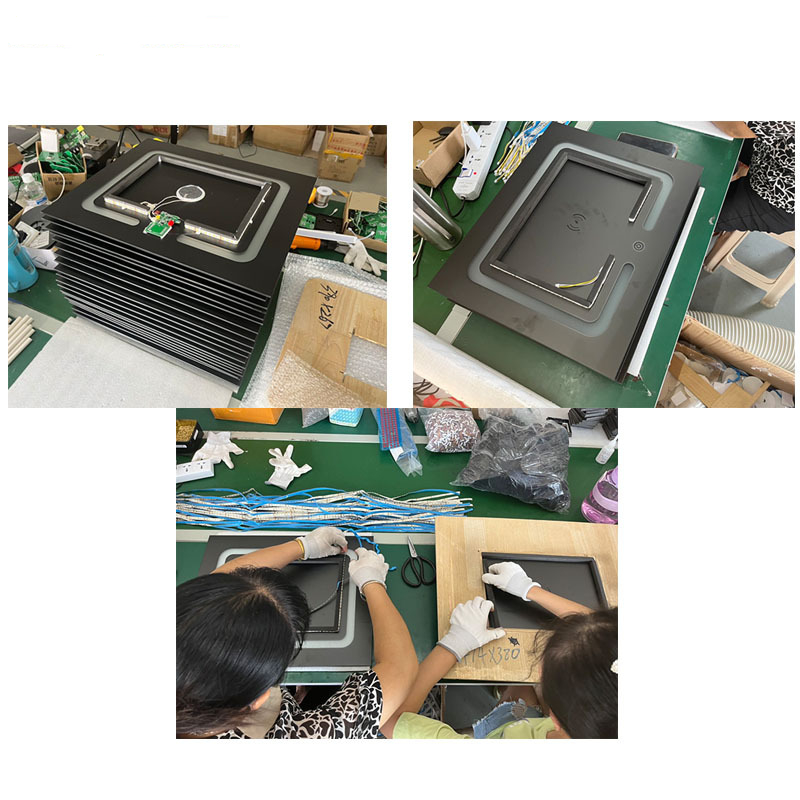
5. Overcurrent and Short-Circuit Protection
Overcurrent protection limits excessive current before it damages USB ports, wireless charging modules, LED drivers, or control boards.
Short-circuit protection helps the system shut down safely when wiring, connectors, or components fail.
In ordinary furniture, these issues do not exist. In smart furniture, they become part of product reliability.
Protection Items Buyers Should Check
Protection Type | Buyer Should Ask |
Overcurrent protection | Is current automatically limited? |
Short-circuit protection | Does the module shut down safely? |
Overload protection | What happens under full USB load? |
Reverse connection protection | Is wiring protected during assembly? |
Fuse / protection IC | Is there module-level protection? |
Port protection | Are USB ports protected from overload? |
Adapter protection | Does the adapter have suitable protection? |
For smart bedside furniture, protection design is more important than simply advertising higher charging power.
A 30W or 45W charging function sounds attractive, but if the adapter, wiring, heat dissipation, and protection design are weak, the higher wattage can create more problems than value.
6. Heat Control: The Most Common Real-World Issue
Heat is one of the most common real-world concerns in smart nightstands.
The reason is simple: electronic modules are installed inside a furniture body, often close to wood panels, drawers, glass tops, foam packaging, or upholstery.
Heat can come from:
Wireless charging coils
USB-C fast charging modules
LED drivers
Bluetooth amplifier boards
Power adapters
Internal power boards
Enclosed cabinet cavities
Heat Sources and Checks
Heat Source | What to Check |
Wireless charger | Surface temperature |
USB-C module | Full-load output temperature |
LED driver | Heat under dimming |
Adapter | Output stability and temperature |
Enclosed cabinet | Ventilation / spacing |
Bluetooth amplifier | Heat and noise under load |
Power board | Stable operation under combined load |
For smart furniture, the question is not only whether one module passes a short test.
The real question is whether the complete nightstand remains stable after wireless charging, USB output, LED lighting, Bluetooth audio, and lock modules operate together for a longer period.
A warm surface is not always a failure. But excessive heat, inconsistent charging, hot adapters, or thermal shutdown are warning signs.
Thermal control is especially important when the product includes a wireless charging nightstand module under glass.
👉wireless charging nightstand safety testing
Need a Safer Smart Nightstand Configuration?
Request full-load test details, adapter specifications, protection design, temperature data, and OEM module options before confirming bulk production.
A professional inquiry should include:
Target market
Required smart functions
Plug type
Charging power requirement
Certification needs
Packaging method
Expected MOQ
7. Finished Product Full-Load Testing
One short sample demo is not enough.
During a demo, the supplier may turn on wireless charging, switch the LED light, test USB output, and show that the touch panel works. That only proves the basic functions can operate for a short time.
For bulk orders, the more useful test is to keep the complete nightstand running with several functions active at the same time. This is when heat, unstable power, buzzing audio, loose wiring, or touch panel problems are more likely to appear.
A product may work well when each module is tested separately, but problems may appear when all electronic functions operate together.
For example:
Wireless charging may heat the glass panel.
USB-C charging may increase adapter load.
LED lighting may add driver heat.
Bluetooth audio may create buzzing if EMI control is poor.
Touch panels may become unstable under poor grounding.
Password or fingerprint locks may fail if battery or power design is weak.
Finished Product Test Conditions
Test Condition | What We Want to See |
Wireless charging active | Phone charges normally; surface temperature stays controlled |
USB-C and USB-A loaded | Ports remain stable without restart |
LED lighting on | Driver does not overheat or flicker |
Bluetooth audio working | No buzzing when charging is active |
Touch panel operating | Buttons remain responsive |
Password / fingerprint lock tested | Lock opens normally after power load |
Drawer opened and closed repeatedly | Wires do not move or loosen |
Product packed and moved | Connectors remain fixed after vibration |
A short sample test only proves that the basic functions can work. It does not prove that the product is ready for bulk production.
For bulk orders, the finished unit should be tested after wiring is fixed, drawers are installed, glass panels are assembled, and the product is packed or moved. This is when hidden problems such as loose connectors, heat buildup, unstable charging, buzzing audio, or touch panel failure are more likely to appear.
For a password lock smart nightstand, battery design, low-battery warning, and emergency power should also be checked during finished-product testing.
👉smart nightstand password lock system
Factory Testing Note
In production review, the finished unit should be checked after all modules are installed, not only the individual electronic boards.
Wire routing, drawer movement, cabinet space, glass panel distance, and packaging pressure can all affect final performance.
For smart nightstands with multiple electronic functions, the sample should be checked in the same condition expected in real use: charging active, LED on, audio working, touch panel operating, and lock system available.
For bulk orders, buyers can request:
sample test video
temperature photos
full-load operation record
adapter label photo
internal wiring photo
packaging test photo
QC checklist
This does not mean every project needs a laboratory report at the sample stage. But a serious supplier should be able to explain how the product is tested before shipment.
When LED strips are integrated inside a cabinet or under a panel, the smart nightstand LED lighting system should also be checked for driver heat, low-voltage stability, and long-term operation.
👉smart nightstand LED lighting system
8. Adapter, Plug and Cable Safety
A smart nightstand can use good modules but still fail because of a poor adapter or weak internal wiring.
For export projects, adapter selection should be confirmed together with the target market plug type and certification path.
Adapter and Wiring Checklist
Item | What Buyers Should Check |
Adapter | Rated output and certification |
Plug type | US / EU / UK / AU compatibility |
Cable routing | Avoid sharp edges and compression |
Connector | Firm connection |
Strain relief | Prevent cable pulling damage |
Wire gauge | Suitable for current load |
Labeling | Voltage, current, polarity if needed |
Internal fixing | Cables secured away from drawer movement |
Replacement | Adapter can be replaced if needed |
Practical Buying Note
Do not approve a sample only because the functions work.
Check the adapter label, plug standard, wire routing, and cable fixing method. For large orders, these small details often decide whether the product is easy to maintain.
9. Moisture, Cleaning and Bedside Use Conditions
A bedroom is not a wet environment, but bedside furniture often faces water glasses, cleaning spray, and wet hands.
For this reason, protected control panels and front-side splash resistance are useful in smart bedside furniture.
This does not mean every smart nightstand must be fully waterproof. It means buyers should check whether common bedside conditions have been considered.
Bedside Use Risks
Bedside Risk | Safety Design |
Water glass spill | Protected panel / raised ports |
Cleaning spray | Sealed control area |
Wet hand touch | Proper touch panel design |
Humid room | Stable wiring and connectors |
Dust | Covered ports and easy cleaning |
Frequent wiping | Durable surface and icon printing |
For products using a tempered glass smart panel, sealing, grounding, and touch response should be considered together.
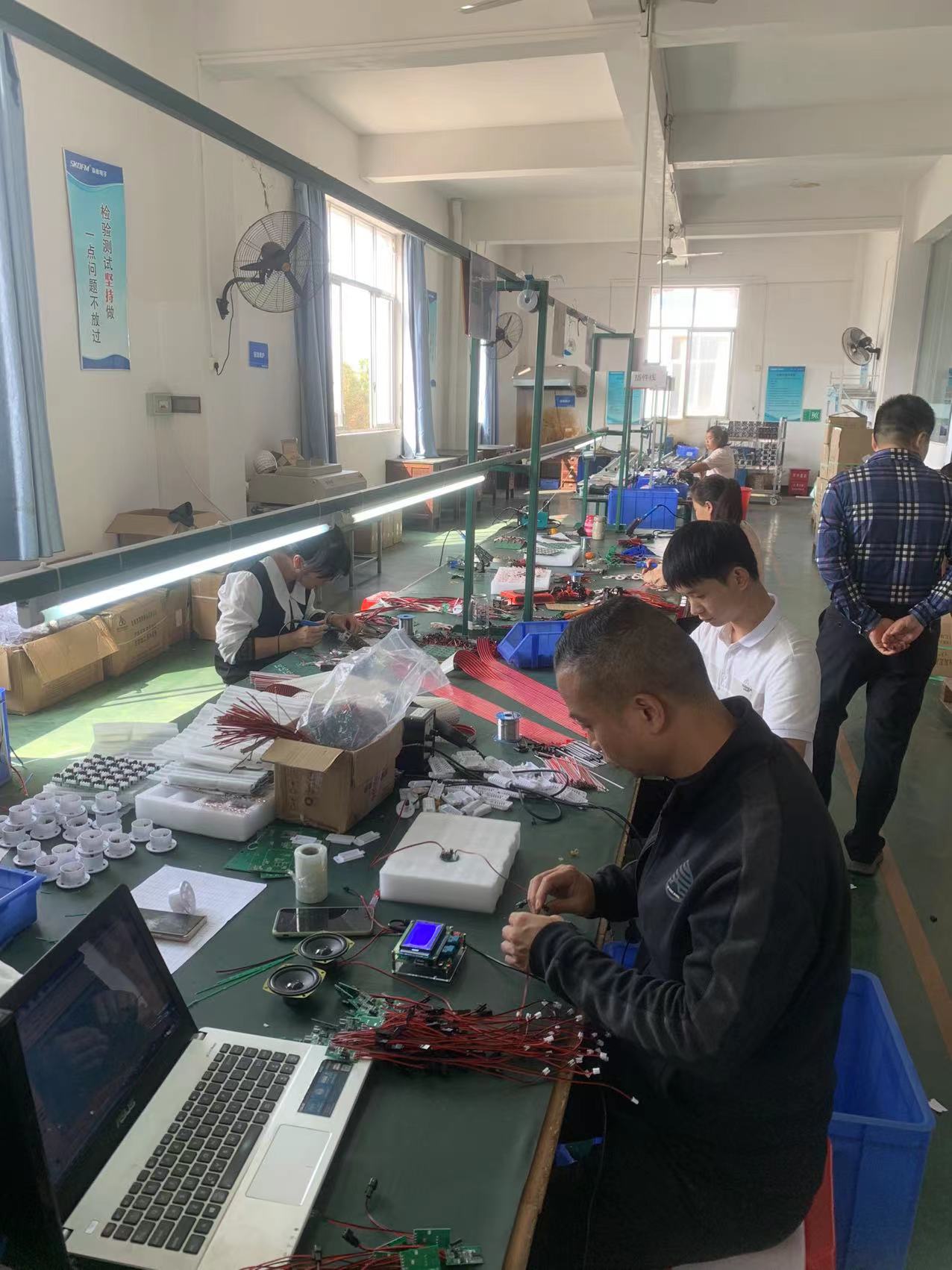
10. EMC / EMI: When Smart Modules Interfere
EMC and EMI are often ignored in furniture sourcing, but they matter once several electronic modules are installed inside a compact cabinet.
FCC Part 15 sets out the U.S. rules under which intentional, unintentional, and incidental radiators may be operated without an individual license. This is relevant because many electronic-electrical products with digital logic or RF functions may fall under FCC equipment authorization review depending on configuration.
A normal function test may not reveal EMI problems.
Buzzing, flicker, or unstable touch response may only appear when several modules operate together.
EMI problems may become more noticeable when a Bluetooth speaker smart nightstand shares limited internal space with wireless charging coils, USB-C power modules, and LED drivers.
👉Bluetooth speaker smart nightstand
Common EMI Sources in Smart Nightstands
Interference Source | Possible Issue |
Wireless charging coil | Noise / unstable audio |
USB-C power module | Signal interference |
LED driver | Flicker or buzzing |
Bluetooth amplifier | Hum noise |
Poor grounding | Touch or audio instability |
Weak shielding | Bluetooth or charging instability |
Loose wiring | Intermittent function failure |
What Buyers Should Request
Ask suppliers to test:
Wireless charging + Bluetooth audio
USB-C charging + LED lighting
LED dimming + touch panel
Full-load operation
Touch response under different module loads
EMI problems may become more noticeable when a Bluetooth speaker smart nightstand shares space with wireless charging and LED drivers.
For smart furniture, stable coexistence between modules is more important than adding more functions on paper.
11. What Compliance Documents Should Buyers Ask For?
Most furniture buyers do not need to become compliance experts. What matters is whether the supplier can explain which documents are available, which component they apply to, and whether the final smart nightstand configuration matches those documents.
For example, an adapter certificate does not automatically cover a finished smart nightstand with wireless charging, LED lighting, Bluetooth audio, and touch control. The final compliance path depends on the target market and the complete electronic configuration.
For most furniture buyers, the goal is not to become an electrical compliance expert. The practical goal is to know which documents are available, which module they apply to, and whether the final product configuration matches the documents.
A certificate for one USB module or adapter does not automatically cover every version of a complete smart nightstand. If the product changes adapter, plug type, wireless module, Bluetooth board, LED driver, or power layout, the compliance path should be checked again.
IEC 62368-1
IEC 62368-1:2023 is a product safety standard for audio/video, information, and communication technology equipment. It classifies energy sources and prescribes safeguards intended to reduce injury and fire-related property damage risks.
For smart nightstands, IEC 62368-1 may be relevant when the product integrates AV/ICT-type electronic modules, power systems, audio modules, displays, or communication components.
EU Low Voltage Directive
The EU Low Voltage Directive 2014/35/EU applies to electrical equipment designed for use within certain voltage limits and is intended to ensure a high level of protection for European users.
This may become relevant depending on the product voltage range, adapter configuration, and how the complete smart furniture product is supplied to the EU market.
EU RoHS
EU RoHS rules restrict the use of hazardous substances in electrical and electronic equipment to protect public health and the environment.
For smart furniture containing electronic modules, buyers may need RoHS documentation for electronic components depending on market requirements.
FCC
For U.S. projects, FCC requirements may become relevant when the product includes digital logic, wireless charging, Bluetooth, or other RF-related functions. FCC equipment authorization materials note that many electronic-electrical products using digital logic are regulated under 47 CFR Part 15 Subpart B.
Compliance Areas Buyers Should Check
Compliance Area | What It Means for Buyers |
CE / LVD | Electrical safety path for EU market |
FCC | RF / digital device requirements for U.S. |
RoHS | Restricted substances in electronics |
IEC 62368-1 | Safety framework for AV / ICT-type electronics |
EMC | Interference control |
Battery rules | Battery safety and transport if applicable |
Adapter certification | Market-specific plug and adapter approval |
User manual | Safety warnings and correct operation |
Practical Compliance Note
Compliance should be discussed before mass production, not after shipment.
A buyer should ask:
Which market is the product for?
Which smart functions are included?
Is the adapter supplied together with the product?
Are wireless modules included?
Is Bluetooth included?
Are batteries included?
Are documents available for components or complete product testing?
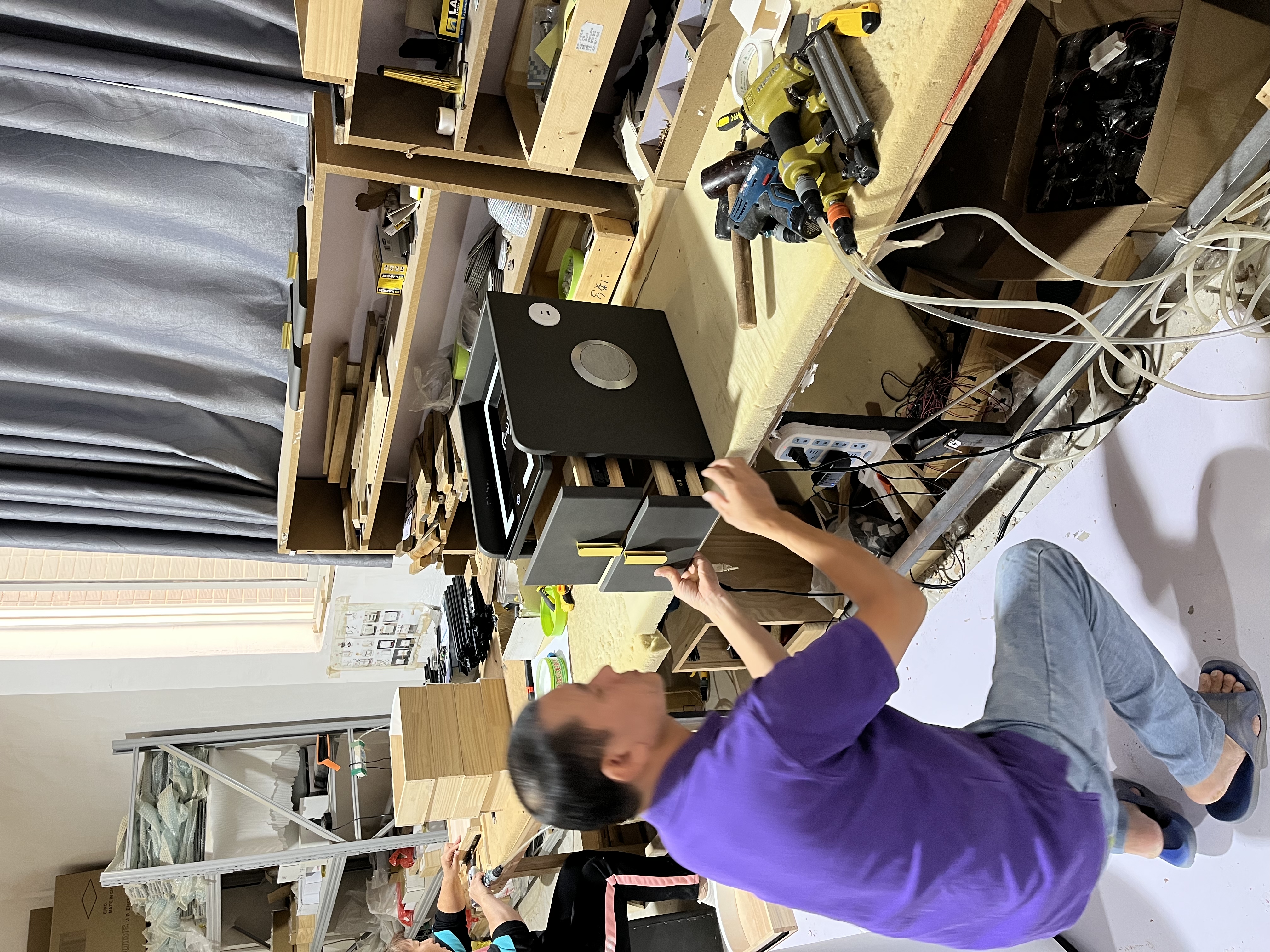
12. Safety Priorities by Buyer Type
Different buyers care about different safety risks.
A hotel buyer worries about guest complaints and room maintenance.
A distributor worries about batch consistency and spare parts.
An Amazon seller worries about returns and reviews.
A retail chain worries about compliance documents and product liability.
Buyer Safety Priority Table
Buyer Type | Main Safety Concern | Recommendation |
Hotels | Low complaints, stable operation | Full-load aging + spare parts |
Distributors | Batch consistency | QC report + replacement modules |
Retail chains | Compliance documents | CE/FCC/RoHS path |
Amazon sellers | Returns and reviews | Clear manual + safe adapter |
Apartments | Long-term use | Maintenance plan |
Dropshipping | Low support ability | Avoid overly complex electronics |
Furniture brands | Brand reputation | Better module selection and documentation |
For large buyers, safety documentation is not only for compliance. It also helps reduce disputes when problems happen after delivery.
13. How We Suggest Checking a Finished Smart Nightstand
A smart nightstand should be checked through several production stages.
Factory QC Checklist
QC Step | What to Check |
Incoming module inspection | Adapter, PCB, wires, connectors |
Assembly wiring check | Routing and connector fixing |
Function test | All smart modules |
Full-load test | Simultaneous operation |
Temperature test | Surface and internal temperature |
Aging test | Long operation stability |
Packaging test | Transport stability |
Final inspection | Labels, manual, accessories |
Spare parts check | Adapter, module, control board if needed |
Manual check | Clear operation and safety notes |
Factory Note
A smart nightstand should be tested after assembly, before packaging, and sometimes again after packaging simulation.
Some problems only appear after drawers, glass panels, electronic modules, and packaging are combined.
14. Mistakes That Increase After-Sales Risk
1. Only checking functions
A sample may charge a phone and turn on LED lights, but that does not mean the protection design is good.
2. Testing modules separately
A wireless charger, USB port, LED driver, and Bluetooth speaker may pass separate tests but fail when operating together.
3. Using random adapters
The adapter should match voltage, current, plug type, and market requirements.
4. Sharing certificates across models
One module certificate does not always cover every complete smart nightstand configuration.
5. Ignoring cable routing
Wires may be pressed by drawers, metal parts, or sharp cabinet edges if routing is not designed carefully.
6. Ignoring heat
Small electronic modules inside enclosed furniture can accumulate heat during long operation.
7. No spare parts plan
For hotels and distributors, spare modules can reduce service delay.
8. Poor user manual
Many after-sales issues come from unclear instructions rather than module failure.
Mistake Summary Table
Mistake | Why It Creates Risk | Better Practice |
Only checking functions | Protection design may be weak | Ask for protection and test details |
Testing modules separately | Full-load problems may be missed | Test the complete finished unit |
Using random adapters | Voltage/current mismatch risk | Confirm adapter rating and plug standard |
Sharing certificates across models | Compliance may not apply | Match documents to actual configuration |
Ignoring cable routing | Wires may be damaged inside cabinet | Request internal wiring photo |
Ignoring heat | Long-term failure risk | Ask for temperature test |
No spare parts plan | After-sales delay | Confirm replaceable modules |
Poor user manual | Misuse and returns | Prepare clear operation guide |
Most of these mistakes do not appear in product photos. They only appear during sample testing, bulk production, shipment, or after-sales service.
15. 10 Questions to Ask Before Ordering Smart Nightstands
Before confirming a smart nightstand sample or bulk order, buyers should ask:
What adapter is used?
Does the product have overcurrent protection?
Does it have short-circuit protection?
Has the finished unit been tested under full load?
What is the highest surface temperature during charging?
Are CE / FCC / RoHS documents available if needed?
Is the wiring protected inside the cabinet?
Can electronic modules be replaced after shipment?
Is the manual clear for end users?
Can the supplier provide sample test videos?
These questions are simple, but they quickly reveal whether a supplier understands smart furniture as a complete electrical system.
16. Smart Nightstand Electrical Safety OEM Checklist
👉Free Download: Smart Nightstand Electrical Safety OEM Checklist
This checklist is designed for hotels, distributors, retail buyers, e-commerce sellers, and smart furniture brands comparing smart nightstand suppliers.
It includes:
Electrical safety inspection checklist
Overcurrent protection checklist
Short-circuit protection checklist
Full-load aging test table
Temperature test record template
CE / FCC / RoHS document checklist
Adapter and plug confirmation sheet
Hotel / retail / e-commerce buyer recommendation
OEM inquiry template
👉Request the checklist together with product catalog, MOQ, sample price, and lead time.
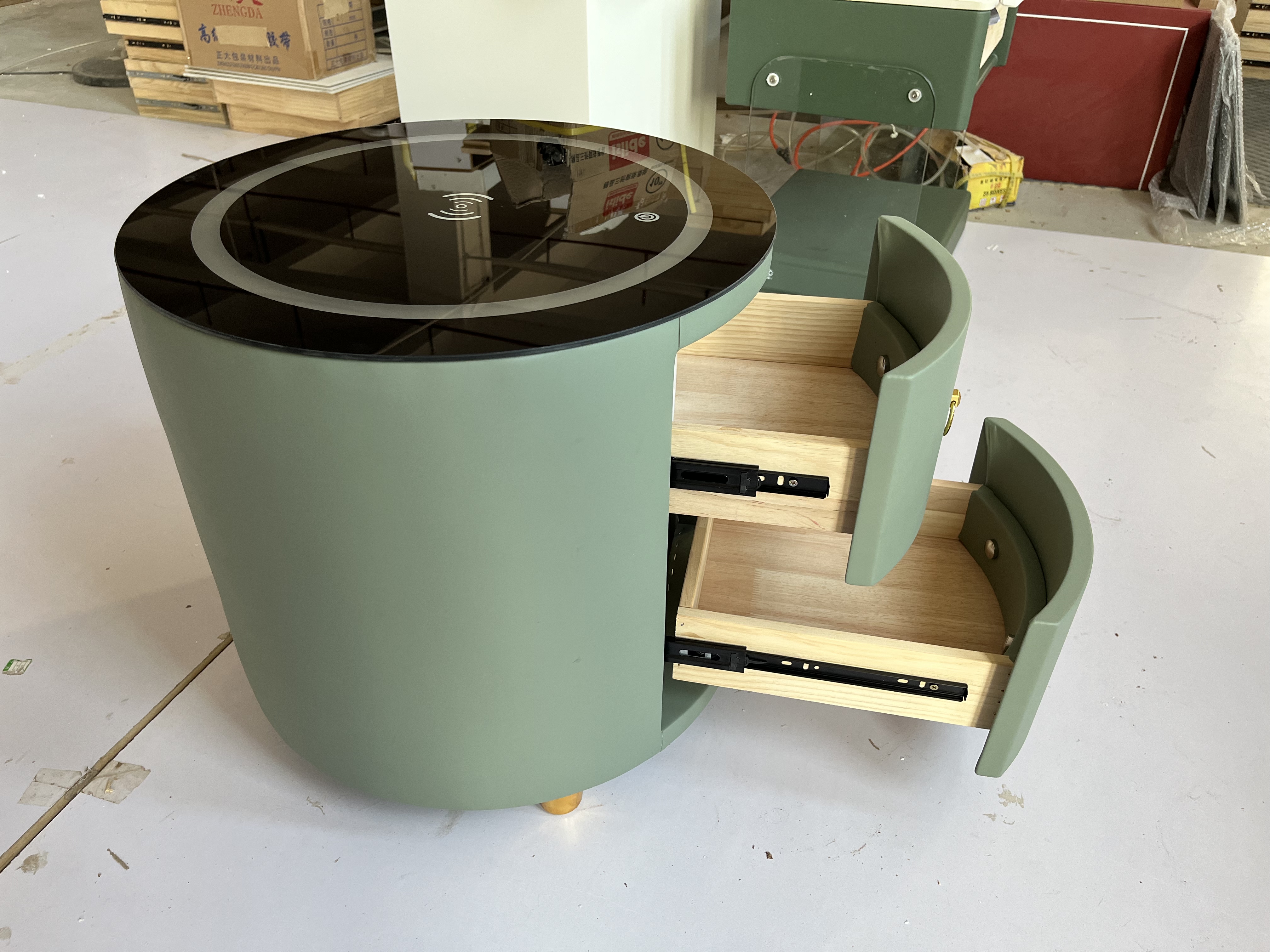
17. Application Scenarios
Hotels
Hotels need stable smart nightstands with low complaint rates. Electrical safety testing should focus on full-load operation, adapter quality, surface temperature, user instructions, and spare parts.
For hotel projects, smart functions should be useful, not excessive.
Serviced Apartments
Apartments require long-term use. Buyers should pay attention to adapter durability, charging stability, LED driver reliability, and replacement modules.
Retail Chains
Retail buyers often need compliance documents, consistent packaging, and clear product labels. They should confirm CE/FCC/RoHS paths before bulk orders.
E-Commerce Sellers
Amazon and Shopify sellers need to reduce returns and negative reviews. Clear instructions, safe adapters, stable charging, and good packaging are especially important.
Distributors
Distributors need batch consistency. They should request QC checklists, spare parts policies, and module replacement support.
Dropshipping
Dropshipping sellers should avoid overly complex configurations unless the supplier can provide clear manuals, packaging support, and after-sales guidance.
FAQ CTA: Compare Electrical Safety Requirements Before Bulk Order
For hotels, distributors, retail chains, and e-commerce sellers, Hebai Furniture can help review power modules, wireless charging, LED lighting, USB-C ports, audio modules, lock systems, and safety documentation according to your target market.
Request a safety checklist before confirming your smart nightstand sample.
👉smart nightstand OEM manufacturer
FAQ: Smart Nightstand Electrical Safety
1. What electrical safety issues should smart nightstand buyers check?
Buyers should check overcurrent protection, short-circuit protection, thermal control, adapter safety, wiring, EMC/EMI, full-load aging tests, and clear user instructions.
2. Are smart nightstands safe to use beside a bed?
They can be safe when the electronic modules, adapter, wiring, and protection systems are properly designed and tested.
3. What is overcurrent protection?
Overcurrent protection limits excessive current before it damages USB ports, charging modules, LED drivers, or control boards.
4. Why is short-circuit protection important?
It helps reduce damage or safety risk when wiring, connectors, or components fail.
5. Do wireless charging nightstands overheat?
They can become warm during charging. Buyers should check surface temperature, coil distance, foreign object detection, and full-load operation.
6. What is a full-load aging test?
It is a test where wireless charging, USB ports, LED lighting, audio, locks, and touch panels operate together for a period of time to check stability.
7. Do smart nightstands need CE certification?
For EU projects, CE-related requirements may apply depending on voltage range, electrical configuration, and target market.
8. Do smart nightstands need FCC testing?
For U.S. projects, FCC requirements may apply when the product includes digital logic, wireless modules, or RF-related functions.
9. What does RoHS mean for smart furniture?
RoHS restricts certain hazardous substances in electrical and electronic components.
10. Is IEC 62368-1 relevant to smart furniture?
It may be relevant when smart furniture includes AV/ICT-type electronic modules, depending on product configuration.
11. Why does EMI matter in smart nightstands?
EMI can cause buzzing audio, unstable touch control, LED flicker, or charging instability when modules interfere with each other.
12. What adapter should be used?
The adapter should match the rated voltage, current, plug type, and certification needs of the target market.
13. Are USB-C ports safe in bedside furniture?
They can be safe when overcurrent protection, port durability, adapter quality, and wiring are properly handled.
14. What should hotels check before ordering?
Hotels should check full-load testing, adapter quality, spare parts, user instructions, and after-sales support.
15. What documents should OEM buyers request?
Buyers should request adapter specifications, test reports, compliance documents if available, wiring layout, user manual, and QC checklist.

Conclusion
A smart nightstand with electronics is no longer just a furniture product. It is a furniture-electronics system that needs proper power protection, wiring, adapter selection, thermal control, EMC/EMI consideration, and finished-product testing.
For B2B buyers, the most important questions are not only:
Does it have wireless charging?
Does it have USB-C?
Does it have LED lighting?
Does it have Bluetooth audio?
Does it have a password or fingerprint lock?
The better questions are:
Does the product have overcurrent and short-circuit protection?
Has the complete unit been tested under full load?
What adapter is used?
What happens when several modules work at the same time?
Are CE / FCC / RoHS documents available if needed?
Can modules be replaced after shipment?
In some projects, adding fewer electronic functions is actually the safer choice.
If the target market does not need Bluetooth audio, app control, or advanced locks, a simpler configuration may be more stable and easier to maintain.
A good OEM smart nightstand project is not about adding every possible function. It is about choosing the functions that match the buyer’s market, price level, certification needs, and after-sales capability.
The safest smart nightstand is not the one with the most functions. It is the one with the right functions, proper protection, clear testing, and realistic after-sales support.
Request a Safer Smart Nightstand Configuration
If you are sourcing smart nightstands for hotels, distributors, retail stores, apartments, or e-commerce channels, please send us:
Target market
Required smart functions
Plug type
USB-C / wireless charging power requirement
LED lighting option
Lock or speaker requirement
Certification documents needed
MOQ and packaging requirement
Hebai Furniture can recommend a suitable smart nightstand configuration with power module options, adapter suggestions, electrical safety checklist, and sample quotation.
👉Request catalog + electrical safety checklist + OEM quotation.
Smart Nightstand Electrical Safety Support
Power protection | Wireless charging | USB-C | LED lighting | CE/FCC/RoHS support | OEM/ODM | Hotel & retail projects
Request Catalog + Safety Checklist
You can also review our smart nightstand product options with wireless charging, USB-C ports, LED lighting, and customized smart modules.
👉smart nightstand product options
Related Hebai Furniture Resources
Explore more visual, video, and platform resources about smart nightstand electrical safety, bedside table power protection, USB-C and wireless charging testing, LED lighting stability, Bluetooth speaker EMI risk, full-load finished-product testing, and OEM smart nightstand projects from Hebai Furniture.
Medium Summary: Smart Nightstand Electrical Safety for Bedside Table Buyers
LinkedIn Discussion: Smart Nightstand Electrical Safety Buyer Checklist
Behance Project: Smart Nightstand Electrical Safety OEM Project
YouTube Short: Smart Nightstand Electrical Safety Guide
Pinterest Board: Smart Nightstand Electrical Safety Guide
Instagram Reel: Smart Nightstand Electrical Safety Buyer Tips
TikTok Video: Smart Nightstand Full-Load Testing
Facebook Post: Smart Nightstand Electrical Safety Buyer Guide