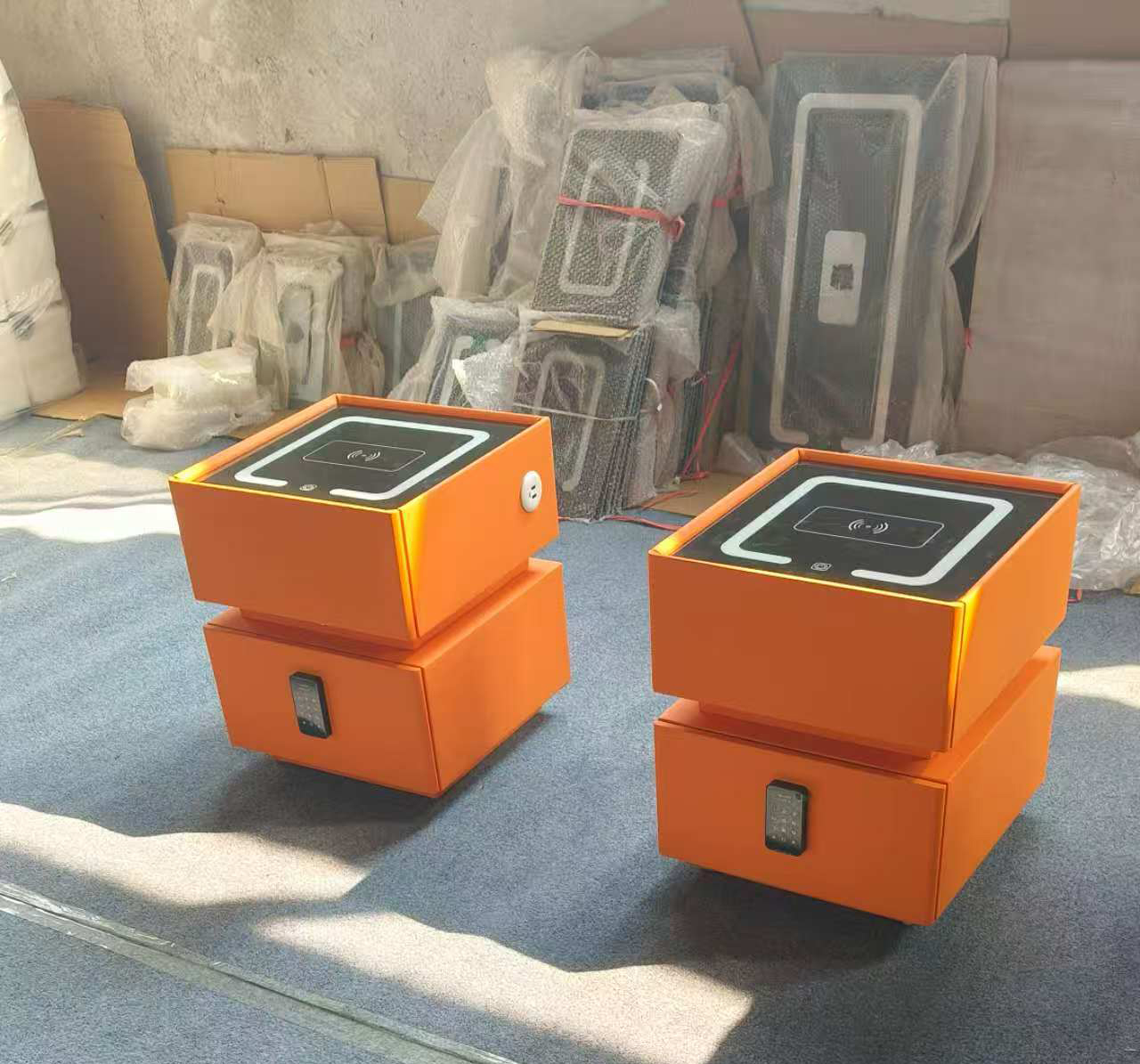
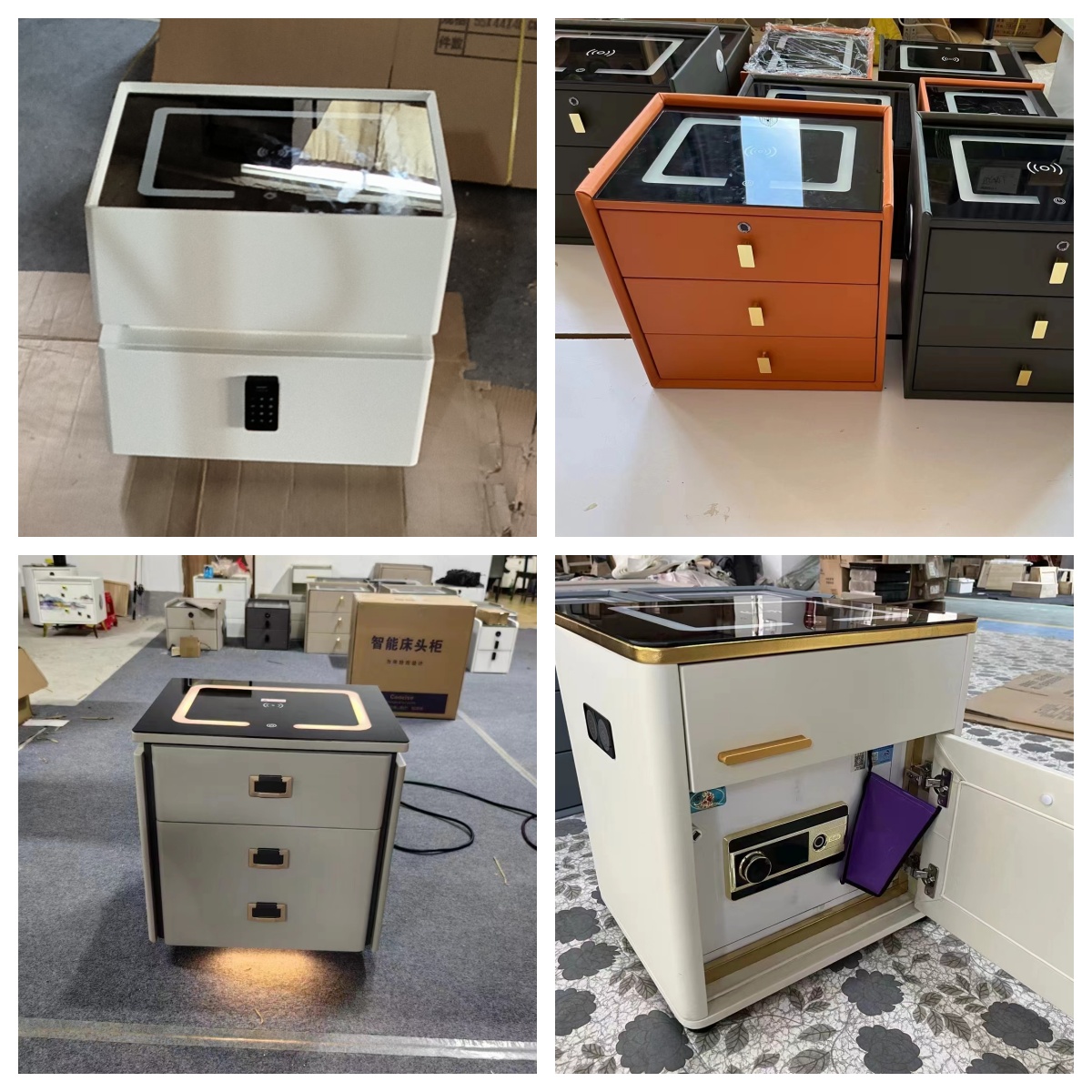
What Is a Smart Nightstand System? Engineering, Standards & OEM Sourcing Guide (2026)
A smart nightstand system is a fully integrated electronic furniture solution combining tempered glass touch panels, wireless charging, LED lighting, USB/Type-C ports, and smart control modules. This 2026 engineering guide explains system architecture, power distribution, configuration differences, and how to choose the right OEM supplier for hotel and wholesale projects.
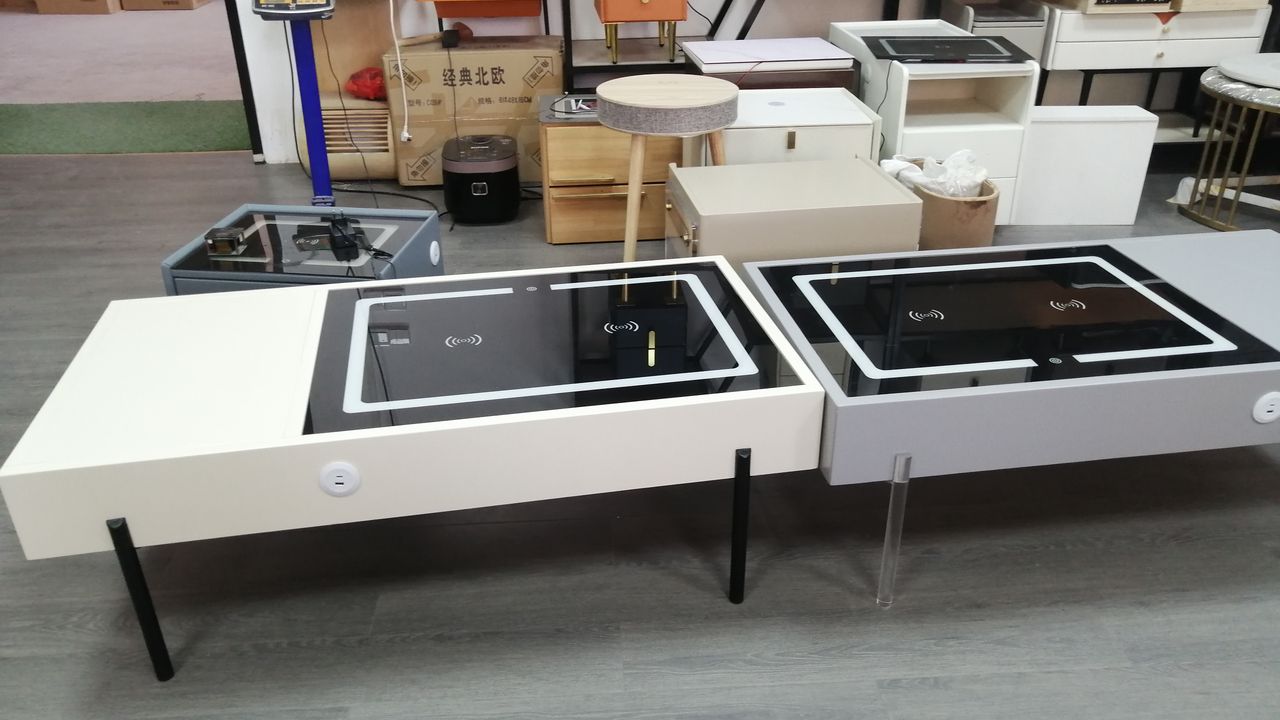
Looking for OEM bedside table supplier? Visit our complete OEM guide:
👉 OEM Bedside Table Manufacturer in China: Ultimate V2 Global Authority Guide (2026)
Ganzhou Hebai Wood Products Co., Ltd is a trusted bedside table manufacturer in China specializing in OEM smart and upholstered nightstands.
👉Looking for OEM bedroom furniture? Explore our Smart bedside table.
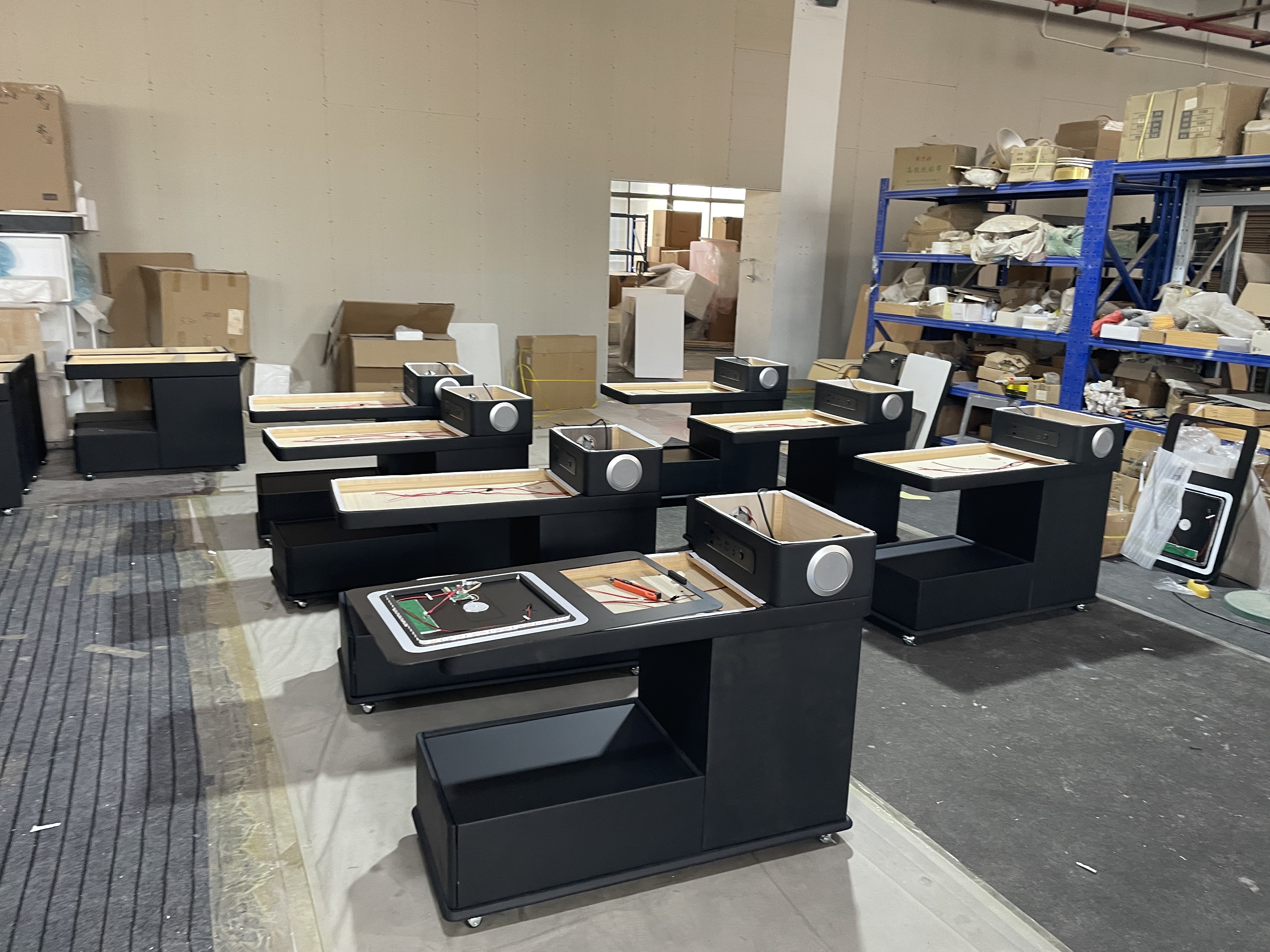
What Is a Smart Nightstand System? Engineering, Standards & OEM Sourcing Guide (2026)
Published: May 5, 2026
Last Updated: May 15, 2026
Reviewed by Hebai FurnitureProduct Development & Export Team
🔴 Looking for Smart Nightstand OEM Manufacturer in China?
Hebai Furniture helps hotel buyers, furniture brands, wholesalers, and smart furniture importers develop modern smart nightstand systems with wireless charging, USB-C PD, LED lighting, and export-ready manufacturing support.
✔ Smart Nightstand OEM & ODM
✔ Wireless Charging Integration
✔ USB-C PD Power System
✔ Hotel Smart Furniture Solutions
✔ Export Packaging & QC Support
📩 Get Catalog, Smart Nightstand Spec Within 24 Hours
A smart nightstand is a bedside table integrated with modern convenience technologies such as wireless charging, USB ports, LED lighting, Bluetooth speakers, security drawers, and intelligent control systems.
This guide is created for buyers searching for:
- smart nightstand manufacturer
- OEM smart bedside table supplier
- wireless charging nightstand factory
- hotel smart furniture manufacturer
- custom smart bedside table China
If you are sourcing smart bedside table OEM products, you are not buying furniture—you are buying a compact electronic system integrated into furniture structure.
A smart nightstand system is defined as:
A modular electronic furniture system integrating control interface, power distribution, and multi-functional modules such as charging, lighting, audio, and smart connectivity.
According to GB/T 43814—2024, smart furniture must meet:
Functional integration capability
Electrical safety compliance
Human-machine interaction standards
Environmental adaptability
👉 This means the difference between a “normal bedside table with features” and a real smart system lies in engineering integration, not feature quantity.
👉 Best Smart Nightstand Manufacturer in China (2026 OEM Guide + Features, Cost & Factory Insights)
Smart Nightstand Industry Standards (2026)
As smart furniture becomes more common in hotels, apartments, and modern residential projects, international buyers increasingly require compliance with electrical safety, charging standards, and durability testing.
The following standards are commonly used in smart nightstand manufacturing:
Standard | Recommended Specification |
|---|---|
USB-C PD Output | 30W–65W |
Wireless Charging | Qi Compatible |
Certification | CE / FCC / RoHS |
Fire Resistance | UL94 V-0 |
Drawer Durability | 50,000+ cycles |
Packaging Test | ISTA Drop Test |
Moisture Content | 8–12% |
LED Safety | Low Voltage System |
For hotel projects and export markets, compliance with electrical safety and packaging durability standards is increasingly important.
## China Smart Nightstand Manufacturing Clusters
China smart nightstand production is mainly concentrated in several industrial regions:
- Foshan, Guangdong — high-end furniture engineering and system integration
- Dongguan, Guangdong — electronics supply chain and export manufacturing
- Nankang, Jiangxi — solid wood cabinet manufacturing and large-scale furniture production
👉 Top 10 Bedside Table Manufacturers in China (2026 Verified List)
Smart Nightstand System Architecture
A modern smart nightstand system is no longer just furniture.
It combines:
Furniture engineering
Power management
Smart charging systems
Safety control
User convenience features
Typical smart nightstand architecture includes:
AC Power Input
      ↓
Internal Power Module
      ↓
USB-C PD System
      ↓
Wireless Charging Module
      ↓
LED Lighting System
      ↓
Safety Protection Circuit
      ↓
User Interface Panel
For hotel and commercial projects, thermal control and electrical safety design are especially important.
👉 Hotel Nightstand Procurement Guide 2026: Global FF&E Standards, Pricing
System Architecture: How a Smart Nightstand Actually Works
A high-quality smart nightstand follows a modular PCB-based architecture, not a simple wiring assembly.
Core System Layers
1. Interface Layer
Tempered glass touch panel
Capacitive touch control (≤2ms response)
2. Power Layer
AC → DC conversion
Voltage distribution (5V / 9V / 12V)
3. Functional Modules
Wireless charging (Qi)
USB / Type-C charging
LED lighting system
Bluetooth audio
4. Optional Smart Layer
Fingerprint lock
IoT connectivity (WiFi / Zigbee)

Why Modular Architecture Matters (Critical for Buyers)
Factor | Modular System | Non-Modular System |
Maintenance | Easy | Difficult |
Failure Impact | Isolated | System-wide |
OEM Flexibility | High | Low |
Cost Control | Optimized | Unstable |
👉 Factory Insight:
Low-cost suppliers often combine all functions into one board → cheaper initially, but:
High failure rate
Difficult repair
Higher long-term cost
👉 Bedside Table MOQ Explained (Factory Secrets Every Buyer Should Know)
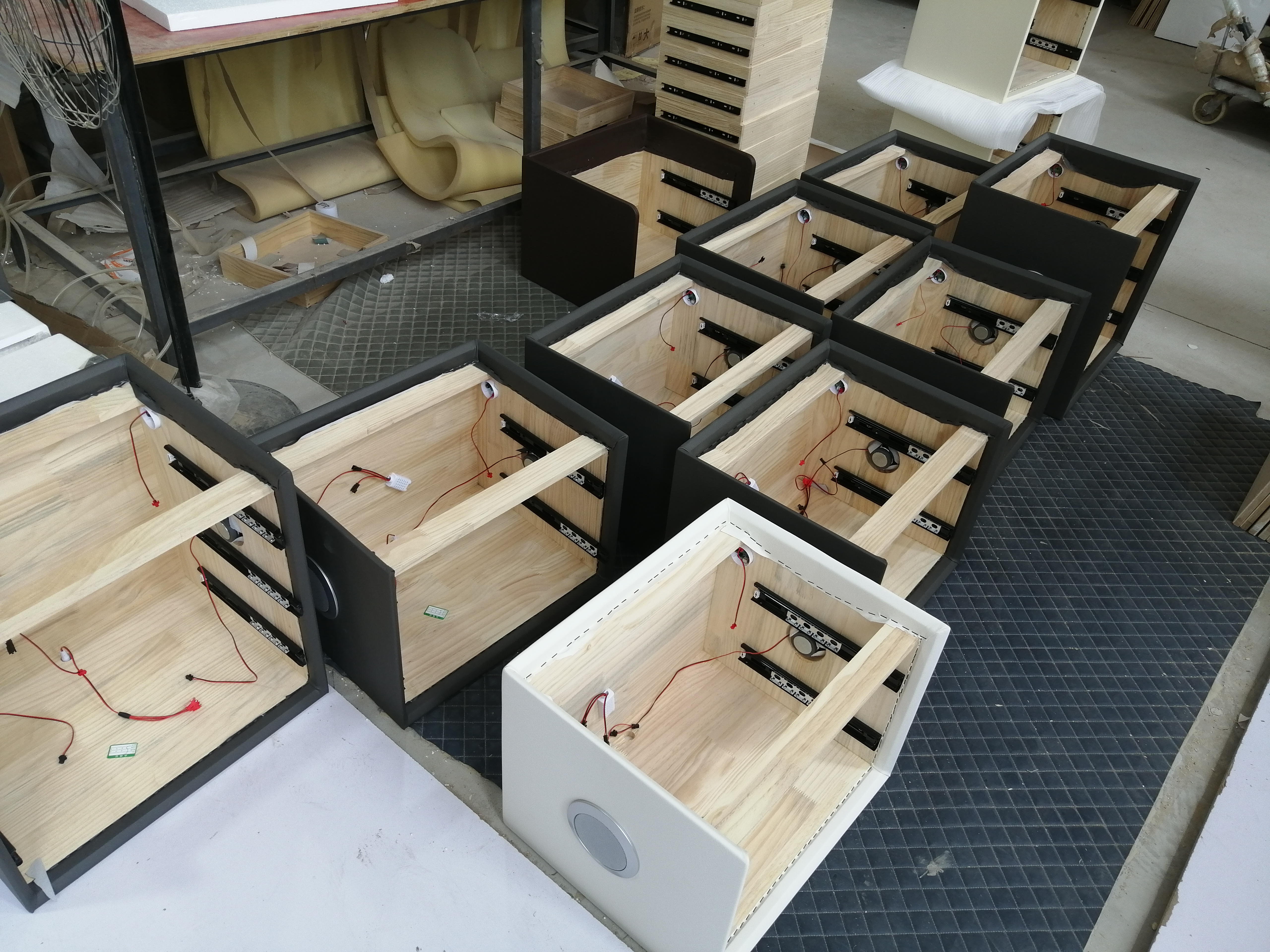
Power Distribution Logic (25W–40W Explained)
Smart nightstands typically operate between 25W and 40W total system load.
Power Allocation Breakdown
Module | Power Range | Notes |
Wireless Charging | 10–15W | Qi standard |
USB / Type-C | 10–30W | PD fast charging |
LED Lighting | 3–8W | Low consumption |
Bluetooth Audio | 3–10W | Depends on speaker |
Control System | <1W | Always-on |
🔴 Free Smart Nightstand Specification Sheet
Download technical specifications for:
✔ USB-C PD systems
✔ Wireless charging modules
✔ Smart LED systems
✔ Hotel smart furniture standards
✔ OEM customization options
📩 Request the Smart Nightstand PDF Specification
Engineering Principles Behind Power Design
Load balancing → prevents overheating
Thermal control → keeps system <45°C
Independent circuits → avoids interference
Standby optimization (<1W)
According to GB 4706.1-2005, systems must include:
Overcurrent protection
Short circuit protection
Thermal shutdown
👉 Buyer Tip:
Always request:
Power distribution diagram
Full-load testing report
👉 Best Smart Bedside Table Buying Guide (Wireless Charging, USB & Luxury Features) 2026
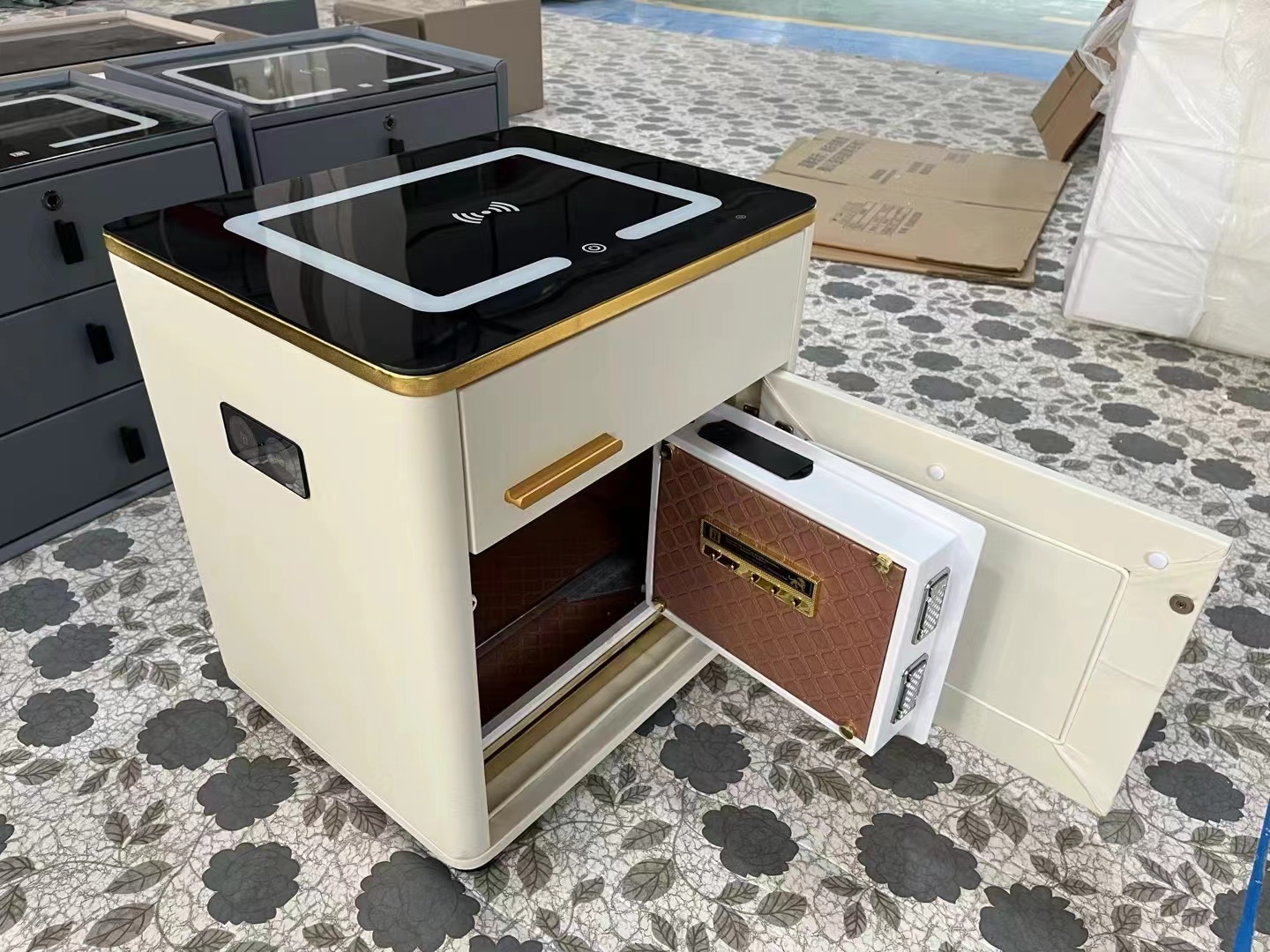
Configuration Comparison (Most Important for Procurement)
Smart Nightstand Configuration Matrix
Feature | Basic | Mid-Range | High-End |
Wireless Charging | 10W | 15W | 15W Adaptive |
USB Ports | Standard | Fast Charge | PD 30W |
Lighting | Warm | 3 Color | Full Range |
Touch Keys | 3–4 | 5–6 | 6–8 |
Bluetooth | No | 3W×2 | 5W×2 HiFi |
Smart Lock | No | Optional | Yes |
👉 Wireless Charging Nightstand: Qi Standard, Power, Thermal Control & OEM Guide (2026)
FAQ: Wireless Charging in Smart Nightstands
1.Why does wireless charging fail on furniture?
Common reasons include:
- panel thickness is too high
- charging coil misalignment
- metal interference
- unstable power modules
2.What panel thickness is recommended?
For most systems, 3mm–5mm tempered glass or thin wood veneer is recommended depending on charging module design.
Real Procurement Recommendation
✔ Basic Version
Wholesale bulk buyers
Low-cost markets
✔ Mid-Range Version (Best Seller)
Hotels (3–4 star)
Apartments
Retail brands
👉 70%+ projects choose this level
✔ High-End Version
Luxury hotels
Smart home ecosystem projects
👉 Best Smart Nightstand Manufacturer in China (2026 OEM Guide + Features, Cost & Factory Insights)
Application Scenarios (Where Real Demand Comes From)
1. Hotels
Multi-device charging demand
Night lighting comfort
Space optimization
2. Serviced Apartments
Long-term durability
User convenience
3. Smart Homes
IoT integration
Scene automation
4. Furniture Brands
Product differentiation
Premium pricing
🔴 For Hotel Buyers & Hospitality Projects
Need hotel smart nightstands with wireless charging, USB-C PD, and commercial-grade durability?
✔ Hotel bedside table customization
✔ Smart charging integration
✔ Fire-resistant material options
✔ Bulk project production
✔ Export-ready packaging
📩 Request Hotel Smart Furniture Catalog
Cost Structure Insight (Critical for Negotiation)
Even without full BOM disclosure, cost typically distributes as:
Component | Cost Share |
Glass Panel | 20–30% |
Charging System | 20–25% |
Electronics PCB | 15–20% |
Audio System | 10–15% |
Assembly | 10–15% |
👉 Key Insight:
Wireless charging + glass panel = over 50% of total cost
Common Sourcing Mistakes (Why Projects Fail)
❌ Ignoring System Design
→ Leads to instability
❌ Choosing Lowest Price
→ Hidden quality risks
❌ No Certification Check
→ Export issues
❌ Over-spec Features
→ Wasted cost
❌ No Testing Requirement
→ High return rate
Factory Testing & Quality Control (From Specification Logic)
A reliable supplier must provide:
✔ Electrical Safety Testing
Insulation ≥100MΩ
Leakage protection
✔ Functional Testing
Charging performance
Touch response
✔ Durability Testing
50,000+ hours lifespan
Continuous operation
✔ Environmental Testing
Temperature: -10°C to 50°C
Humidity: up to 95%
👉 These are derived from engineering standards, not marketing claims.
👉 OEM vs ODM Bedside Tables in 2026: Which Is Better for Your Business?
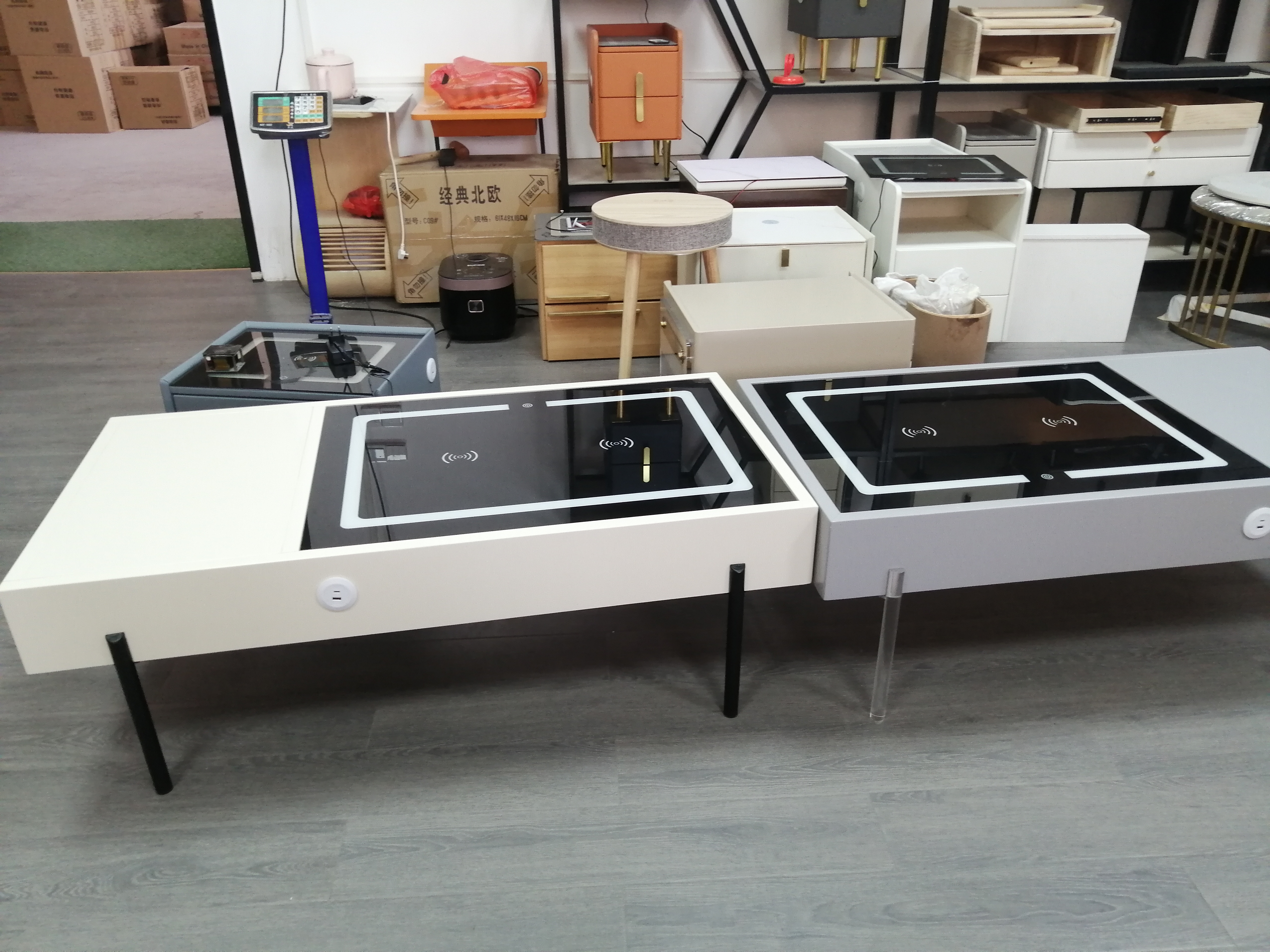
Smart Nightstand OEM Development Workflow
Professional smart furniture manufacturing usually follows the process below:
Product Concept
      ↓
CAD & Technical Drawing
      ↓
Material Selection
      ↓
Smart Module Integration
      ↓
Prototype Sampling
      ↓
Electrical Testing
      ↓
Mass Production
      ↓
Quality Inspection
      ↓
Export Packaging
      ↓
Global Shipment
For OEM smart nightstand projects, electrical testing and packaging protection are critical before shipment.
Factory Quality Control Insights
Based on Hebai Furniture internal production experience, smart bedside table manufacturing requires stricter quality inspection compared with traditional furniture.
Typical internal QC standards include:
QC Item | Internal Standard |
|---|---|
USB Module Failure Rate | <0.8% |
Drawer Cycle Test | 50,000 cycles |
Packaging Damage Rate | <0.5% |
Moisture Content | 8–12% |
Surface Inspection Pass Rate | >98% |
Smart Function Testing | 100% inspection |
For export smart furniture projects, packaging protection and electrical stability are especially important.
🔴 Planning a Smart Nightstand OEM Project?
Our export team can help you choose the right smart furniture solution based on your market, MOQ, charging requirements, and project budget.
✔ OEM & ODM support
✔ Smart charging recommendations
✔ Hotel furniture solutions
✔ Packaging optimization
✔ Fast quotation response
📩 Get Free OEM Consultation Within 24 Hours
FAQ
1. What is a smart nightstand system?
An integrated electronic furniture system combining control, charging, lighting, and smart modules.
2. What power range is standard?
25W–40W depending on configuration.
3. Which configuration is best?
Mid-range offers best cost-performance.
4. Is it safe?
Yes, when compliant with GB 4706.1-2005.
5. What certifications are required?
CE, FCC, RoHS, Qi.
6. Can modules fail independently?
Yes, in modular systems.
7. What is the lifespan?
50,000–80,000 hours.
8. Do I need IoT features?
Only for premium projects.
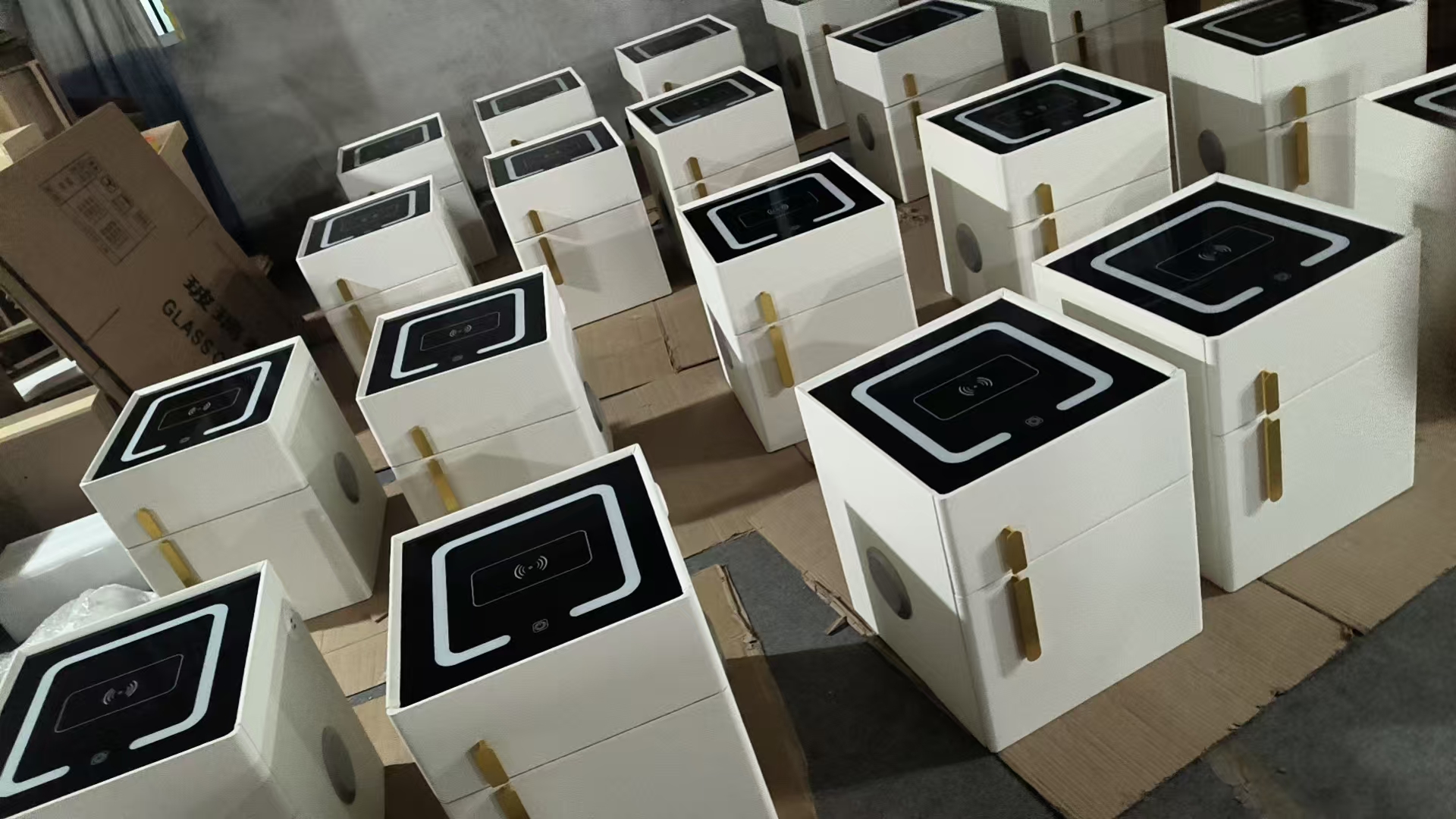
🔴 Ready to Develop Smart Nightstand Systems?
Hebai Furniture helps global buyers develop smart bedside table collections with wireless charging, USB-C PD systems, LED lighting, and hotel-grade OEM manufacturing support.
✔ Smart Nightstand OEM & ODM
✔ Wireless Charging Integration
✔ USB-C PD Systems
✔ Hotel Furniture Solutions
✔ Export Packaging Support
📩 Contact Us Today for:
✔ Catalog
✔ MOQ Sheet
✔ Smart Furniture Spec PDF
✔ Material Catalog
✔ Factory Quotation
Ganzhou Hebai Wood Products Co., Ltd
supplier China / manufacturer China / OEM factory
📩 vincent@hebaifurniture.com
📱 WhatsApp: +86 15207972272
🌐 https://hebaifurniture.com/
👉 Home| Product| Smart Bedside Table Series|Catalogue
Related Articles:
👉 How to Import Furniture from China | Bedside Table Supplier Guide 2026
👉 Private Label Furniture: Full Guide (2026 B2B Buyer Edition)
👉 Furniture Supplier Checklist (Free Template) – 2026 B2B Buyer Guide
👉 Bedside Table Pricing Guide (2026 Updated): What Really Affects Cost?
👉 How to Import Bedside Tables from China in 2026 (7-Step Buyer Guide)
This article was reviewed and updated to reflect the latest market information and factory production standards.
Watch Our Factory Video
See how smart bedside tables are manufactured at Ganzhou Hebai Wood Products Co., Ltd.
YouTube: OEM bedside table manufacturer China
Explore Our OEM Furniture Project
Behance: Smart OEM Bedside Table Manufacturing System | Hotel Furniture Supplier in China
Read Industry Insights
Medium: Why Global Buyers Are Choosing OEM Bedside Table Manufacturers in China in 2026
Connect on LinkedIn
LinkedIn:Why OEM Bedside Table Manufacturing in China Is Evolving Rapidly in 2026