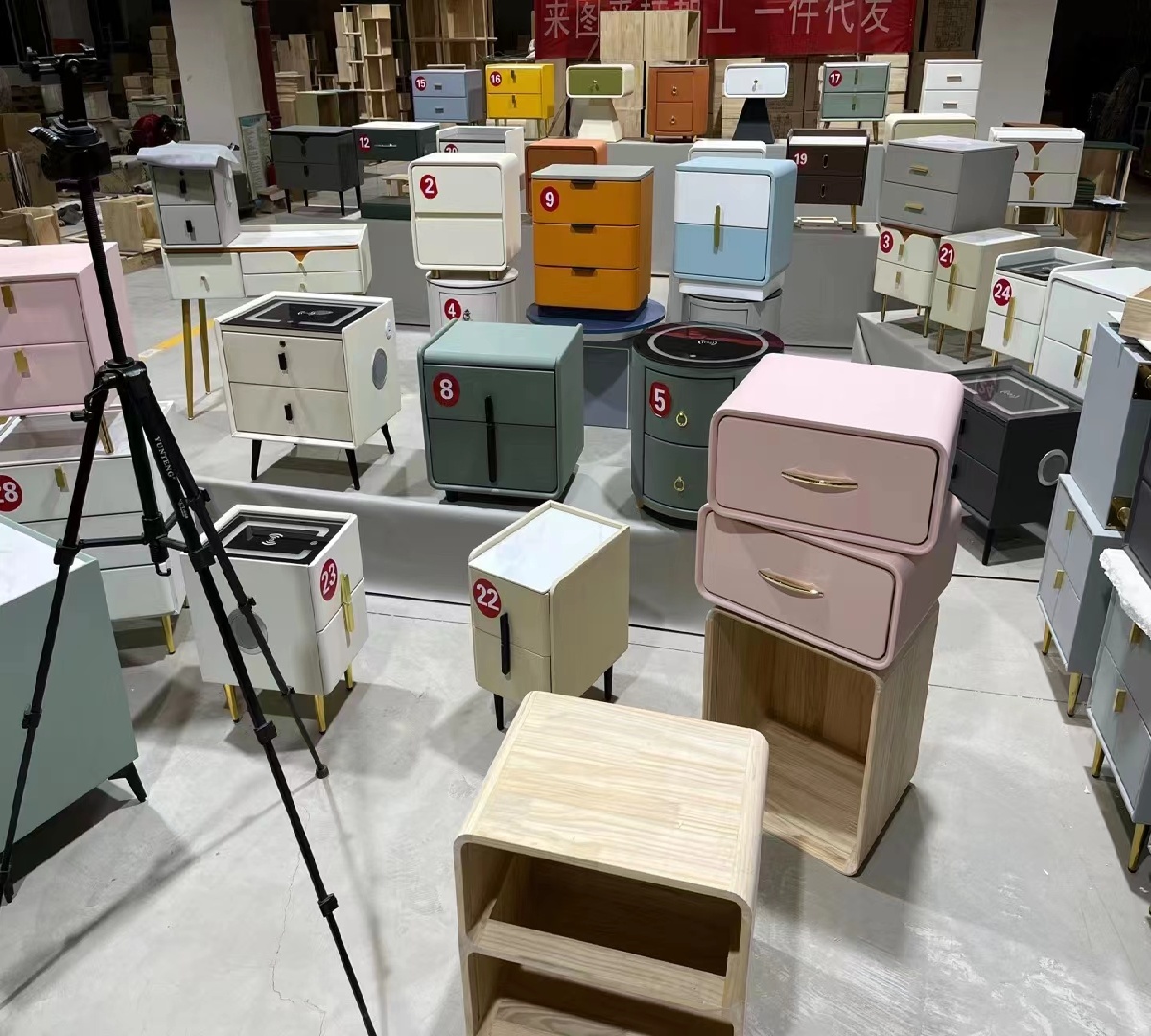
Why Bluetooth Speakers Are Becoming a Standard Feature in Smart Nightstands
Why are Bluetooth speakers becoming a standard feature in smart nightstands? Explore user benefits, audio integration, common feature combinations, and OEM customization options for furniture brands, distributors, and hospitality projects.
Looking for OEM bedside table supplier? Visit our complete OEM guide:
👉 What Is a Smart Nightstand System? Engineering, Standards & OEM Sourcing Guide (2026)
Ganzhou Hebai Wood Products Co., Ltd is a trusted bedside table manufacturer in China specializing in OEM smart and upholstered nightstands.
👉Looking for OEM bedroom furniture? Explore our Smart bedside table.
Bluetooth Speaker in Smart Nightstands:Market Demand, Sound Quality & OEM Decision Guide (2026)
Published: May 22, 2026
Last Updated: June 09, 2026
Reviewed by Hebai Furniture Product Development & Export Team
Do Bluetooth speaker smart nightstands really improve hotel room experience?
Bluetooth speaker smart nightstands are increasingly used in hotel and apartment furniture projects, but not all models deliver stable sound quality, balanced bass, or long-term durability for commercial use.
Item | Low-End Models | OEM Factory Models |
|---|---|---|
Sound Quality | Weak | Balanced |
Bass Performance | Poor | Optimized |
Durability | Low | High |
Hotel Use | Not recommended | Recommended |
Quick Answer
- Bluetooth speakers are more suitable for retail, e-commerce, and lifestyle smart nightstands than for cost-sensitive hotel projects.
- For hotel and apartment bedside furniture, 3W×2 speaker systems are usually more practical than larger subwoofer systems because they reduce vibration, EMI risk, and after-sales complexity.
- Bluetooth 5.0 is still enough for most smart nightstand projects if the module quality, antenna layout, and EMI control are stable.
- EMI noise is one of the most common hidden issues when wireless charging, USB-C, LED lighting, and Bluetooth audio share limited cabinet space.
- For bedside furniture, clear sound, low vibration, and stable pairing usually matter more than heavy bass.
Over the past two years, we have seen more inquiries from distributors, Amazon sellers, retail furniture brands, and smart furniture importers asking whether Bluetooth speakers should be added to smart nightstands.
From an OEM sourcing point of view, the answer is not always yes.
Bluetooth audio can improve perceived product value, especially for retail and e-commerce products. But it also adds electronic complexity, EMI risk, vibration control requirements, packaging pressure, and after-sales responsibility.
For hotel projects or cost-sensitive wholesale programs, a simpler configuration may sometimes be the better choice.
This guide does not treat Bluetooth speakers as a universal upgrade. Instead, it explains when the feature makes commercial sense, when it may create extra risk, and what buyers should check before confirming a sample.
Planning a Smart Nightstand With Bluetooth Audio?
Before requesting samples, ask suppliers for:
Speaker system specification
Bluetooth module information
Audio power comparison
EMI testing details
Packaging protection method
Replacement/repair structure
OEM branding options
Suggested Inquiry Message
1. What Is a Smart Nightstand Audio System?
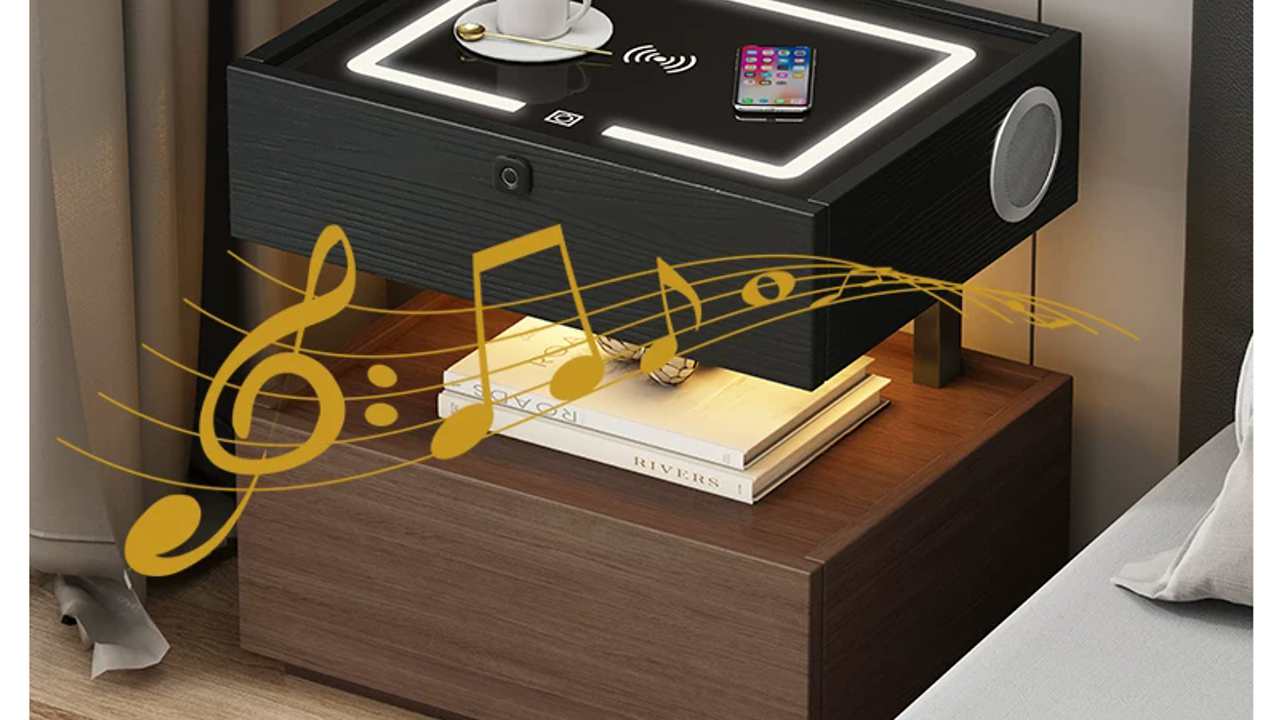
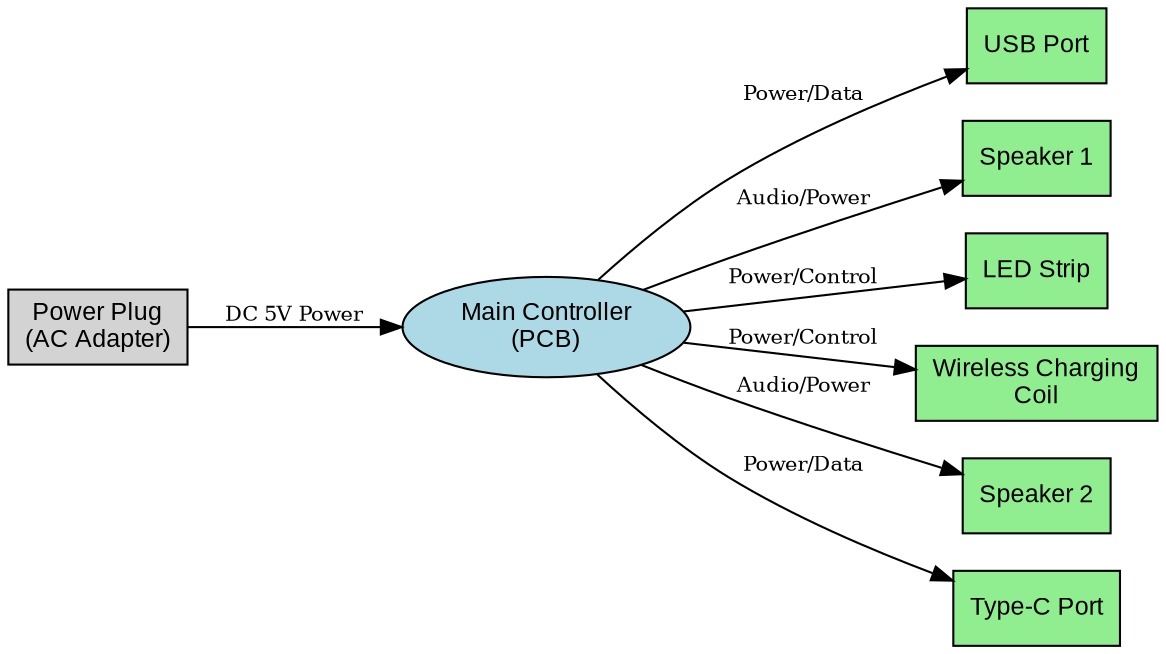
In most smart nightstand projects, Bluetooth audio is usually integrated as a compact speaker module inside the bedside cabinet rather than as a standalone audio product.
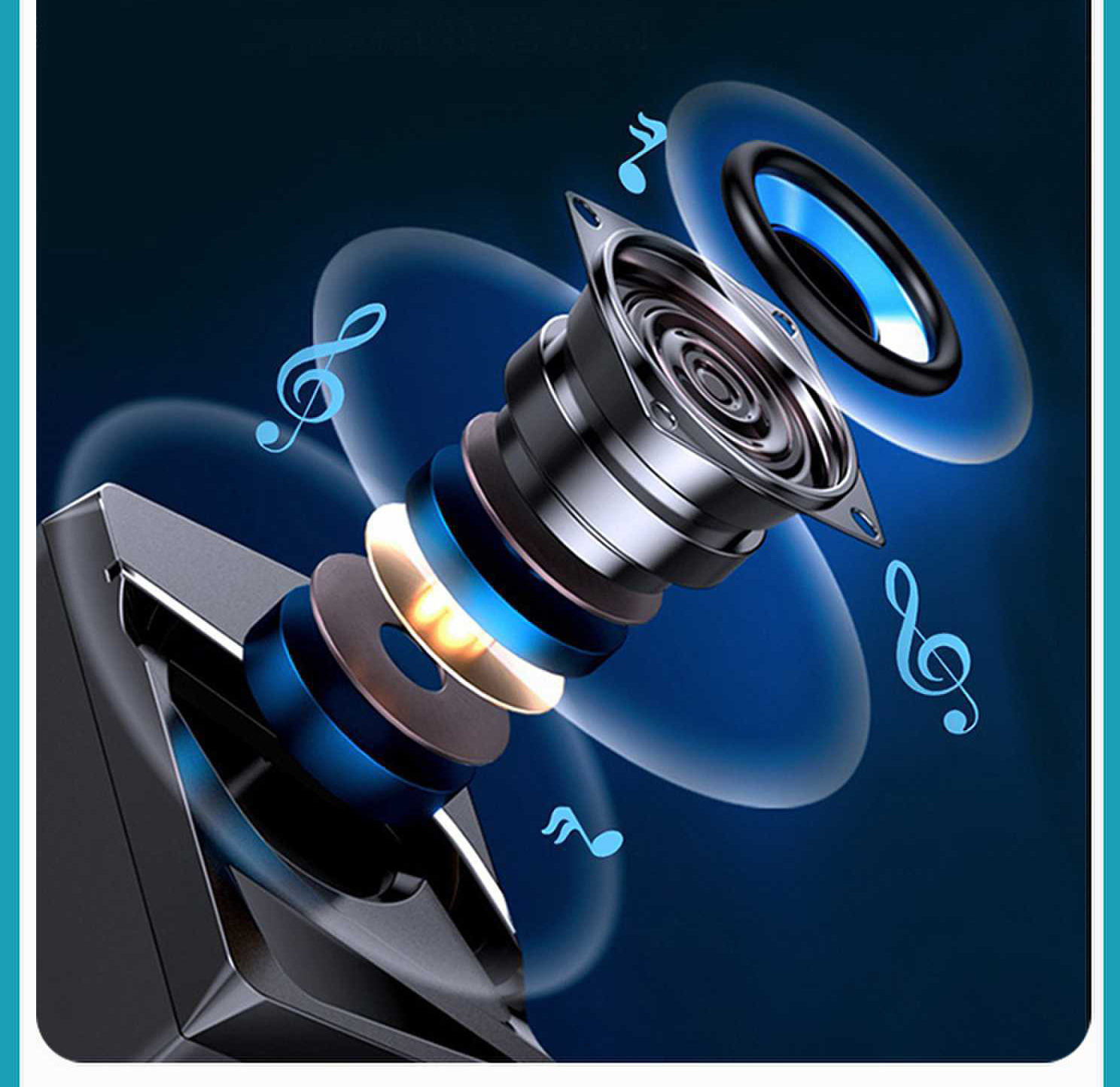
A typical smart bedside table audio system may include:
Bluetooth module
Small speaker drivers
Amplifier board
Internal acoustic cavity
Shared power system
Touch or button control
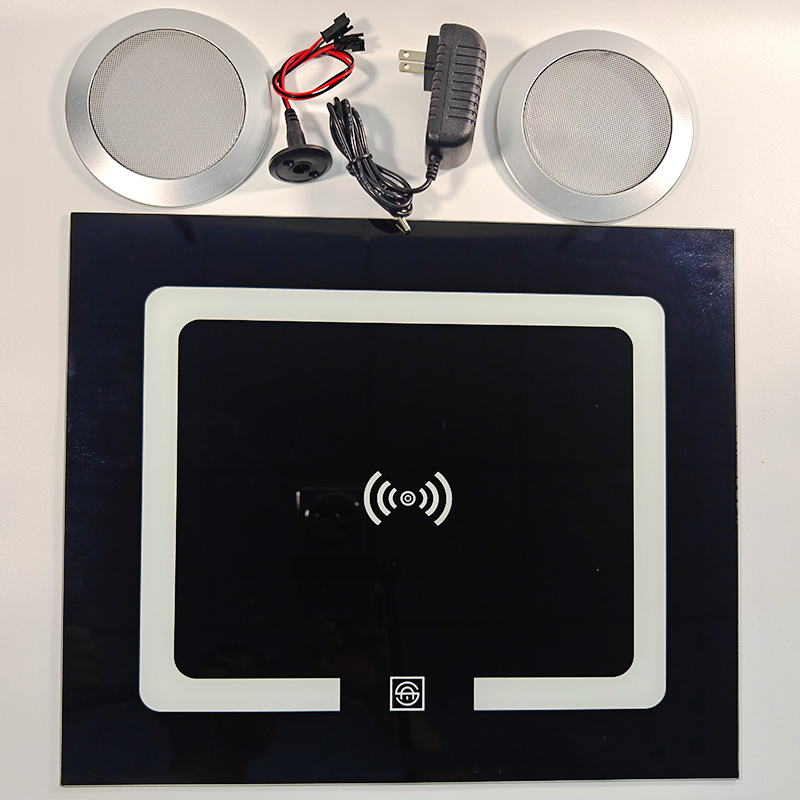
Many smart nightstand audio systems are combined with tempered glass touch panels for cleaner bedside control layouts.
Unlike portable speakers, smart furniture audio systems must operate inside furniture structures made from:
MDF
plywood
lacquer panels
upholstered panels
tempered glass tops
This creates additional challenges involving vibration, heat, EMI interference, and acoustic resonance.
Common Audio Components
Audio Component | Main Function |
Speaker driver | Sound output |
Bluetooth module | Wireless connection |
Amplifier board | Signal amplification |
Acoustic cavity | Bass response |
Power module | Stable voltage |
Control panel | User operation |
EMI shielding | Noise reduction |
Audio modules are only one part of a complete smart nightstand system.
Why Furniture Audio Is Different From Portable Speakers
Many buyers compare smart nightstand audio with portable Bluetooth speakers. In practice, they are very different products.
Portable speakers are designed mainly around sound quality.
Smart furniture audio systems must balance:
Furniture structure
Electronic integration
Wireless charging compatibility
Heat management
User safety
Packaging durability
Cost control
After-sales stability
This is why some bedside tables with Bluetooth speakers may look impressive online but create problems during mass production or shipment.
2. Is Bluetooth Audio Still a Valuable Feature in 2026?
The answer depends heavily on the market.
Some buyers assume Bluetooth speakers are now a “standard smart feature.” In reality, market demand varies significantly by sales channel.
Market Demand by Channel
Market | Demand Level | Commercial Value |
Amazon / Shopify | High | Strong visual selling point |
Retail furniture stores | High | Improves showroom appeal |
Gaming furniture | High | Entertainment positioning |
Apartments | Medium | Lifestyle upgrade |
Hotels | Medium-low | Mainly differentiation feature |
Budget wholesale | Low-medium | Cost-sensitive |
Elderly care | Low | Usually unnecessary |
Why Retail Buyers Still Like Bluetooth Audio
For e-commerce and retail-oriented products, Bluetooth audio increases:
“Smart furniture” perception
Product differentiation
Video presentation quality
Short-form content performance
Click-through rate potential
In many Amazon-style listings, visible electronic features matter even if daily usage frequency is moderate.
Why Hotels Often Care Less
In hotel projects, buyers usually focus more on:
Stability
Maintenance
Ease of use
Complaint reduction
Long-term durability
For many hospitality projects, Bluetooth audio is viewed more as a premium differentiation feature than a core requirement.

3. How Consumers Actually Use Bedside Speakers
One common sourcing mistake is assuming bedside speakers should behave like home Hi-Fi systems.
In actual use, most consumers use bedside speakers for lighter audio tasks.
Common Real-World Usage
Usage Scenario | Typical Use Frequency |
Sleep music | High |
White noise | High |
Podcast listening | Medium |
Casual music | Medium |
Background audio | Medium |
Gaming | Low-medium |
Movie playback | Low |
What This Means for Product Design
In many projects, stable and comfortable sound matters more than aggressive bass performance.
For bedside products, users usually care more about:
Easy pairing
Stable Bluetooth connection
Comfortable sound
Simple controls
Low vibration
Low electrical noise
rather than extreme output power.
4. 3W×2 vs 5W×2 vs Subwoofer:
Which Configuration Actually Makes Sense?
One of the most common questions buyers ask is:
“Should we use 3W×2 or 5W×2 speakers?”
In reality, speaker wattage alone does not determine user experience.
Speaker System Comparison
System | Suitable For | Main Advantage | Main Limitation |
3W×2 | Hotels, apartments | Stable & compact | Limited bass |
5W×2 | Retail & e-commerce | Fuller sound | Higher cost & vibration |
2.1 + subwoofer | Gaming products | Strong bass effect | More EMI & after-sales risk |
Why 3W×2 Is Often Enough
For many hotel and apartment projects, 3W×2 systems are already practical.
Reasons include:
Lower vibration
Lower heat
Lower EMI risk
Smaller cavity requirements
Lower return rate
For white noise, podcasts, and casual listening, the sound level is usually acceptable.
When 5W×2 Makes More Sense
5W×2 systems are more suitable for:
Retail furniture
Lifestyle-oriented products
Premium smart furniture
E-commerce collections
because they create a stronger “smart product” impression.
However, they also increase:
Cabinet vibration
Heat
Packaging risk
Electrical complexity
if the cabinet structure is weak.
Are Subwoofers Worth Adding?
In most smart nightstand projects:
Not really.
Subwoofer systems create several practical problems:
More vibration
Larger cabinet requirements
More EMI risk
Higher packaging damage rate
More difficult repair work
They are mainly suitable for:
Gaming products
Entertainment-oriented furniture
Youth-focused retail products
For most distributors and hotel buyers, simpler systems are usually safer.
5. What Does 60Hz–22kHz Actually Mean?
Many audio specifications list frequency response numbers such as:
60Hz–22kHz
but buyers often misunderstand what these numbers actually mean in bedside furniture.
Frequency Range Explanation
Frequency Range | Perceived Sound |
20–60Hz | Deep bass |
60–250Hz | Bass body |
250Hz–2kHz | Vocals |
2kHz–22kHz | Detail & clarity |
Practical Reality in Smart Nightstands
For smart nightstands, a wider frequency response range should be read carefully. A small bedside cabinet does not have the same acoustic space as a dedicated speaker box.
If the cabinet volume is limited, the speaker may not reproduce deep bass effectively even if the specification looks good on paper. For this reason, OEM buyers should test actual listening quality, vibration, and distortion instead of relying only on frequency response numbers.
Most bedside furniture cannot reproduce deep bass effectively because:
Internal cabinet volume is limited
Speaker drivers are small
Furniture vibration becomes noticeable
Space is shared with electronics
This means a balanced sound profile is usually more important than exaggerated bass specifications.
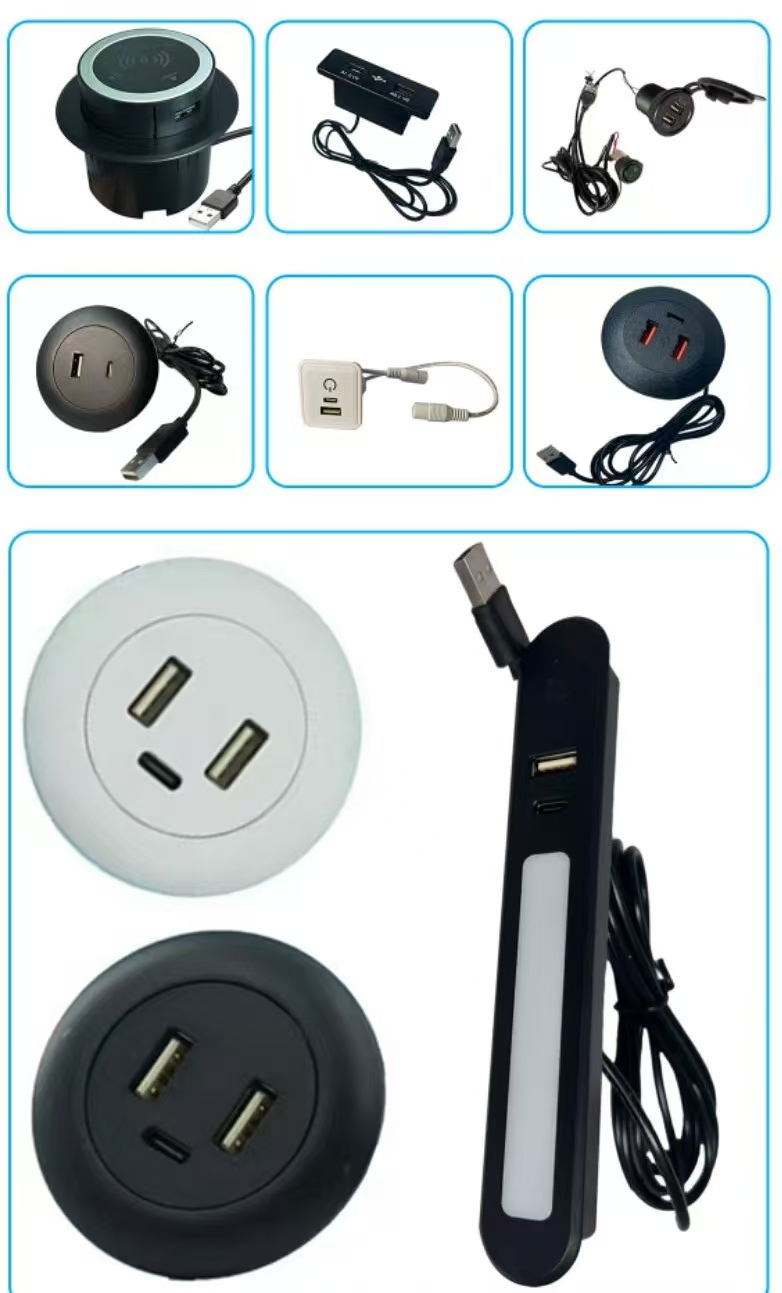
Bluetooth audio systems often share power architecture with smart bedside table power systems.
👉 smart bedside table power system
What Buyers Should Prioritize Instead
For smart bedside table audio systems, practical priorities are usually:
Clear vocals
Stable Bluetooth connection
Low distortion
Comfortable volume
Controlled vibration
rather than maximum low-frequency performance.
6. Bluetooth 5.0 vs 5.2:
Is the Upgrade Necessary?
Bluetooth version should not be the only decision factor. Bluetooth 5.2 introduced newer features such as LE Audio support, but in many furniture projects, actual module quality is more important than the printed version number.
For smart nightstands, buyers should pay more attention to antenna position, pairing stability, EMI control, and performance under full electrical load. A Bluetooth 5.0 module with stable testing may be more practical than a poorly integrated Bluetooth 5.2 module.
Bluetooth Version Comparison
Version | Main Advantage |
Bluetooth 5.0 | Stable mainstream standard |
Bluetooth 5.1 | Improved positioning |
Bluetooth 5.2 | Lower power & LE Audio support |
For buyers who need to verify Bluetooth specifications, the Bluetooth SIG provides official Bluetooth specification resources and qualification information.
Practical OEM Recommendation
For most bedside table Bluetooth speaker OEM projects:
Bluetooth 5.0 is already sufficient.
Reasons:
Mature supply chain
Stable compatibility
Lower module cost
Broad device support
When Bluetooth 5.2 Makes Sense
Bluetooth 5.2 may be useful for:
Premium smart furniture
Future-oriented retail products
Low-power ecosystems
Advanced smart home integration
However, for many projects, Bluetooth module quality matters more than version number alone.
What Buyers Should Actually Test
Instead of focusing only on Bluetooth version, buyers should test:
Pairing stability
Connection speed
Audio delay
EMI resistance
Performance under charging load
Standards & Compliance Notes for Bluetooth Speaker Smart Nightstands
For export-oriented smart furniture, Bluetooth audio modules should be reviewed together with wireless communication, electrical safety, and EMC requirements.
Buyers should confirm whether the selected Bluetooth module, power system, and complete smart nightstand can meet the target market’s compliance requirements.
Common areas to check include:
Area | What Buyers Should Check |
Bluetooth module | Module specification and qualification path |
EMC / EMI | Interference control under full-load operation |
Electrical safety | Adapter, wiring, insulation, and overload protection |
RoHS | Restricted substance compliance for electronics |
FCC / CE | Market-dependent export requirements |
For serious B2B projects, compliance should be discussed before mass production, not after shipment.
7. EMI Interference: Why Audio Noise Appears in Smart Furniture
👉 wireless charging bedside table OEM 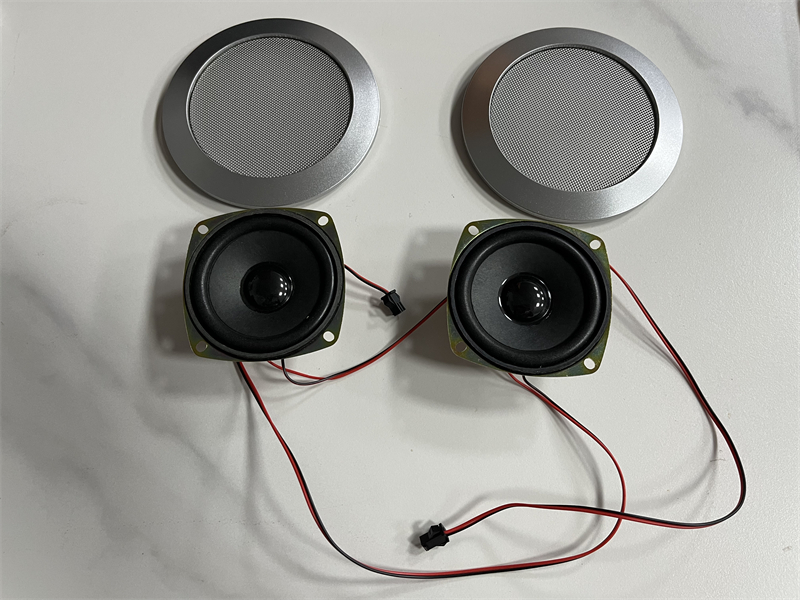 |
Why Smart Furniture Has Higher EMI Risk
Smart nightstands often combine:
Wireless charging
USB-C PD charging
LED lighting
Touch panels
Bluetooth modules
Audio amplifiers
inside a very limited internal space.
These systems can interfere with each other if the design is weak.
For smart nightstands that combine wireless charging, USB-C charging, LED lighting, touch control, and Bluetooth audio, a normal speaker test is not enough.
The speaker should be tested under full-load conditions. That means the wireless charging module, LED lighting, USB ports, and audio system should be turned on together.
Buzzing or hum noise often appears only when several electronic modules are working at the same time. This is why large buyers should ask for short sample testing videos before confirming mass production.
Common EMI Sources
Interference Source | Possible Problem |
Wireless charging coil | Buzzing sound |
LED driver | Electrical noise |
USB-C PD module | Signal instability |
Poor grounding | Hum sound |
Weak shielding | Bluetooth interruption |
Why Large Buyers Care About EMI
Hotels and distributors usually prefer lower-risk products.
This is why many large buyers avoid overly complicated electronic combinations unless the supplier can demonstrate stable testing results.
Practical Questions Buyers Should Ask
When evaluating suppliers, ask:
Has the speaker been tested while wireless charging is active?
Has grounding isolation been checked?
Is EMI shielding used?
Has full-load testing been performed?
These questions reveal whether the supplier actually understands smart furniture integration.
A practical testing request can be written as:
“Please test the Bluetooth speaker while wireless charging, USB-C output, and LED lighting are working at the same time. Please also provide a short video showing whether buzzing or interference appears under full load.”
8. Speaker Placement & Acoustic Cavity Design
Speaker wattage alone does not determine sound quality.
Furniture structure matters heavily.
Why Acoustic Design Matters
Inside furniture, sound is influenced by:
Cabinet volume
Panel density
Vibration
Airflow
Internal structure
A weak cabinet may create:
Buzzing
Resonance
Vibration noise
Distortion
even if the speaker module itself is acceptable.
Recommended Design Structure
Design Area | Recommended Direction |
Speaker direction | Front-facing preferred |
Acoustic cavity | Semi-sealed |
Cabinet material | MDF preferred |
Isolation | Rubber damping recommended |
Internal structure | Avoid loose panels |
Why MDF Often Performs Better
MDF generally provides:
Better vibration control
More stable resonance
Better damping behavior
than lightweight hollow panels.
This is one reason many smart bedside table audio systems use MDF structures even in mixed-material products.
9. Why Bluetooth Speaker Nightstands Perform Better in E-commerce
Bluetooth speakers are especially valuable in online retail environments.
Why E-commerce Sellers Like Audio Features
Feature | Commercial Impact |
Bluetooth speaker | Higher perceived intelligence |
LED lighting | Better product visuals |
RGB + audio | Better short-form video content |
Wireless charging + speaker | Strong “smart furniture” identity |
Why This Improves Conversion
Consumers often associate integrated audio with:
Modern lifestyle
Smart bedroom systems
Premium furniture
Technology integration
Even if actual speaker usage is moderate, the feature can still improve perceived product value.
But There Is a Trade-Off
The more electronics added:
The higher the after-sales complexity.
This is why packaging quality and electronic stability become extremely important for e-commerce projects.
Looking for a Smart Nightstand Audio OEM Solution?
Request:
Bluetooth speaker specification sheet
Speaker power options
EMI testing details
Packaging protection method
OEM logo options
Sample quotation
Suggested Inquiry Message
10. How Much Does Bluetooth Audio Increase Cost?
This is often the deciding factor for distributors and wholesalers.
Approximate OEM Cost Impact
System | Approximate Cost Impact |
3W×2 | Low |
5W×2 | Medium |
Subwoofer system | High |
Factory Sourcing Note
In real bedside furniture projects, speaker power should not be selected only by looking at wattage. A 5W×2 system may sound fuller than 3W×2, but it also requires better cabinet structure, stronger vibration control, and better packaging protection.
For hotel and apartment projects, 3W×2 is often the safer configuration. For retail and e-commerce projects, 5W×2 may create stronger product appeal if the cabinet structure is stable.
Hidden Costs Buyers Often Miss
Audio systems may also increase:
Foam protection cost
Packaging size
Assembly time
Testing time
Return risk
Repair workload
Why Some Buyers Still Add Audio
For retail-oriented products, Bluetooth speakers often increase perceived value more than actual hardware cost.
This is why many smart furniture brands still choose to include them despite the added complexity.
11. After-Sales Reality:
Why Many Large Buyers Prefer Simpler Audio Systems
For large buyers, the main concern is not whether the speaker can work during the sample stage. The real concern is whether the same performance can be maintained after packaging, shipping, installation, and repeated daily use.
A Bluetooth speaker module adds more parts, more wiring, more testing steps, and more possible failure points. This does not mean the feature should be avoided. It means the buyer should prepare a clear testing and replacement plan before mass production.
This is one of the most important sections for real OEM projects.
Common After-Sales Problems
Problem | Typical Cause |
Buzzing | EMI interference |
Bluetooth disconnect | Weak module quality |
Distortion | Weak amplifier |
Broken speaker | Packaging damage |
Cabinet vibration | Weak structure |
Low volume | Poor cavity design |
For distributors and retail brands, replacement parts are important. Buyers should confirm whether speaker modules, amplifier boards, Bluetooth modules, and control panels can be supplied separately after shipment.
For hotel projects, this is even more important because one failed room unit may require fast maintenance without replacing the whole nightstand.
Why Hotels Often Avoid Complex Audio
Hotels usually prioritize:
Reliability
Low complaint rate
Easy maintenance
Long-term stability
This is why many hotel projects still prefer:
Simpler 3W×2 systems
or
No audio system at all.
Why Retail Buyers Accept More Risk
Retail buyers are often more willing to accept feature complexity because:
Smart features improve visual appeal
Product differentiation matters
Video content becomes stronger
Consumers expect “tech furniture”
12. Hotel vs Home:
Should Smart Nightstands Include Bluetooth Speakers?
The answer depends completely on the target market.
Recommendation by Channel
Buyer Type | Recommendation |
Hotels | Optional |
Apartments | Good lifestyle upgrade |
Retail furniture | Recommended |
Amazon sellers | Strong selling point |
Gaming products | Recommended |
Elderly care | Usually unnecessary |
Budget wholesale | Depends on pricing |
Hotel Recommendation
Bluetooth speakers can be used in boutique hotels, lifestyle hotels, and smart room projects where product differentiation matters.
For large hotel projects, however, Bluetooth audio should usually be treated as an optional upgrade rather than a default function. The reason is not sound quality. The real issue is maintenance control.
If one room has pairing problems, buzzing, or speaker vibration, the hotel needs a fast replacement or repair process. For many hotel buyers, reliability is more important than adding one more smart feature.
Home & Retail Recommendation
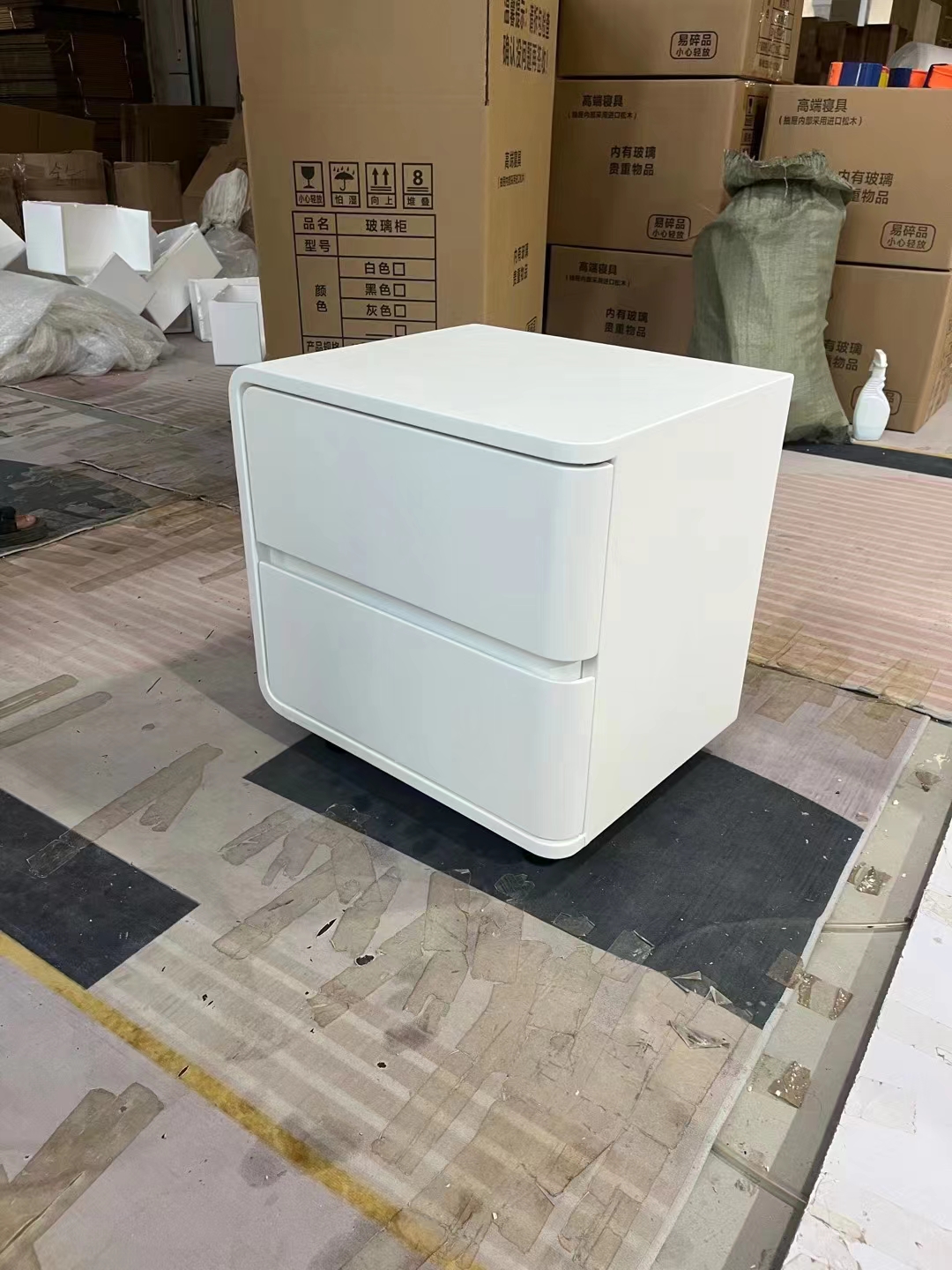
For residential retail and e-commerce products, Bluetooth audio usually has stronger commercial value.
It helps create a more complete “smart bedroom” impression, especially when combined with wireless charging and LED ambient lighting. For Amazon, Shopify, and retail store displays, the speaker function can also make product videos more convincing.
In this channel, the feature is not only about daily audio usage. It is also about perceived smart value.
13. Is Bluetooth Audio Worth Adding?
The Real OEM Decision Guide
This is the most important commercial question.
Bluetooth Audio Is Usually Worth Adding For:
Amazon & Shopify products
Retail collections
Smart lifestyle furniture
Young consumer markets
Gaming-oriented products
Bluetooth Audio Is Usually Less Valuable For:
Budget hotel projects
Cost-sensitive wholesale
Large engineering orders
Elderly care projects
Minimalist furniture collections
The Most Important Insight
Bluetooth speaker systems are usually more valuable in retail-oriented smart nightstands than in cost-sensitive hospitality projects.
That does not mean the feature is bad.
It simply means different markets value different things.
14. Common OEM Specification Range for Bluetooth Speaker Smart Nightstands
Bluetooth speaker smart nightstands can be customized in several ways.
Common OEM Options
The following table is a common OEM reference range for discussion. Actual specifications should be confirmed according to cabinet size, speaker position, target market, Bluetooth module selection, and price level.
OEM Item | Supported |
Speaker power | 3W×2 / 5W×2 |
Frequency Response | 60Hz–22kHz, depending on module and cavity |
Bluetooth module | 5.0 / 5.2 |
Connection Range | 8–10m under normal indoor conditions |
Amplifier Type | Class D commonly used |
Distortion | ≤1% preferred for premium projects |
Power Input | DC 5V or DC 12V depending on system design |
EMI Shielding | Recommended when combined with wireless charging |
Speaker Direction | Front-facing preferred |
Acoustic Structure | Semi-sealed cavity recommended |
Packaging Protection | Foam isolation recommended |
Replacement Parts | Speaker / amplifier / Bluetooth module optional |
Channel-Specific OEM Advice
For Distributors
Choose stable and lower-risk systems.
For Amazon Sellers
Focus on visual value and strong packaging.
For Hotels
Prioritize reliability and easy maintenance.
For Furniture Brands
Use Bluetooth audio as part of “smart lifestyle positioning.”
15. Technical Specification Table
Parameter | Recommended Specification |
Speaker System | 3W×2 / 5W×2 |
Frequency Response | 60Hz–22kHz |
Bluetooth Version | 5.0 / 5.2 |
Connection Range | 8–10m |
Amplifier Type | Class D preferred |
Distortion | ≤1% preferred |
Power Input | DC 12V |
EMI Shielding | Recommended |
Speaker Direction | Front-facing preferred |
Acoustic Structure | Semi-sealed cavity |
Packaging Protection | Foam isolation recommended |
Retail-oriented smart nightstands often combine Bluetooth speakers with ambient LED lighting systems.
👉 smart nightstand LED lighting system  |
17. Free Download:
Smart Nightstand Audio System OEM Checklist
This checklist is designed for distributors, furniture brands, Amazon sellers, and hotel project buyers who are comparing Bluetooth speaker smart nightstands.
It includes:
- 3W×2 vs 5W×2 speaker selection table
- Bluetooth 5.0 vs 5.2 sourcing notes
- EMI full-load testing checklist
- Speaker placement and acoustic cavity review
- Packaging protection checklist
- Hotel vs retail recommendation chart
- Replacement parts confirmation form
- OEM inquiry template
Request the checklist together with product catalog, MOQ, sample price, and lead time.
FAQ
Frequently Asked Questions
1. Are Bluetooth speakers useful in smart nightstands?
Yes, especially for retail, e-commerce, and lifestyle-oriented smart furniture.
2. Is 3W×2 enough for bedside audio?
For hotels and apartments, 3W×2 is usually sufficient for casual listening and white noise.
3. Is 5W×2 better?
It provides fuller sound but also increases vibration and packaging risk.
4. Are subwoofers recommended?
Usually only for gaming or entertainment-focused products.
5. What is the biggest audio problem in smart furniture?
EMI interference between electronic modules.
6. Does wireless charging affect speakers?
Yes, poor shielding can create buzzing or instability.
7. Is Bluetooth 5.2 necessary?
Not always. Bluetooth 5.0 is sufficient for most projects.
8. Why do some smart nightstands buzz?
Poor grounding or EMI interference is usually the reason.
9. Is audio important for hotel projects?
Usually less important than reliability and maintenance simplicity.
10. Why do Amazon sellers like Bluetooth speakers?
Because they improve perceived product intelligence and visual appeal.
11. Which market benefits most from audio systems?
Retail and e-commerce.
12. Which market benefits least?
Budget hospitality and elderly care projects.
13. Can the audio system be customized?
Yes. Speaker power, Bluetooth module, branding, and packaging can all be customized.
14. Does speaker placement matter?
Yes. Poor placement can reduce sound quality and increase vibration.
15. What should buyers test before ordering?
Bluetooth stability, EMI performance, vibration, and packaging durability.
Looking for Smart Nightstand Audio OEM Solutions?
We support:
Bluetooth speaker integration
Wireless charging systems
LED lighting systems
OEM / ODM smart furniture
Retail & e-commerce projects
Smart bedside furniture customization
Request:

Conclusion
Bluetooth speakers in smart nightstands are not simply audio features.
In many projects, they function more as:
Product differentiation tools
Smart lifestyle features
Retail selling points
E-commerce presentation upgrades
rather than heavily used home audio systems.
For some channels — especially retail and online sales — Bluetooth audio can increase perceived value significantly.
For other channels — especially cost-sensitive hospitality projects — simpler and more stable configurations are often preferred.
The best smart nightstand audio system is usually not the loudest one.
It is the one that best matches:
The target market
The price level
The after-sales capability
The real usage scenario
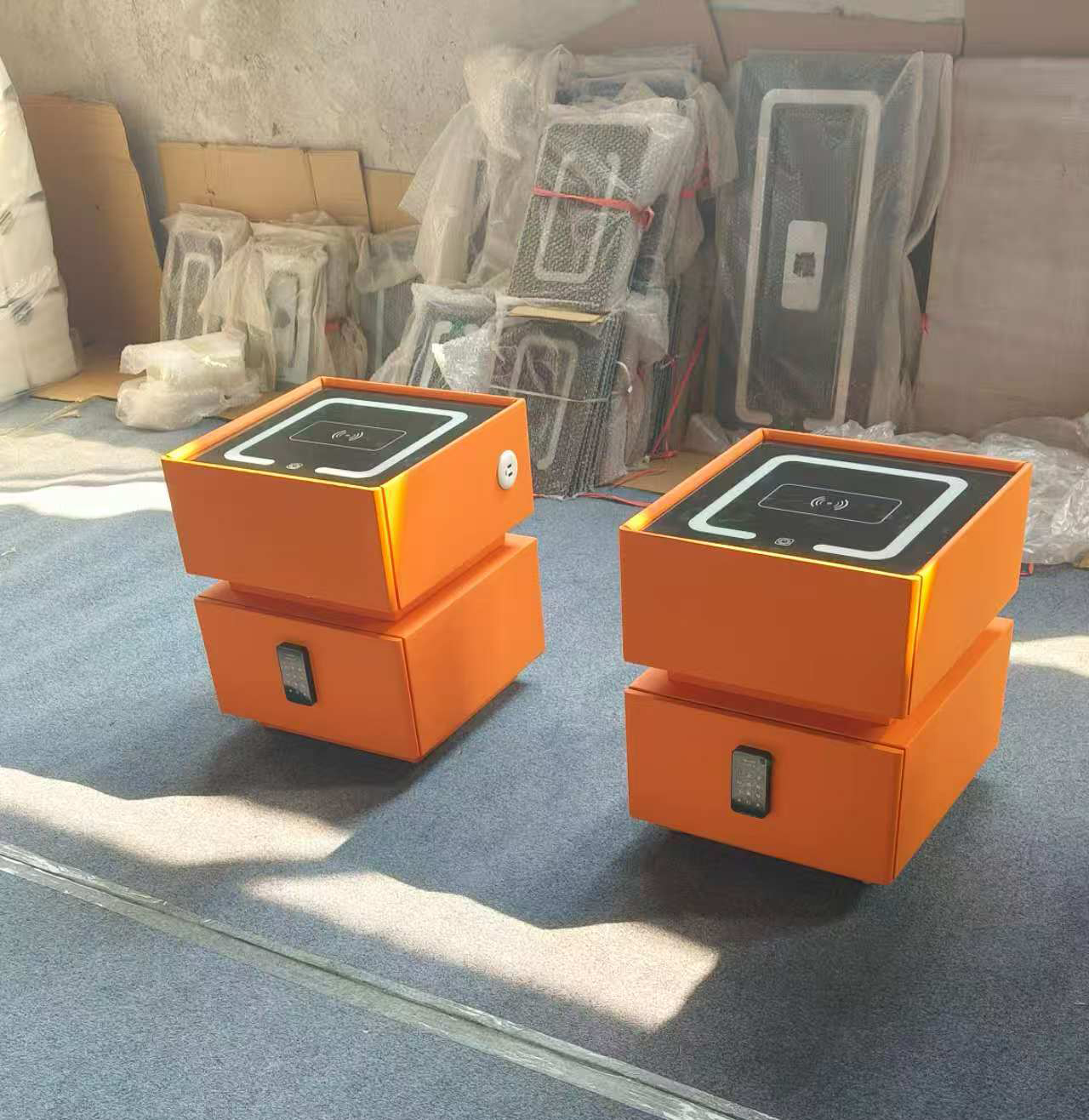
Request a Bluetooth Speaker Smart Nightstand OEM Solution
If you are developing smart nightstands for retail, e-commerce, distributors, or hotel projects, the audio system should be selected according to your sales channel, price level, and after-sales plan.
When sending an inquiry, please include:
- Target market: hotel / retail / Amazon / distributor / apartment
- Preferred speaker system: 3W×2 or 5W×2
- Required Bluetooth version
- Whether wireless charging and LED lighting are included
- Expected MOQ
- Packaging requirement
- OEM logo or private-label needs
Hebai can support smart nightstand OEM projects with Bluetooth audio, wireless charging, LED lighting, tempered glass panels, and export packaging options.
👉 Ganzhou Hebai Wood Products Co., Ltd
✔Web:https://hebaifurniture.com/
✔Email:vincent@hebaifurniture.com
✔whatsapp:+86 15207972272
👉 Home| Product| Smart Bedside Table Series|Catalogue
Continue Reading
👉 Smart Nightstand Manufacturer
👉 Fingerprint Lock Smart Nightstand Guide
👉 Motion Sensor Smart Nightstand Guide
👉 Wireless Charging Smart Nightstand Guide
👉 USB-C Charging Smart Nightstand Guide
👉 Smart Nightstand Buying Guide
👉 Hotel Nightstand Procurement Guide
Related Hebai Furniture Resources
Explore more visual, video, and platform resources about Bluetooth speaker smart nightstands, bedside tables with Bluetooth speakers, OEM smart nightstand sourcing, EMI testing, and acoustic cavity design from Hebai Furniture.
👉 Medium Summary: Bluetooth Speaker Smart Nightstands for Bedside Table Buyers
👉 LinkedIn Discussion: Bluetooth Speaker Smart Nightstand Sourcing
👉 Behance Project: Bluetooth Speaker Smart Nightstand OEM Project
👉 YouTube Short: Bluetooth Speaker Smart Nightstand Guide
👉 YouTube Video: Bluetooth Speaker Smart Nightstands Explained
👉 Pinterest Board: Bluetooth Speaker Smart Nightstand & Bedside Table Ideas
👉 Instagram Reel: Bluetooth Speaker Smart Nightstand Guide
👉 TikTok Video: Bluetooth Speaker Nightstand Buyer Tips
👉 Facebook Post: Bluetooth Speaker Smart Nightstand Buyer Guide