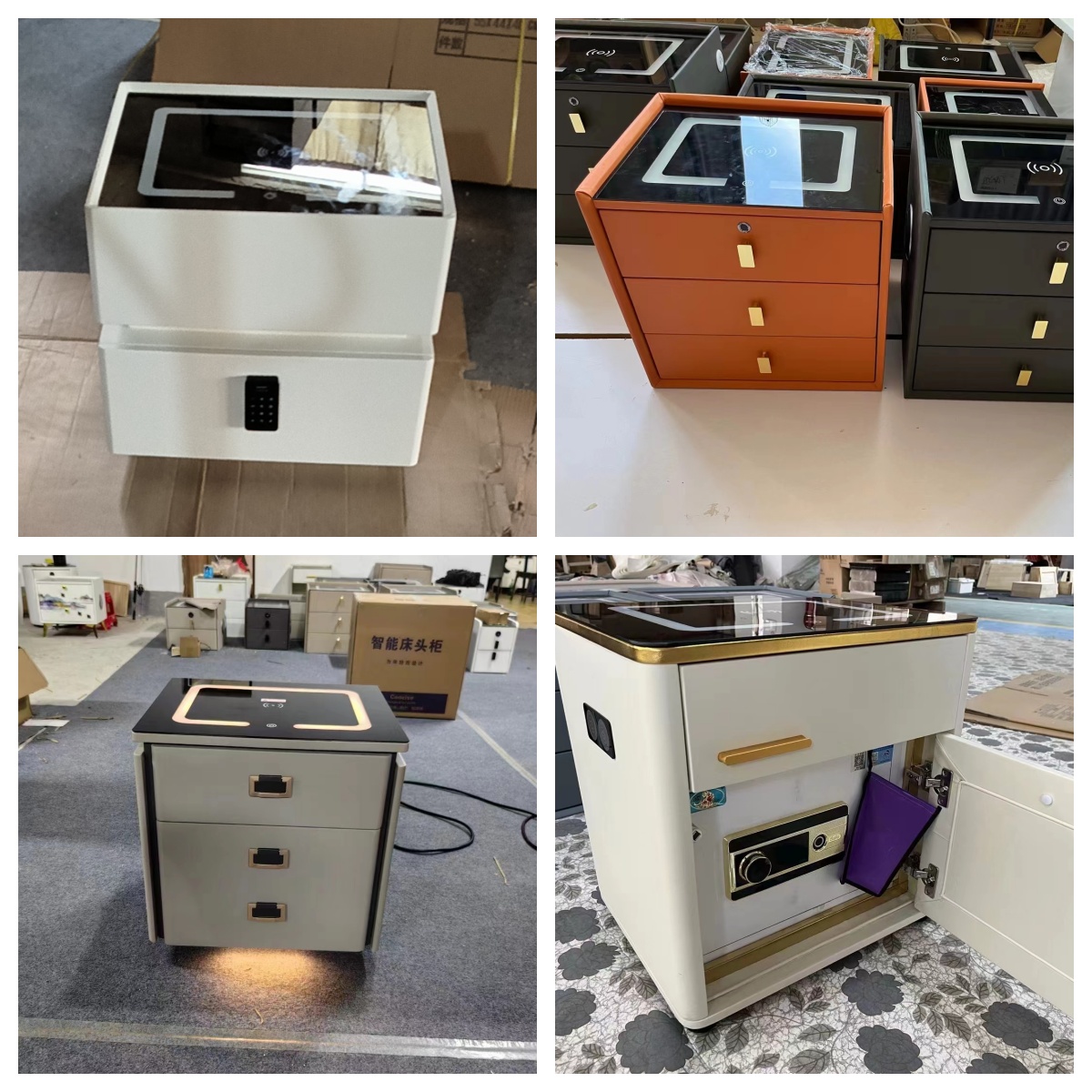
What Buyers Should Know About LED Lighting in Smart Nightstands
What should buyers consider when adding LED lighting to smart nightstands? Explore lighting options, color temperature, motion sensors, brightness control, user experience, and OEM integration for furniture brands, distributors, and hospitality projects.
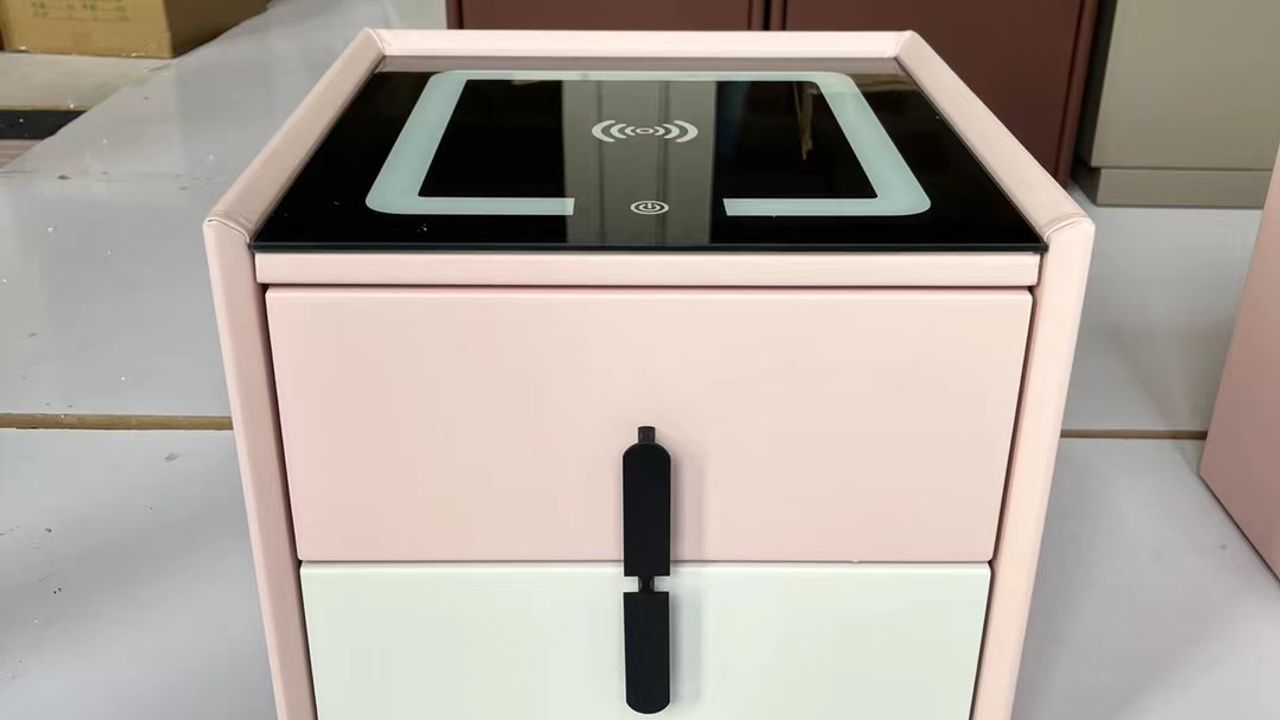
Looking for OEM bedside table supplier? Visit our complete OEM guide:
👉 What Is a Smart Nightstand System? Engineering, Standards & OEM Sourcing Guide (2026)
Ganzhou Hebai Wood Products Co., Ltd is a trusted bedside table manufacturer in China specializing in OEM smart and upholstered nightstands.
👉Looking for OEM bedroom furniture? Explore our Smart bedside table.
Smart Nightstand LED Lighting Engineering Guide: 3000K vs 6000K, Flicker-Free Design & OEM Buying Standards (2026)
Published: May 20, 2026
Last Updated: June 8, 2026
Reviewed by Hebai Furniture Product Development & Export Team
How does LED lighting impact hotel room experience in smart nightstands?
LED lighting is no longer just a functional feature in smart nightstands. It plays a key role in hotel atmosphere design, luxury bedroom experience, and furniture brand positioning in global markets.
Factor | Options |
|---|---|
Color Temperature | 2700K / 4000K / 6500K |
Brightness Control | Touch / App / Sensor |
Light Position | Drawer / Bottom / Side |
Lighting Style | Warm / Neutral / RGB |
Power System | USB / AC / Integrated |
Quick Answer
For smart nightstands and LED bedside tables, the best lighting system depends on the buyer’s application. Hotel projects usually need 3000K warm light, low-glare hidden LED strips, simple touch control, ≤5 lux night mode, and flicker-free dimming. E-commerce sellers may prefer stronger ambient lighting or optional RGB effects for product photos and short videos. Premium furniture brands can use stepless dimming, tunable white, custom touch icons, and consistent LED color control.
For B2B buyers, LED lighting should not be specified only as “add LED light.” A better RFQ should include color temperature, dimming method, LED position, night mode brightness, flicker-free test, heat dissipation, driver quality, touch-control logic, and replacement module requirements.
In most hotel bedside table and nightstand projects, the safest LED specification is 3000K warm light + three-color option + low-glare hidden lighting + ≤5 lux night mode + stable flicker-free driver.
In many smart nightstand projects, buyers first ask about wireless charging, USB-C ports, or tempered glass panels. LED lighting is often discussed later, almost as a decorative option. In real production and after-sales feedback, however, the lighting system is one of the features users notice most quickly.
A bedside LED light can make a smart nightstand feel premium, but it can also create complaints if it is too bright, too cold, flickers at low brightness, or reflects directly into the user’s eyes.
For B2B buyers, LED lighting should not be treated as “add a light strip.” It should be specified as a small lighting system inside furniture.
This guide focuses specifically on LED lighting systems inside smart nightstands and LED bedside tables. For USB-C PD charging architecture, wireless charging safety, and full smart bedside table power system design, buyers should refer to a dedicated power system guide. Here, the focus is color temperature, glare control, dimming comfort, flicker-free performance, heat dissipation, and OEM LED lighting specifications.
1. What Is a Smart Nightstand LED Lighting System?
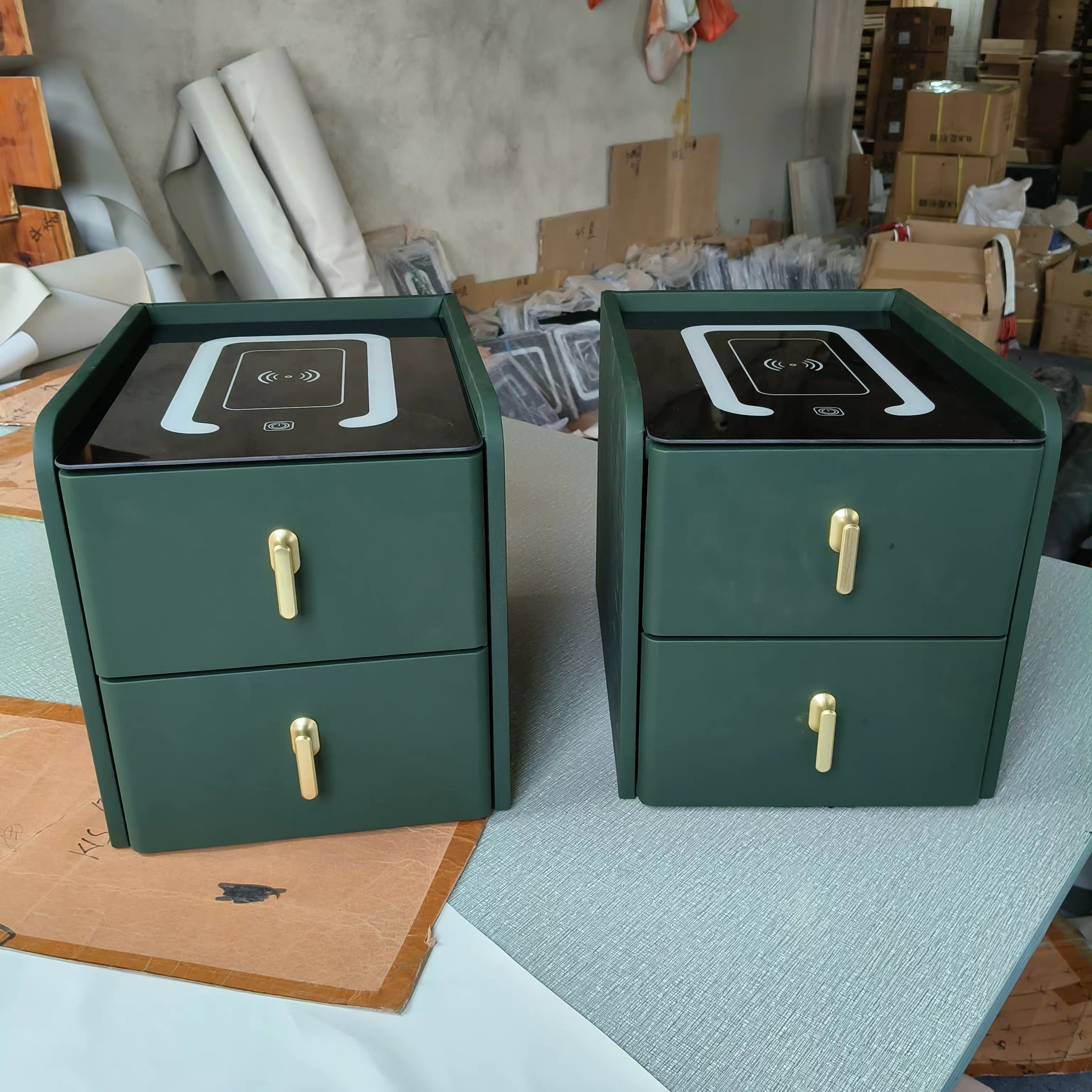
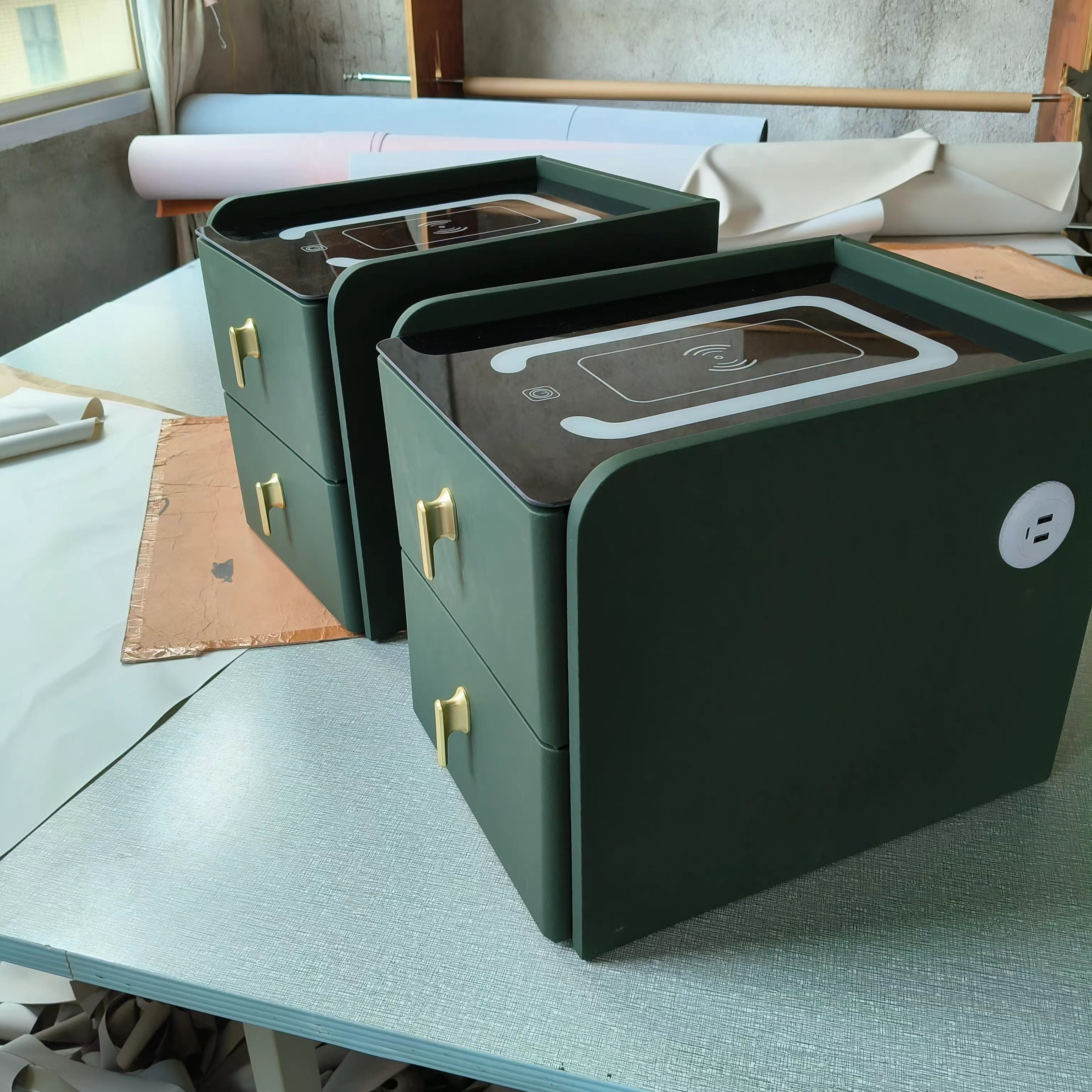
A smart nightstand LED lighting system is an integrated bedside furniture lighting module. It combines LED light sources, touch or sensor control, dimming logic, and ambient lighting design inside the nightstand structure.
It is different from a standalone bedside lamp.
A standalone lamp can be replaced easily. An integrated LED system is part of the product. If the LED design is poor, the whole nightstand may receive complaints.
Common lighting positions in smart nightstands
Lighting Position | Main Purpose | Typical Buyer |
Bottom LED strip | Night navigation / floating effect | Hotels, apartments |
Back panel light | Wall-wash ambient effect | Retail brands, luxury homes |
Drawer light | Interior visibility | Premium furniture brands |
Glass panel icon backlight | Touch operation visibility | Smart panel models |
Side edge light | Decorative highlight | E-commerce sellers |
Motion sensor night light | Night movement safety | Hotels, elderly care, apartments |
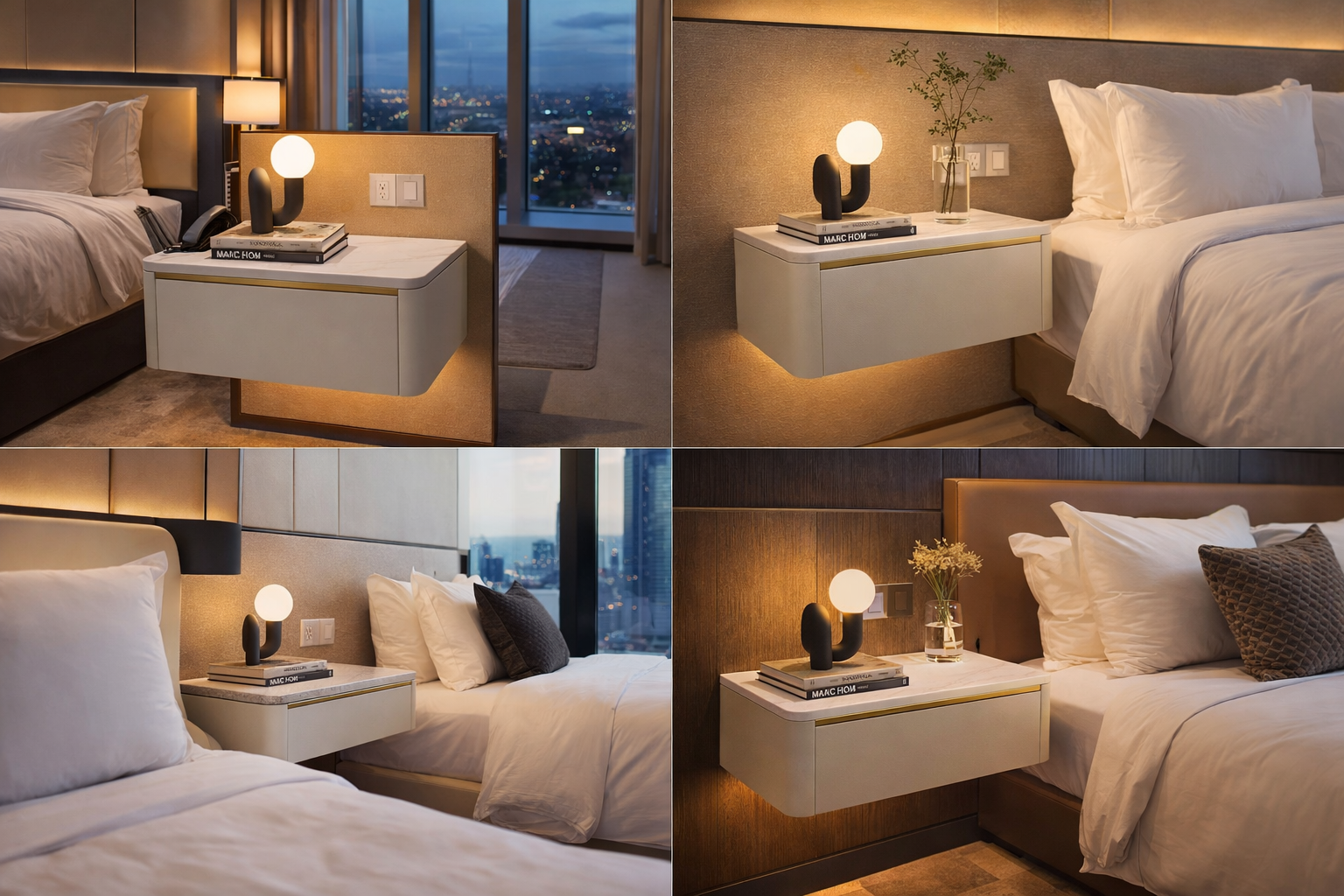
For hotel bedside furniture, the most practical lighting positions are bottom lighting, hidden back lighting, and touch icon backlight. These positions provide visibility without shining directly into the guest’s eyes.
For e-commerce smart nightstands, more visible LED effects may help product images and videos. But for hotel and apartment projects, lighting should be quieter, softer, and easier to use.


2. Why LED Lighting Is Now a B2B Furniture Upgrade, Not Just Decoration
In the past, nightstands were judged mainly by material, drawer structure, surface finish, and price. Smart nightstands are judged differently.
Buyers now compare:
· Is there wireless charging?
· Is there USB-C?
· Does the product have a clean touch panel?
· Is the lighting warm and comfortable?
· Does the LED flicker when dimmed?
· Can the lighting be customized for a brand or hotel project?
This is why smart nightstand LED systems are becoming more important for OEM furniture programs.
How different buyers use LED lighting
Buyer Type | What They Usually Care About | Recommended Lighting Direction |
Hotel project buyers | Guest comfort, reliability, simple operation | 3000K warm light + night mode |
Distributors | Broad market acceptance | Three-color lighting |
E-commerce sellers | Product photos and video effect | Ambient LED strip, RGB optional |
Furniture brands | Premium positioning | Stepless dimming, hidden lighting |
Apartment projects | Practical daily use | Motion sensor + low-glare lighting |
Elderly care projects | Safe night movement | Warm low-lux night light |
A distributor may prefer a simple three-color system because it is easier to sell across markets. An Amazon seller may request stronger visual lighting for product photography. A hotel buyer will usually care less about dramatic RGB effects and more about guest comfort and failure rate.
3. 3000K vs 4500K vs 6000K: What Color Temperature Actually Changes
Color temperature is measured in Kelvin (K). Lower values look warmer and more yellow. Higher values look cooler and more blue-white.
ENERGY STAR’s lighting guide explains the basic principle clearly: lower Kelvin values appear warmer, while higher Kelvin values appear cooler and bluer. For bedside furniture, this is not just a technical detail. It affects how the room feels at night.
Bedside color temperature comparison
Color Temperature | Visual Feeling | Best Use in Smart Nightstands | Procurement Comment |
2700K | Very warm, soft | Sleep mode, premium home use | Comfortable but may feel too yellow for some markets |
3000K | Warm white | Hotel rooms, night mode, ambient lighting | Most practical warm bedside color |
4500K | Neutral white | Reading support, daily use | Balanced for mixed-use scenes |
6000K | Cool white | Cleaning, display, product photos | Clear but not ideal for sleep environment |
6500K | Daylight white | Utility lighting, display | Should be used carefully near beds |
Why 3000K is usually better for hotels
Hotel lighting must work for different guests. A 3000K warm white light gives a softer impression and is less visually harsh at night. It helps the room feel warmer and more relaxing.
For this reason, a smart nightstand with 3000K lighting is often more suitable for hotel rooms than one that only uses cool white lighting.
Why 6000K still has value
6000K is not “bad.” It is simply better for different tasks.
It can help with:
· Cleaning visibility
· Product display
· E-commerce photography
· Modern tech-style appearance
But if 6000K is the only lighting option near the bed, it can feel too cold for nighttime use.
Practical recommendation
For most B2B orders, the safer specification is:
3000K + 4500K + 6000K three-color lighting
For premium models:
2700K–6500K adjustable color temperature + stepless dimming
👉 Wireless Charging Nightstand: Qi Standard, Power, Thermal Control & OEM Guide (2026)

4. Three-Color Lighting vs Stepless Dimming
Many smart nightstand lighting systems are described as “adjustable,” but this word can mean different things.
There are three common systems:
1. Three-color lighting
2. Stepless dimming
3. RGB lighting
They should not be mixed together in buyer communication.
Comparison table
Lighting System | What It Does | Advantage | Limitation | Best For |
Three-color lighting | Switches among 3000K/4500K/6000K | Simple, stable, easy to explain | Limited personalization | Hotels, distributors |
Stepless dimming | Adjusts brightness from low to high | Better comfort control | Requires better driver quality | Premium retail, luxury homes |
Tunable white | Adjusts color temperature range, such as 2700K–6500K | High-end user experience | Higher cost | Premium smart furniture |
RGB lighting | Creates colored lighting effects | Strong visual appeal | Not always practical | E-commerce, youth market |
Which system is better for hotels?
For hotels, simplicity matters.
A guest should not need to read instructions to turn off a nightstand light. Three-color lighting with clear touch icons is usually better than complicated RGB modes.
Which system is better for retail?
For retail and e-commerce, visual appeal matters more. RGB or tunable lighting can help photos, short videos, and showroom display.
Which system is better for furniture brands?
For furniture brands targeting higher price points, stepless dimming is valuable. It feels more refined and gives the customer more control.
5. Night Light Mode Under 5 Lux: Why This Detail Matters
A night light should not behave like a small reading lamp. Its purpose is to help users move safely at night without fully waking them or creating glare.
For smart nightstands, a night light mode under 5 lux is a useful design target.
Bedside lighting brightness guide
Mode | Suggested Illuminance | Use Case |
Sleep mode | 0–2 lux | Very low background visibility |
Night light mode | ≤5 lux | Night movement, bathroom trips |
Ambient lighting | 5–30 lux | Relaxing atmosphere |
Reading support | 100 lux+ | Reading assistance, not always from nightstand alone |
Why this matters in real rooms
In a dark hotel room, even a small LED strip can feel bright if it is directed toward the eyes. This is why the position of the light is as important as the lux value.
For a better result:
· Hide the LED strip from direct view
· Use a diffuser
· Aim light downward or backward
· Keep night mode very low
· Avoid cool white light for sleep mode
Best use cases for ≤5 lux night mode
· Hotel rooms
· Senior living furniture
· Apartment bedrooms
· Children’s rooms
· Healthcare-adjacent residential projects
A bedside lighting under 5 lux is not a marketing gimmick. It is a practical comfort feature.
👉 Best Smart Nightstand Manufacturer in China (2026 OEM Guide + Features, Cost & Factory Insights)
6. Flicker-Free LED Design: What B2B Buyers Should Ask
Flicker is one of the easiest details to ignore during product selection. It is also one of the most common reasons LED lighting feels low-quality.
Flicker is rapid variation in light intensity. The U.S. Department of Energy describes flicker, also called temporal light modulation, as rapid variation in light source intensity that can create visual effects ranging from distracting to, in rare cases, harmful.
IEEE 1789-2015 provides recommendations related to modulating current in high-brightness LEDs and reducing potential health risks from flicker. For smart furniture, the main lesson is simple: driver quality and dimming design matter.
Where flicker appears in smart nightstands
Situation | Why Flicker Happens |
Low brightness dimming | Poor PWM control |
Cheap LED driver | Unstable current output |
Long LED strip | Voltage drop |
Mixed power modules | Electrical interference |
Touch dimming | Poor control firmware |
Simple test buyers can request
Ask suppliers to test the light:
· At 100% brightness
· At 50% brightness
· At 10–20% brightness
· While wireless charging is active
· While USB ports are loaded
Low brightness is where poor systems usually show problems.
Factory-level flicker checklist
Check Item | Recommended Requirement |
Driver type | Constant current preferred |
Low brightness test | Required |
Visible flicker | No obvious flicker |
Camera slow-motion test | No strong stripes |
Dimming stability | Smooth transition |
Electrical interference test | Lighting remains stable under charging load |
Buyer note
Do not only ask: “Is it flicker-free?”
Ask:
“Can you test the LED at low brightness while wireless charging and USB charging are working at the same time?”
This question immediately separates a serious OEM supplier from a simple assembler.
7. LED Heat Dissipation and Lifespan
LEDs are efficient, but they still generate heat. In furniture, heat has fewer places to escape because light strips are often hidden inside wood panels, glass panels, drawers, or back structures.
Poor heat management can cause:
· Brightness decay
· Color shift
· Driver instability
· Shorter LED lifespan
· Yellowing of diffusers
· Higher warranty risk
Recommended engineering targets
Item | Recommended Specification |
LED lifespan | 30,000–50,000 hours depending on module quality |
Heat dissipation | Aluminum profile preferred |
Operating area | Avoid fully sealed high-heat cavities |
Driver placement | Away from heat-sensitive surfaces |
Brightness design | Avoid unnecessary high output for night mode |
Your smart nightstand specification system includes long-life electronic requirements and lighting functions such as three-color light, stepless dimming, night mode, and brightness memory. These features only perform well when the LED strip, driver, and heat design are matched correctly.
Why 50,000 hours needs context
Many suppliers claim 50,000 hours. The number is only meaningful if supported by:
· LED chip quality
· Driver stability
· Heat dissipation design
· Operating temperature
· Actual brightness level
A poor thermal structure can reduce useful life even if the LED chip itself is rated for long operation.
8. CRI and Color Quality: A Small Detail That Affects Premium Feel
CRI, or Color Rendering Index, describes how accurately a light source shows colors compared with a reference source.
For smart nightstands, CRI is not as critical as in art galleries or retail fashion lighting, but it still affects perceived quality.
The Illuminating Engineering Society has also developed TM-30 as a more detailed method for evaluating color rendition. For general B2B furniture procurement, CRI remains easier to understand, while TM-30 can be referenced for advanced lighting evaluation.
Practical CRI guidance
CRI Level | Interpretation | Smart Nightstand Use |
CRI <70 | Low quality | Not recommended |
CRI 80+ | Standard good quality | Recommended for most projects |
CRI 90+ | Premium color quality | Premium retail or luxury projects |
What buyers should specify
For mainstream smart bedside table lighting systems:
CRI ≥80 is a reasonable requirement.
For premium retail brands:
CRI 90+ can be used as a higher-end selling point.
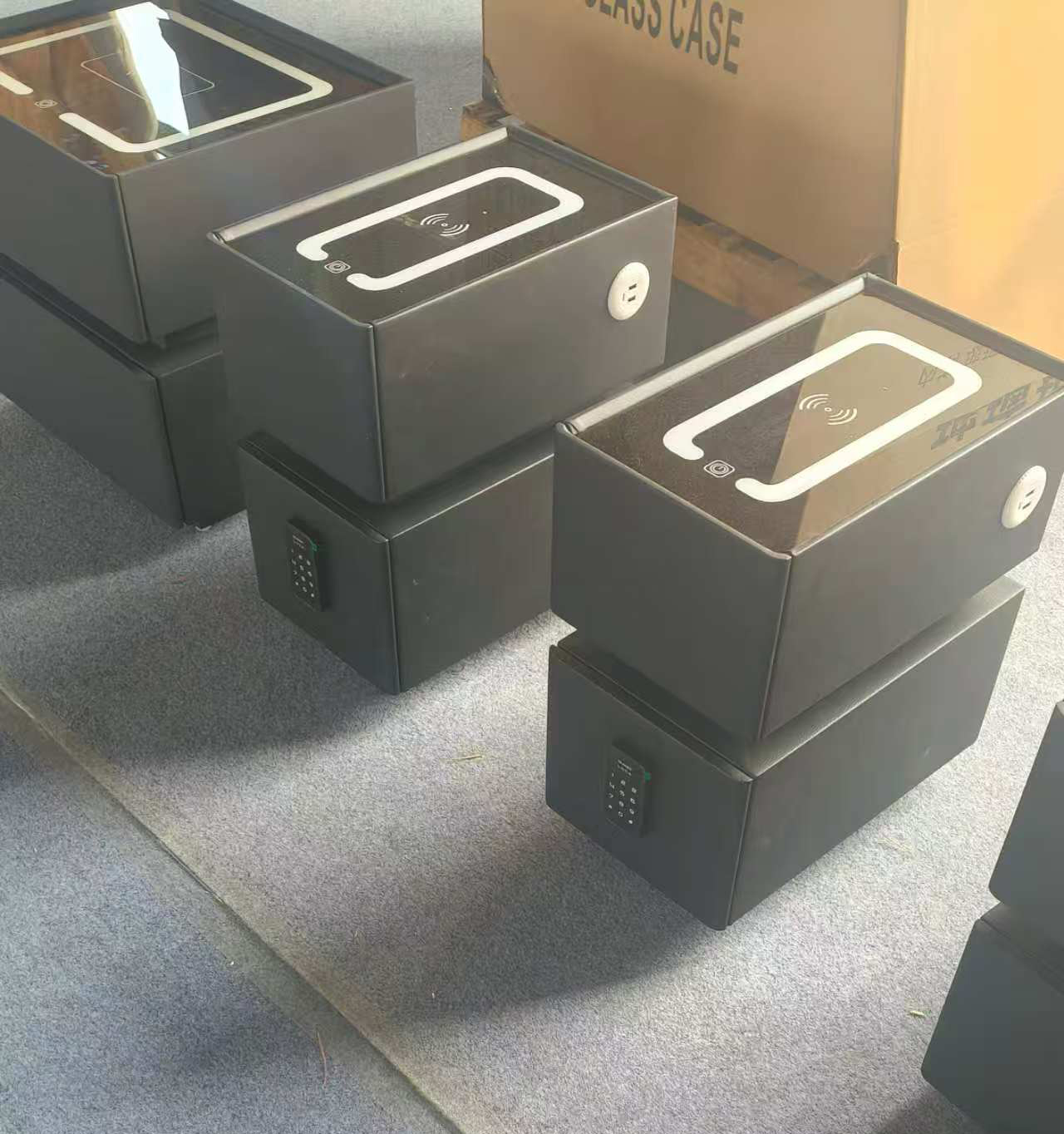
9. Photobiological Safety and Blue Light Considerations
LED lighting near the bed should be comfortable and safe for close-range use.
IEC 62471 provides guidance for evaluating the photobiological safety of lamps and lamp systems, including LEDs. This does not mean every smart nightstand needs laboratory-level lighting documentation, but it does give buyers a useful direction: avoid high-intensity, direct, cool-white light close to the eyes.
Practical design recommendations
Risk Area | Better Design Choice |
Direct glare | Hidden LED strip or diffuser |
Cold light at night | Use 2700K–3000K night mode |
High brightness near face | Limit night mode to low lux |
Exposed LED dots | Use frosted diffuser |
Reflective glass glare | Place light downward or behind the panel |
For bedside furniture, comfort is more important than maximum brightness.
10. Touch Control Integration for LED Lighting
Most smart nightstand lighting systems use capacitive touch control. This allows a clean glass panel surface without mechanical switches.
Typical touch-control features include:
Feature | Common Specification |
Touch type | Capacitive touch |
Touch response | Responsive touch operation; actual response depends on selected touch-control module and panel structure |
Key quantity | 3–8 icons |
Backlight | White or warm white |
Auto-off | 30 seconds after no operation |
Wet hand use | Supported in qualified designs |
In the technical specifications for smart bedside electronic panels, lighting controls include warm light, three-color light, stepless dimming, night mode, wake-up mode, and brightness memory depending on configuration.
Buyer Note
For B2B smart nightstand projects, touch-control performance should be evaluated by actual sample testing rather than only by a response-time number. Buyers should test whether the LED on/off, color switching, dimming, and master-off functions feel clear, stable, and easy to understand in normal bedroom or hotel-room use.
Practical UI recommendation
For hotel rooms:
· Use fewer buttons
· Use clear icons
· Avoid confusing RGB modes
· Keep light on/off obvious
· Add a master off function if possible
For retail and e-commerce:
· More lighting modes may be acceptable
· But instructions must still be clear
11. Smart Nightstand LED System Specification Table
The following table can be used as a starting point for OEM quotation discussions.
Parameter | Recommended Specification |
LED Type | Integrated LED strip or surface light |
Color Temperature | 3000K / 4500K / 6000K |
Advanced Color Range | 2700K–6500K adjustable |
Dimming | Two-level or stepless 0–100% |
Night Light Mode | ≤5 lux recommended |
Touch Control | Capacitive touch |
Touch Response | Smooth and responsive operation; actual response time should be confirmed based on the selected module |
Backlight | White / warm white / custom |
Flicker Control | Flicker-free driver recommended |
CRI | ≥80 recommended |
LED Lifespan | 30,000–50,000 hours depending on design |
Heat Dissipation | Aluminum profile recommended |
Splash Protection | Optional front-side splash resistance depending on module design and project requirement |
Working Temperature | Typical indoor furniture electronics range; confirm according to module supplier data and target market |
Working Humidity | Working humidity should be confirmed according to the selected electronic module and target market |
OEM Options | Color temperature, light position, logo, sensor, control logic |
12. Hotel vs Home vs E-Commerce: Which LED System Should You Choose?
A good smart nightstand supplier should not recommend the same lighting system to every buyer.
Buyer-specific recommendation table
Buyer Type | Recommended Lighting System | Reason |
Hotels | 3000K + three-color + ≤5 lux night mode | Simple, comfortable, reliable |
Apartments | Three-color + motion sensor | Practical for daily use |
Furniture distributors | Three-color lighting | Easy to explain and sell |
Retail chains | Stepless dimming + clean ambient light | Premium showroom experience |
E-commerce sellers | Ambient LED + optional RGB | Better photos and videos |
Dropshipping sellers | Simple LED model with strong packaging | Lower after-sales risk |
Elderly care | Warm low-glare night light | Safety and comfort |
Luxury homes | 2700K–6500K tunable + memory dimming | Higher user experience |
Hotel recommendation
For hotel projects, the recommended configuration is:
· 3000K warm light
· Three-color switching if required
· Low-glare structure
· Night mode under 5 lux
· Flicker-free dimming
· Simple touch operation
· No unnecessary RGB complexity
E-commerce recommendation
For Amazon, Shopify, and Wayfair-style sellers, lighting must photograph well. A smart bedside table with ambient light can increase visual appeal, but the system should remain easy to use.
The safest option is:
· Warm ambient lighting
· Optional RGB for specific styles
· Clear remote or touch instructions
· Strong packaging to protect lighting modules
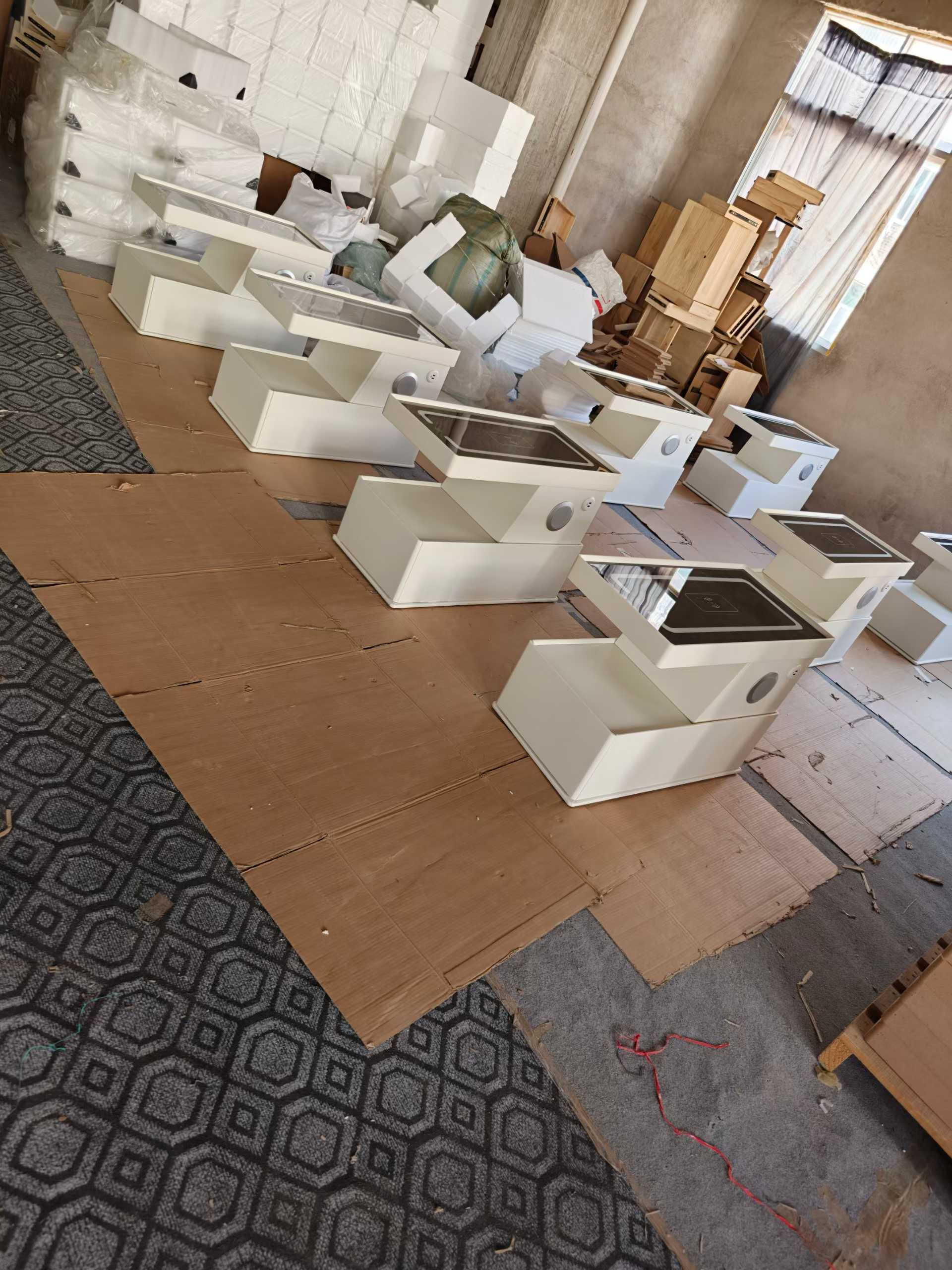
13. Common LED Lighting Failures in Smart Nightstands
This is the section buyers should read before confirming a supplier.
1. The light is too bright at night
Cause: no low-lux mode or poor brightness calibration.
Fix: specify night mode brightness and request sample testing in a dark room.
2. The light flickers when dimmed
Cause: low-quality driver or unstable PWM dimming.
Fix: test at low brightness and ask for driver details.
3. The color is different between batches
Cause: inconsistent LED binning.
Fix: request batch color consistency control.
4. The LED strip becomes hot
Cause: poor heat dissipation or enclosed installation.
Fix: use aluminum profile and avoid sealed heat pockets.
5. The light shines directly into the eyes
Cause: wrong light position.
Fix: use hidden strip, diffuser, or downward lighting.
6. RGB effects look good online but create complaints
Cause: too many modes and unclear operation.
Fix: use simpler lighting logic for hotels and distributors.
7. Touch control is confusing
Cause: too many icons or poor layout.
Fix: use fewer control points and clear printed icons.
8. LED failure is hard to repair
Cause: non-replaceable integrated design.
Fix: request modular lighting structure for B2B projects.
14. OEM Customization Options for Smart Nightstand LED Lighting
Smart nightstand lighting systems can be customized for different sales channels.
Common OEM customization options
OEM Item | Customization Possibility |
Color temperature | 3000K / 4500K / 6000K / 2700K–6500K |
Dimming | Two-level / stepless |
LED position | Bottom, back, drawer, side, panel icon |
Touch icon | Custom printed icon |
Logo lighting | Optional |
Motion sensor | Optional |
Remote control | Optional for retail/e-commerce |
App control | Optional for premium smart furniture |
Plug standard | US / EU / UK / AU depending on market |
Packaging | Retail carton / mail-order packaging / project packaging |
Channel-specific OEM suggestions
For distributors
Choose stable three-color lighting with clear product labeling.
For Amazon sellers
Focus on product photos, simple operation, and strong packaging.
For hotel buyers
Prioritize low-glare warm light and repairability.
For private-label furniture brands
Use custom icon printing, logo lighting, and consistent color temperature.
👉 Smart Nightstand LED Lighting RFQ Checklist
Before requesting a quotation for LED bedside tables or smart nightstands, buyers should prepare the following details:
· Target product type: LED bedside table, smart nightstand, hotel bedside table, or private-label nightstand
· Target buyer channel: hotel project, distributor, wholesaler, e-commerce seller, retail chain, or furniture brand
· Target market: US, EU, UK, Middle East, Australia, or other market
· Lighting position: bottom, back panel, drawer, side edge, touch icon backlight, or motion sensor night light
· Color temperature: 3000K, 4500K, 6000K, three-color lighting, or tunable white
· Dimming method: fixed brightness, two-level dimming, stepless dimming, or brightness memory
· Night mode requirement: ≤5 lux or buyer-specified target
· Flicker-free requirement: visible flicker check, low-brightness test, or camera slow-motion test
· Control method: touch control, sensor control, remote control, or app control
· Smart functions required: USB-C, wireless charging, Bluetooth speaker, fingerprint lock, password lock, or tempered glass top
· Plug standard: US, EU, UK, AU, or other market requirement
· Quantity and MOQ expectation
· Sample testing requirement
· Logo, private label, and packaging requirement
· Expected price range and delivery schedule
A clear RFQ helps the manufacturer recommend the right LED lighting configuration, avoid unnecessary cost, and reduce sample revision time.
FAQ: Smart Nightstand LED Lighting Systems
1. What is the best LED color temperature for smart nightstands?
For hotels and bedrooms, 3000K warm white is usually the most comfortable. 4500K works well for reading, while 6000K is better for cleaning or display.
2. Is 6000K bad for bedside lighting?
No. It is useful for clear visibility, but it may feel too cold for nighttime comfort if used as the only bedside light.
3. What is a three-color LED nightstand?
It is a smart nightstand lighting system that switches among warm white, neutral white, and cool white, commonly 3000K, 4500K, and 6000K.
4. What is stepless dimming?
Stepless dimming allows brightness to be adjusted smoothly across a range instead of switching only between fixed brightness levels.
5. Why is night light mode under 5 lux recommended?
A low-lux night mode provides enough visibility for nighttime movement while reducing glare and sleep disturbance.
6. What causes LED flicker in smart nightstands?
Flicker is usually caused by poor LED drivers, unstable PWM dimming, voltage fluctuation, or interference from other electronics.
7. Is RGB lighting suitable for hotel smart nightstands?
Usually not as the main lighting system. Hotels normally prefer warm, simple, low-glare lighting. RGB is more suitable for e-commerce, youth furniture, or gaming-style products.
8. What LED lifespan should buyers request?
For B2B smart nightstand projects, 30,000–50,000 hours is a reasonable range depending on LED chip quality, driver quality, and heat dissipation.
9. What CRI is recommended for bedside furniture lighting?
CRI ≥80 is suitable for most smart nightstand projects. CRI 90+ can be used for premium retail or luxury residential furniture.
10. Can the LED lighting system be customized?
Yes. Color temperature, LED strip position, dimming method, logo lighting, touch icons, motion sensors, and packaging can be customized.
11. What lighting system is best for distributors?
A three-color LED system is usually best because it is easy to explain, widely accepted, and stable for different markets.
12. What lighting system is best for Amazon sellers?
Amazon sellers often benefit from visible ambient lighting, clear product photos, simple controls, and strong packaging.
13. Should a smart nightstand use a hidden LED strip?
For hotels and bedrooms, hidden LED strips are usually better because they reduce glare and create softer lighting.
14. Does LED heat affect product lifespan?
Yes. Poor heat dissipation can reduce brightness, shorten LED lifespan, and increase failure risk.
15. What should buyers ask before ordering samples?
Ask for color temperature, dimming method, night mode lux value, flicker-free driver information, LED position drawing, and replacement module support.
16. What information should buyers provide for an LED bedside table quotation?
Buyers should provide the target quantity, product size, lighting position, color temperature, dimming method, night mode requirement, smart functions, plug standard, packaging method, logo requirement, and target market. Clear information helps the manufacturer recommend a practical LED nightstand configuration and reduce sample revision time.
17. Can LED lighting be combined with USB-C and wireless charging in one smart nightstand?
Yes. LED lighting can be combined with USB-C ports, wireless charging, Bluetooth speaker, fingerprint lock, password lock, and tempered glass top. However, buyers should confirm power load, heat control, flicker-free performance, and module layout during sample testing.
Conclusion
A smart nightstand LED lighting system is not simply a decorative light strip. It is part of the product’s usability, comfort, and perceived quality.
For B2B buyers, the most important lighting decisions are:
· 3000K vs 6000K color temperature
· Three-color lighting vs stepless dimming
· Night mode brightness under 5 lux
· Flicker-free driver quality
· LED heat dissipation
· Touch-control simplicity
· Channel-specific customization
Practical buying conclusion
For hotel and apartment projects, choose:
· 3000K warm lighting
· Three-color option if needed
· Low-glare hidden LED design
· Night mode under 5 lux
· Flicker-free dimming
· Replaceable lighting module where possible
For retail and e-commerce, choose:
· Stronger ambient lighting effect
· Optional RGB or tunable white
· Clear product photography
· Stable packaging
· Simple user instructions
For private-label brands, choose:
· Custom lighting layout
· Custom icon printing
· Consistent LED binning
· Premium dimming feel
· Reliable after-sales parts
The best smart nightstand LED system is not the brightest one. It is the one that matches the user environment, sales channel, and after-sales expectations.
References:
1.ENERGY STAR Light Bulb Purchasing Guide, 2020 — color temperature explanation from warm to cool Kelvin values.
2.U.S. Department of Energy, Flicker Research — definition of flicker / temporal light modulation.
3.IEEE Std 1789-2015 — recommended practice for modulating current in high-brightness LEDs.
4.IEC 62471:2006 — photobiological safety of lamps and lamp systems.
5.IES TM-30 resources — color rendition evaluation method.

Related Articles:
👉 OEM vs ODM Bedside Tables: Which Is Better for Your Business in 2026?
👉 How to Import Furniture from China | Bedside Table Supplier Guide 2026
👉 Private Label Furniture: Full Guide (2026 B2B Buyer Edition)
👉 Furniture Supplier Checklist (Free Template) – 2026 B2B Buyer Guide
👉 Bedside Table Pricing Guide (2026 Updated): What Really Affects Cost?
This article was reviewed and updated to reflect the latest market information and factory production standards.
Looking for an OEM LED bedside table or smart nightstand manufacturer?
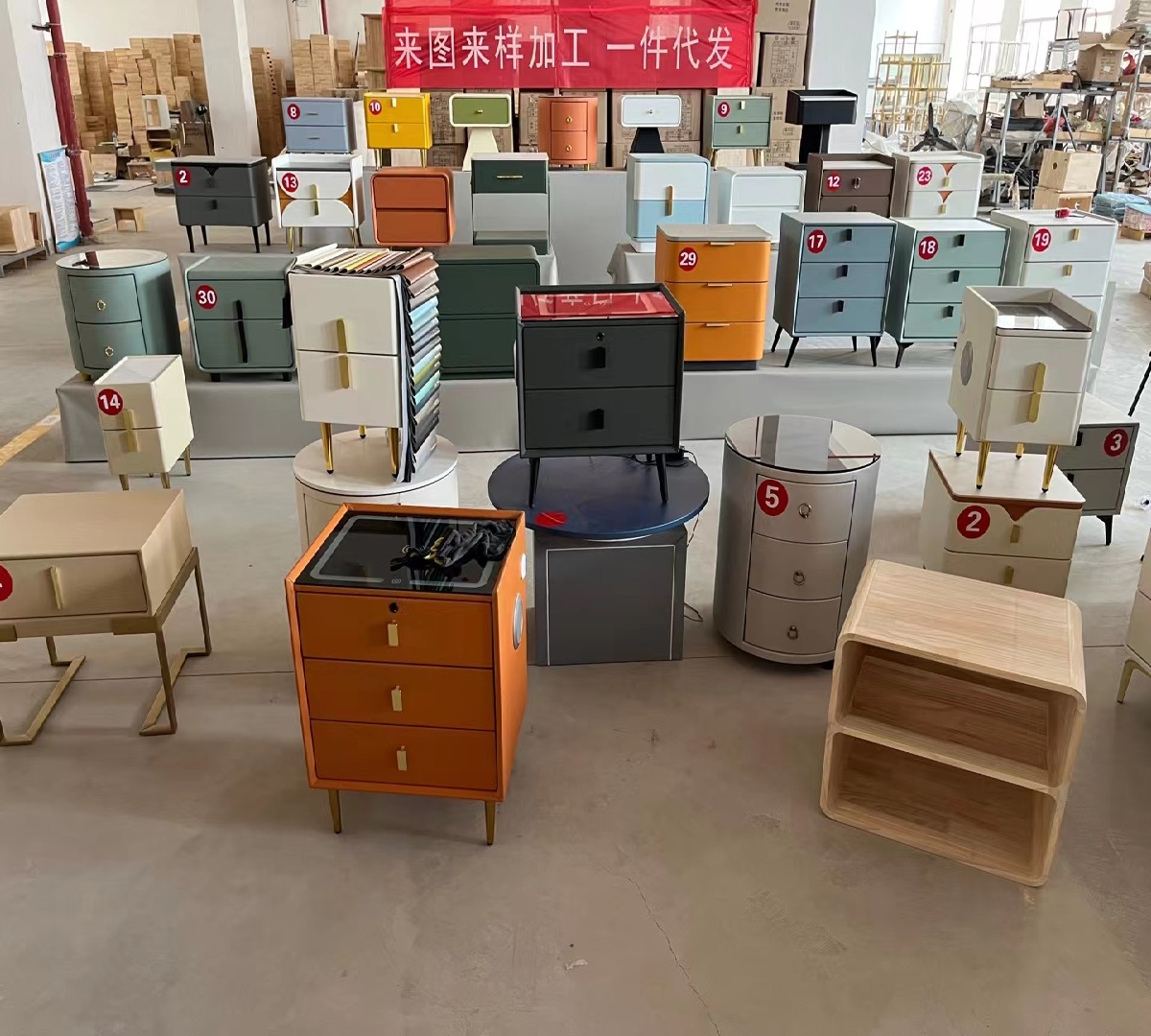
Hebai Furniture supports smart nightstand and LED bedside table projects with 3000K / 4500K / 6000K lighting, three-color lighting, low-glare night mode, stepless dimming, touch icon backlight, wireless charging, USB-C ports, tempered glass tops, Bluetooth speaker, fingerprint lock, and custom packaging.
We support importers, distributors, wholesalers, e-commerce sellers, furniture brands, private-label buyers, and hotel project buyers with OEM/ODM smart nightstand solutions.
Browse product catalog:
https://hebaifurniture.com/category
Request catalogue and quotation:
https://hebaifurniture.com/catalogue
Email:
hebaifurniture.vincent@gmail.com
WhatsApp:
+86 15207972272
👉 Home| Product| Smart Bedside Table Series|Catalogue
Related Hebai Furniture Resources
Explore more visual and video resources about smart nightstand LED lighting, LED bedside tables, and OEM smart nightstand projects.
👉 Medium Summary: Smart Nightstand LED Lighting Standards
👉 LinkedIn Discussion: LED Nightstand Buying Standards
👉 Behance Project: Smart Nightstand LED Lighting System
👉 YouTube Short: LED Nightstand Lighting Guide
👉 Pinterest Pin: LED Bedside Table Lighting Idea
👉 Instagram Reel: Smart Nightstand LED Lighting
👉 TikTok Video: LED Nightstand Quick Guide