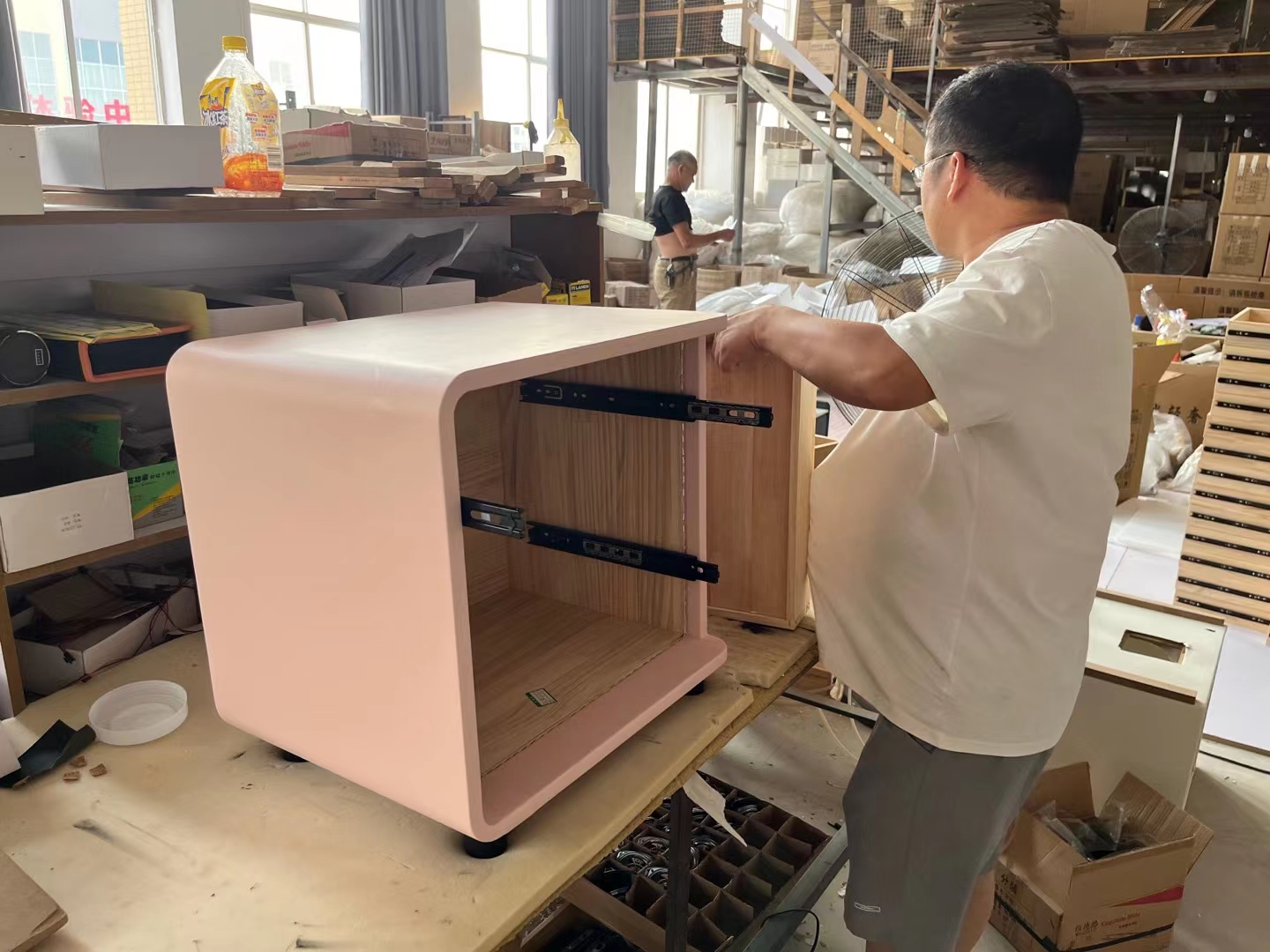
How to Check Bedside Table Quality Before Ordering from a Factory
Buying bedside tables from China? Learn what buyers should check before placing an OEM order, including materials, workmanship, smart functions and production quality control.

How to Check Bedside Table Quality Before Ordering from a Factory
Introduction
When buyers start an OEM bedside table project, price and design are usually the first things they compare.
However, after working with different furniture projects, we have found that the biggest challenges rarely come from the quotation stage. They usually appear when production moves from one approved sample to hundreds or thousands of units.
A sample can show the expected result, but it does not guarantee that every product from mass production will look and perform the same.
Small differences in material, assembly, finishing or hardware may not be obvious on one sample, but they become clear when products are installed in hotels, displayed in stores or delivered to end customers.
For traditional bedside tables, buyers mainly focus on structure, appearance and durability.
For smart nightstands, quality control becomes more complicated because the product also includes electronic functions such as wireless charging, USB charging, LED lighting, Bluetooth speakers and smart locks.
This guide explains the key quality control points buyers should understand before choosing an OEM bedside table supplier.
Many sourcing problems can be avoided before production even starts. If you are still comparing suppliers, materials and customization options, our detailed guide on OEM Bedside Table Manufacturing in China explains how buyers evaluate factories, compare capabilities and choose the right OEM partner.
👉 OEM Bedside Table Manufacturing in China
Why Quality Control Matters in OEM Bedside Table Projects
In furniture sourcing, quality issues are usually not caused by one big mistake. More often, they come from small details that were not confirmed early enough.
A slightly different veneer color may not be obvious on one sample. But when 300 bedside tables are installed in a hotel project, the difference becomes immediately visible.
The same situation happens with drawer gaps, hardware performance and smart functions.
For OEM buyers, quality control is not about finding problems at the final inspection stage. By that time, some problems may already be expensive to fix. The real purpose of quality control is to identify risks earlier, before they affect the entire order.
Keeping Bulk Production Consistent With the Approved Sample
In most OEM projects, the approved sample becomes the standard used by both sides when checking production.
Without a clear reference sample, even small differences can become difficult to judge during mass production.
During sample development, buyers normally confirm:
Product dimensions
Material selection
Surface finish
Hardware
Functions
Packaging
The challenge starts when production volume increases.
For example, one sample may have perfect veneer color and drawer alignment, but maintaining the same standard across hundreds of units requires proper production control.
Common differences found in bulk orders include:
Slight color variation between panels
Uneven surface finishing
Drawer gaps not matching the sample
Different hardware performance
Smart functions working differently between units
This is why sample approval should not be treated as the end of product development.
It is the starting point for production control.
Finding Problems Before They Become Expensive
The timing of quality checks makes a big difference.
A problem found during sample review is usually easy to correct.
A problem found during early production may require adjustment.
A problem found after shipment may involve:
Customer complaints
Replacement costs
Additional shipping expenses
Project delays
Many buyers think quality control starts with the final inspection before shipment. In reality, most quality problems can be avoided much earlier, during product confirmation, sample approval and production follow-up.
Protecting the Buyer’s Brand
Most customers never know which factory produced their furniture.
They judge the brand based on the final product.
For example, a hotel guest will not know whether a loose drawer came from a supplier problem or a production problem.
They only know that the bedside table does not work properly.
For retailers and distributors, product consistency directly affects:
Customer reviews
Return rates
Brand reputation
Long-term sales
That is why quality control should be considered part of the purchasing decision, not only a factory responsibility.
Production time is only one part of the purchasing process. Buyers importing bedside tables from China should also consider supplier selection, shipping arrangements and customs planning.
👉 How to Import Bedside Tables from China
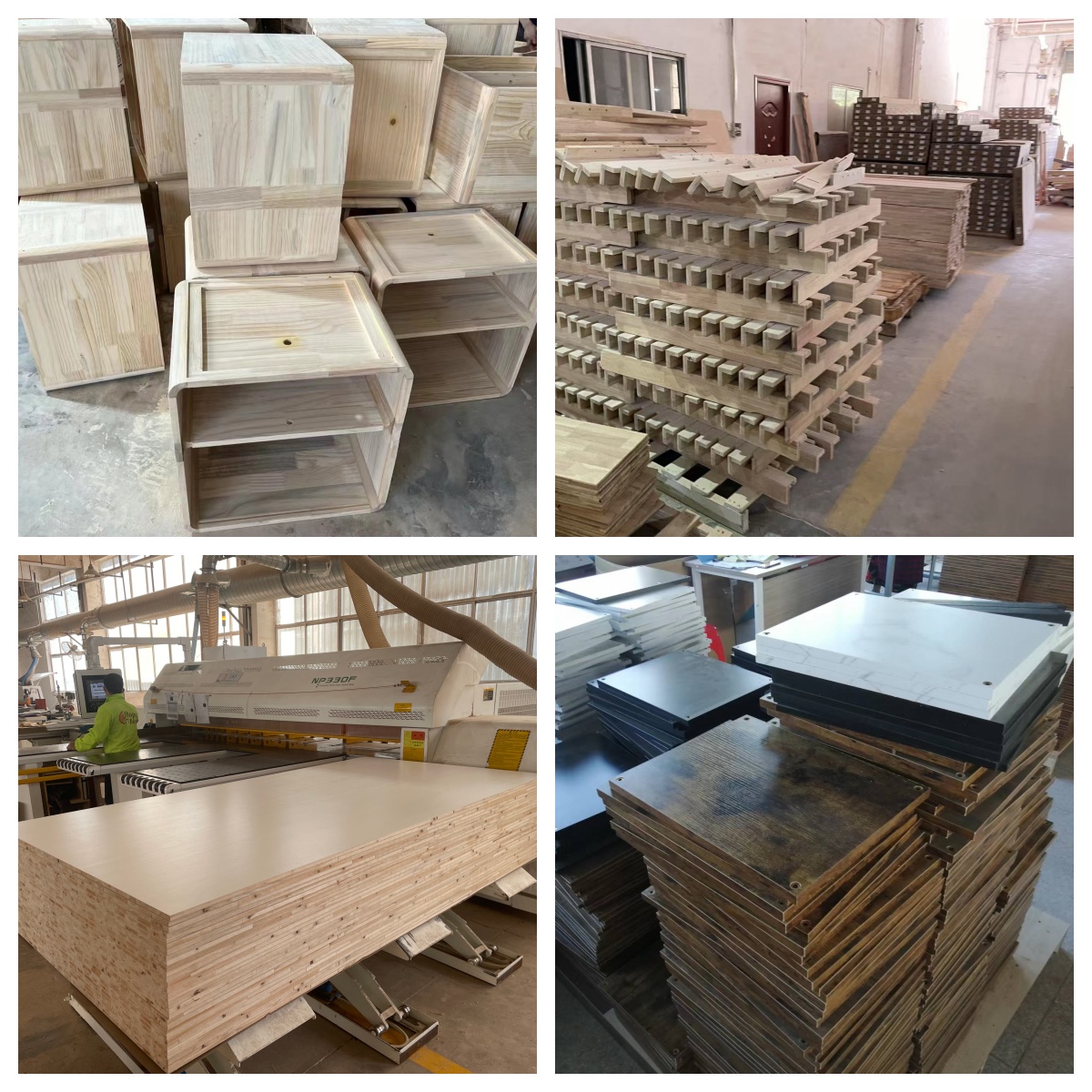
The Quality Control Process for OEM Bedside Tables
A complete QC process should cover the entire production cycle.
Checking products only before shipment is too late because many problems have already become difficult to fix.
1. Specification Review and Sample Approval
Before production starts, both sides need to have the same understanding of the final product.
In many OEM projects, production issues are not caused by manufacturing ability. They happen because some details were not clearly confirmed before the order moved forward.
Important points include:
Product Structure
Such as:
Overall dimensions
Drawer design
Cabinet construction
Installation method
Materials
Including:
MDF or plywood structure
Veneer or finishing materials
Surface treatment
Thickness requirements
Hardware
Including:
Drawer slides
Hinges
Handles
Locks
Smart Functions
For smart nightstands:
Wireless charging specification
USB / Type-C output
LED system
Bluetooth speaker
Fingerprint lock
A sample is not only for checking appearance.
It is also used to confirm production details.
Before approval, buyers should check:
Does the drawer move smoothly?
Does the surface finish meet expectations?
Are all functions working correctly?
Does the packaging protect the product?
A good sample reduces uncertainty before mass production starts.
For smart furniture projects, confirming technical specifications early is essential. Wireless charging power, LED systems, USB ports and smart locks can all affect production planning and testing requirements.
👉 Smart Nightstand Manufacturer
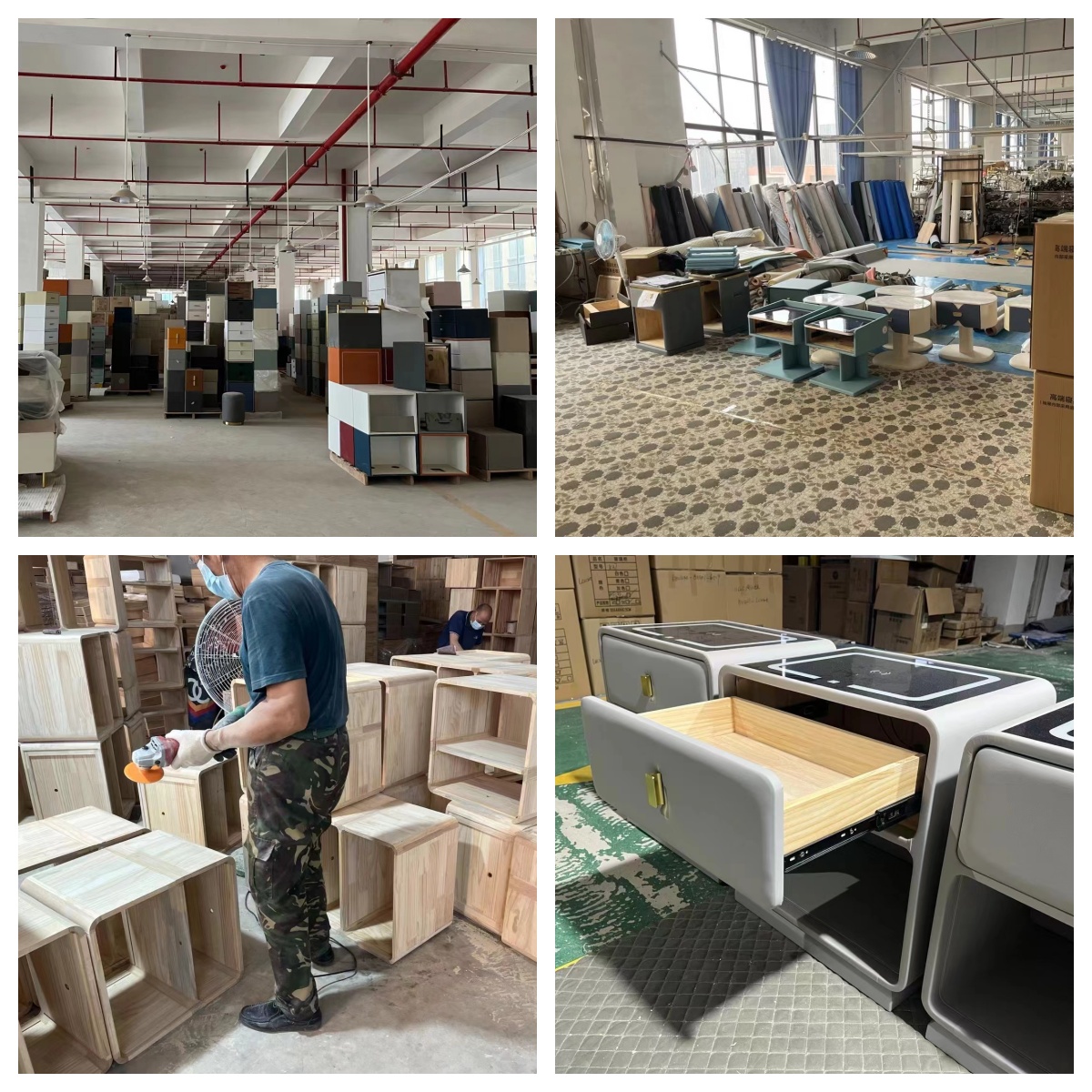
2. Material and Component Inspection
Furniture quality starts with the materials entering the factory.
For buyers, the key point is not only whether the factory uses the stated material, but whether the material remains consistent throughout the whole order.
A small change in board quality, veneer selection or hardware specification may affect the final product appearance and user experience.
Before production, materials and components should be checked according to the approved requirements.
For wooden bedside tables, attention should be given to:
Board quality
Thickness consistency
Surface condition
Veneer appearance
For hardware:
Drawer slide quality
Hinge performance
Handle strength
For smart components:
Wireless charging modules
USB ports
LED systems
Electronic locks
A small difference in material quality may not be visible immediately, but it can affect product appearance and user experience after delivery.
3. First Unit Inspection Before Mass Production
Before running full production, checking the first completed unit is an important step.
This allows the factory and buyer to confirm that the actual product matches the approved sample.
The inspection usually covers:
Area | Checking Points |
Structure | Size, assembly, stability |
Appearance | Color, finish, surface quality |
Hardware | Drawer and hinge operation |
Functions | Smart features and accessories |
If adjustments are needed, they can be made before the problem affects the entire order.
4. Production Process Inspection
Quality control should continue during manufacturing.
Typical production checks include:
Cutting accuracy
Assembly consistency
Surface finishing
Hardware installation
Product appearance
For example, drawer installation should be checked during production rather than waiting until the final inspection.
The earlier a problem is found, the easier it is to correct.
5. Finished Product Inspection and Smart Function Testing
For traditional bedside tables, final inspection usually focuses on appearance, structure and basic functions.
However, smart nightstands require another level of checking because they combine furniture manufacturing with electronic components.
A product may look perfect from the outside but still have problems with charging, lighting or electronic functions if these parts are not tested properly after assembly.
This is why smart furniture should be inspected as a complete product, not only as separate components.
Need Help Reviewing Your Bedside Table Design?
Before investing in samples or production, our engineering team can review your drawings, materials and smart-function requirements and provide practical OEM recommendations.
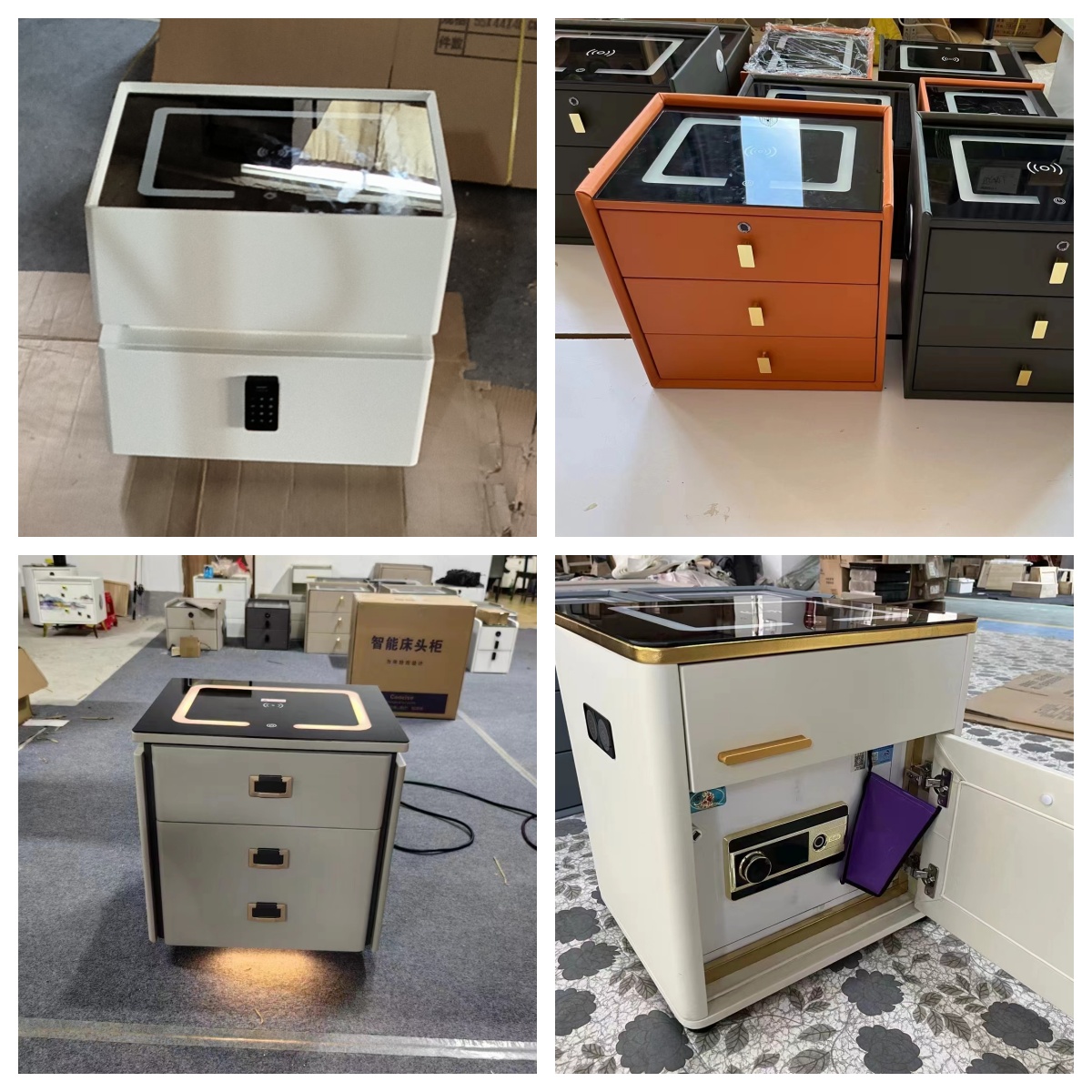
Traditional Bedside Table Checks
Before shipment, buyers should pay attention to:
Appearance
Including:
Surface finishing
Color consistency
Edge details
Visible scratches or defects
A small surface issue that is acceptable on one sample may become noticeable when hundreds of units are installed together.
Structure and Assembly
Important points include:
Cabinet stability
Drawer alignment
Hardware installation
Overall assembly accuracy
For hotel or commercial projects, furniture is used frequently every day, so structural consistency is especially important.
Hardware Performance
Common checks include:
Drawer opening and closing
Soft-close performance
Handle installation
Hinge operation
Hardware problems are among the most common reasons for customer complaints because they directly affect daily use.
Smart Nightstand Function Testing
Smart nightstands create a different challenge from traditional bedside tables. The factory is no longer checking furniture only; it also needs to make sure electronic functions work properly after everything is assembled together.
This is one reason why smart furniture projects usually require more communication between buyers and suppliers than standard furniture orders.
The furniture structure and electronic components need to work together as one finished product.
A wireless charging module may pass a component test but perform differently after installation inside the cabinet. The final product, not only the individual part, is what customers actually use.
The same applies to:
USB charging systems
LED lighting
Bluetooth speakers
Fingerprint locks
The final assembled product should be tested under actual usage conditions.
Wireless Charging
Important checks include:
Charging stability
Charging position
Compatibility
Heat generation during operation
The charging module installation position and tabletop material can affect actual performance.
Wireless charging is one of the most frequently misunderstood smart furniture features. Understanding charging standards, power ratings and installation requirements can help avoid costly changes later in the project.
👉 Wireless Charging Nightstand Guide

USB and Type-C Charging
Testing should confirm:
Output performance
Connection stability
Port installation quality
A loose charging port may work during factory testing but fail after repeated customer use.
LED Lighting
Checks should include:
Lighting operation
Brightness consistency
Control function
Wiring connection
For products used in bedrooms or hotels, unstable lighting can create a poor user experience.
Bluetooth Speakers and Smart Locks
For Bluetooth functions:
Connection stability
Sound performance
Pairing process
For fingerprint locks:
Registration process
Recognition performance
Locking and unlocking operation
These functions should be tested after final assembly because installation conditions can affect performance.
Electrical reliability is just as important as furniture quality. Buyers sourcing smart nightstands should also understand electrical safety requirements, testing standards and compliance considerations before placing large orders.
👉 Smart Nightstand Electrical Safety Guide
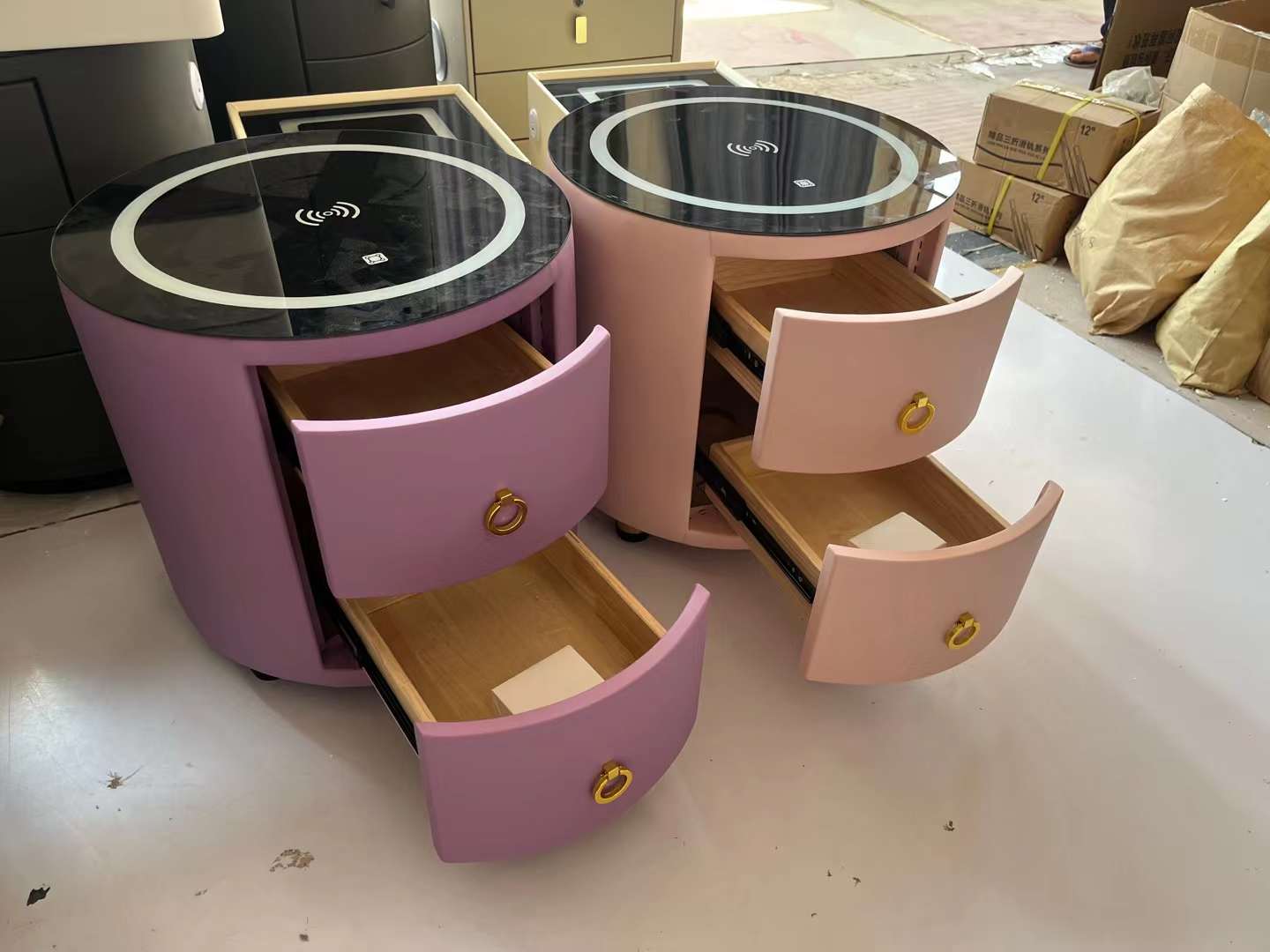
6. Final Inspection and Packaging Before Shipment
Final inspection is the last checkpoint before products leave the factory.
At this stage, the purpose is to confirm that finished products match the approved requirements.
The inspection usually covers:
Product appearance
Dimensions
Functions
Accessories
Quantity
Packaging condition
Why Packaging Is Part of Quality Control
Many furniture problems happen after production is completed.
A product can leave the factory in good condition but arrive damaged because of insufficient packaging.
This is especially important for bedside tables because they often include:
Glass panels
Painted surfaces
Metal accessories
Electronic components
Packaging checks should include:
Carton strength
Corner protection
Internal cushioning
Product fixing method
For export orders, packaging is not just a shipping detail.
It is part of protecting the final customer experience.
What Buyers Should Know About AQL Inspection
AQL is commonly mentioned during furniture inspection, but many buyers misunderstand what it actually means.
AQL is a sampling method used to evaluate whether a shipment meets an agreed quality level.
It is a tool for evaluating a shipment, not a replacement for proper product testing.
It does not mean that a certain percentage of defective products is automatically acceptable.
The inspection result depends on factors such as:
Inspection level
Sample quantity
Defect classification
Acceptance criteria
What AQL Can Help Identify
AQL inspection is useful for checking issues such as:
Surface defects
Missing accessories
Assembly problems
Packaging issues
It helps buyers evaluate the overall quality condition of a shipment without checking every single unit.
What AQL Cannot Replace
AQL should not replace specific product testing.
For example:
AQL inspection alone cannot confirm:
Structural durability
Electrical safety
Wireless charging performance
Long-term smart function reliability
For smart nightstands, functional testing should be completed before shipment.
In practice, AQL is only one part of quality control. It works together with material checks, production inspection and functional testing.
One of the most common sourcing risks is choosing a supplier without understanding their production capabilities, quality systems and project experience.
👉 Top Bedside Table Manufacturers in China
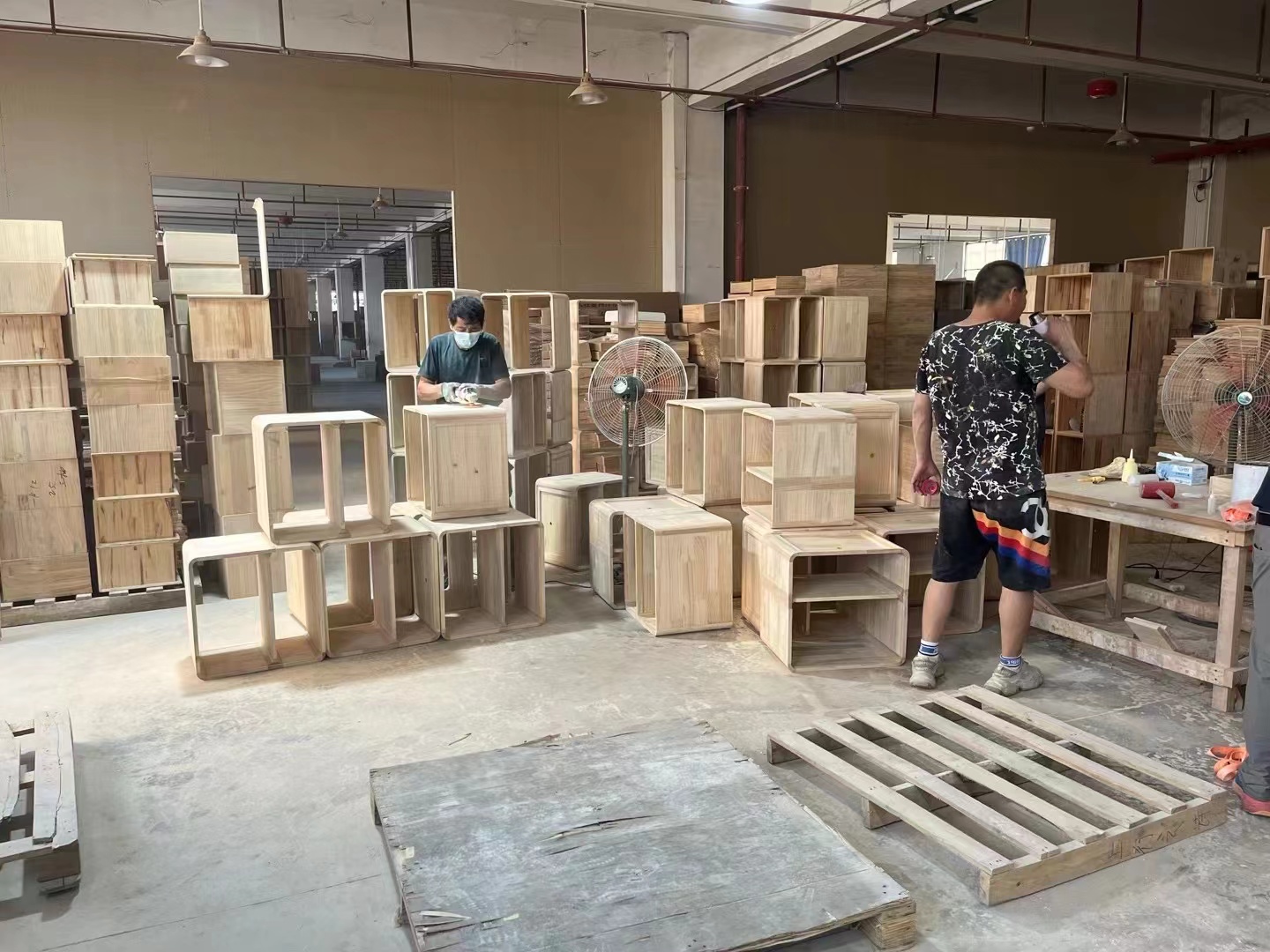
Common Quality Problems in Bedside Table Projects
Based on furniture production experience, most quality issues usually come from several common areas.
1. Surface and Finishing Problems
Common examples:
Color difference between panels
Scratches
Uneven coating
Poor edge finishing
These problems are especially noticeable when multiple units are installed together.
2. Drawer and Hardware Problems
Common examples:
Drawer gaps are inconsistent
Slides do not move smoothly
Hardware becomes loose
Since bedside tables are used every day, small hardware problems can quickly become customer complaints.
3. Structural Problems
Examples include:
Unstable assembly
Incorrect installation
Weak connection points
These issues may not appear immediately but can affect long-term product performance.
4. Smart Function Problems
For smart nightstands, additional risks include:
Wireless charging not working properly
LED control failure
USB connection problems
Bluetooth connection instability
This is why smart furniture requires both furniture inspection and function testing.
Buyer Checklist Before Choosing a Bedside Table Supplier
Before placing an OEM order, buyers should evaluate more than just the factory quotation.
A lower price does not always mean a better supplier.
Important questions include:
Before Choosing a Bedside Table Supplier, Buyers Should Ask:
1. How do you control sample and bulk production consistency?
2. What materials and hardware specifications do you use?
3. What inspections are performed during production?
4. How do you test smart functions after assembly?
5. Can you provide production and inspection records?
Can the supplier explain material specifications clearly?
Buyers should understand:
What materials are used
How materials are controlled
Whether substitutions are allowed
Does the supplier inspect during production?
Quality should not depend only on final inspection.
Problems should be identified while production is still ongoing.
Are smart functions tested after assembly?
For smart nightstands, buyers should confirm that the supplier tests the complete finished product.
Can the supplier provide quality records?
Inspection records, production photos and testing information help buyers understand how the order is managed.
Real Project Example: Quality Control for a Smart Nightstand Hotel Project
A hotel project involving 640 smart nightstands required consistent quality across all units.
The products included:
Wireless charging
USB charging
LED lighting
The main challenge was not only producing the furniture, but ensuring that every unit delivered the same user experience.
During the project, key quality control points included:
Confirming the approved sample before production
Checking materials and components
Monitoring production consistency
Testing smart functions after assembly
Confirming packaging before shipment
For hotel projects, consistency is especially important because the products are installed in many rooms and used by different guests every day.
This project also showed that quality problems are easier to solve before shipment. Clear specifications, sample approval and production follow-up helped keep the final products consistent across the entire order.
Looking for a Reliable OEM Bedside Table Factory?
Whether you need traditional bedside tables, upholstered nightstands or smart nightstands with wireless charging and LED lighting, our team can help evaluate specifications and provide a production solution.
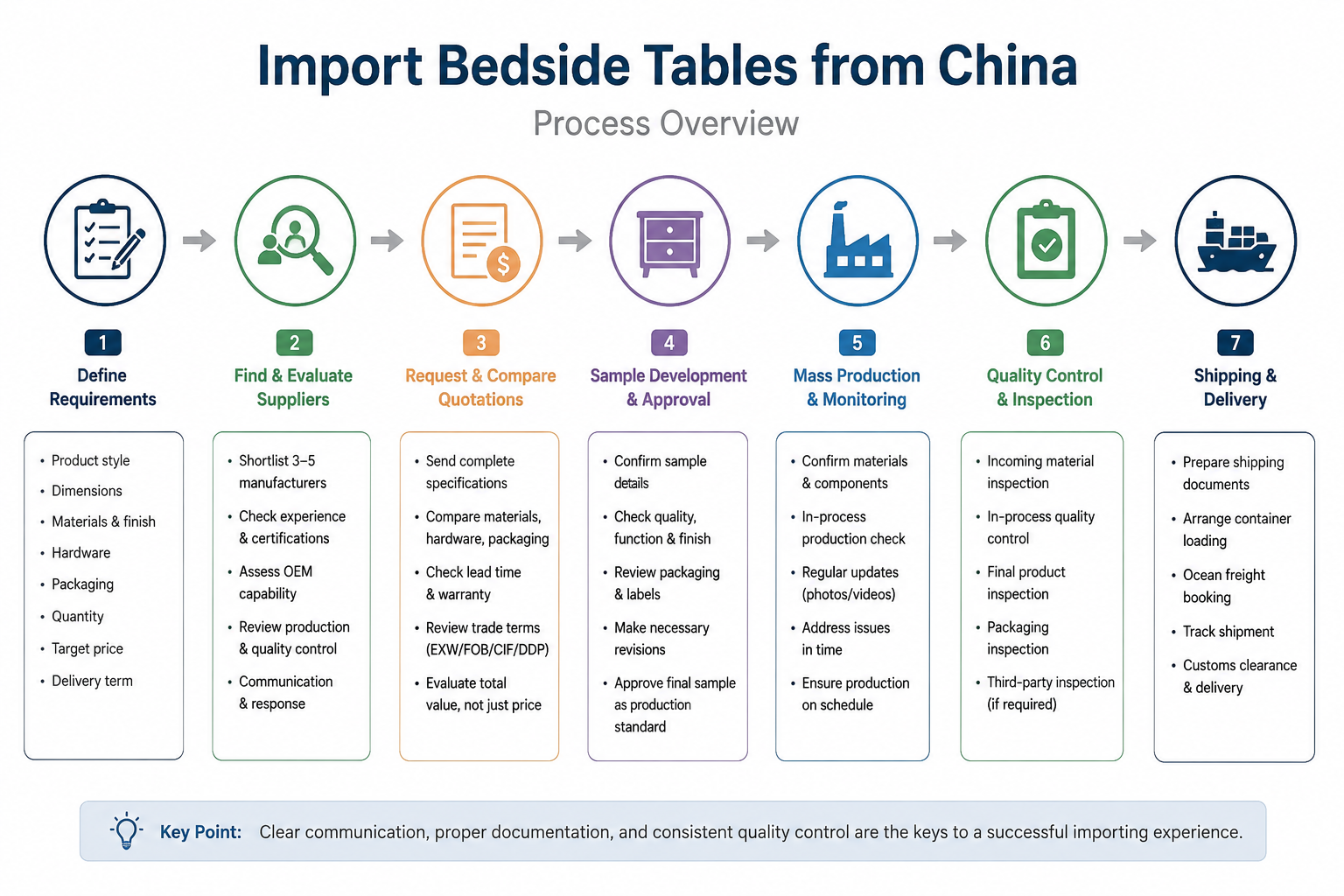
FAQ
1. What quality checks should buyers expect for OEM bedside tables?
OEM bedside table quality checks usually cover sample approval, material inspection, production monitoring, finished product inspection and packaging checks. The purpose is to make sure the final shipment matches the approved requirements.
Many buyers focus only on final inspection, but most quality problems can be avoided earlier. A clear specification and approved sample usually prevent more issues than checking products after production is finished.
2. How can buyers make sure bulk production matches the approved sample?
The best way is to use an approved sample as the production reference and confirm important details before mass production, including materials, dimensions, finishing, hardware and functions.
In real OEM projects, the biggest differences often appear when production volume increases. A sample may look perfect, but the challenge is keeping hundreds of units consistent.
3. Why is sample approval important before ordering bedside tables?
Sample approval gives both buyer and supplier the same reference before production starts. It reduces misunderstandings about design, materials, appearance and product functions.
Photos are useful, but they cannot show everything. Drawer movement, surface texture, assembly quality and smart functions are easier to evaluate from an actual sample.
4. What should buyers check before starting bedside table production?
Before production, buyers should confirm product specifications, materials, hardware, functions, packaging requirements and the approved sample.
Many production problems are not caused by poor factory ability. They happen because some details were not clearly confirmed at the beginning.
5. How do factories control quality during bedside table manufacturing?
Factories usually control quality through several stages, including incoming material checks, first unit inspection, production follow-up, finished product testing and final inspection.
A final inspection can find problems, but it cannot always solve them. Experienced suppliers try to identify issues while production is still flexible.
6. What materials should be checked for bedside table production?
Material checks usually include board quality, thickness, veneer or finishing materials, hardware specifications and smart components if the product includes electronic functions.
Two bedside tables may look similar in pictures but use different internal materials. Material consistency is important for both appearance and long-term durability.
7. What is first article inspection in furniture manufacturing?
First article inspection means checking the first finished unit before full production continues. It confirms that the actual product matches the approved design.
This step is especially useful for OEM orders because a small mistake found on the first unit is much easier to correct than a problem found after hundreds of pieces are completed.
8. How are smart nightstands tested before shipment?
Smart nightstands should be tested after complete assembly, including wireless charging, USB ports, LED lighting, Bluetooth speakers and smart locks.
Testing individual components is not enough. A charging module may work separately but perform differently after installation inside the finished cabinet.
9. What problems are common in bedside table OEM orders?
Common problems include finishing differences, drawer alignment issues, hardware problems, structural instability, packaging damage and smart function failures.
Most problems are not caused by one major mistake. They usually come from small details that were not controlled during production.
10. Is final inspection enough for bedside table quality control?
No. Final inspection is important, but quality should also be controlled during material selection, sample approval and production.
Once a problem reaches final inspection, the cost of correction is usually much higher. Early control is more effective.
11. What is AQL inspection for furniture products?
AQL inspection is a sampling method used to evaluate whether a shipment meets agreed quality standards. It is commonly used during pre-shipment inspection.
AQL is useful for checking shipment quality, but it does not replace product testing, especially for smart furniture with electronic functions.
12. Can AQL inspection test smart nightstand functions?
AQL inspection can check some product conditions, but smart functions require additional testing, such as charging performance, LED operation and electronic control functions.
Smart furniture needs both furniture inspection and electronic testing because the final product combines two different systems.
13. How should buyers evaluate a bedside table supplier’s quality control ability?
Buyers should ask about sample approval, production inspection, material control, testing methods and previous OEM project experience.
A supplier’s quality ability is usually shown by its process, not only by the final product photos.
14. What quality control is needed for hotel bedside table projects?
Hotel projects require consistent quality across large quantities, including appearance, structure, functions and packaging.
A single good sample is not enough for hotel projects. Hundreds of units installed in different rooms need to maintain the same standard.
15. Why do smart nightstands need more quality control than normal bedside tables?
Smart nightstands combine furniture manufacturing with electronic functions, so they require additional checks for components, wiring, installation and final performance.
The product must work as both furniture and an electronic device. Problems can happen when these two parts are not managed together.
16. What documents should buyers request from a bedside table supplier?
Depending on the project, buyers may request product specifications, approved samples, inspection records, testing information and packaging details.
Clear documentation helps both sides avoid misunderstandings, especially for repeat orders or customized products.
17. How can buyers reduce quality risks when importing bedside tables from China?
Buyers can reduce risks by choosing experienced suppliers, confirming specifications, approving samples, monitoring production and checking products before shipment.
The cheapest quotation is not always the lowest-cost option. Quality problems after delivery usually create higher expenses.
18. What questions should buyers ask before choosing a smart nightstand manufacturer?
Buyers should ask about customization ability, sample development, smart function testing, production control and previous project experience.
For smart furniture, the supplier needs to understand both furniture production and electronic integration.
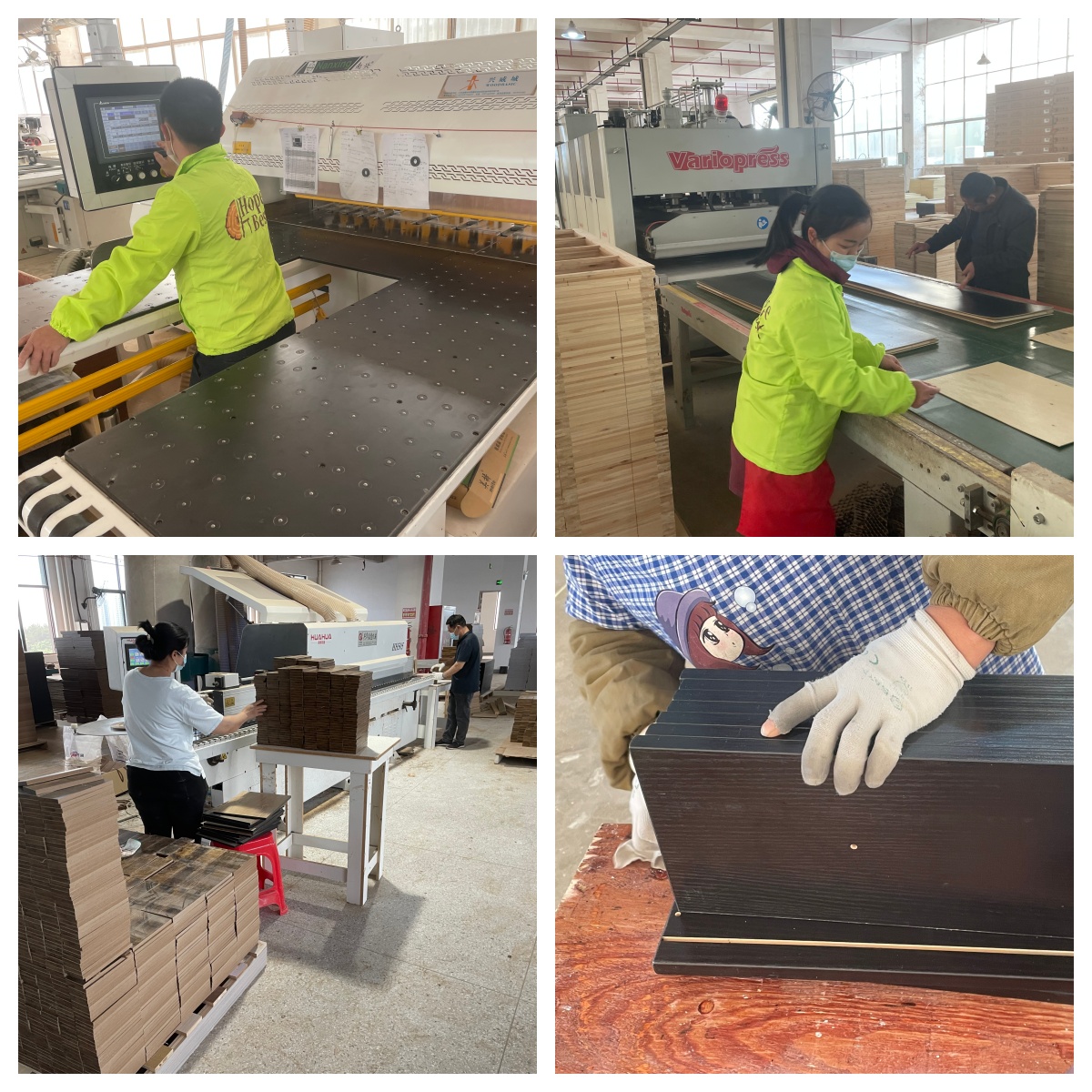
Conclusion
Quality control in bedside table manufacturing is not a single inspection before shipment.
It is a continuous process that starts from product confirmation and continues through production, testing and packaging.
For OEM buyers, the most important factors are:
Clear specifications
Approved samples
Controlled materials
Production monitoring
Finished product testing
Proper packaging
Choosing a supplier is not only about finding a factory that can make the product.
It is about finding a partner that can produce the same quality consistently from the first unit to the last.
Start Your OEM Bedside Table Project
Whether you are sourcing standard bedside tables, smart nightstands or custom hotel furniture, our team can help with product development, sampling, production and export logistics.
✔ OEM & ODM Service
✔ Smart Nightstand Solutions
✔ Low MOQ Available
✔ Sample Support
✔ Export Experience
👉 Get OEM Quote Within 24 Hours