How to Build a Bedside Table Collection That Sells in Your Market
A practical B2B guide to building a bedside table collection with the right SKU mix, price tiers, styles, smart models and inventory strategy for your market.

How to Build a Bedside Table Collection That Sells in Your Market
A Collection Should Have a Reason Behind It
When an importer, distributor, or retailer starts putting together a bedside table range, the first step is often very simple: open a factory catalog and mark the models that look promising.
That works up to a point.
The problem comes when ten selected models end up targeting almost the same customer. They may differ in leg shape, handle style, or finish, but from a buyer’s point of view they are doing almost the same job.
A useful bedside table collection needs more structure than that.
Each SKU should have a clear purpose. One may bring customers in at a lower price point. Another may become the main volume model. A third may give the collection a more premium feel. A smart model may be there to offer something competitors do not have.
The real question is not how many bedside tables you can add.
It is whether each one adds something useful to the range.
That difference matters because every extra SKU affects purchasing, stock, replenishment, and eventually cash tied up in inventory.
If you are still deciding which product categories belong in the range, our guide to bedside table styles and product types explains the main options from a wholesale and OEM buyer's point of view.

1. Start With the People You Expect to Buy the Product
The easiest way to make a poor product selection is to start with the factory catalog instead of the market.
Before choosing models, it helps to be clear about who you are selling to.
A value-focused retailer may need straightforward bedside tables with useful storage, familiar styling, and a price that is easy for customers to accept.
A mainstream furniture store may need something a little more refined: better drawer movement, stronger details, a more attractive finish, or a design that feels less basic without becoming expensive.
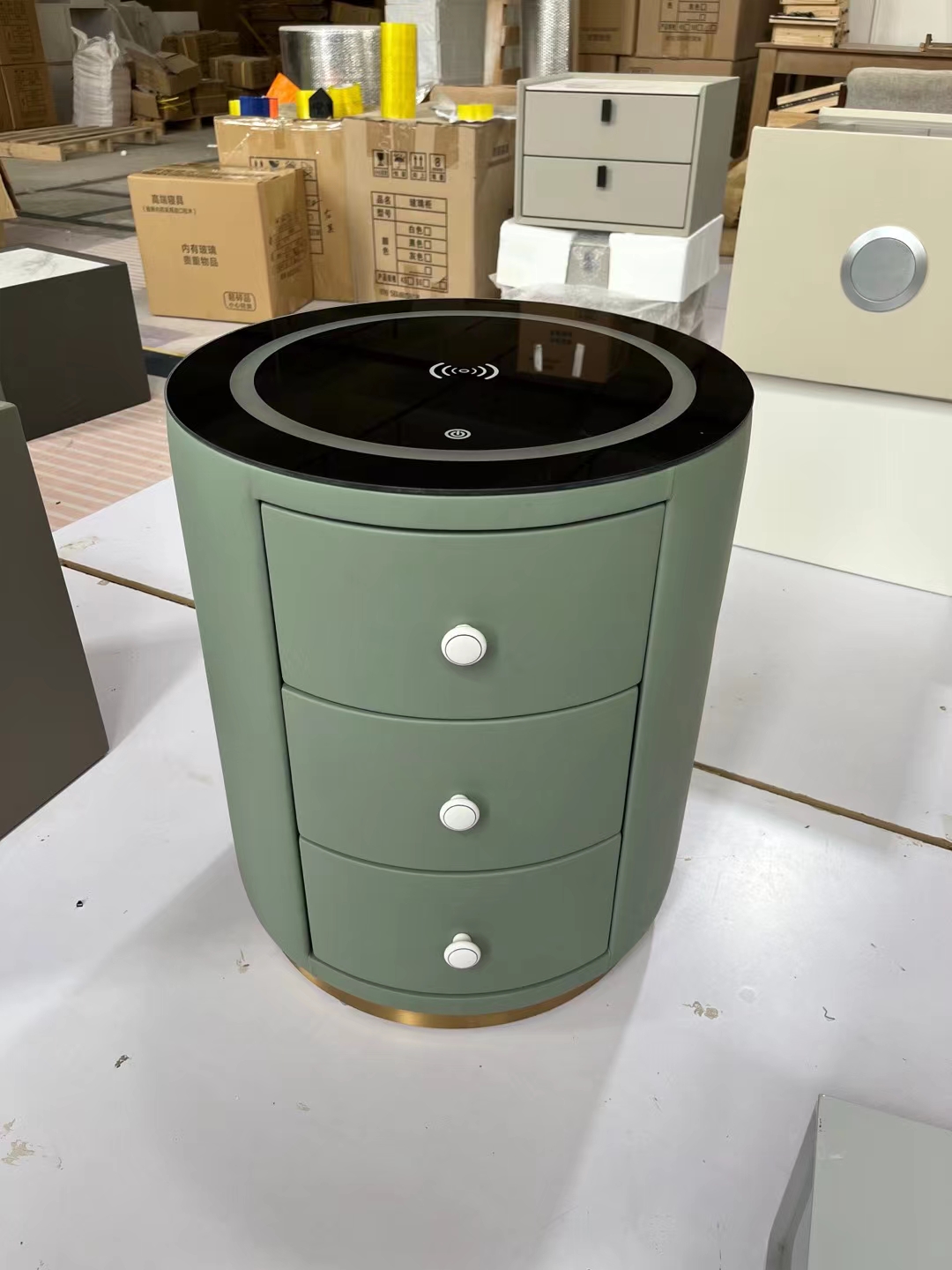
At the premium end, customers notice different things. Proportion, surface quality, hardware, upholstery, glass details, and the overall feel of the product matter more.
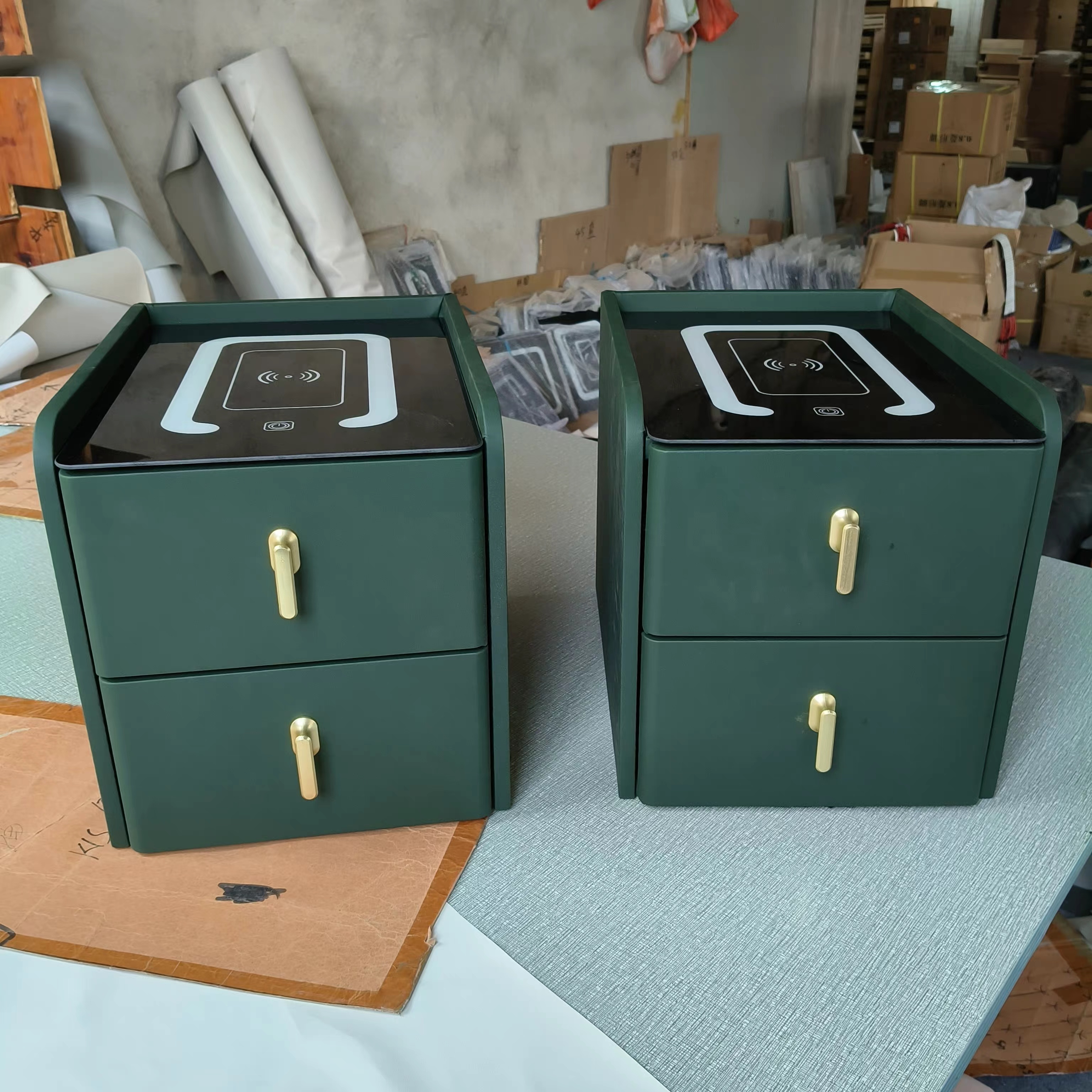
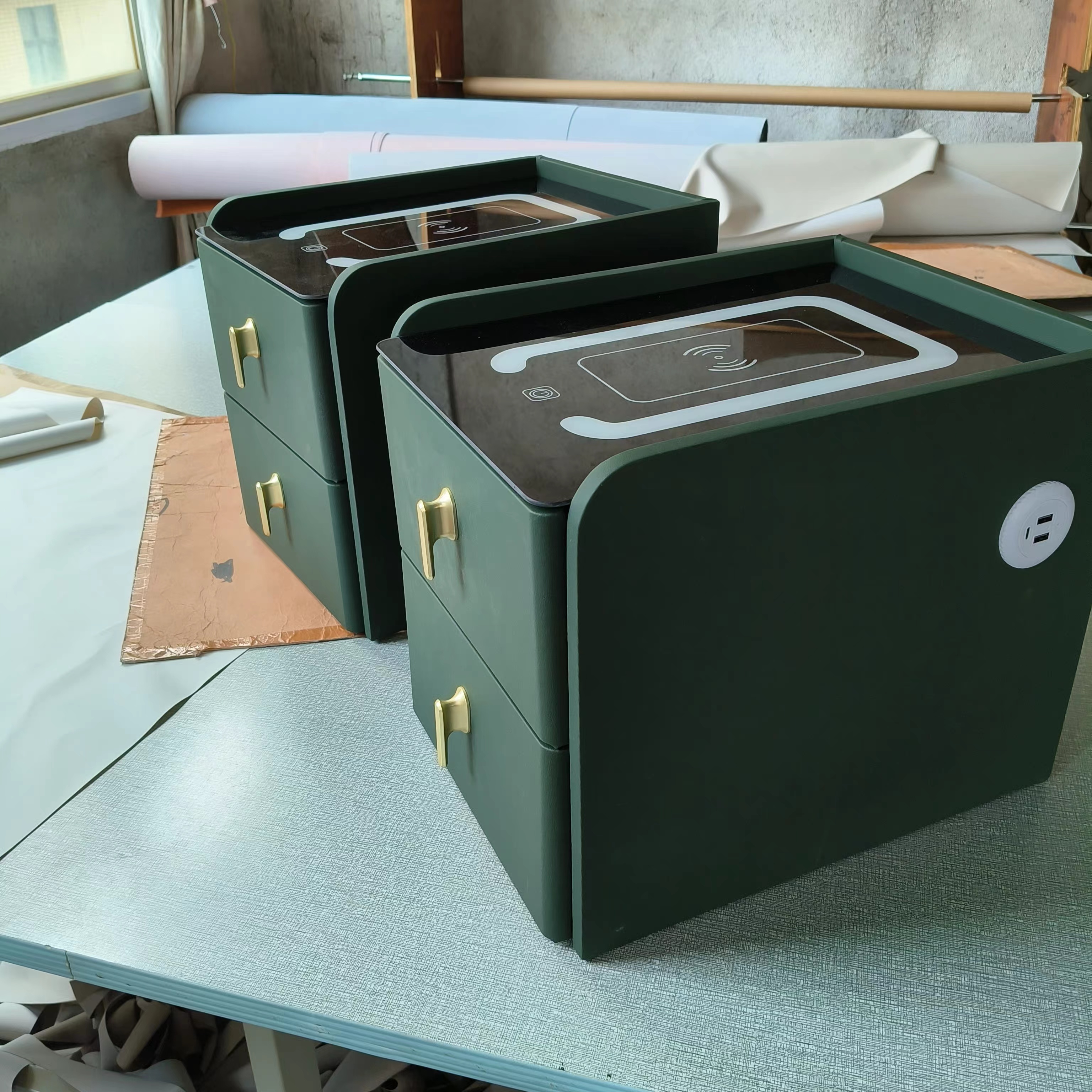
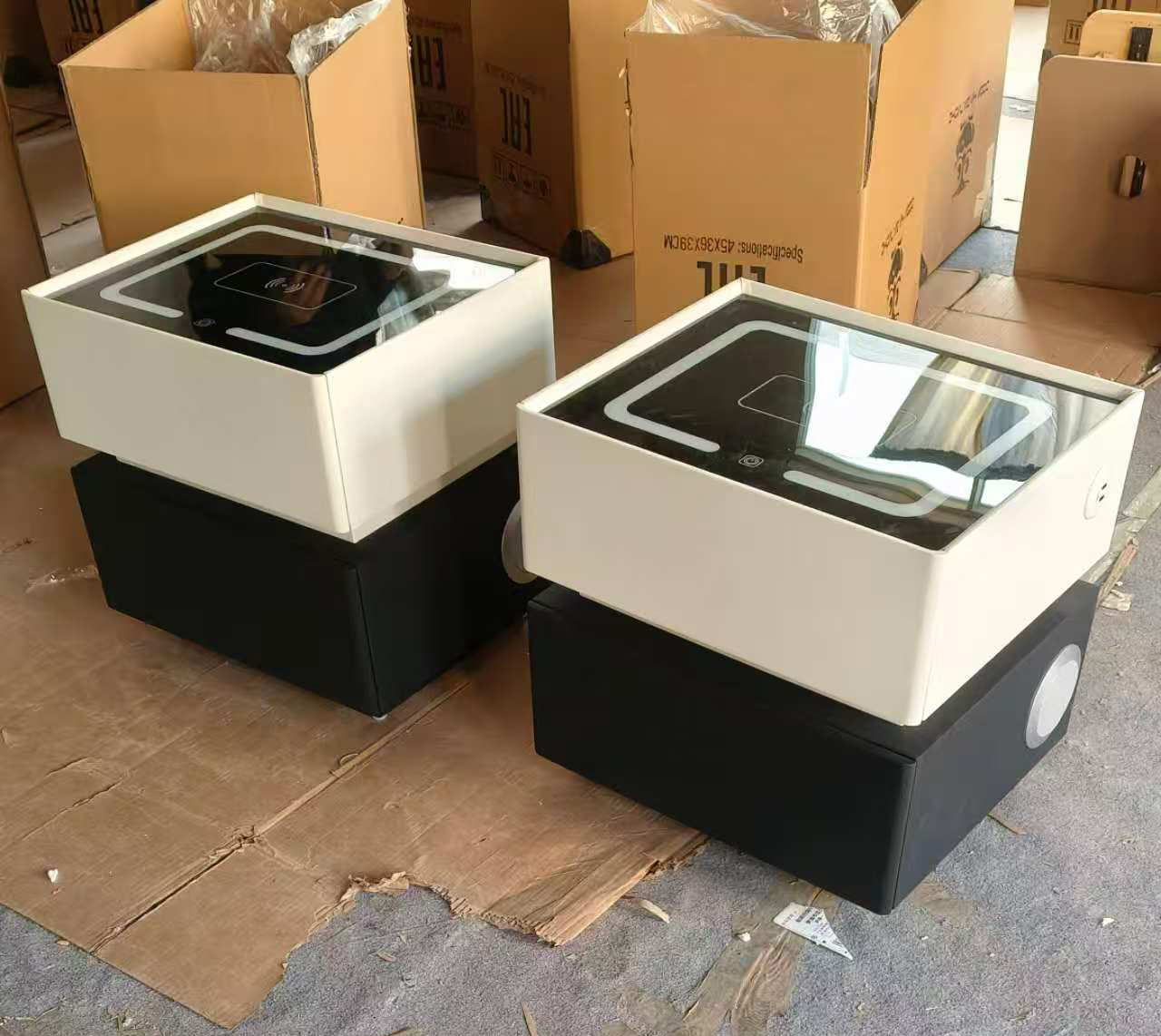
There is also a separate group of buyers who are interested in extra functions such as wireless charging, USB or Type-C ports, LED lighting, speakers, or locks.
These customers do not necessarily belong in the same price segment, and they do not all need the same product.
That is why a collection should be built around the customers that matter most to your business.
If your business mainly serves price-sensitive furniture stores, a range full of complicated smart models may be difficult to move. If your customers expect higher-end bedroom furniture, a collection made only from basic low-cost designs can look weak.
The factory can supply many things. Your market does not need all of them.
2. Every SKU Needs a Job
A simple way to review a collection is to ask one question for every model:
Why is this product here?
If the answer is unclear, the SKU may not be necessary.
A range might include:
SKU Role | What It Is There For |
Entry Model | Give price-sensitive customers an accessible option |
Core Model | Cover the broadest part of the market |
Premium Model | Offer a visible step up in value |
Smart Model | Add function and differentiation |
SKU Role | What It Is There For |
Compact Model | Serve small rooms or apartment markets |
This does not mean every buyer needs all five.
A focused three-model range can be stronger than a ten-model range if the three products have clearly different roles.
One situation we see quite often is a buyer selecting several products that look different in the catalog but become very similar once specifications are compared.
For example:
All are black
All are two-drawer designs
Dimensions are almost the same
Prices sit close together
The customer group is the same
One may have square metal legs, another rounded legs, and another a slightly different handle.
On paper, there are several SKUs.
In practice, they may be competing with one another for the same sale.
A new model deserves its place when it adds something the existing range does not already cover.
That difference could be size, function, price, storage, finish, style, or customer type.
If you cannot explain the difference in one sentence, it is worth asking whether the SKU is really needed.
3. Price Steps Need to Be Easy to Understand
A good collection should also make sense when customers compare prices.
Imagine three bedside tables selling at $99, $109, and $119.
If the products look nearly identical, customers may not understand why they should move up.
A more useful range creates clearer steps.
The entry model gives the customer the basic product at an accessible price.
The core model should offer something noticeable, perhaps:
Better proportions
More practical storage
Better drawer hardware
A more refined finish
The premium model needs an even clearer reason to cost more.
That might come from:
Higher-value surface materials
Upholstered details
Glass elements
Better hardware
More refined construction
A smart model can create another type of step up by adding functions such as charging or lighting.
The exact price difference will vary by market.
What matters is whether the customer can see what they are paying for.
A useful test is:
If the next model costs more, what does the customer actually get?
If the answer is only “a slightly different design,” the range may be too crowded.
Once the role of each SKU is clear, the next step is deciding what the individual product should actually look like. Our guide to choosing the right bedside table design for your market covers that process in more detail.

4. Variety Is Useful Until It Starts Creating Confusion
A collection needs enough variety to serve different customers, but there is a point where more choice stops helping.
A buyer may like a modern lacquered model, a warm wood design, an upholstered nightstand, a floating model, and a smart bedside table.
All of them may be good products.
That does not automatically mean they belong in one range.
A large distributor selling to many different retailers may need a wider mix.
A brand with a clear visual identity may be better off with fewer design directions.
Instead of adding unrelated products, it often makes more sense to build around a small number of design families.
For example, one buyer might focus on:
Clean contemporary designs
Warm wood finishes
One smart upgrade
Another may build the range around:
Upholstered details
Larger proportions
Premium bedroom styling
The collection still has variety, but it feels deliberate.
The same issue appears with colors.
One bedside table available in black, white, grey, walnut, and oak becomes five SKUs immediately.
Six models in five finishes means thirty combinations before different sizes are added.
That may look impressive in a sales catalog.
It looks different when those products are sitting in a warehouse.
A safer way to start is often:
One main finish
One secondary finish
Additional colors only after demand becomes clear
The factory may be able to make five colors. That does not mean you need to stock all five.
5. Smart Models Should Have a Clear Place in the Range
Smart bedside tables can help a product line stand out, but they do not need to replace standard models.
A standard nightstand still works well for customers who mainly want storage, appearance, and a reasonable price.
A smart model can sit above it as an upgrade.
For example, a collection might have:
A standard core model
A smart version with wireless charging and LED lighting
Now the customer can clearly see the difference between the two.
This works better than adding every possible smart function to every model.
Extra functions also mean more components, more testing, and more things to confirm before production.
If the customer does not care about a function, the extra complexity has not helped the sale.
Smart products work best when they have a specific role in the range rather than being added simply because the technology is available.
6. Too Many SKUs Can Become Expensive Very Quickly
Ten models may not sound like a large range.
But ten models in three finishes means thirty SKUs.
If some of those products also have different sizes or configurations, the number grows again.
Every SKU needs to be:
Forecast
Purchased
Stored
Tracked
Replenished
Sold
That is where collection planning starts to affect the business more directly.
A small number of well-separated products can sometimes perform better than a large range full of overlapping options.
Once the collection is selling, there are a few simple numbers worth watching.
Sell-Through
How quickly is the product moving compared with the stock you bought?
A model that sells steadily deserves a different level of attention from one that sits in inventory for months.
Inventory Turnover
How quickly is the money tied up in that product coming back through sales?
A high-margin product is less attractive if the stock barely moves.
Gross Margin
Margin still matters, but it should not be looked at by itself.
Returns and Damage
Furniture can appear profitable on paper and look much less attractive once replacements, damage claims, or repeated returns are included.
A product with a good margin is not necessarily a good SKU if it sells slowly, needs regular discounting, or creates too many after-sales problems.
Planning a New Bedside Table Collection?
Send us your target market, preferred styles, price positioning, and expected order size. We can review the range with you and suggest which models may work better as core, premium, compact, or smart options.
7. The First Order Is a Test, Not a Final Answer
The first order does not need to define the range forever.
It is better to treat it as a way to test your assumptions.
Some products will perform as expected.
Others will surprise you.
A model that looked strong in a supplier catalog may attract little interest once it reaches the market. A simpler design may become the repeat seller.
The first order can help answer practical questions:
Which design gets the most interest?
Which price level moves fastest?
Which finish do customers prefer?
Are smart functions actually important?
Which products are reordered?
This also means there is no reason to treat every SKU equally from the beginning.
If you are more confident about the core models, those products may deserve more stock.
New ideas can be tested more carefully.
This is especially useful when trying:
A new design style
A higher price position
A smart model
A new finish
A compact version
A new SKU should earn a bigger place in the next order by performing well in the market.
8. Let the Market Decide What Stays
Once the products are selling, the next range should be based less on opinion and more on actual results.
Look at:
Which models sell consistently
Which ones are reordered
Which finishes move
Which products need discounting
What customers ask about
Why products are returned
Which SKUs create repeated problems
You can then divide the range into three simple groups.
Keep
These are the products with stable demand and a clear role.
They form the base of the collection.
Expand
A strong model may deserve:
Another finish
Another size
A higher-positioned version
One additional feature
Adding to something the market has already accepted is usually easier to justify than introducing an unrelated product.
Remove
Some products simply do not earn their space.
A model may need to go if it:
Sells slowly
Overlaps another SKU
Needs constant discounting
Creates repeated complaints
No longer fits the range
Removing a model is not a failure.
It is part of improving the collection.
In repeat orders, the stronger and weaker SKUs usually become much easier to identify than they were during the first selection.
If you need to work backward from a target retail price, see our bedside table pricing guide for a closer look at factory pricing, specification differences, and landed-cost considerations.
9. Discuss the Collection With the Factory as a Whole
Many buyers send suppliers one product at a time.
Model A is quoted first.
Then Model B.
Then Model C.
Only after several rounds does the full collection become clear.
By then, the factory may be looking at a group of products with completely different:
Finishes
Hardware
Components
Structures
Packaging requirements
From the buyer’s side, the range may look straightforward.
From production, it can be unnecessarily complicated.
For multi-model projects, it helps to explain the bigger picture earlier.
Useful information includes:
Target market
Main customer groups
Planned number of models
Entry, core, and premium positions
Core versus test products
Preferred finishes
Standard versus smart products
Expected order mix
This gives the manufacturer more context.
There may also be opportunities to make the collection easier to produce and reorder without changing what the customer sees.
Several models may be able to share:
The same hardware family
A common finish
Some internal components
Similar production specifications
This is especially useful when the collection contains several models but the order quantity for each one is not very large.
The aim is not to make every product the same.
It is to remove complexity that the customer does not value.
A factory can quote individual products without understanding the collection. Planning the range properly requires a broader discussion.
Finish choice is only one part of the specification. If you are comparing MDF, plywood, solid wood, or other construction options for different price positions, see our bedside table materials guide for OEM buyers.

Conclusion: A Smaller Range Can Be a Stronger Range
There is no correct number of bedside tables for every importer, retailer, or distributor.
A specialist online seller may only need a few strong models. A large wholesaler serving different customer groups may need a broader range.
What matters is whether the collection makes sense.
Each SKU should have a clear customer and a clear role.
Price differences should mean something.
Styles and finishes should give useful choice without creating unnecessary stock.
Smart models should have a reason to be there.
And once the products reach the market, sales performance should decide what happens next.
For B2B buyers, a focused collection is usually easier to purchase, stock, replenish, and improve than a large catalog full of products doing the same job.
You do not need every bedside table the factory can make. You need the right products for the customers you actually sell to.
After defining the product direction, choosing an experienced OEM bedside table manufacturer is the next step to turn the design concept into a production-ready product.
👉 OEM bedside table production process

FAQ: Bedside Table Assortment & Collection Planning
1. What is a bedside table assortment?
A bedside table assortment is simply the mix of nightstands a retailer, importer, or distributor decides to carry.
It can include different price levels, styles, sizes, finishes, and functions. What matters is how those products work together. If five models appeal to exactly the same customer and sit at almost the same price, having five SKUs may not add much useful choice.
2. How many bedside table models should a retailer carry?
There is no standard number.
A smaller retailer may do well with a few carefully chosen models, while a distributor supplying different stores or markets may need a much wider range. Available inventory space, purchasing budget, sales volume, and the number of customer groups you serve all make a difference.
In practice, it is usually better to start with fewer models that have clear roles than to fill the range with similar designs.
3. What makes a good bedside table product mix?
A good product mix gives customers real choices without making the range unnecessarily complicated.
For example, you might have an affordable entry model, one or two main sellers, a higher-end option, and perhaps a compact or smart model. Another retailer may need a completely different mix.
The important part is that each product brings something different to the range.
4. How should retailers choose bedside tables that are likely to sell?
Start with what you already know about your customers.
Look at the styles and price levels that sell well, the finishes customers ask for, products that receive repeat orders, and any obvious gaps in the current range. Then compare new models against that information.
Factory catalogs are useful for finding ideas, but a product being new or attractive does not necessarily mean it belongs in your assortment.
5. Should a bedside table collection cover several price points?
Usually, yes—provided the differences between those price points are easy to understand.
If one model costs more, there should be a reason for it. It may have a better finish, more refined details, upgraded hardware, stronger design appeal, or useful additional functions.
Three almost identical products at slightly different prices often create more confusion than choice.
6. How do you know when two bedside table SKUs are too similar?
Compare them from the customer's point of view.
If the size, storage, finish, price, style, and intended customer are almost identical, changing the legs or handle may not be enough to justify another SKU.
A useful test is to ask a salesperson:
“Why should a customer choose this one instead of the other model?”
If there is no clear answer, there may be too much overlap.
7. How many colors should you offer for one bedside table?
Start with the colors you have a good reason to sell.
Offering five finishes sounds attractive, but it also turns one product into five inventory lines. Some colors may move quickly while others sit in the warehouse.
For a new collection, one main finish and one carefully chosen alternative can be enough. More options can be added later if customer demand supports them.
Planning a Hotel or Apartment Furniture Project?
Share your drawings, quantity requirements or reference photos. We can help evaluate feasibility, lead time and customization options.
👉 Discuss Smart Furniture Project
8. Does every bedside table collection need a smart nightstand?
No.
For many markets, standard bedside tables will still make up most of the range. A smart nightstand makes sense when charging, lighting, or another function gives customers a genuine reason to choose it.
It can work particularly well as an upgrade to a standard model rather than becoming the default specification for the whole collection.
9. Is it better to offer more bedside table SKUs?
Only when the additional SKUs serve a useful purpose.
Every new model, color, or size needs stock, forecasting, warehouse space, and replenishment. A large assortment can therefore become expensive surprisingly quickly.
Four clearly different products may give customers more useful choice than ten nightstands that look and cost almost the same.
10. What should retailers track after launching a bedside table collection?
Start with a few practical numbers: sell-through, inventory turnover, gross margin, repeat orders, markdowns, returns, and damage claims.
These numbers need to be looked at together.
A bedside table with a good margin can still be a weak SKU if it stays in stock for months. A fast-selling model can also be less attractive than expected if it generates too many returns or replacements.
11. What is a good sell-through rate for bedside tables?
There is no single sell-through percentage that works for every furniture business.
A retailer selling inexpensive flat-pack nightstands online will have a different sales cycle from a distributor carrying premium bedroom furniture.
For assortment decisions, comparing similar SKUs over the same period is often more useful. If one model consistently moves faster and needs fewer discounts than another, that tells you something useful about the next order.
12. Should every model receive the same quantity in the first order?
Not necessarily.
You may already have strong reasons to believe that one or two models will become the core of the range, while a new style or smart model is still being tested.
Treating every SKU equally assumes they will all perform equally. That rarely becomes clear until the products are actually in the market.
The final quantity also has to work with the supplier's production requirements, so assortment planning and factory planning need to be considered together.
13. When is it worth adding another bedside table model?
Add one when it fills a gap you can clearly identify.
Perhaps customers are asking for a narrower size. Maybe the range lacks an affordable entry product, a stronger premium option, or a model with charging functions.
“It's a new design” is not, by itself, a strong reason to carry another SKU.
14. When should a retailer stop carrying a bedside table?
Slow sales are one reason, but they are not the only one.
A model may also deserve review if it needs constant discounting, overlaps with a stronger seller, generates repeated complaints, or takes up stock without bringing anything distinctive to the range.
Sometimes removing a weak SKU makes the rest of the collection easier to manage.
15. Should a bestselling nightstand be offered in more colors or sizes?
It can be a sensible next step, especially when customers are already asking for those variations.
A proven product gives you some evidence to work with. If the walnut version sells consistently and buyers regularly ask for black, testing a black version has a clearer basis than adding another color simply because it is available.
The same logic applies to sizes and features.
16. What should an importer tell the factory when planning several bedside table models?
Give the factory the bigger picture, not just a list of product numbers.
It helps to explain the target market, which models are expected to be core sellers, the general price positioning, preferred finishes, whether smart models are included, and roughly how the order will be divided.
This can also reveal opportunities to use common finishes, hardware, or components across several models. The products can still look different to the customer while being easier to manage in production and repeat orders.
17. What is the most common mistake when building a bedside table collection?
Choosing each model on its own without looking at the range as a whole.
It is easy to pick ten attractive products from a catalog and only later notice that six of them target the same customer.
Before adding a model, ask what job it will do in the collection. If another SKU already does that job well, you may not need both.
Start Your OEM Bedside Table Project
Whether you are sourcing standard bedside tables, smart nightstands or custom hotel furniture, our team can help with product development, sampling, production and export logistics.
✔ OEM & ODM Service
✔ Smart Nightstand Solutions
✔ Low MOQ Available
✔ Sample Support
✔ Export Experience
👉 Get OEM Quote Within 24 Hours