
Tempered Glass Smart Nightstand Manufacturer in China: OEM Options, MOQ and Features
Looking for a tempered glass smart nightstand manufacturer in China? Learn about OEM customization options, MOQ requirements, wireless charging features, LED lighting, smart locks, and production capabilities before choosing a supplier.
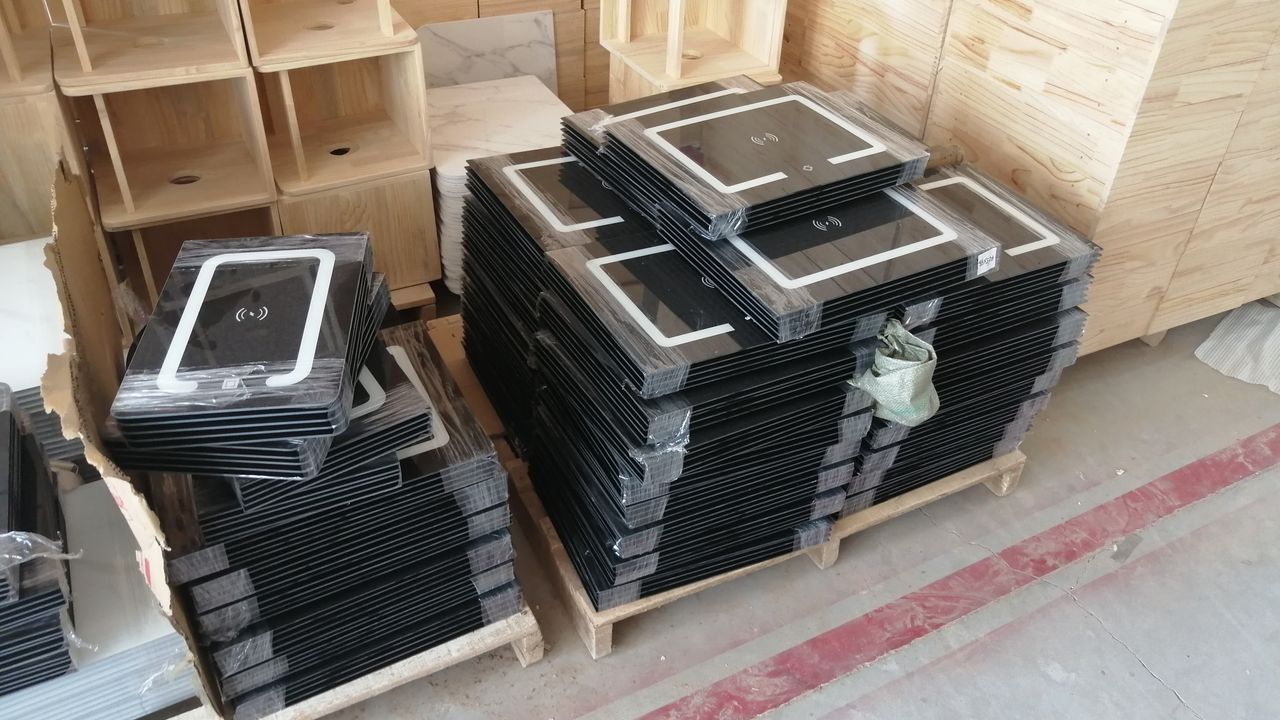
Tempered Glass Smart Panel for Smart Nightstands: Engineering Standards, Wireless Charging Distance & OEM Buying Guide (2026)
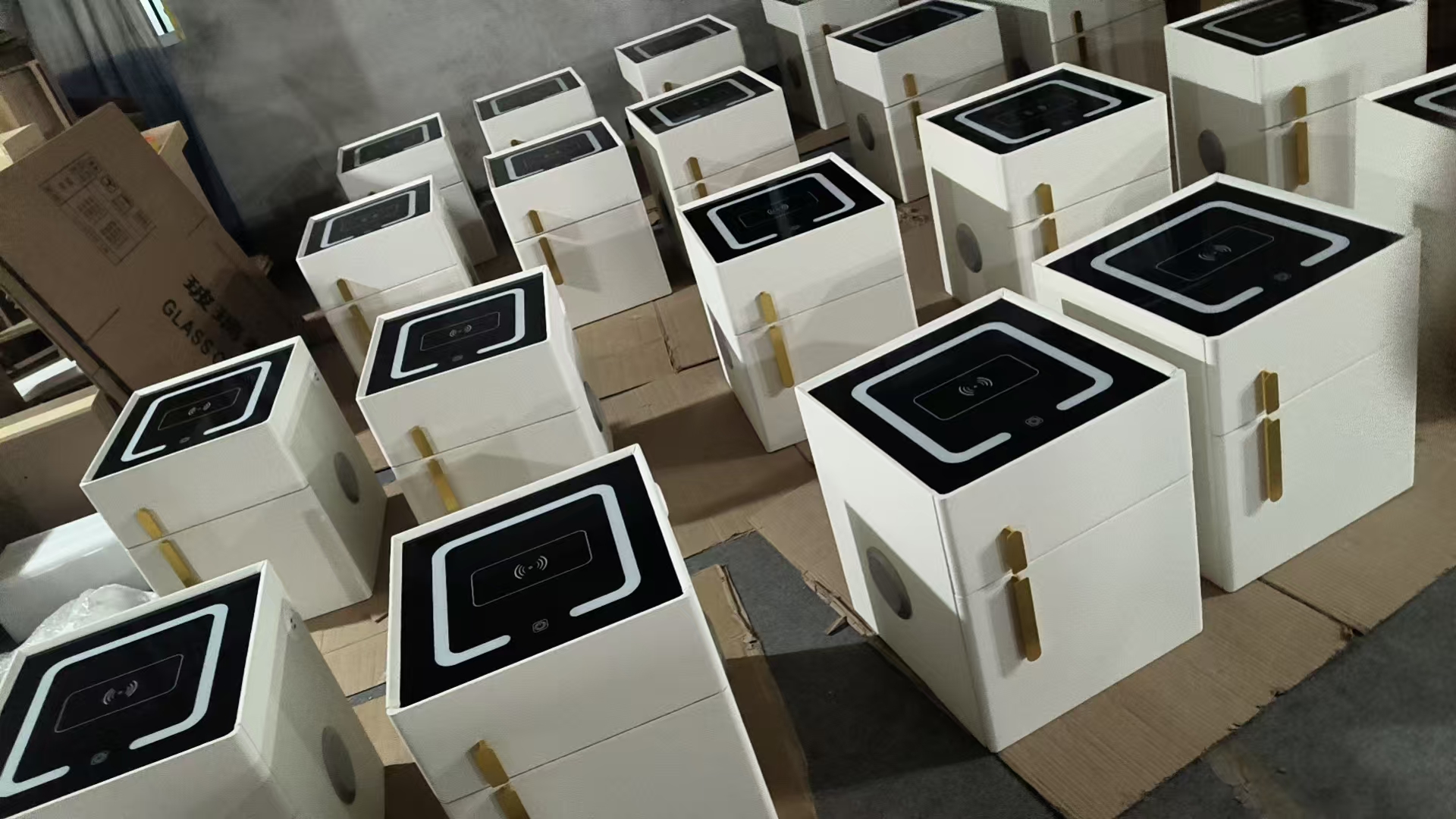
For smart nightstands, the tempered glass smart panel is not just a decorative top surface. It is the main human-machine interface that combines:
Capacitive touch control
Wireless charging zone
LED backlit icons
USB / Type-C access area
Moisture-resistant surface
Premium visual finish
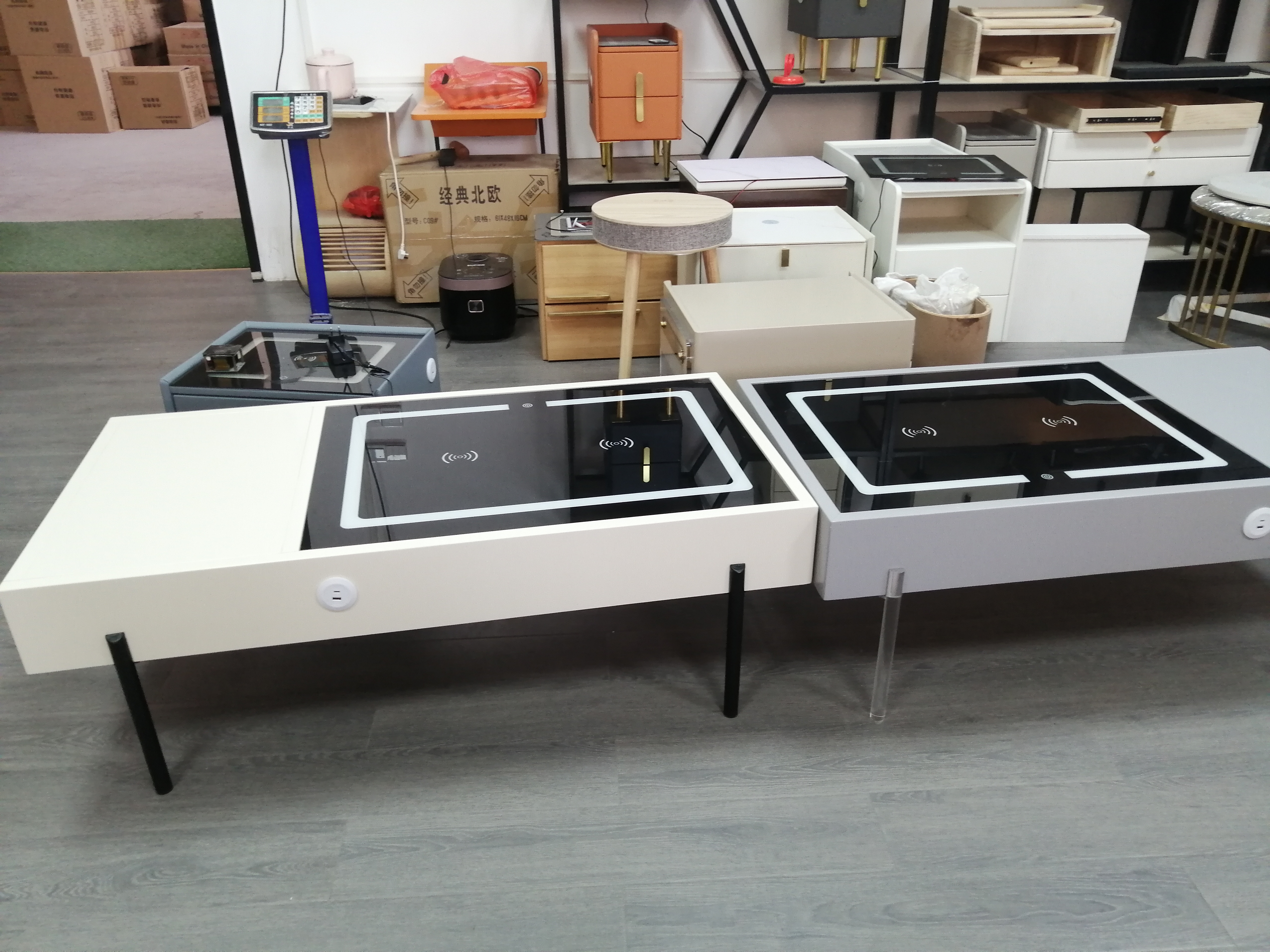
For B2B buyers, hotels, importers, and furniture brands, the glass panel directly affects:
Product durability
Wireless charging success rate
User experience
Warranty cost
Freight damage rate
Premium market positioning
A common misconception in sourcing is:
“Thicker glass is always better.”
That is not always true. For smart furniture with embedded wireless charging, glass thickness must balance strength with charging distance.
Why Tempered Glass Is Required (Not Optional)
According to your technical specification, the panel uses national standard tempered glass and references :
GB/T 15763.2—2025 (Tempered Safety Glass)
GB/T 4208-2017 (IP protection)
GB 4943.1-2011 (Electrical safety)
Why normal glass is risky
Ordinary glass may:
Crack more easily during shipping
Produce sharp shards when broken
Scratch faster in hotel use
Fail under temperature change
Why tempered glass is preferred
Proper tempered glass provides:
Higher impact resistance
Safer fragmentation behavior
Better scratch resistance
Stable daily-use durability
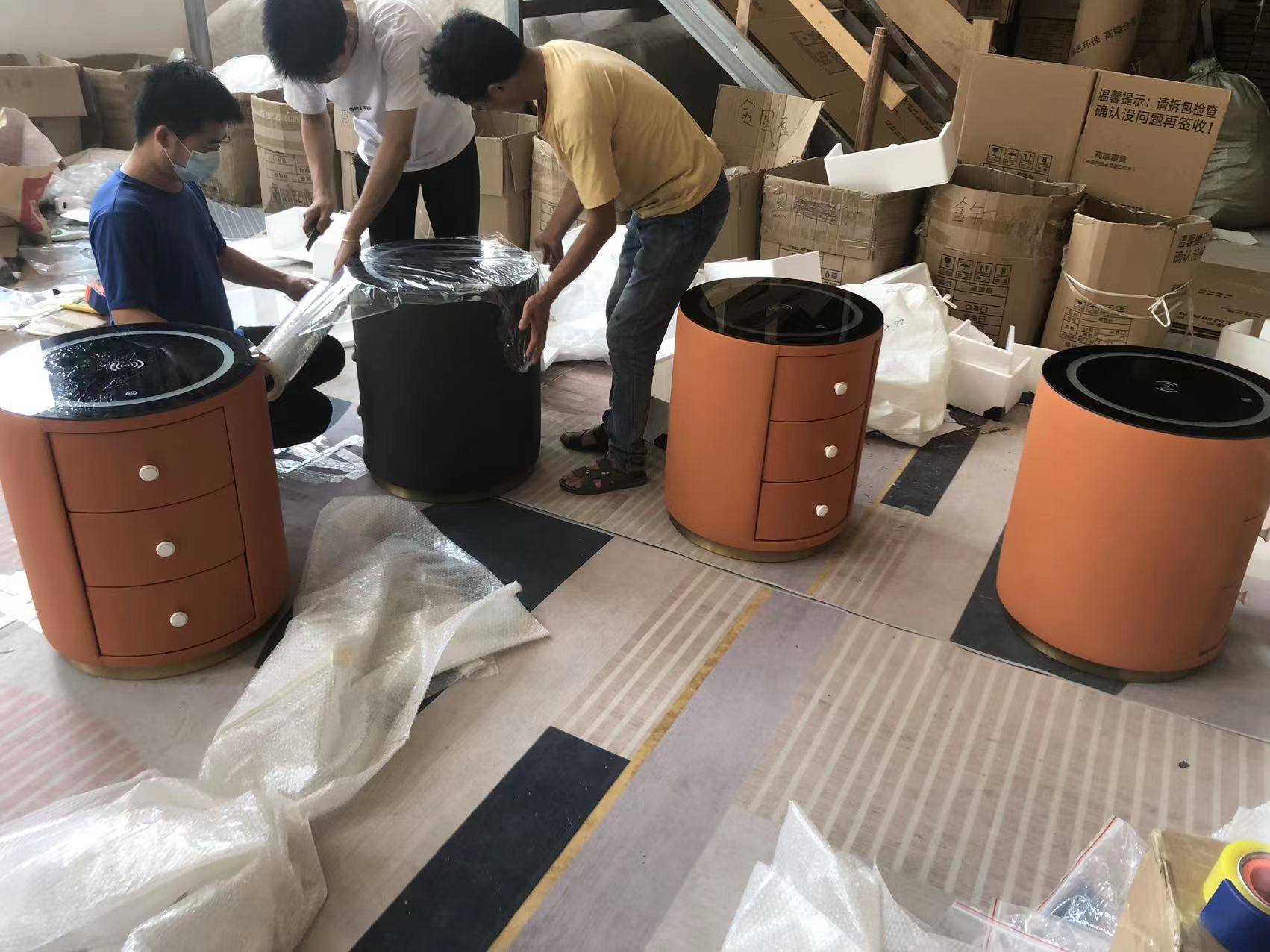
Glass Thickness: 3.2mm vs 4mm vs 5mm vs 6mm
Your technical document lists common options: 3.2mm / 4mm standard, with 5mm / 6mm custom .
Engineering Comparison
Thickness | Strength | Weight | Premium Feel | Wireless Charging Efficiency | Best Use Case |
3.2mm | Medium | Low | Standard | Excellent | Budget models |
4mm | Good | Moderate | Good | Very Good | Hotels / Mainstream OEM |
5mm | Better | Higher | Premium | Medium | Premium retail |
6mm | Highest | Highest | Luxury | Lower if not optimized | Luxury custom |
Important: Glass Is NOT Always Better When Thicker
Wireless charging works through coupling distance between the transmitter coil and phone receiver coil.
That total distance includes:
Glass thickness
Surface coating / print layer
Air gap
Protective case thickness
Coil mounting depth inside cabinet
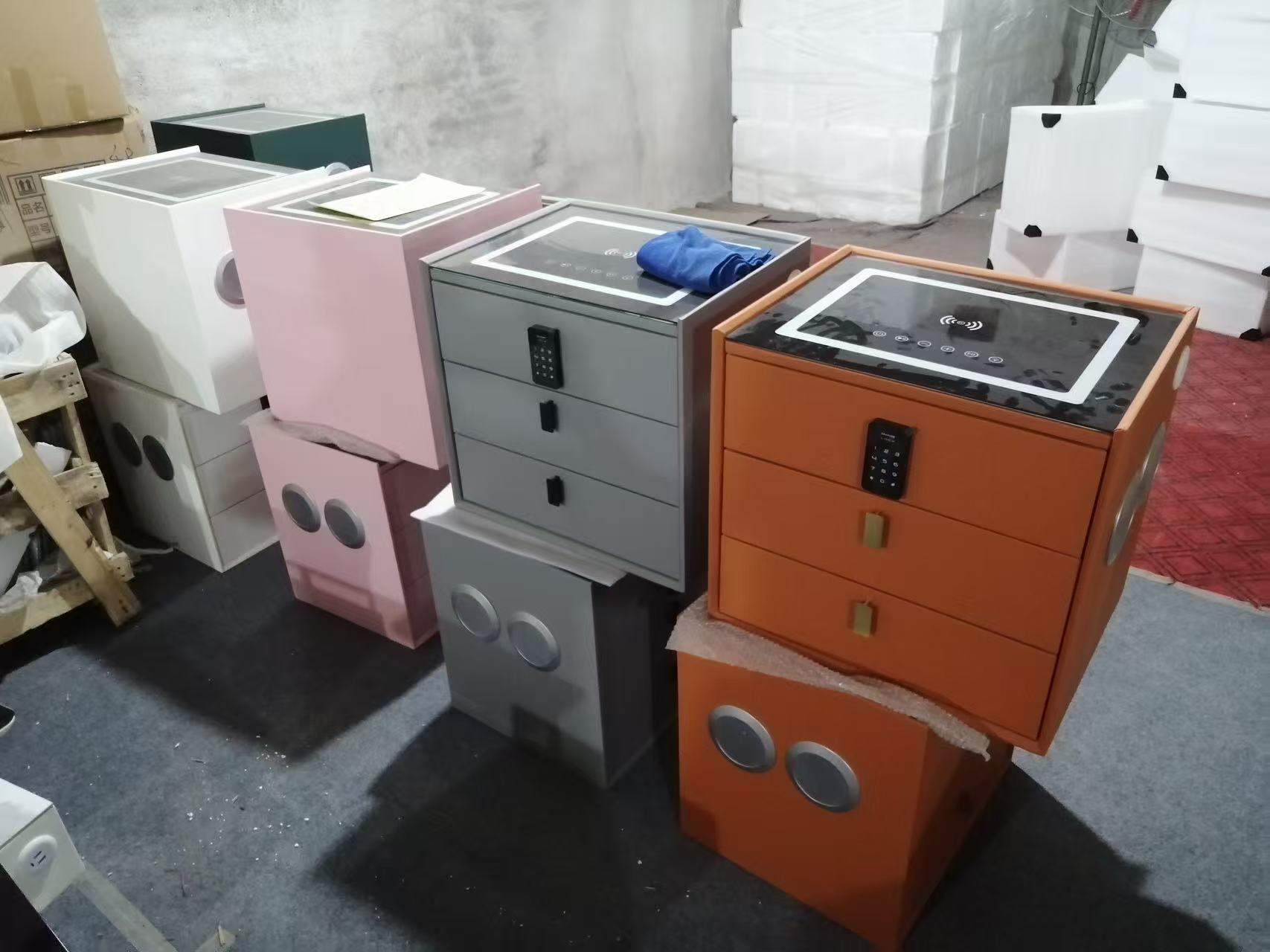
Practical Example
Scenario | Approx Distance |
3.2mm glass + thin phone case | Excellent |
4mm glass + normal case | Ideal |
5mm glass + thick case | May reduce alignment tolerance |
6mm glass + thick case | Charging may become inconsistent |
Buyer Insight
If you sell to hotel users, many guests place phones casually.
That means charging tolerance matters more than extreme glass thickness.
👉 For most projects, 4mm tempered glass is the best engineering balance.
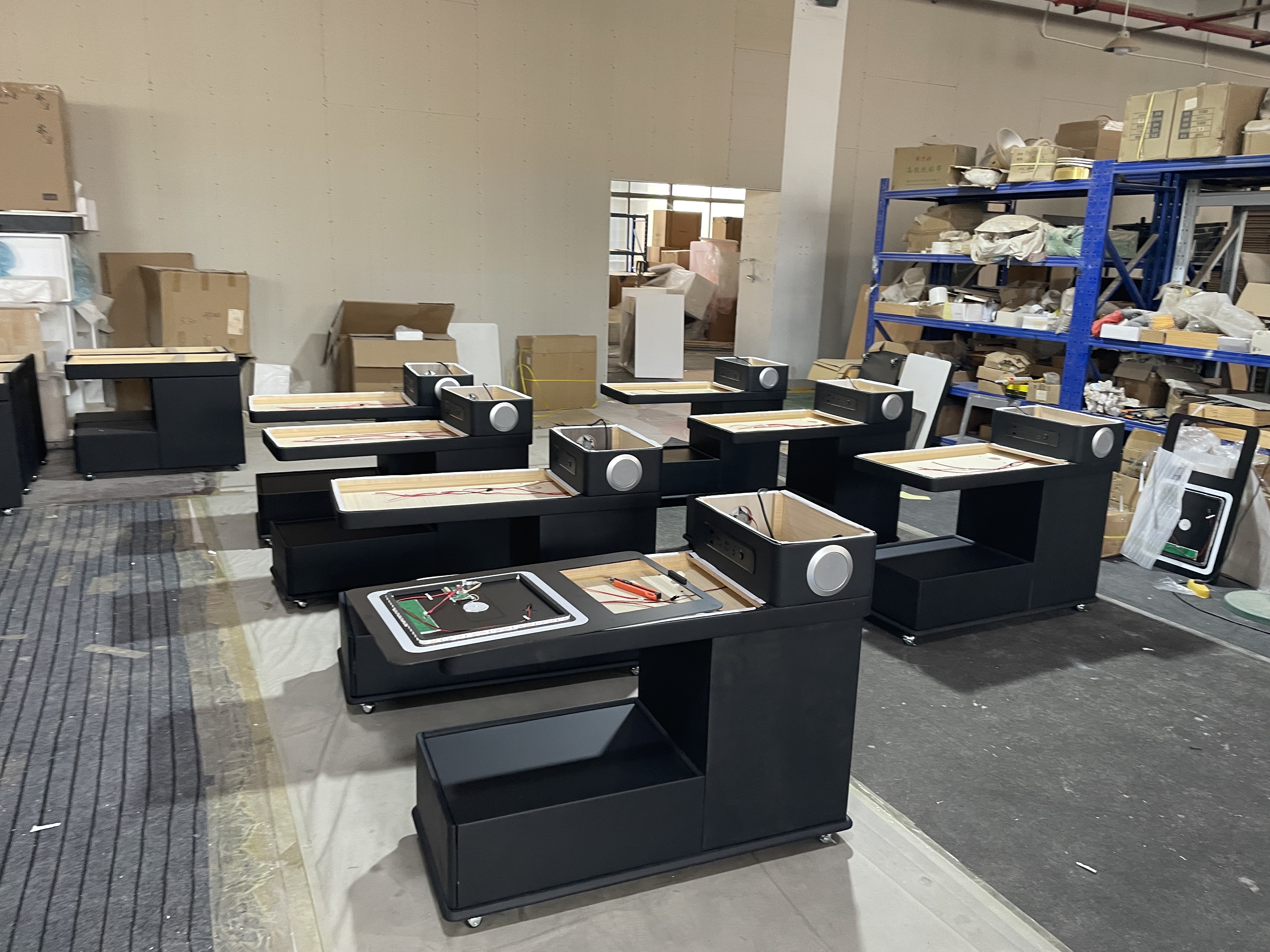
Recommended Wireless Charging Glass Strategy
Based on your panel specs (10W / 15W Qi charging), practical recommendations:
Project Type | Recommended Glass |
Hotel Rooms | 4mm |
Apartments | 4mm |
Retail Premium | 5mm |
Luxury Custom Villa | 5mm–6mm with coil optimization |
Budget Bulk Order | 3.2mm |
Surface Hardness: Mohs ≈ 6.5
Your spec sheet lists Mohs hardness ≈ 6.5
This means good resistance against:
Keys
Coins
Metal charger heads
Cosmetic containers
Daily wiping friction
Clarification
Hardness ≠ Unbreakable.
It mainly indicates scratch resistance, not immunity to corner impacts.
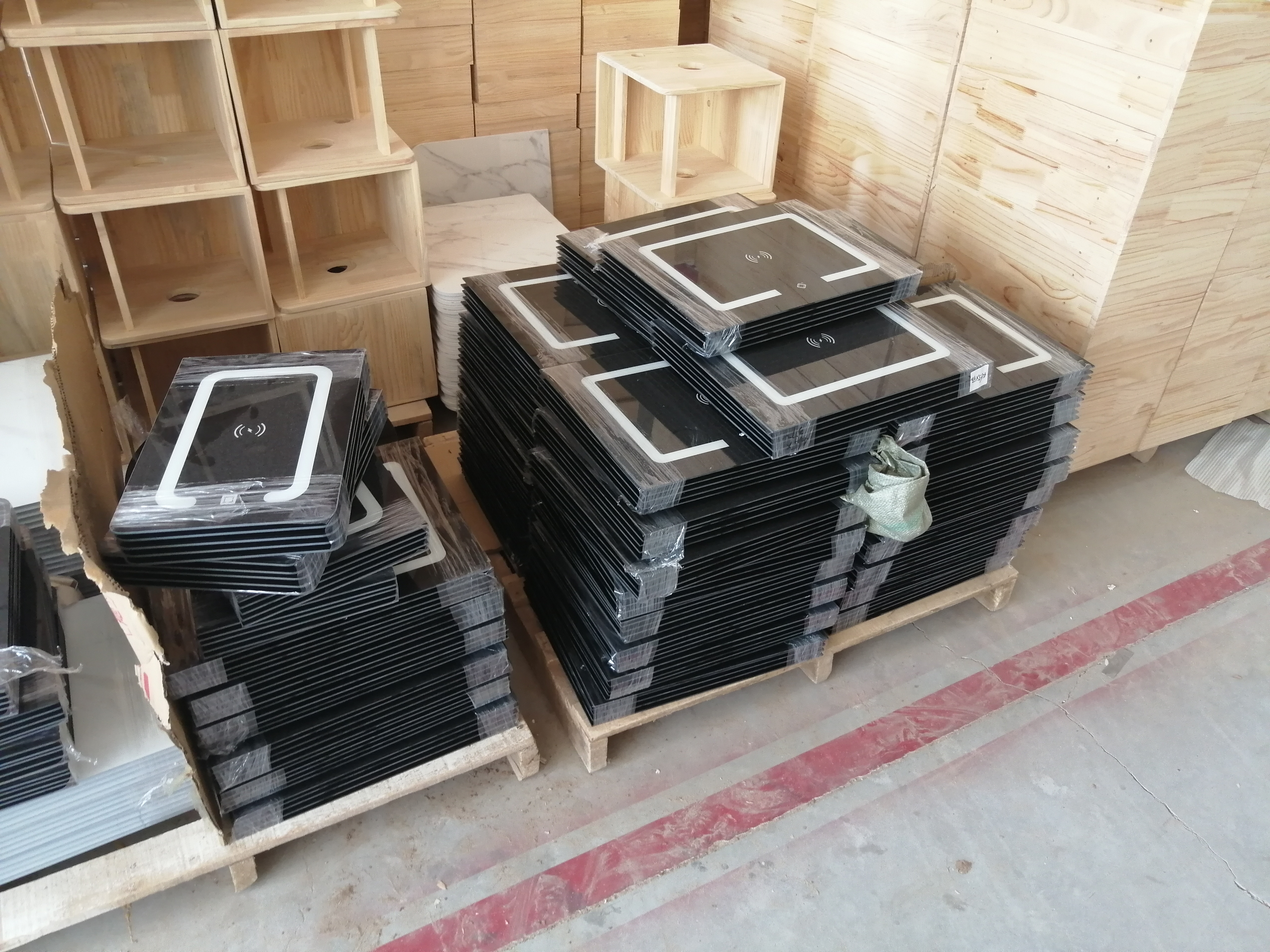
Impact Resistance & Safety Data
Your document specifies:
1040g ±10g steel ball
Drop from 1000mm
No breakage required standard
This is highly valuable for procurement because it gives measurable quality control.
Why It Matters
Shipping damage often occurs from:
Corner pressure
Carton drops
Installer mishandling
Panels tested for impact are lower-risk in export supply chains.
Fragmentation Safety (Critical for Hotels)
If breakage occurs, tempered glass should form:
Small blunt particles
No sharp knife-like shards
Your spec notes 50×50mm fragmentation count compliance
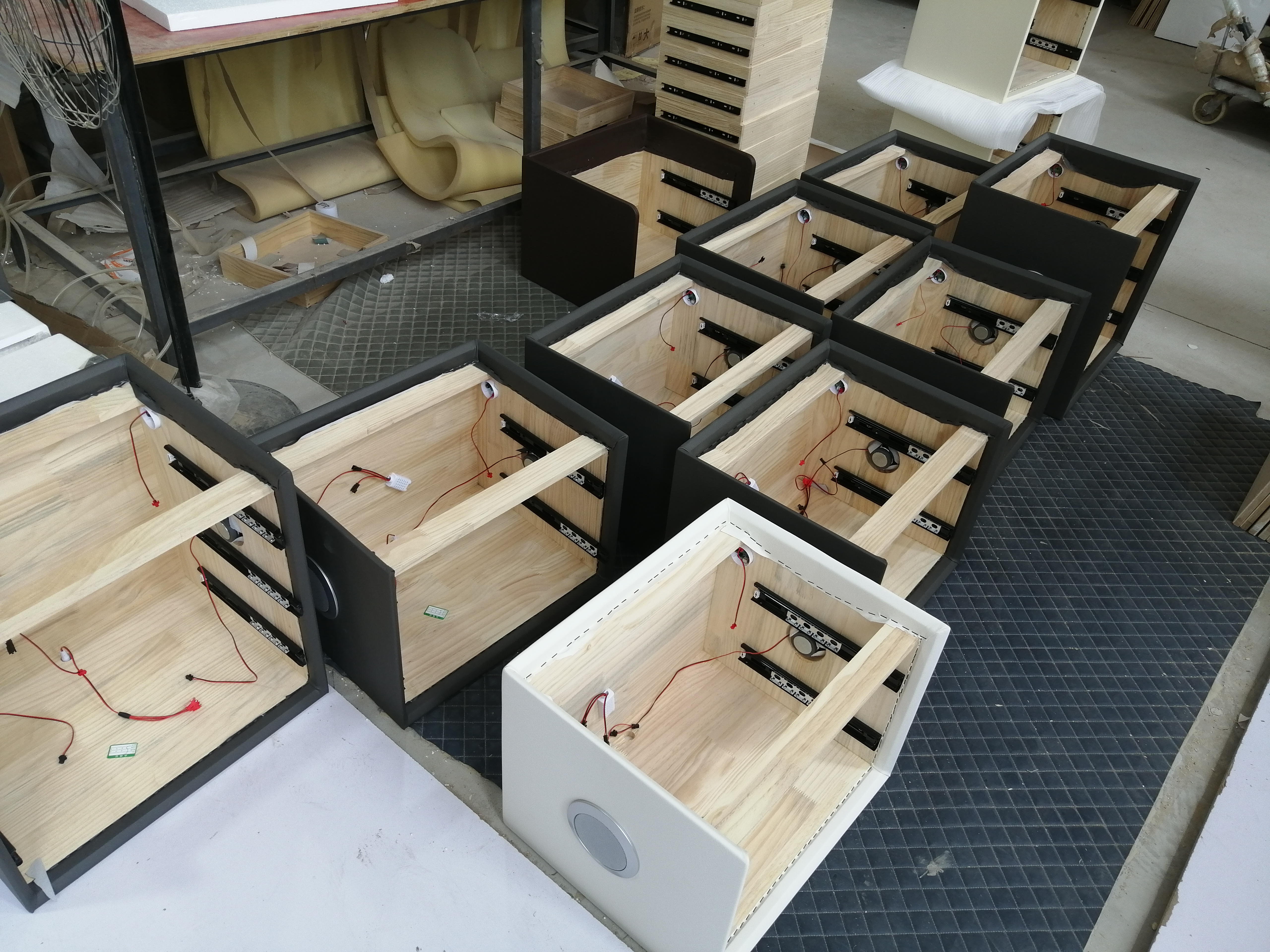
This is especially important for:
Hotels
Family furniture
Rental apartments
Surface Stress Standard
Your file specifies:
Surface stress ≥80MPa
Stress difference controlled
This matters because inconsistent tempering stress can create:
Spontaneous cracking risk
Edge weakness
Poor long-term reliability
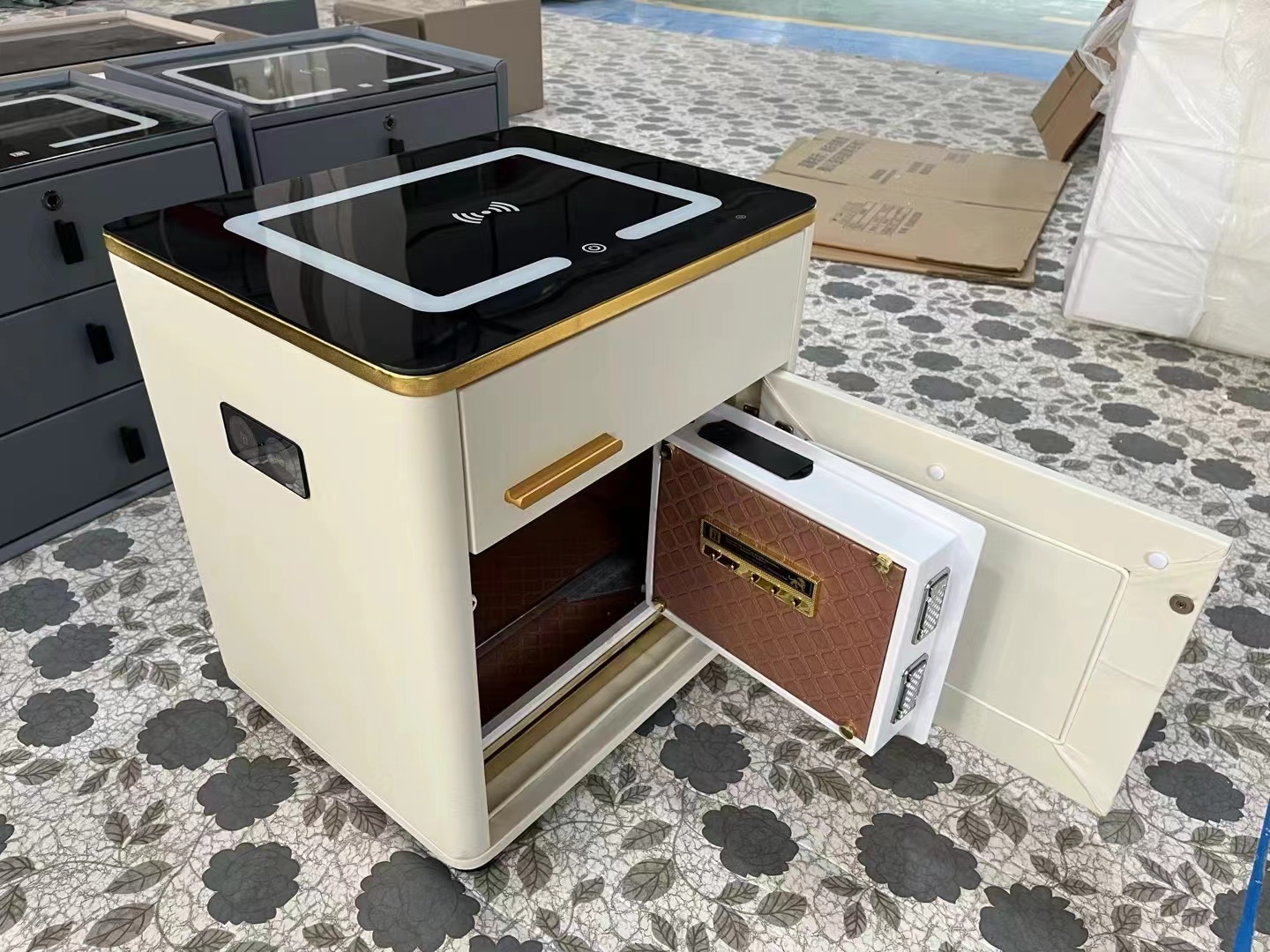
Electronic Touch Panel Data (Professional Buyer Section)
Your technical file includes three electronic levels.
Capacitive Touch Performance
Item | Basic | Mid | High |
Touch Type | Capacitive | Capacitive | Capacitive |
Response Speed | ≤3ms | ≤3ms | ≤2ms |
Wet Hand Use | Yes | Yes | Yes |
Thin Glove Use | No | Yes | Yes |
EMI Resistance | Standard | Better | Advanced |
Why It Matters
At night, users want instant response.
Poor touch tuning creates:
Delayed lighting control
False presses
Dead zones
Frustration complaints
Button & Backlight Design
Version | Keys |
Basic | 3–4 |
Mid | 5–6 |
High | 6–8 |
Buyer Advice
Too many keys can confuse hotel guests.
For hospitality, 4–6 clear icons is usually best.
Power & Charging Data
System Power
Version | Total Power |
Basic | 25–30W |
Mid | 30–35W |
High | 35–40W |
Wireless Charging
Version | Total Power |
Basic | 25–30W |
Mid | 30–35W |
High | 35–40W |
Wired Charging
Version | Output |
Basic | 5V/2.1A |
Mid | 5V/3A |
High | 5V/3A, 9V/2A, 12V/1.5A |
IPX4 Splash Resistance vs Ordinary Panels
Your file requires front-side IPX4 splash resistance
Why It Matters in Real Bedrooms
Common bedside risks:
Water glass spill
Coffee splash
Cleaning spray
Wet hands
IPX4 Means:
Protection against splashing water, not submersion.
For hotels, IPX4 is highly recommended.
LED & Night Mode Performance
Feature | Mid | High |
Color Temp | 3000K / 4500K / 6000K | 2700K–6500K |
Dimming | Infinite | Infinite + memory |
Night Light | Yes | Yes |
Wake-up Mode | No | Yes |
Hotel Procurement Recommendations
Best Specification for Hotels
4mm tempered glass
15W wireless charging
USB-A + Type-C
4–6 touch keys
IPX4 protection
Warm / neutral / white light
Auto-off key backlight
Why Not 6mm for Hotels?
Because hotels prioritize:
Stable charging for all guests
Lower freight weight
Easier replacement
Better ROI
Common Sourcing Mistakes
Mistake 1: Buying Thickest Glass Only
Ignoring charging distance.
Mistake 2: Ignoring Touch Calibration
Beautiful panel, poor usability.
Mistake 3: No Impact Test Proof
Higher breakage claims.
Mistake 4: Too Many Functions
Complicated for hotel guests.
Mistake 5: Lowest Price Supplier
Often weak tempering process.
Factory Acceptance Checklist
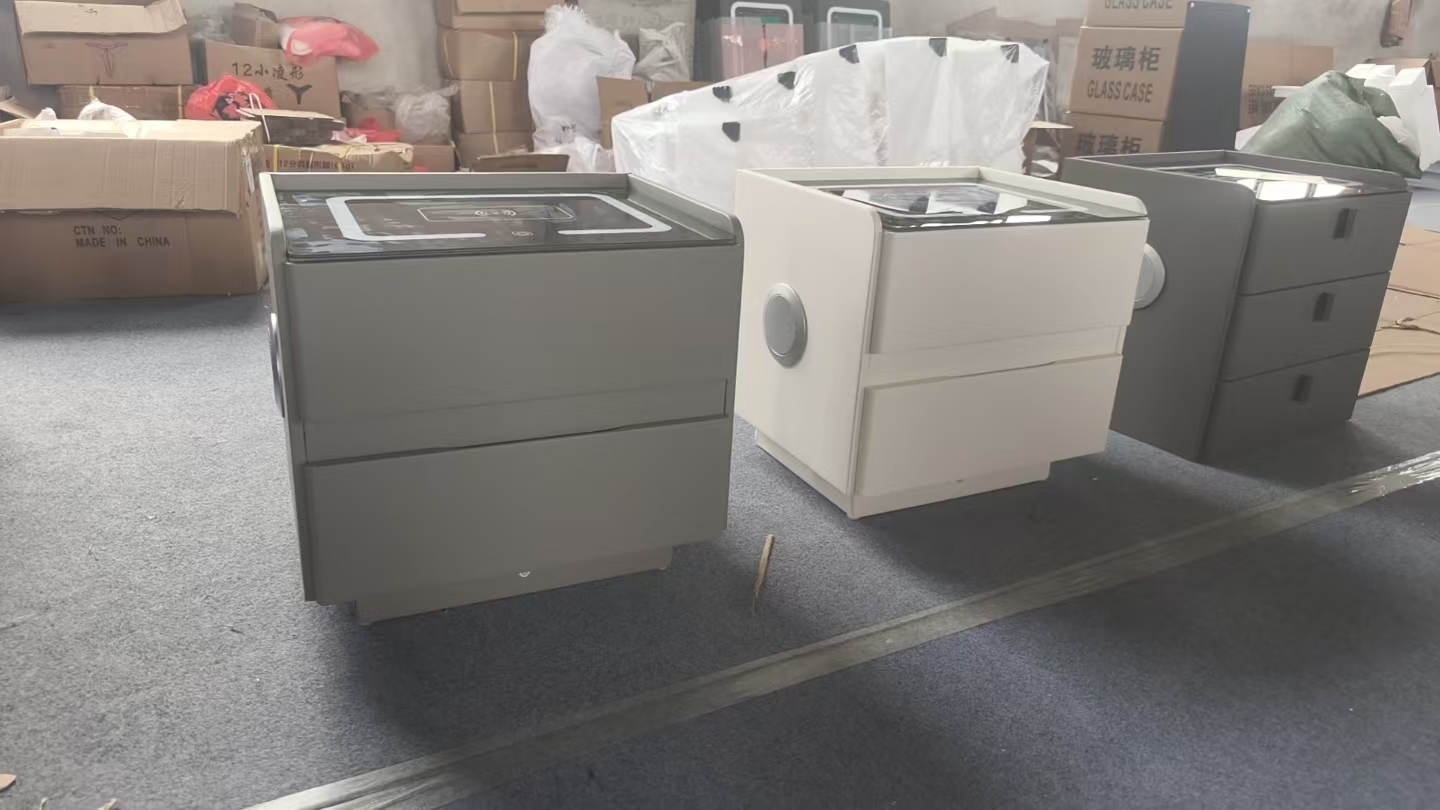
Your specification already includes strong QC logic.
Request:
100% visual inspection
Touch response test
Wireless charging test
IPX4 test
72-hour aging test
Insulation ≥100MΩ
Spare panel support
Application Scenarios
Hotels
High-frequency use, charging convenience, durable panel.
Apartments
Modern convenience + USB + night lighting.
Retail Brands
Premium showroom appearance.
Luxury Projects
Custom logo glass + advanced electronics.
Summary
For smart nightstands, the best glass panel is not the thickest one.
It is the panel that balances:
Strength
Safety
Charging distance
Touch performance
Cost
Logistics durability
Final Buying Recommendation
Most B2B Projects:
👉 4mm tempered glass + 15W charging + IPX4
Premium Retail:
👉 5mm glass + upgraded finish
Luxury Custom:
👉 5–6mm only with optimized coil spacing
FAQ
1. Is thicker glass always better?
No. Thicker glass can reduce wireless charging tolerance.
2. What is best for hotels?
Usually 4mm tempered glass.
3. Can 6mm still support charging?
Yes, but coil distance and alignment must be optimized.
4. Why does guest charging fail sometimes?
Phone misalignment, thick case, excessive panel distance.
5. Is 3.2mm too thin?
Suitable for budget models if properly tempered.
6. What touch speed is good?
≤3ms is good, ≤2ms is premium.
7. Is IPX4 enough?
Yes for splash resistance bedside use.
8. How to reduce warranty claims?
Choose certified glass + real QC + modular electronics.
9. Does thicker glass cost more freight?
Yes, higher weight increases logistics cost.
10. Should I request samples?
Always yes.
Inquiry CTA
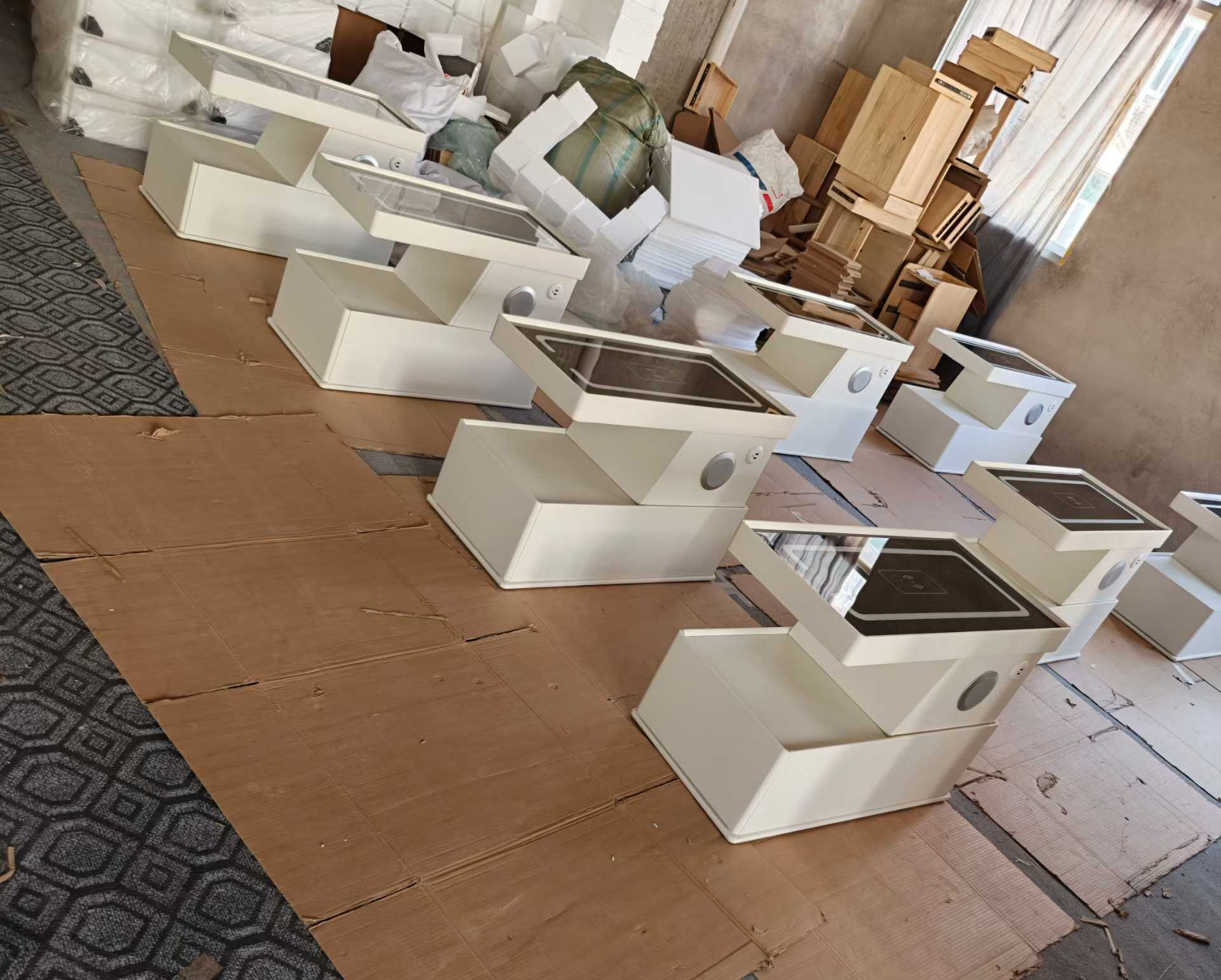
If you are sourcing smart nightstand tempered glass panels or complete OEM bedside tables, request:
Recommended glass thickness for your market
Wireless charging compatibility test
Hotel-grade durability samples
Custom icon / logo panel design
Full quotation + lead time plan
👉 Ganzhou Hebai Wood Products Co., Ltd
supplier China / manufacturer China / OEM factory
✔Web:https://hebaifurniture.com/
✔Email:vincent@hebaifurniture.com
✔whatsapp:+86 15207972272
Related Articles
👉 What Is a Smart Nightstand System? Engineering, Standards & OEM Sourcing Guide
👉 Top 10 Modern Bedside Table Designs for 2026 (Trends, Materials & Buying Guide)
👉 OEM Bedside Table Manufacturer in China (2026–2030 Market Guide & Sourcing