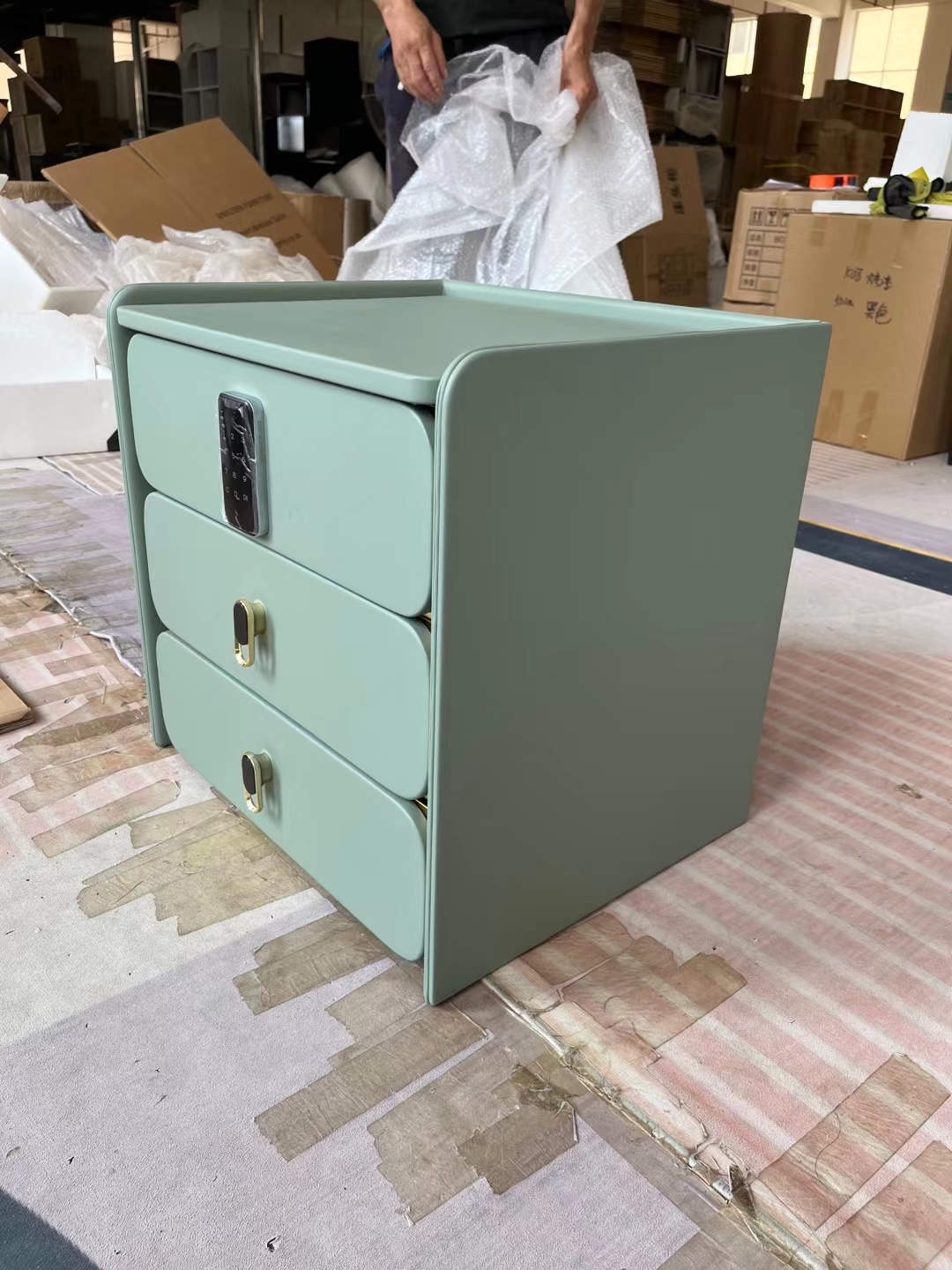
How Much Does a Smart Nightstand Cost in 2026? Factory Prices, Features & OEM Buying Guide
Wondering how much a smart nightstand really costs? This 2026 pricing guide explains factory prices, material differences, wireless charging costs, LED lighting, fingerprint locks, MOQ requirements, sample fees and OEM buying considerations.
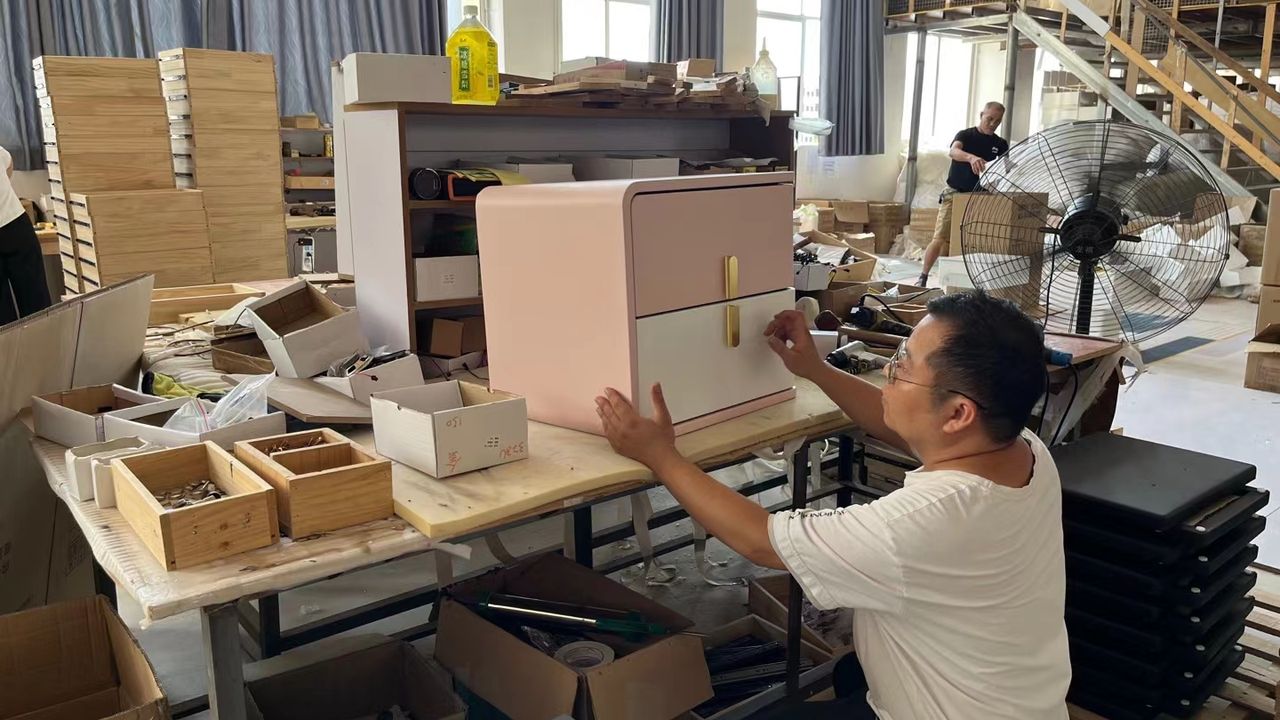
How Much Does a Bedside Table Really Cost in 2026?
If you have sourced furniture from China before, you have probably experienced this situation.
You send the same product photo to several suppliers.
One factory quotes USD 45.
Another quotes USD 65.
A third supplier comes back with USD 85.
At that point, most buyers ask the same question:
Why are the prices so different when the product looks exactly the same?
The short answer is that it usually isn't the same product.
From the outside, two bedside tables can look nearly identical.
Inside, however, they may use different materials, different hardware, different construction methods and different electronic components.
That is why experienced furniture buyers rarely focus on price alone.
They focus on what is behind the price.
Over the years, we have seen buyers save money by choosing a simpler specification. We have also seen buyers spend far more later because important details were ignored during sourcing.
This guide is not about finding the cheapest bedside table.
It is about understanding where the cost comes from and how to compare quotations properly.
Looking for a Smart Nightstand Manufacturer in China?
Planning a new furniture collection or hotel project?
Hebai Furniture specializes in OEM and ODM smart nightstands with:
✔ Wireless Charging
✔ USB & Type-C Charging
✔ LED Lighting
✔ Bluetooth Speakers
✔ Fingerprint & Password Locks
✔ Wood Veneer & Upholstered Designs
Our engineering team can help you develop custom smart furniture based on your market and budget requirements.
👉 Get a Smart Nightstand Solution
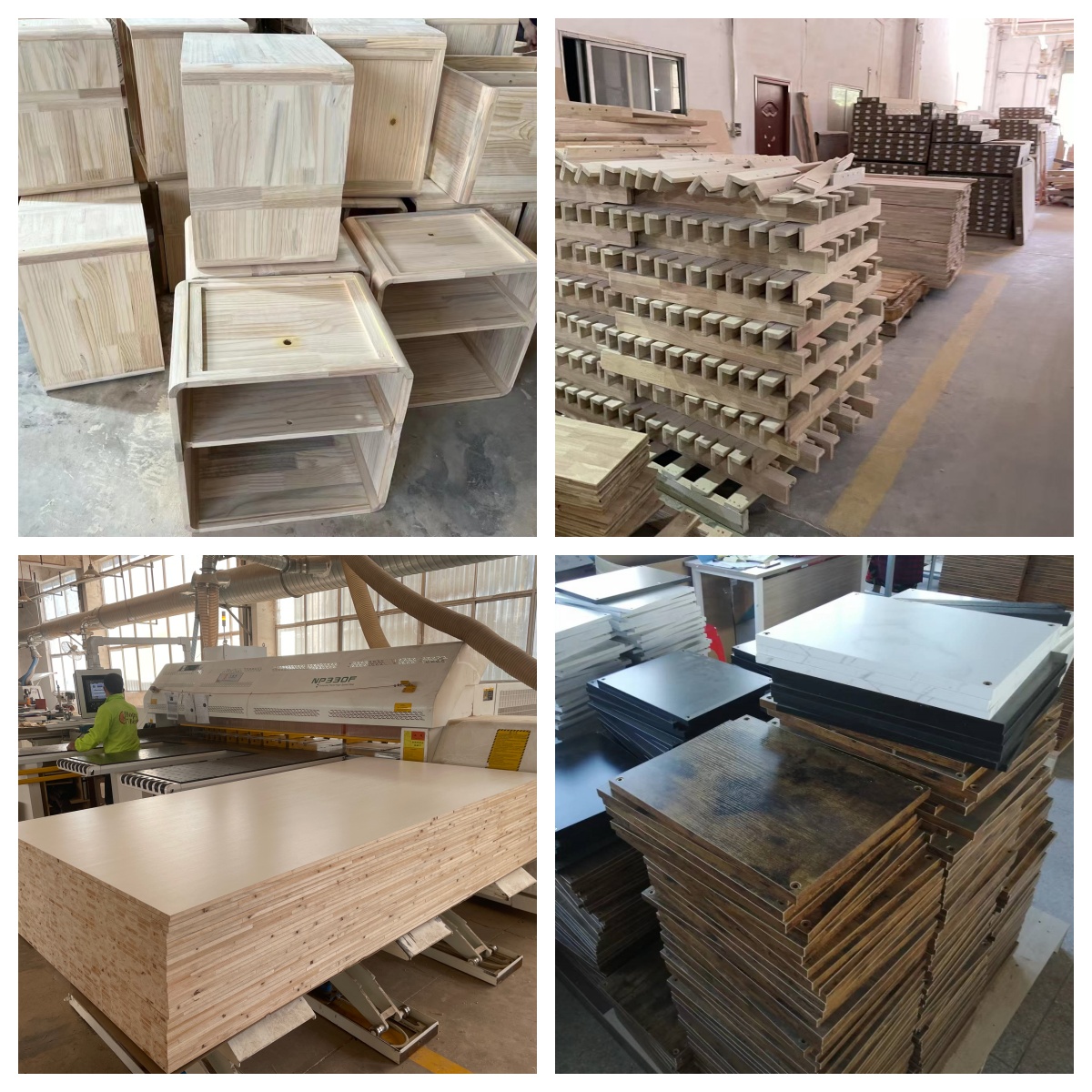
Typical Bedside Table Prices in China
For most export projects in 2026, bedside tables manufactured in China generally fall into the following price ranges.
Product Type | Typical Factory Price |
Basic MDF Bedside Table | USD 18–40 |
Wood Veneer Nightstand | USD 35–90 |
Upholstered Nightstand | USD 40–100 |
Solid Wood Nightstand | USD 65–150+ |
Standard Smart Nightstand | USD 45–80 |
Premium Smart Nightstand | USD 80–150+ |
These are factory reference prices rather than retail prices.
The actual quotation depends on the specification, quantity and market requirements.
For example, a 50-piece order for a local retailer and a 1,000-piece hotel project will rarely have the same pricing structure.
Likewise, a smart nightstand with wireless charging and LED lighting should not be compared directly with a basic MDF cabinet.
They belong to different product categories even if they look similar in photos.
What Actually Drives the Cost?
Many people assume material is the biggest factor.
Material is important, but it is not the whole story.
In practice, the final quotation is usually influenced by several areas working together.
Material
The difference between MDF, veneer, upholstery and solid wood is often obvious.
What buyers do not always see is the difference between good materials and average materials.
Board density, veneer quality and upholstery grade can all affect pricing.
Construction
A bedside table is more than a collection of panels.
Panel thickness, drawer structure and internal reinforcement all influence durability.
Two products may use the same material but still have very different manufacturing costs because of the way they are built.
Hardware
Drawer slides are a good example.
A basic slide and a quality soft-close slide may look similar in photos.
The user experience is completely different.
For projects such as hotels and rental apartments, hardware quality often matters more than decorative details.
Finish
The finish is where many price differences start to appear.
A simple melamine finish and a carefully finished natural veneer surface can look similar from a distance.
The labor required to produce them is very different.
Smart Functions
This is the area that has changed the most over the last few years.
Many buyers still assume wireless charging, LED lighting and USB charging are expensive upgrades.
That used to be true.
Today, most smart modules are mass-produced and surprisingly affordable.
In many projects, upgrading the cabinet finish costs more than adding basic smart functions.
Packaging
Packaging is often forgotten during quotation discussions.
Then the products arrive damaged.
Good packaging costs money, but it can save far more money than it costs.
For furniture sold online, packaging can be almost as important as the product itself.
The Biggest Pricing Change We Have Seen in Recent Years
Five or six years ago, smart nightstands were still considered premium furniture.
Today, they are becoming mainstream.
Wireless charging, USB ports and LED lighting are no longer unusual features.
Customers expect them.
The reason is simple.
China's smart furniture supply chain has matured.
Charging modules, LED systems, Bluetooth speakers and smart locks are now produced on a large scale.
As production volumes increased, costs came down.
This has changed the way buyers budget for furniture projects.
In fact, we often see projects where switching from MDF to natural wood veneer adds more cost than adding wireless charging and LED lighting.
That would have been difficult to imagine a few years ago.
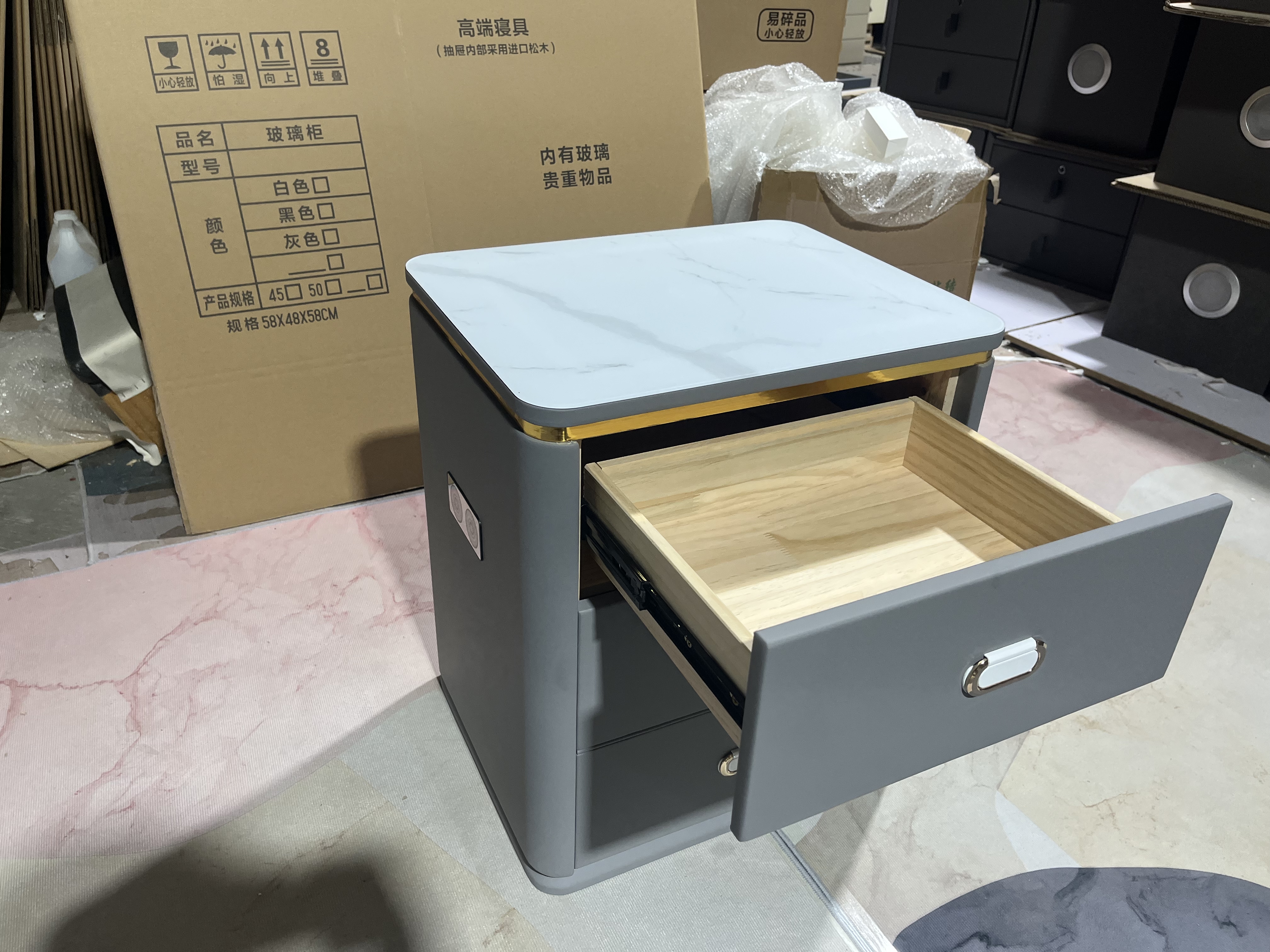
Material Matters More Than Most Buyers Think
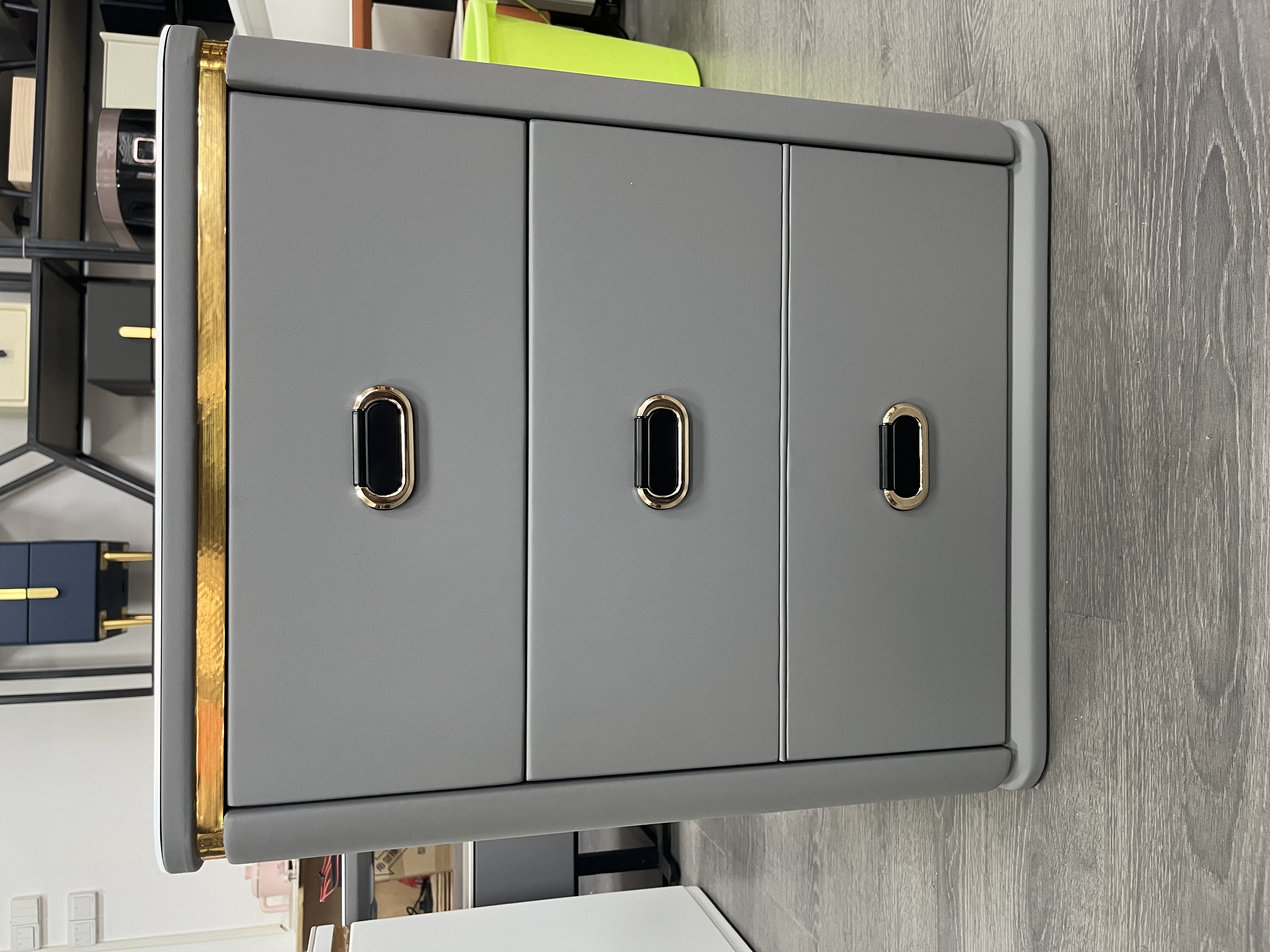
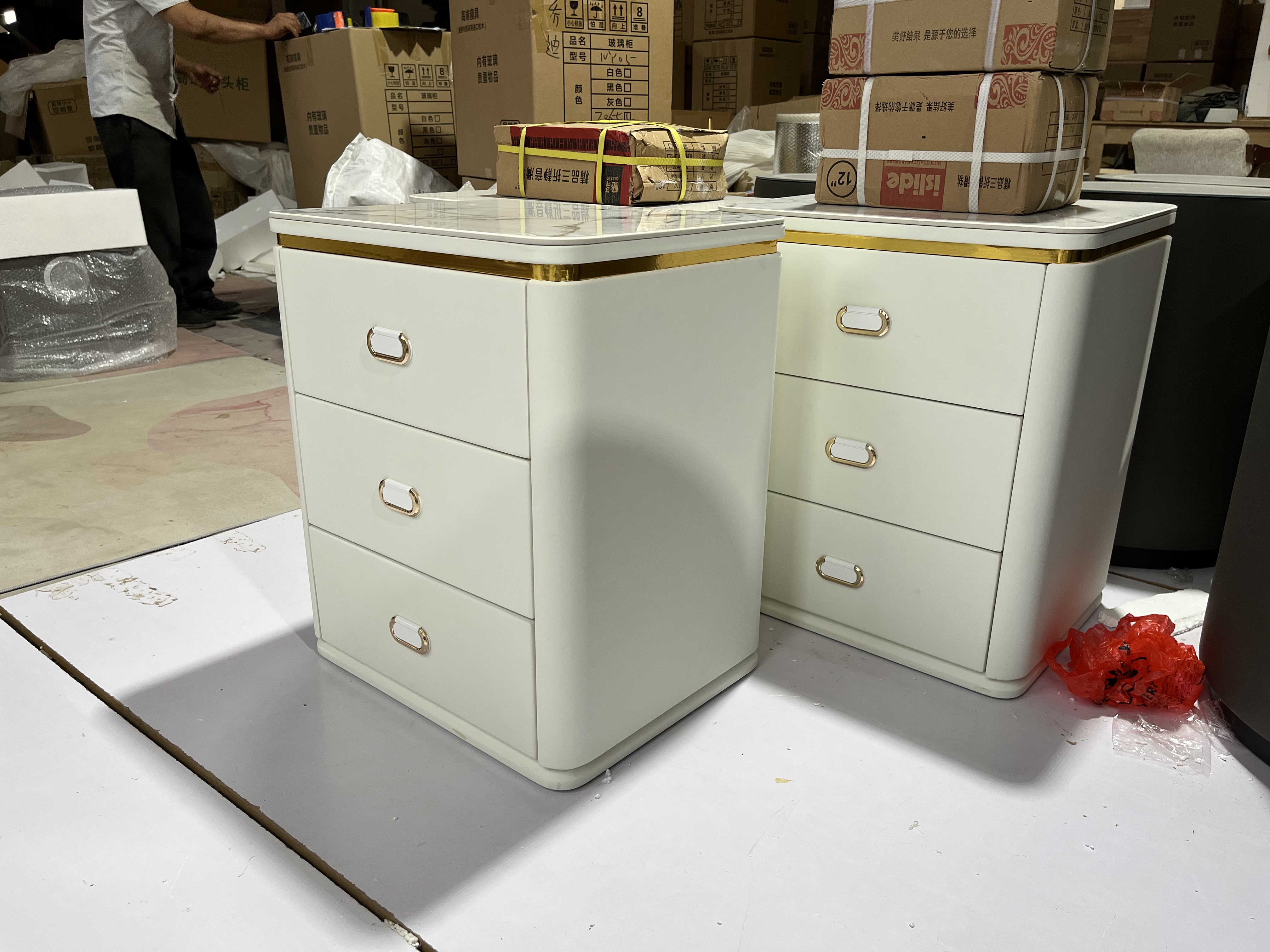
When buyers ask why one factory is quoting USD 40 and another is quoting USD 70, the answer often starts with the material.
The challenge is that materials are not always obvious from a product photo.
A nightstand may look like solid wood but actually use veneer.
A product described as "wooden" may be MDF, plywood, veneer, or a combination of several materials.
This is why material specifications should always be confirmed before comparing prices.
In our experience, many pricing misunderstandings happen because buyers compare photos instead of comparing specifications.
MDF: The Most Common Option
Despite the popularity of solid wood in marketing materials, MDF is still the most widely used material for bedside tables.
There is a simple reason for that.
It offers a good balance between appearance, stability and cost.
For many furniture retailers, apartment projects and e-commerce sellers, MDF remains the most practical choice.
Typical factory price:
USD 18–40
Depending on:
Board density
Board thickness
Number of drawers
Finish quality
Hardware specification
MDF Pricing Factors
Not all MDF is identical.
The biggest factors affecting price are:
Board density
Panel thickness
Emission standards
Higher-density boards generally cost more but provide better durability and screw-holding performance.
For export projects, E1 and CARB-compliant materials are commonly requested.
Wood Veneer: One of the Most Popular Choices
If MDF dominates the entry-level market, veneer dominates the middle and upper-middle market.
Many buyers want the natural appearance of wood without paying for a fully solid wood cabinet.
That is exactly where veneer performs well.
A good veneer finish can create a premium look while keeping production costs under control.
Typical factory price:
USD 35–90
What Affects Veneer Pricing?
The main cost differences usually come from:
Veneer species
Natural vs engineered veneer
Finishing requirements
In many projects, the finishing process has a bigger impact on cost than the veneer itself.
Upholstered Nightstands
Upholstered nightstands remain extremely popular in hotels and high-end residential furniture.
The reason is simple.
They create a softer and more luxurious appearance than exposed wood panels.
Many hotel designers prefer upholstered furniture because it helps create a warmer bedroom environment.
Typical factory price:
USD 40–100
Upholstery Cost Factors
The upholstery material is usually the biggest cost driver.
Common options include:
PU leather
Microfiber leather
Saddle leather
Fabric
Velvet
More complex stitching and additional manual work can also increase production costs.
Solid Wood: Premium but Not Always Necessary
Many buyers automatically assume solid wood is the best option.
Sometimes it is.
Sometimes it is not.
Solid wood generally costs more because the manufacturing process is more demanding.
The factory must manage:
Timber selection
Moisture control
Material grading
Natural color variation
All of these add cost.
Typical factory price:
USD 65–150+
Which Material Offers the Best Value?
For most OEM projects, the material with the best balance between cost, appearance and durability is usually wood veneer.
It delivers a premium look while remaining more cost-effective than solid wood.
For hotel projects, veneer and upholstered constructions are often preferred because they provide consistent quality and easier large-scale production.
Solid wood remains a good option for premium collections, but it is not always the most practical choice from a commercial perspective.
A Practical Material Comparison
Material | Typical Factory Price | Common Applications |
MDF | USD 18–40 | Retail, e-commerce, apartments |
Wood Veneer | USD 35–90 | Hotels, furniture brands, residential |
Upholstered | USD 40–100 | Hotels, luxury residential |
Solid Wood | USD 65–150+ | Premium furniture collections |
Smart Nightstands Are No Longer a Luxury Product
A few years ago, smart nightstands were still considered something special.
Most buyers associated them with luxury hotels or high-end furniture stores.
That has changed quickly.
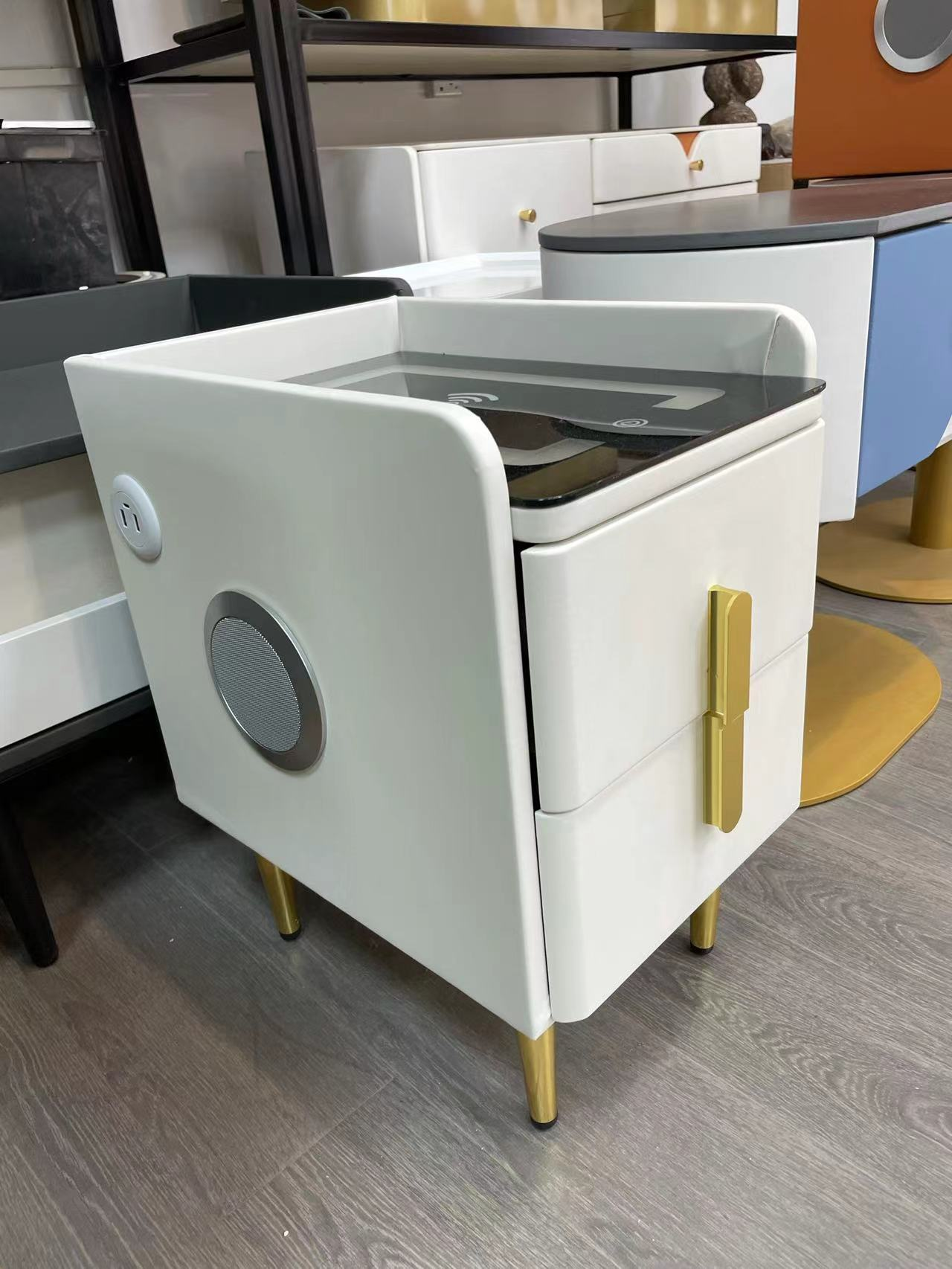
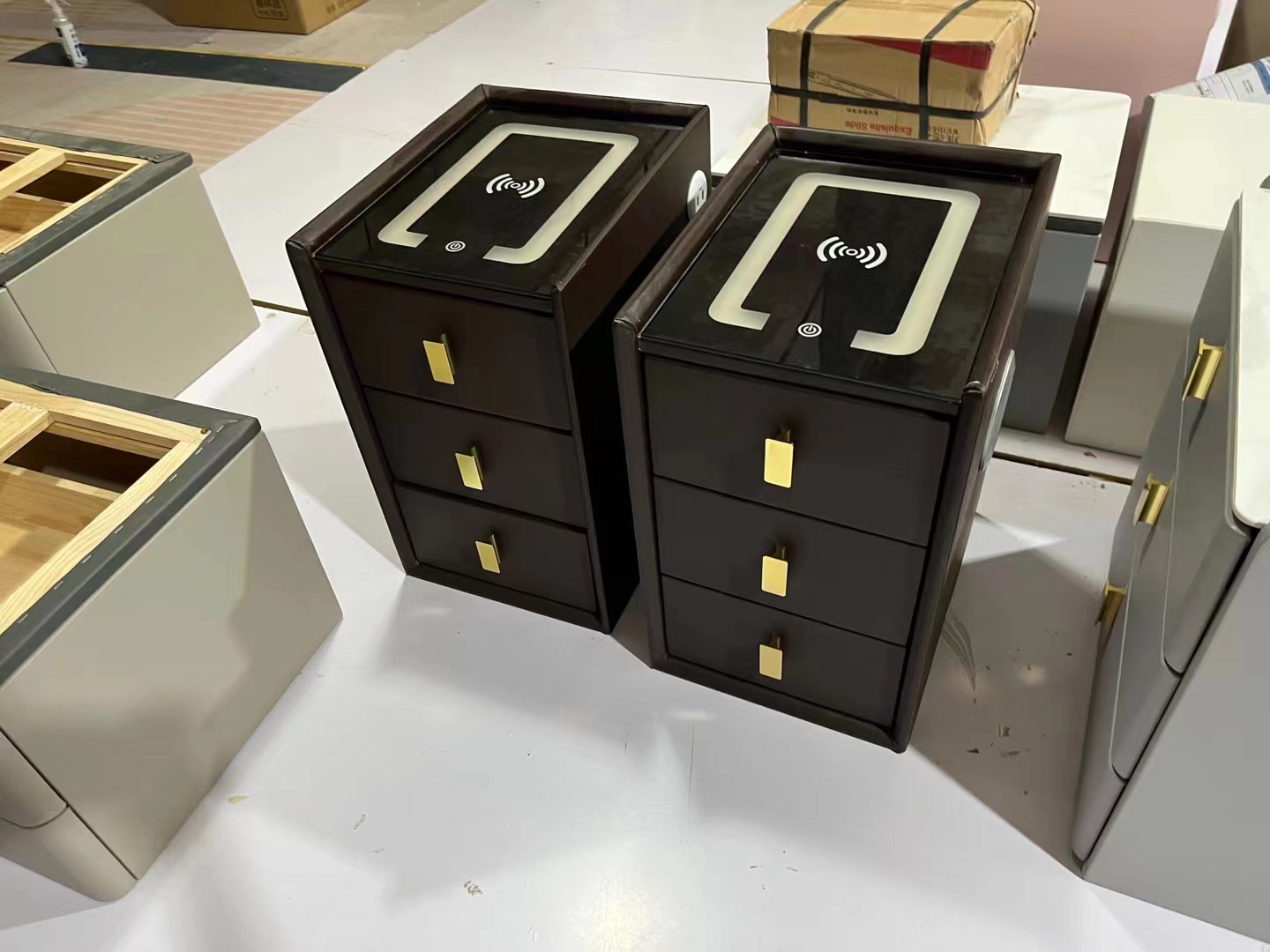
Today, wireless charging, USB ports and LED lighting are becoming standard features in many bedroom furniture collections.
One reason is simple: the cost of smart components has dropped significantly.
China now has a mature supply chain for smart furniture. Wireless charging modules, USB systems, LED lights and Bluetooth speakers are mass-produced and readily available.
As a result, adding smart functions often costs less than buyers expect.
In some projects, upgrading from MDF to natural walnut veneer adds more cost than installing wireless charging and LED lighting.
That surprises many first-time buyers.
Related Reading
👉OEM Smart Nightstand Manufacturer in China
👉 Best Smart Nightstand Manufacturer in China
What Is the Most Popular Smart Configuration Today?
Many buyers assume more functions mean a better product.
In reality, the best-selling models are usually the simplest.
The majority of successful projects focus on practical functions that customers actually use every day.
For most markets, the best-selling combination is:
Wireless charging
USB charging
LED lighting
That's it.
The product feels modern, solves a real problem and remains affordable.
This configuration is commonly seen in:
Furniture retailers
Online furniture stores
Apartment projects
Hotels
Private label furniture brands
Typical factory price:
USD 50–75
For many buyers, this is the sweet spot between cost and market appeal.
Learn More
👉 Wireless charging specifications, Qi standards and OEM options
Advanced Smart Nightstands
Some buyers want more than charging functions.
In that case, the next step usually includes:
Wireless charging
USB charging
Type-C charging
LED lighting
Bluetooth speaker
Typical factory price:
USD 60–110
The biggest cost difference here is often not the charging system.
It is usually the speaker quality and power system.
A basic Bluetooth speaker and a high-quality audio system can have very different costs.
This is why two suppliers may quote different prices even when both mention "Bluetooth speaker" in their specifications.
Learn More
👉 LED lighting systems for smart nightstands
Hotel projects typically require:
· Wireless charging
· USB charging
· LED lighting
· Better hardware
· Reliable construction
Typical price:
USD 80–150+
How Much Does Each Smart Function Actually Cost?
This is one of the questions buyers ask most often.
The answer depends on specifications and order quantity, but the following ranges provide a useful reference.
Smart Function | Typical Factory Cost Increase |
USB Charging | USD 1–2 |
Type-C Charging | USD 2–4 |
Wireless Charging | USD 2–5 |
LED Lighting | USD 2–4 |
Motion Sensor | USD 2–5 |
Bluetooth Speaker | USD 5–10 |
Password Lock | USD 4–10 |
Fingerprint Lock | USD 6–15 |
Safe Drawer | USD 15–35 |
Looking at these numbers, it becomes clear why smart furniture has become more affordable.
Many smart functions add surprisingly little to the overall manufacturing cost.
Not Sure Which Smart Features Are Worth Paying For?
Many buyers spend too much on functions their customers never use.
Our team can recommend the right combination based on:
Retail Furniture
Hotel Projects
Apartment Furniture
Amazon & E-commerce
We'll help you balance cost, functionality and market demand before production begins.
Which Functions Are Actually Worth Paying For?
This depends on the target market.
However, after working with distributors, retailers and hotel buyers, we have noticed some clear patterns.
Functions We Usually Recommend First
If the goal is to maximize value while controlling costs, we normally recommend:
Wireless Charging
Customers immediately understand the benefit.
No explanation is required.
USB and Type-C Charging
People charge multiple devices every day.
These functions are practical and inexpensive to add.
LED Lighting
LED lighting makes the product feel more modern and premium.
The visual impact is often greater than the actual cost increase.
Functions That Need More Careful Evaluation
Not every smart feature is necessary.
Sometimes buyers add functions simply because they seem impressive.
That can increase costs without increasing sales.
Bluetooth Speakers
Bluetooth speakers look attractive on paper.
However, many consumers already own:
Portable speakers
Smart speakers
Smartphones
In some markets, Bluetooth speakers help differentiate a product.
In others, they have little influence on purchasing decisions.
Fingerprint Locks
Fingerprint locks are popular in premium furniture and hotel projects.
They create a strong "smart furniture" impression.
However, they also increase complexity and cost.
For entry-level products, they are often unnecessary.
Learn More
👉 Fingerprint lock systems for smart furniture
Safe Drawers
Safe drawers work particularly well in:
Hotels
Serviced apartments
Luxury residential projects
For ordinary retail furniture, the additional investment may not always generate additional sales.
A Common Mistake: Adding Too Many Functions
One mistake we see repeatedly is feature overload.
A buyer starts with:
Wireless charging
USB charging
Then adds:
LED lighting
Bluetooth speaker
Fingerprint lock
Safe drawer
Eventually the product becomes expensive and complicated.
Meanwhile, the customer may only care about charging a phone.
In many cases, a simpler configuration performs better in the market.
The goal should not be to build the most advanced product.
The goal should be to build the most sellable product.
The Photo May Be the Same, but the Product Often Isn't
This is probably the question we hear most often.
A buyer sends us a photo and says:
"This supplier quoted USD 48. Another quoted USD 72. Why?"
At first glance, the products look identical.
Same size.
Same shape.
Same color.
Sometimes even the same product photo.
But once we start comparing specifications, the differences usually appear very quickly.
Furniture pricing is a bit like buying a car.
Two cars may look similar from the outside, but what is under the hood can be completely different.
The same applies to bedside tables.
What affects the price is often hidden inside the cabinet rather than visible on the surface.
Where Does the Money Actually Go?
Many buyers assume the electronics are the most expensive part of a smart nightstand.
In most cases, they are not.
A typical smart nightstand budget is usually spread across several areas.
Example: Wood Veneer Smart Nightstand
Cost Item | Approximate Share |
Cabinet Structure | 35% |
Veneer & Finish | 20% |
Hardware | 10% |
Smart Functions | 10% |
Labor | 15% |
Packaging | 10% |
The first thing many buyers notice is that the cabinet itself usually costs more than the smart functions.
Removing wireless charging may save a few dollars.
Changing from walnut veneer to basic veneer may save much more.
Material Differences Add Up Quickly
One supplier may use higher-density MDF.
Another may use a lower-density board.
One factory may use 18mm panels.
Another may use thinner materials in non-visible areas.
The finished product can look exactly the same in photos.
Long-term performance may be very different.
This is one reason why experienced buyers always ask for detailed specifications rather than relying on product images.
Hardware Is Often Overlooked
Most customers never ask what drawer slides are being used.
Until the drawer starts sticking six months later.
Hardware is one of the easiest areas for factories to reduce cost.
Common differences include:
Drawer slide quality
Soft-close systems
Handles
Locks
Internal connectors
For hotel furniture and high-use environments, hardware quality often matters more than decorative details.
A beautiful cabinet with poor hardware quickly becomes a customer complaint.
The Same Function Doesn't Always Mean the Same Quality
This is especially important for smart nightstands.
For example:
Two factories may both advertise:
Wireless charging
But the systems may not be identical.
The differences can include:
Charging efficiency
Power output
Heat management
Adapter quality
Electrical protection
The same applies to:
USB charging
Type-C charging
Bluetooth speakers
Fingerprint locks
On a quotation sheet, both suppliers appear to offer the same feature.
In reality, the quality level may be completely different.
A Few Words About Extremely Low Prices
Everyone wants a competitive quotation.
That is normal.
But when a price looks unusually low, it is worth asking why.
Sometimes the answer is positive.
The factory may have:
Better purchasing power
Higher production volume
More efficient manufacturing
Those advantages are real.
However, sometimes the savings come from reducing quality rather than improving efficiency.
Common examples include:
Lower-density boards
Thinner panels
Basic hardware
Lower-grade electronics
Reduced inspection
Simplified packaging
The difference may only be a few dollars per unit.
The long-term impact can be much larger.
The Cheapest Supplier Is Not Always the Cheapest Choice
One lesson many buyers learn over time is that the lowest quotation is not always the lowest cost.
A cheaper product may later create:
Replacement costs
Customer complaints
Warranty claims
Shipping losses
Reputation issues
A slightly higher quotation may include:
Better materials
Better hardware
Better packaging
Better quality control
In the long run, that can be the more economical decision.
The goal is not simply to find the cheapest supplier.
The goal is to find the supplier that offers the best balance between price, quality and reliability.
The Unit Price Is Not the Whole Story
When buyers compare quotations, most attention goes to the unit price.
That is understandable.
However, the final cost of a project is usually influenced by several other factors, including:
Order quantity
Sample charges
Certification requirements
Packaging
Freight and logistics
In some cases, these costs can have a bigger impact on the overall budget than a few dollars difference in factory price.

How MOQ Affects Pricing
MOQ, or Minimum Order Quantity, is not simply a number chosen by the factory.
It is closely related to production efficiency.
A factory producing 50 nightstands still needs to:
Purchase materials
Arrange production
Set up machines
Perform inspections
Prepare packaging
Many of these costs remain the same whether the order is 50 units or 500 units.
This is why larger orders often receive better pricing.
The fixed costs are spread across more products.
Typical MOQ Reference
For most bedside table projects, the following ranges are common:
Project Type | Typical MOQ |
Existing Model | 50–100 pcs |
Standard Smart Nightstand | 50–100 pcs |
Custom Color | 100+ pcs |
OEM Branding | 100+ pcs |
New Design Development | 100–300+ pcs |
Actual requirements vary from factory to factory, but these figures provide a useful starting point.
A Practical Way to Reduce MOQ Pressure
Many buyers do not want to place a large order on a new product immediately.
That is perfectly reasonable.
One solution is a mixed order.
For example, instead of ordering:
300 pcs of one model
A buyer might purchase:
100 pcs of Model A
100 pcs of Model B
100 pcs of Model C
As long as the products share similar materials, finishes or smart components, factories can often produce them more efficiently than completely unrelated items.
This approach is commonly used by distributors testing a new market.
Related Guide
👉 Want to understand MOQ requirements before sourcing?
Why Sample Prices Are Higher
This is one of the questions almost every new buyer asks.
"Why does the sample cost so much more than the production price?"
The answer is simple.
A sample is built almost like a one-off project.
The factory still needs to:
Review drawings
Purchase materials
Set up production
Assemble the product
Install electronics
Test functions
Prepare packaging
All of those activities happen for a single unit.
Mass production becomes cheaper because those costs are shared across hundreds of pieces.
Typical Sample Pricing
In the furniture industry, it is common for sample prices to be:
2–3 Times the Estimated Production Price
For example:
Estimated Production Price | Typical Sample Price |
USD 40 | USD 80–120 |
USD 60 | USD 120–180 |
USD 90 | USD 180–270 |
This is considered normal practice throughout the industry.
Smart Furniture Samples Usually Cost More
A smart nightstand requires more work than a standard bedside table.
Additional tasks may include:
Wiring
Charging system installation
LED testing
Speaker testing
Lock programming
Electrical inspection
For this reason, smart furniture samples generally require more engineering time and labor.
Can the Sample Fee Be Refunded?
In many cases, yes.
Most professional furniture manufacturers understand that samples are part of the buying process.
A common arrangement is:
Full sample fee deduction after a bulk order
Partial sample fee deduction
Sample credit against future orders
The exact policy varies by project.
Before approving a sample, buyers should confirm:
Sample cost
Shipping cost
Production time
Deduction conditions
Getting these details confirmed early helps avoid misunderstandings later.
Certification Costs Are Often Overlooked
One mistake we sometimes see is buyers focusing only on furniture costs while ignoring certification requirements.
For traditional bedside tables, this may not be a major issue.
For smart nightstands, it can be very important.
Depending on the market, buyers may need to consider:
CE-related requirements
RoHS requirements
FCC-related requirements
EMC testing
Electrical safety requirements
The cost of compliance can sometimes exceed the cost of the electronic module itself.
One Important Detail
Many suppliers can provide certificates for individual components.
For example:
Wireless charging module
Power adapter
Bluetooth module
That does not automatically mean the complete nightstand has been tested as a finished product.
This is an area that buyers should clarify early, especially for larger projects or hotel programs.
Recommended Reading
👉 OEM vs ODM Bedside Tables
👉 How to Import Bedside Tables from China
👉 Top Bedside Table Manufacturers in China
Real Project Examples
The following examples help illustrate how pricing decisions are made in real projects.
Texas Hotel Smart Nightstand Project
A hotel customer in Texas originally planned to purchase a standard smart nightstand with wireless charging and USB ports.
During sample evaluation, the client decided to upgrade several components, including drawer slides, packaging and internal construction.
Although the unit cost increased slightly, the final product delivered better durability and lower maintenance risk.
For hotel furniture, reliability often creates more value than achieving the absolute lowest purchase price.
Final Configuration:
Wireless charging
USB charging
LED lighting
Hotel-grade drawer slides
Reinforced export packaging
Final Factory Price:
Approximately USD 61 per unit.
Costa Rica Distributor Project
A furniture distributor in Costa Rica was looking for a smart nightstand suitable for retail sales.
The initial focus was reducing product cost.
After reviewing logistics expenses, the customer switched to flat-pack packaging.
The result was improved container loading efficiency and lower overall landed cost.
This project demonstrated that packaging optimization sometimes saves more money than reducing product specifications.
Final Configuration:
Wireless charging
USB charging
Bluetooth speaker
Final Factory Price:
Approximately USD 58 per unit.
Hong Kong OEM Development Project
A customer in Hong Kong wanted a unique smart nightstand for a new furniture collection.
The project included:
Wireless charging
LED lighting
Fingerprint lock
Custom veneer finish
The customer initially assumed the fingerprint lock would be the largest cost factor.
However, the biggest increase came from custom development work and finishing requirements.
This is common in OEM projects, where customization often costs more than the electronic components themselves.
Final Factory Price:
Approximately USD 92 per unit.
Need an Accurate OEM Quotation?
A product photo is usually not enough to calculate a reliable price.
Send us:
Product Photos
Drawings
Target Quantity
Required Functions
and we'll provide a customized quotation with practical cost-saving suggestions.
Frequently Asked Questions
Why are smart nightstands much cheaper today than five years ago?
The main reason is that China's smart furniture supply chain has become much more mature.
Wireless charging modules, LED systems, Bluetooth speakers and smart locks are now mass-produced at a much larger scale than before.
As production volume increased, component costs dropped significantly.
In many projects today, upgrading the cabinet material costs more than adding basic smart functions.
This is one of the reasons smart nightstands have moved from a niche product to a mainstream furniture category.
How much does a bedside table cost in China?
There isn't a single answer because the specification makes a huge difference.
A simple MDF bedside table may cost less than USD 30, while a premium smart nightstand with wireless charging, LED lighting and fingerprint lock can easily exceed USD 100.
For most export projects, bedside tables generally fall between USD 18 and USD 150+.
The safest approach is to compare specifications first and prices second.
How much does a smart nightstand cost?
Most smart nightstands currently fall between USD 45 and USD 150+.
The final price depends on the materials, smart functions and order quantity.
For many furniture retailers and distributors, the most popular range is around USD 50–75 because it offers a good balance between cost and functionality.
What is the most popular smart nightstand configuration today?
The majority of projects we see are surprisingly simple.
Wireless charging, USB charging and LED lighting remain the most requested combination.
These functions solve real problems for end users without increasing the cost too much.
Adding more features is possible, but it does not always improve sales.
Is wireless charging worth adding?
In most cases, yes.
A wireless charging module is no longer an expensive upgrade, but customers immediately understand its value.
For many furniture brands, it has become one of the easiest ways to make a bedside table feel more modern.
How much does wireless charging add to the factory cost?
Usually only a few dollars.
Depending on specifications and quantity, the increase is often around USD 2–5 per unit.
Many buyers are surprised to learn that upgrading the veneer or hardware can cost more than adding wireless charging.
Does LED lighting significantly increase the price?
Not really.
LED lighting is one of the most affordable smart features available today.
The typical increase is around USD 2–4 per unit, but it can make the product look considerably more premium.
That is why it is commonly used in both residential and hotel furniture.
Are fingerprint locks worth the extra cost?
That depends on the target market.
For standard retail furniture, they are often unnecessary.
For hotels, serviced apartments and premium furniture collections, they can help differentiate the product and improve security.
The added cost is usually much lower than buyers expect.
What smart features offer the best value?
If we had to choose only a few functions, they would be:
Wireless charging
USB charging
Type-C charging
LED lighting
These are the features customers use most frequently and they usually provide the best return on investment.
What material offers the best balance between cost and appearance?
For most OEM projects, wood veneer is the answer.
It provides the natural look of wood while keeping costs under control.
That is one reason veneer remains one of the most widely used materials in hotel and residential furniture.
Is solid wood always better?
Not necessarily.
Solid wood has its advantages, but it is not automatically the best option.
Many premium furniture collections use veneer construction because it offers better consistency, easier production and more competitive pricing.
The right material depends on the project rather than the marketing label.
Why do similar-looking nightstands have different prices?
Because they are often not the same product.
A photo cannot show:
Board density
Hardware quality
Panel thickness
Internal construction
Smart module quality
These hidden details are usually what create the price difference.
What usually costs more: materials or smart functions?
In many projects, materials cost more.
A veneer upgrade, premium upholstery or better hardware can increase the price more than adding wireless charging or LED lighting.
This is one of the biggest misconceptions in smart furniture sourcing.
Why are samples so expensive?
Because a sample is essentially a one-off production run.
The factory still needs to prepare materials, arrange production, assemble the product and test all functions.
Those costs are spread across a single unit instead of hundreds of units.
That is why sample pricing is normally much higher than mass-production pricing.
Can sample fees be deducted from a future order?
Often, yes.
Many manufacturers offer partial or full sample fee deductions once a production order is confirmed.
The policy varies from factory to factory, so it is always worth discussing before approving the sample.
How much should I budget for a hotel smart nightstand?
Most hotel projects fall between USD 80 and USD 150+ per unit.
Hotels typically require better hardware, stronger packaging and higher durability standards than standard retail furniture.
As a result, the final cost is usually determined more by reliability requirements than by the smart functions themselves.
Ready to Start Your OEM Smart Nightstand Project?
Whether you need:
A standard smart nightstand
A custom wood veneer design
A hotel furniture solution
A completely new OEM development project
our team can help from concept and sampling to mass production and export.
Final Thoughts
After working with furniture importers, retailers, distributors and hotel buyers for many years, we have learned that successful sourcing decisions are rarely about finding the cheapest supplier.
Most of the time, they come from understanding where the cost comes from.
A bedside table is more than a cabinet.
Its price is influenced by:
Materials
Construction
Hardware
Smart functions
Packaging
Quality control
The good news is that smart furniture is becoming more affordable than ever. Functions such as wireless charging, USB charging and LED lighting are no longer limited to premium products. They can now be added to many projects at a reasonable cost.
For buyers planning a new collection in 2026, a practical approach is to start with the basics:
Define the target market.
Choose the right material.
Select only the smart functions customers will actually use.
Compare specifications before comparing prices.
Focus on long-term value rather than the lowest quotation.
A supplier can always lower a price by removing something.
The real challenge is finding the right balance between cost, quality and functionality.
In the long run, that balance usually creates a more successful product—and a more profitable business.
Get an OEM Quote Within 24 Hours
Looking for a reliable smart nightstand manufacturer in China?
Contact Hebai Furniture for:
Factory Pricing
OEM Development
Hotel Furniture Projects
Smart Furniture Solutions
Sample Support
👉 Most quotations are provided within 24 hours.