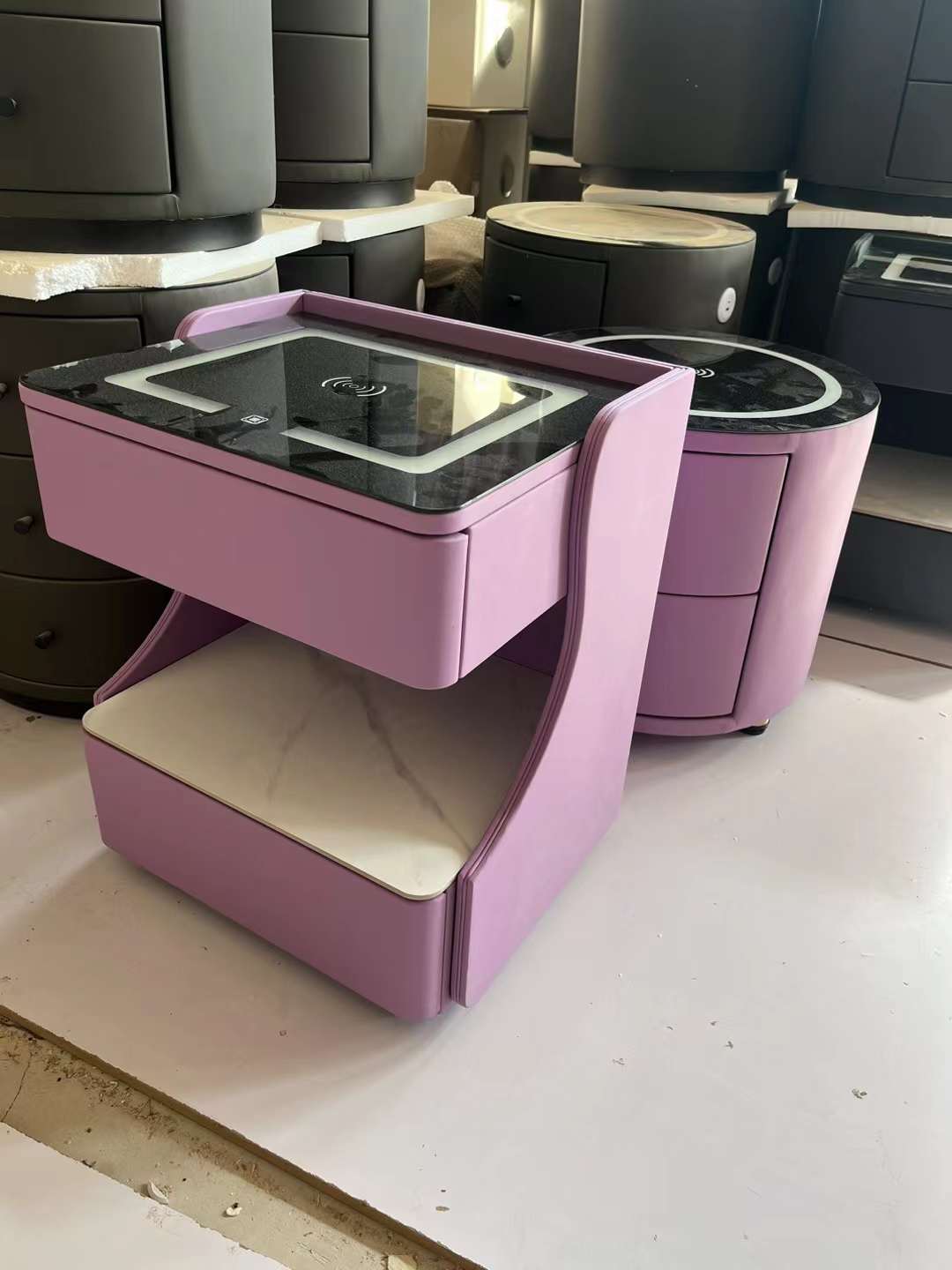
PIR vs Human Presence Sensors: Which Is Better for Smart Nightstands?
Should you choose a PIR motion sensor or a human presence sensor for a smart nightstand? Compare detection accuracy, response speed, false trigger rates, energy consumption, and OEM integration considerations for furniture brands, hotels, apartments, and smart furniture projects.
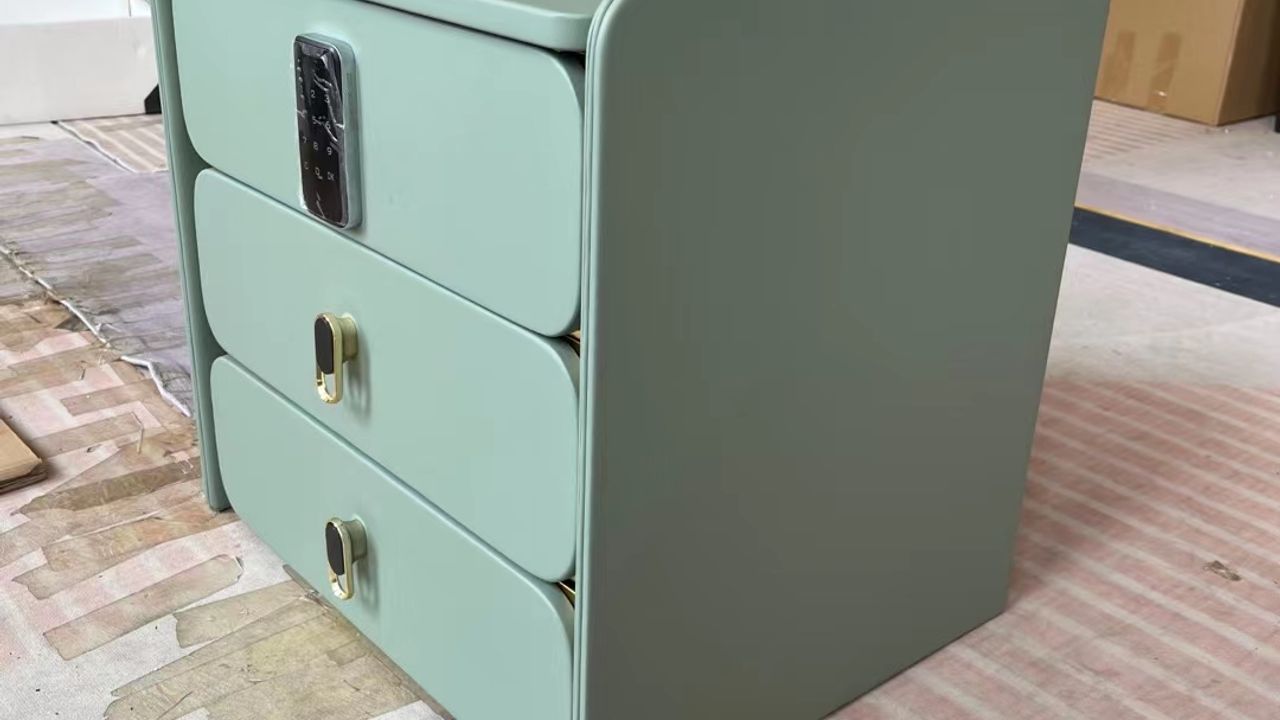
Motion Sensor Smart Nightstand Guide: PIR Night Light, Human Presence Sensor & OEM Buying Advice (2026)
Published: June 10, 2026
Last Updated: June 10, 2026
Reviewed by Hebai Furniture Product Development & Export Team
Excerpt
Compare PIR motion sensors and human presence sensors used in smart nightstands, including detection accuracy, false trigger issues, night lighting behavior, OEM cost differences, and best applications for hotels, apartments, and furniture importers.
Quick Answer
A motion sensor smart nightstand usually uses a PIR sensor, drawer switch, or proximity sensor to activate a soft night light, drawer light, or touch-panel wake-up function.
For most hotel, apartment, distributor, and standard OEM smart nightstand projects, a PIR motion sensor is more practical than a human presence sensor. It is easier to test, easier to explain, and usually safer for after-sales support.
Human presence sensors can create a more advanced smart furniture experience, but they should be used carefully. If the detection area is too sensitive, the light may turn on when the user turns over in bed, when a blanket moves, or when a pet passes by.
For bedside furniture, the best sensor design is usually not the most sensitive one. It is the one with the right sensing distance, limited trigger angle, soft low-glare lighting, 15–60 second auto-off delay, and manual override.
Before mass production, buyers should test false triggering, sensing distance, LED brightness, manual override, and sensor performance while USB-C, wireless charging, LED lighting, and other smart modules are working together.
Looking for smart nightstands with motion sensor night lights or drawer sensor lighting?
Hebai Furniture supports OEM/ODM smart bedside table projects with motion sensor LED lighting, USB-C charging, wireless charging, fingerprint lock, Bluetooth speaker, tempered glass top, and custom packaging.
👉 Request catalogue and quotation.
Key Takeaways
· For most smart nightstand and bedside table projects, PIR motion sensors are more practical than human presence sensors.
· Human presence sensors are better suited for premium smart furniture projects, but they require more sample testing.
· Hotel bedside tables should use simple low-lux sensor night lights with limited sensing distance and manual override.
· Buyers should test false triggering before mass production, especially in bedrooms, hotel rooms, and small apartments.
· Sensor modules should be tested together with LED lighting, USB-C charging, wireless charging, and touch control.
· For distributors and hotel projects, repair and replacement access can be more important than using the most advanced sensor module.
Definition
A motion sensor smart nightstand is a bedside table with a built-in sensor module. The sensor detects nearby movement and automatically turns on a function such as LED night lighting, drawer lighting, or touch-panel wake-up.
A human presence sensor smart nightstand uses a more sensitive module. Depending on the module, it may detect smaller movement or continued presence. This can feel more advanced, but it also increases the need for proper layout, sample testing, and false-trigger control.
This guide focuses on sensing logic, trigger behavior, sensor placement, false-trigger testing, and OEM sourcing decisions. It does not replace a dedicated LED lighting guide.
In other words, this article explains when and how the light should turn on. The LED lighting guide explains color temperature, flicker-free design, brightness, CRI, and LED driver selection.
👉 smart nightstand system guide
1. What Is a Motion Sensor Smart Nightstand?
A motion sensor smart nightstand is a bedside table or nightstand that can react automatically when the user moves near it.
In real use, the feature is usually simple. It is not about making the furniture “high-tech” for the sake of it. The real value is convenience.
For example:
· A soft light turns on when the user gets out of bed.
· A drawer light turns on when the drawer is opened.
· A touch panel lights up slightly so the user can find the control area.
· A bottom light helps the guest walk at night without turning on the main room light.
Common motion sensor functions include:
Sensor Function | Typical Use |
Automatic night light | Turns on a soft light when the user gets out of bed |
Drawer sensor light | Lights up when the drawer is opened |
Touch-panel wake-up | Lights the control icon area before operation |
Bottom guidance light | Provides low-glare floor-level lighting |
Side or back panel light | Gives soft direction guidance without direct glare |
Hotel night mode | Helps guests move at night without switching on bright room lights |
For B2B buyers, the question should not only be:
“Does this nightstand have a sensor?”
A better question is:
“Is the sensor useful, stable, and suitable for my customer?”
That difference matters a lot.
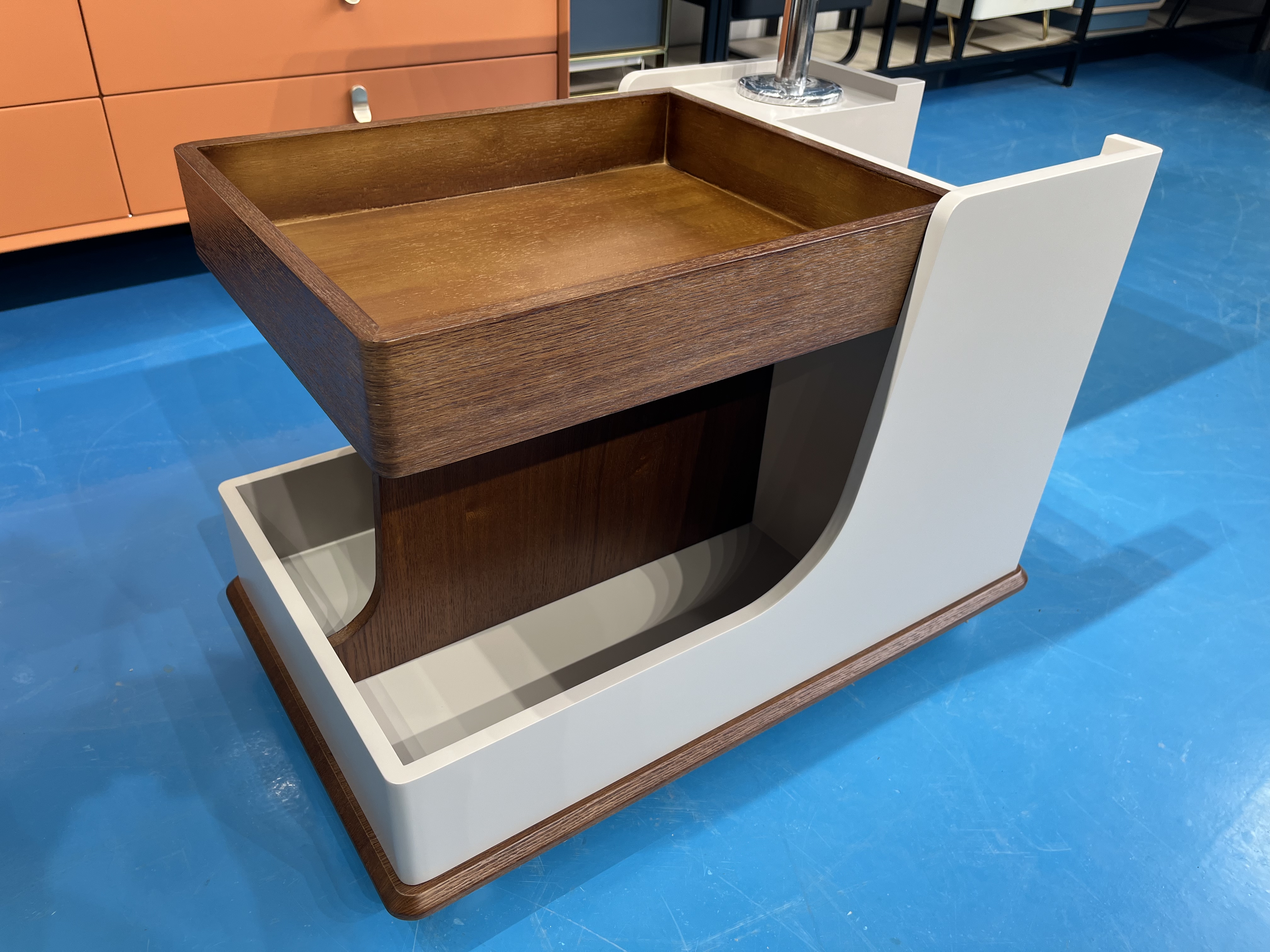
2. Why Motion Sensors Are Added to Smart Bedside Tables
Motion sensors are added to smart bedside tables because users often interact with bedside furniture in low light.
At night, people do not always want to look for a switch, touch a panel, or turn on the main room light. A soft automatic light can make the experience easier and more comfortable.
A hotel buyer and an Amazon seller may both ask for a motion sensor nightstand, but they are usually not looking for the same thing.
Buyer Type | Why They Care About Sensor Nightstands |
Hotel buyers | Night safety, guest comfort, low-glare room experience |
E-commerce sellers | Strong visual selling point for videos and product photos |
Distributors | Easy-to-explain smart feature for different markets |
Private label brands | Product differentiation and premium positioning |
Apartment projects | Practical automatic lighting for small bedrooms |
Senior living projects | Soft night guidance and less need to search for switches |
Retail furniture stores | Adds smart value without changing the basic product category |
For e-commerce sellers, motion sensor lighting is easy to show in a short video. A hand moves close to the nightstand, and the light turns on. This is simple for buyers to understand.
For hotel buyers, the logic is different. Hotels do not need exaggerated lighting effects. They need something stable, quiet, soft, and unlikely to create complaints.
For wholesalers and distributors, simple features usually sell better than complicated ones. A PIR motion sensor night light is often easier to explain than an advanced presence-sensing system.
3. Motion Sensor vs Human Presence Sensor: Key Differences
Many buyers use “motion sensor” and “human presence sensor” as if they mean the same thing. In sourcing, they should be treated differently.
A motion sensor mainly detects movement. A human presence sensor may detect smaller movements or continued presence, depending on the module.
Feature | PIR Motion Sensor | Human Presence Sensor |
Detection logic | Detects movement | Detects presence or micro-movement depending on module |
Cost | Lower | Higher |
Complexity | Simple | Higher |
Best use | Night light, drawer light, basic automation | Premium smart furniture, advanced interaction |
False trigger risk | Moderate | Depends strongly on module and layout |
Hotel suitability | Good if simple and stable | Needs careful testing |
OEM difficulty | Lower | Higher |
After-sales risk | Lower | Higher if module is too sensitive or hard to replace |
In our view, most buyers should not start with the most sensitive sensor module. They should first confirm the real use case.
If the buyer only needs a soft night light when someone gets out of bed, PIR is usually enough. If the buyer wants advanced room interaction, presence sensing may be considered, but only after sample testing in a real bedroom layout.
A sensor that looks impressive in a showroom can become a complaint source if it turns on too often in a hotel room.
For most smart nightstand projects, PIR is the safer starting point. It is easy to understand, easier to test, and easier to explain to end users.
Human presence sensors can be useful, but they should not be added casually. If the module is too sensitive, the nightstand may light up when the user turns over in bed, when a blanket moves, or when someone walks past the bed.
That kind of “smart” feature quickly becomes annoying.
Practical recommendation:
For hotels, distributors, and first-time smart nightstand buyers, start with a stable PIR motion sensor night light. For premium private label projects, human presence sensing can be considered after sample testing.
Technical Note: How PIR and Presence Sensors Detect Movement
PIR sensors detect changes in infrared radiation caused by moving people or warm objects. This makes them useful for simple motion-activated night lights, especially when the goal is to detect a person getting out of bed or walking near the nightstand.
Human presence sensors may use more sensitive sensing methods depending on the selected module. Some modules can detect smaller movements or continued presence, but this also means layout, sensitivity, false-trigger control, and power stability become more important.
For smart nightstands, the goal is not to use the most advanced sensor available. The goal is to choose a sensor that works reliably inside a bedroom environment, close to beds, blankets, drawers, glass panels, and other electronic modules.
4. Sensor Types Used in Smart Nightstands
There are several types of sensors that can be used in smart bedside tables. The best choice depends on the function.
Sensor Type | Common Use in Nightstands | Best For | Buyer Notes |
PIR motion sensor | Automatic night light | Standard smart nightstands | Practical, cost-effective, easy to explain |
Human presence sensor | More sensitive detection | Premium smart bedside tables | Needs more testing and better layout |
Microwave sensor | Movement detection | Special layouts | Needs careful false-trigger and EMI testing |
Magnetic switch | Drawer open/close light | Drawer lighting | Simple and stable |
Proximity sensor | Touch panel wake-up | Glass top or control panel area | Useful for premium smart interfaces |
The best sensor is not always the most expensive one.
For a hotel room, a simple PIR sensor may work better than a complex presence sensor.
For a drawer light, a magnetic switch may be more reliable than a motion sensor.
For a glass-top smart nightstand, a proximity sensor can make the touch panel feel more premium.
The right choice depends on the product, not on the name of the module.
5. Common Sensor Applications in Bedside Tables
5.1 Automatic Bottom Night Light
This is one of the most useful sensor applications in smart nightstands.
When the user gets out of bed, a low-brightness LED under the nightstand turns on automatically. The light is usually directed downward or backward, so it does not shine directly into the user’s eyes.
This function works well for:
· Hotel rooms
· Apartments
· Family bedrooms
· Senior-friendly bedrooms
· Smart nightstand retail products
The most important point is brightness. The light should guide the user, not wake up the whole room.
5.2 Drawer Sensor Lighting
Drawer sensor lighting is simple, but very practical.
When the drawer is opened, a small internal light turns on. This helps users find glasses, chargers, keys, medicine, or other small items at night.
Drawer lights can use:
· Magnetic switches
· Small sensor modules
· Mechanical trigger switches
For bedside tables, drawer sensor lighting is often easier to control than a full presence-sensing system. It is also easier for buyers to understand and explain.
5.3 Touch Panel Wake-Up
Some smart nightstands use a glass top or touch-control panel for LED lighting, USB-C charging, wireless charging indicators, fingerprint lock control, or Bluetooth speaker operation.
A proximity or motion sensor can lightly wake up the icon area when the user approaches. This makes the interface easier to find in the dark.
This function is more suitable for premium smart nightstands. For budget projects, it may not be necessary.
5.4 Side or Back Panel Guidance Light
A side or back panel light can provide soft direction guidance without direct glare.
This works well in:
· Hotel rooms
· Small apartments
· Senior living spaces
· Low-glare smart furniture designs
Sensor placement is important here. If the sensing angle is too wide, the light may turn on too often.
5.5 Hotel Guest Room Night Mode
Hotels can use motion sensor bedside tables to improve night comfort.
For example, when a guest gets out of bed, a soft floor-level light turns on. The guest can move around without turning on the main room light.
For hotels, the system should be:
· Simple
· Soft
· Low-glare
· Easy to turn off
· Stable in different room layouts
· Not overly sensitive
A sensor that looks impressive in a showroom may not be suitable for hotel rooms if it triggers too often.
6. Which Sensor Function Is Best for Each Buyer Type?
Different buyers need different sensing logic. A single configuration does not fit all projects.
Buyer Type | Recommended Sensor Setup |
Hotel project buyers | PIR low-lux night light + auto-off + manual override |
E-commerce sellers | Motion LED light with strong video demonstration value |
Distributors | Simple PIR night light or drawer sensor light |
Private label brands | PIR + touch wake-up or optional human presence sensor |
Senior living projects | Warm low-lux night guide light |
Apartment projects | Motion bottom light + drawer light |
Budget wholesale buyers | Drawer sensor light or no sensor |
Premium retail brands | Presence sensor + dimming function after testing |
For hotels and distributors, simplicity is usually an advantage.
For e-commerce sellers, the feature should be easy to show visually.
For premium brands, sensor logic can become a product difference, but only if the sample works reliably.
Best Sensor Configuration by Application
For hotel bedside tables, the safest sensor setup is usually a PIR motion sensor with a warm low-lux night light, hidden bottom LED placement, 15–60 second auto-off delay, limited sensing distance, and manual override.
For e-commerce smart nightstands, motion sensor lighting should be easy to demonstrate in product videos. At the same time, buyers should avoid overly sensitive modules because they can lead to customer complaints.
For premium private label smart nightstands, human presence sensors can be used as a differentiation feature. However, they should be tested carefully for false triggering, sensing distance, and compatibility with USB-C, wireless charging, and LED lighting.
For distributors and wholesalers, a simple PIR night light or drawer sensor light is often easier to sell, easier to explain, and safer for after-sales support than a more advanced sensing system.
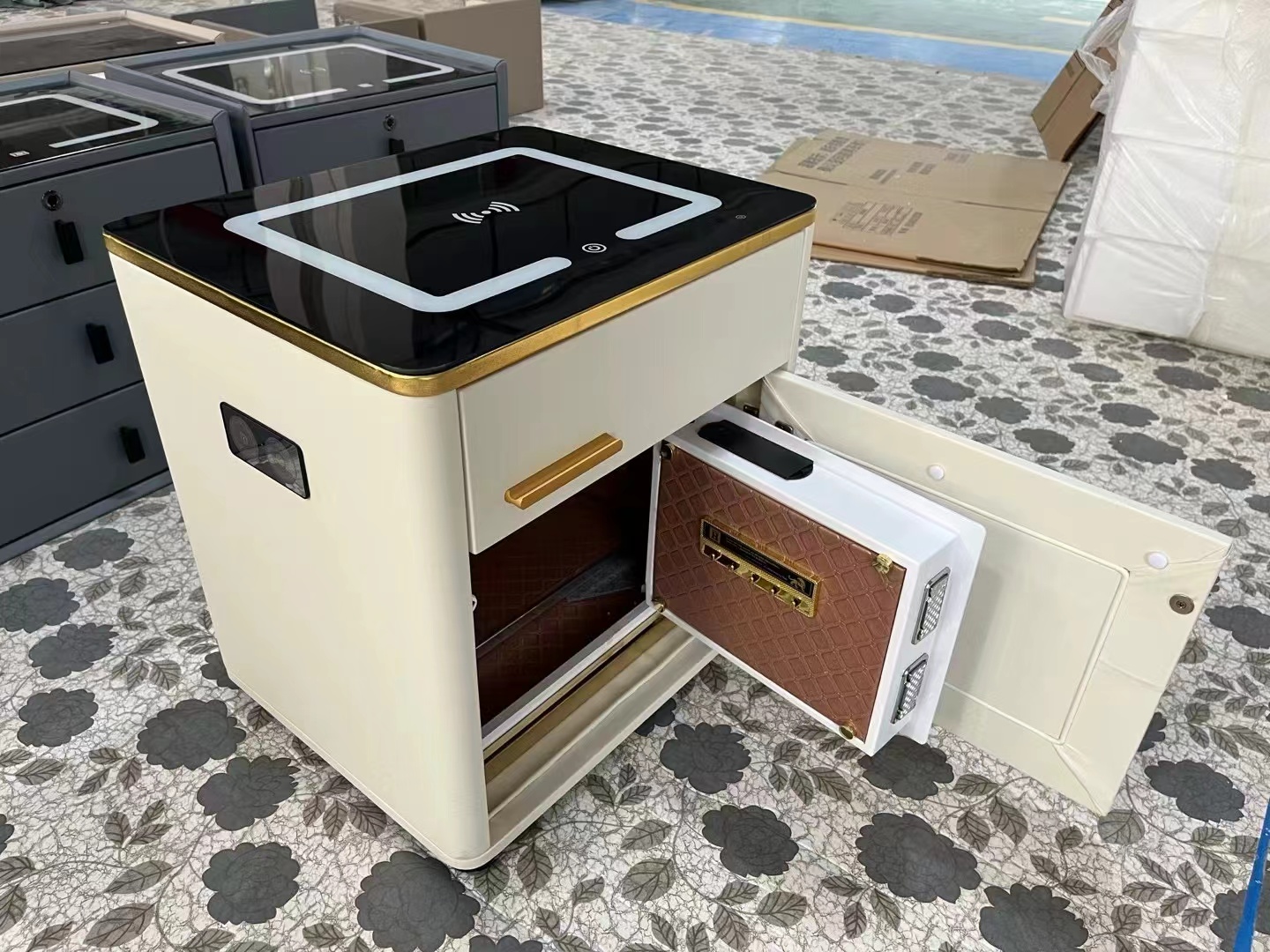
7. Night Light Brightness: How Bright Should a Sensor Nightstand Be?
A sensor night light should not behave like a reading lamp.
Its job is to provide soft guidance when the user moves near the bed. If the light is too bright, it may disturb sleep and cause complaints.
A practical sensor night light should consider:
Item | Recommendation |
Color temperature | Warm light is usually better for bedside use |
Light direction | Downward, backward, or hidden |
LED visibility | Avoid direct exposure to the user’s eyes |
Brightness | Low-lux guidance, not task lighting |
Diffuser | Recommended to reduce glare |
Manual override | Recommended |
Auto-off delay | Needed for better user experience |
For bedside use, warm light such as 3000K is usually more comfortable than cool white. Cool white may look bright in photos, but it can feel harsh at night.
This guide focuses on sensing logic and automatic light activation. For detailed LED color temperature, flicker-free design, CRI, and heat dissipation, buyers can refer to the dedicated smart nightstand LED lighting guide.
👉 smart nightstand LED lighting guide
8. Sensing Distance, Trigger Angle, and Auto-Off Delay
Sensing distance, trigger angle, and delay time decide whether the feature feels helpful or annoying.
If the sensing distance is too long, the nightstand may trigger when someone walks past the bed.
If the trigger angle is too wide, it may detect unrelated movement.
If the delay time is too short, the light may turn off too quickly.
If the delay time is too long, the light may disturb sleep.
Parameter | Why It Matters | Buyer Recommendation |
Sensing distance | Too far may cause false triggers | Keep limited for bedside use |
Trigger angle | Wide angles may detect unrelated movement | Match bed-side direction |
Auto-off delay | Affects comfort and energy use | 15–60 seconds depending on function |
Sensitivity | Different rooms need different settings | Adjustable sensitivity is useful |
Manual override | Helps users control the function | Recommended |
Light direction | Reduces glare | Downward or hidden lighting preferred |
For hotel projects, over-sensitive sensing is usually worse than slightly conservative sensing. Guests should feel the light is useful, not irritating.
For e-commerce products, buyers should test the sensor in a real bedroom environment, not only in a factory workshop.
9. False Trigger Problems Buyers Should Test
For sensor smart nightstands, the key test is not only whether the sensor can turn on the light.
The real test is whether it turns on only when it should.
Common false-trigger situations include:
False Trigger Scenario | Possible Problem |
User turns over in bed | Light turns on unnecessarily |
Blanket movement | Sensor detects movement too easily |
Pets passing by | Night light activates too often |
Air conditioner airflow | Certain sensor types may react poorly |
Curtain movement | Sensor triggers without user action |
Strong light reflection | May affect some module layouts |
Small hotel rooms | Detection area may be too wide |
Wireless charging active | Possible interference in poorly designed systems |
LED dimming active | Power fluctuation may affect performance |
Touch panel wake-up conflict | User interface may behave inconsistently |
For sensor nightstands, the best sample is not the one that reacts fastest. It is the one that reacts correctly.
Before mass production, buyers should test samples in realistic conditions:
· Bedside placement
· Low-light environment
· User getting out of bed
· User turning in bed
· Drawer opening
· Wireless charging active
· USB-C output active
· LED lighting active
· Bluetooth speaker active, if included
A short factory video is useful, but it is not enough. Buyers should also test the sample in the kind of room where the product will actually be used.
10. Sensor Placement in Smart Nightstand Design
Sensor placement should be decided together with lighting direction, user behavior, cable routing, and furniture structure.
A sensor installed in the wrong position can create false triggers, weak detection, or awkward lighting behavior.
Sensor Placement | Use | Risk |
Bottom front | Night walking light | May trigger too often if angle is too wide |
Side panel | Bedside reach detection | Needs direction control |
Drawer interior | Drawer lighting | Stable and practical |
Back panel | Ambient guidance | Less direct glare |
Glass top icon area | Touch panel wake-up | Requires careful module selection |
Inside drawer track area | Drawer open detection | Needs durable installation |
For hotel or apartment projects, bottom or side placement is usually more useful than top-facing wide detection.
For drawer lighting, a magnetic switch or drawer-open sensor is often more reliable than a general motion sensor.
For premium glass-top smart nightstands, proximity wake-up can improve the user experience, but the control logic should remain simple.
11. Sensor Module and Smart Function Integration
Sensor modules often share the same cabinet space and power environment with other smart nightstand functions.
These may include:
· LED lighting
· USB-C charging
· Wireless charging
· Touch control
· Bluetooth speaker
· Fingerprint lock
· Password lock
· Tempered glass top
· Power adapter
· Control board
Because several electronic modules may work inside a limited furniture structure, buyers should test the functions together.
Combined Test | What to Check |
Sensor + LED lighting | Whether the light activates smoothly without flicker |
Sensor + wireless charging | Whether charging affects sensor stability |
Sensor + USB-C output | Whether sensor logic remains stable under load |
Sensor + touch control | Whether manual control and auto control conflict |
Sensor + Bluetooth speaker | Whether EMI or vibration affects operation |
Sensor + fingerprint lock | Whether drawer/light logic remains consistent |
Full-load test | Whether all smart modules work together reliably |
In factory sample reviews, sensor problems often appear not when the product is tested alone, but when the nightstand is tested beside a bed with LED lighting, charging modules, and drawer operation working together.
Sensor integration should not be treated as a small accessory decision. It should be part of the full smart nightstand sample approval process.
For details about USB-C charging architecture and smart bedside table power systems, buyers can refer to the dedicated power system guide.
Sensor modules should also be reviewed together with the smart bedside table power system, especially when the nightstand includes USB-C charging, wireless charging, LED lighting, Bluetooth speaker modules, or smart locks.
If the product uses wireless charging under a glass top, buyers should also test whether charging activity affects sensor stability. For models with Bluetooth speakers, EMI behavior should be checked when audio, charging, and LED lighting work together.
12. Sample Testing Procedure Before Bulk Order
For motion sensor smart nightstands, buyers should not approve mass production only by checking whether the light turns on. A practical sample test should include several real-use scenes.
First, place the nightstand beside a bed instead of testing it only on a factory table. The sensor angle and distance may feel different after the product is placed next to a mattress, blanket, wall, or carpet.
Second, test the night light in a dark room. Some lights look soft in a workshop but feel too bright in a bedroom.
Third, test false triggering. Move a blanket, walk past the nightstand, open and close the drawer, and check whether the sensor reacts only when needed.
Fourth, test all smart functions together. If the nightstand includes USB-C charging, wireless charging, LED lighting, Bluetooth speaker, or fingerprint lock, these functions should be tested at the same time.
Finally, confirm whether the sensor module can be repaired or replaced. For hotel and distributor projects, replacement structure can be more important than adding advanced functions.
Sample Test Step | What Buyers Should Check |
Bedside placement test | Whether sensing distance feels correct beside a bed |
Dark room test | Whether night light brightness is comfortable |
False-trigger test | Whether blankets, pets, or passing movement cause unwanted activation |
Drawer test | Whether drawer lighting turns on/off consistently |
Full-load test | Whether sensor works with USB-C, wireless charging, LED, and other modules |
Manual override test | Whether users can easily turn off the automatic function |
Replacement check | Whether the sensor module can be accessed for repair |
For many export projects, a simple and stable PIR sensor is easier to mass-produce than a complex presence sensor that needs repeated adjustment.
A sensor module that works on a table may behave differently after it is installed inside a finished nightstand.
Drawer structure, LED direction, glass panel position, mattress height, room size, internal wiring, and other smart modules can all affect the final sensing behavior.
For this reason, sample approval should be based on finished-product testing, not only sensor module testing.
13. Are Human Presence Sensors Worth It for Smart Nightstands?
Human presence sensors are not necessary for every smart nightstand.
They can make the product feel more advanced, but they may also increase cost, testing time, module complexity, and after-sales risk.
Project Type | Human Presence Sensor Recommendation |
Standard wholesale nightstands | Usually not necessary |
Budget smart nightstands | Avoid unless buyer has a clear need |
Hotel rooms | Use carefully; simple PIR may be safer |
Premium retail smart nightstands | Worth considering |
Private label smart furniture | Possible differentiation |
Senior living projects | Only if simple and reliable |
E-commerce premium models | Useful if the feature is easy to demonstrate |
For many B2B buyers, the safer question is not “Can we add a human presence sensor?” but “Will this sensor reduce user effort without increasing complaints?”
If the answer is not clear, a simple PIR motion sensor with soft night lighting is usually the better starting point.
A practical question is:
Will the presence sensor make the nightstand easier to use, or will it create more false triggers and confusion?
If the answer is unclear, a simpler PIR motion sensor night light may be the better solution.
14. Hotel Bedside Tables: Should Sensors Be Added?
Motion sensors can be useful in hotel bedside tables, but only when the design is simple and stable.
Hotels usually need:
· Consistent guest experience
· Low maintenance
· Easy operation
· Low complaint risk
· Batch consistency
· Safe night movement
· Simple replacement if needed
For hotel projects, a recommended sensor configuration is:
Function | Recommendation |
Sensor type | PIR motion sensor |
Light type | Low-lux warm night light |
Light placement | Hidden bottom or side lighting |
Sensing distance | Limited bedside range |
Auto-off | Simple delay function |
Manual override | Recommended |
Interface | Avoid complicated app or multi-step control |
Replacement access | Easy access is preferred for hotel maintenance |
Avoid using overly sensitive human presence sensors in hotel rooms unless the module has been tested in real room layouts.
A hotel room is different from a showroom. Guests may move blankets, turn over in bed, walk close to furniture, or use different lighting conditions. If the sensor triggers too often, the feature may become a complaint rather than a benefit.
For hotel projects, buyers should also ask whether the sensor module can be accessed and replaced without damaging the cabinet structure.
15. OEM Customization Options for Sensor Smart Nightstands
Hebai Furniture can discuss different sensor configurations based on the buyer’s target market, quantity, price range, and smart function requirements.
Possible OEM options include:
OEM Option | Application |
PIR motion sensor night light | Standard smart nightstand night mode |
Drawer open sensor light | Nighttime drawer use |
Human presence sensor option | Premium smart furniture |
Bottom LED sensor lighting | Floor-level night guidance |
Side panel sensor lighting | Bedside reach detection |
Back panel ambient sensor lighting | Low-glare guidance |
Touch panel wake-up | Premium glass-top smart nightstands |
Manual override | Hotel and apartment projects |
Adjustable delay time | Private label customization |
3000K warm sensor light | Bedside comfort |
Sensor + USB-C | Multi-function smart bedside table |
Sensor + wireless charging | Smart charging nightstand |
Sensor + fingerprint lock | Smart drawer storage |
Custom logo and packaging | Private label buyers |
Not every option should be used in every project. For mass-market buyers, a simple stable configuration may be better. For premium private label collections, more advanced sensor interaction can be considered.
👉 smart nightstand manufacturer in China
16. Motion Sensor Smart Nightstand RFQ Checklist
Before requesting a quotation for motion sensor smart nightstands or bedside tables with sensor lights, buyers should prepare the following information:
RFQ Item | What to Confirm |
Product type | Smart nightstand, LED bedside table, hotel bedside table, or private-label nightstand |
Sensor type | PIR motion sensor, drawer sensor, proximity sensor, or human presence sensor |
Application | Night light, drawer light, touch panel wake-up, hotel room guidance |
Lighting position | Bottom, side, back panel, drawer, or glass panel |
Color temperature | 3000K, 4500K, 6000K, or three-color lighting |
Brightness level | Low-lux night mode or buyer-specified level |
Sensing distance | Short-range bedside detection or wider detection |
Trigger angle | Directional or wide-angle sensing |
Auto-off delay | 15–60 seconds or customized |
Manual override | Required or not required |
Other functions | USB-C, wireless charging, LED lighting, Bluetooth speaker, fingerprint lock |
Plug standard | US, EU, UK, AU, or other market |
Quantity | Trial order, wholesale order, or project order |
MOQ expectation | Standard model or customized model |
Target market | US, EU, UK, Middle East, Australia, or other |
Packaging | Export carton, private label packaging, barcode, drop protection |
Sample testing | Required before bulk order |
A clear RFQ helps the supplier recommend a practical sensor configuration and reduces sample revision time.
👉 bedside table MOQ guide
Need a Sensor Smart Nightstand RFQ Checklist?
If you are not sure whether PIR motion sensor, drawer sensor lighting, or human presence sensor is better for your smart nightstand project, send us your target market, quantity, and function requirements. We can help you prepare a practical configuration before sample development.
👉 Request catalogue and quotation:
17. Common Mistakes When Sourcing Sensor Nightstands
Mistake 1: Only Asking Whether the Nightstand Has a Sensor
A sensor is not enough. Buyers should ask what type of sensor is used, where it is placed, what it controls, and how it behaves in real use.
Mistake 2: Choosing a Sensor That Is Too Sensitive
Over-sensitive sensors may cause false triggers. This is especially risky in hotels, small rooms, and bedrooms where users move while sleeping.
Mistake 3: Making the Night Light Too Bright
A motion sensor night light should be soft and low-glare. If the light is too bright, it can disturb sleep.
Mistake 4: Ignoring Manual Override
Users should be able to turn the automatic function off if they do not want it. This is especially important for hotel and apartment projects.
Mistake 5: Not Testing False Triggers
Buyers should test blankets, pets, room size, walking direction, air movement, and other real-use conditions.
Mistake 6: Not Testing with Other Smart Functions
Sensor logic should be tested while USB-C charging, wireless charging, LED lighting, touch control, and other modules are working.
Mistake 7: Using Complex Presence Sensing for Budget Projects
Advanced human presence sensors may not be necessary for budget wholesale or basic smart nightstand projects.
Mistake 8: Ignoring Repair and Replacement Structure
If the sensor module fails, can it be replaced? How difficult is the repair? Buyers should confirm before mass production.
18. Why Hebai Furniture Supports Motion Sensor Smart Nightstand OEM Projects
Hebai Furniture, operated by Ganzhou Hebai Wood Products Co., Ltd., supports OEM and ODM smart nightstand and bedside table projects for global buyers.
For motion sensor and human presence sensor smart nightstand projects, we can support:
· Smart nightstands with automatic LED night lights
· Bedside tables with drawer sensor lighting
· PIR motion sensor nightstands
· Human presence sensor options for premium projects
· USB-C charging
· Wireless charging
· LED ambient lighting
· Bluetooth speaker
· Fingerprint lock
· Password lock
· Tempered glass top
· Smart drawer storage
· Custom size, color, material, logo, and packaging
We can help buyers choose a practical sensor configuration based on target market, room application, budget, MOQ, and after-sales requirements.
👉 Browse product catalog.
👉 Request catalogue and quotation:
Email:
hebaifurniture.vincent@gmail.com
WhatsApp:
+86 15207972272
FAQ
1. What is a motion sensor smart nightstand?
A motion sensor smart nightstand is a bedside table or nightstand with a built-in sensor module that detects nearby movement and automatically activates LED night lighting, drawer lighting, or touch-panel wake-up. It is mainly used to improve night-time convenience and low-light bedside guidance.
2. What is a human presence sensor in a bedside table?
A human presence sensor is a more sensitive sensing module that may detect presence or micro-movement depending on the selected module. It is usually used in premium smart furniture projects but requires more careful layout and false-trigger testing.
3. What is the difference between PIR and human presence sensors?
A PIR motion sensor mainly detects movement, while a human presence sensor can detect presence or smaller micro-movements depending on the selected module. PIR sensors are usually more practical for standard smart nightstands, while human presence sensors are better for premium projects that can support higher cost and more testing.
4. Are motion sensor nightstands useful for hotels?
Yes, but hotel projects usually need simple and stable sensor logic. A low-lux PIR night light with limited sensing distance, hidden LED placement, auto-off delay, and manual override is often safer than a complex presence-sensing system.
5. What is the best sensor for smart nightstands?
For most standard smart nightstand projects, PIR motion sensors are practical and cost-effective. For premium private label smart furniture, human presence sensors or proximity sensors can be considered after sample testing.
6. Can a motion sensor control LED lighting?
Yes. A motion sensor can control bottom LED strips, drawer lights, side lights, back panel lights, or touch icon backlights. Buyers should confirm brightness, delay time, sensing distance, trigger angle, and manual override before production.
7. How bright should a sensor night light be?
A sensor night light should be soft and low-glare. For bedside use, warm light such as 3000K is usually more comfortable than cool white. The light should provide guidance, not act as a bright reading lamp.
8. What causes false triggering in sensor nightstands?
False triggering can be caused by overly wide sensing angles, excessive sensing distance, pets, blanket movement, air movement, curtain movement, small room layouts, poor module placement, or interference from other electronic functions.
9. Can sensors work with USB-C and wireless charging?
Yes, but buyers should test sensor activation while USB-C charging, wireless charging, and LED lighting are working at the same time. This helps confirm power stability and prevents unexpected behavior.
10. Are human presence sensors worth the cost?
Human presence sensors may be worth considering for premium smart nightstands and private label projects. However, for standard wholesale, hotel, or budget projects, a simple PIR motion sensor is often more practical.
11. What should buyers test before confirming samples?
Buyers should test sensing distance, trigger angle, auto-off delay, false activation, LED brightness, manual override, drawer lighting, touch-panel wake-up, and performance under full smart-function load.
12. Can Hebai Furniture support OEM sensor smart nightstands?
Yes. Hebai Furniture supports OEM and ODM smart nightstand projects with motion sensor night lights, drawer sensor lighting, human presence sensor options, USB-C charging, wireless charging, LED lighting, Bluetooth speaker, fingerprint lock, tempered glass top, and custom packaging.
Conclusion
Motion sensors and human presence sensors can make smart nightstands more practical, more comfortable, and more attractive for certain markets. But they should not be added just because the feature sounds advanced.
For most bedside table and nightstand projects, the most practical sensor function is still a soft automatic night light or drawer sensor light. For hotels, apartments, and distributors, simple PIR-based sensing is usually safer and easier to manage. For premium smart furniture brands, human presence sensors can be considered if the buyer accepts higher cost, deeper testing, and more careful integration.
The best sensor smart nightstand is not the one with the most advanced module. It is the one with the right sensing distance, correct trigger angle, soft lighting behavior, stable smart-function integration, and low after-sales risk.
Request a Motion Sensor Smart Nightstand Configuration
If you are sourcing motion sensor smart nightstands for hotels, apartments, distributors, retail stores, or e-commerce channels, please send us:
- Target market
- Required sensor function: night light / drawer light / touch wake-up
- Preferred sensor type: PIR / magnetic switch / human presence
- LED color temperature and brightness requirement
- Auto-off delay requirement
- Whether USB-C, wireless charging, Bluetooth, or smart locks are included
- MOQ and packaging requirement
Hebai can recommend a practical sensor configuration based on your market, price level, room application, and after-sales requirements.
👉 Request catalog + sensor configuration sheet + OEM quotation